

Lately Shanghai has gradually moved into summer, and there’s a noticeable warmth in the air. For runners, the most immediate effects of heat are that maintaining the same pace feels more taxing, heart rate rises more easily, and long runs become more grueling. Then, with rising temperatures, what effects will they have on our marathon training and race performance?
There is no single fixed answer。Because temperature does not have a constant effect; it simultaneously depends on the starting temperature, humidity conditions, race duration, runner ability, body type, and level of heat acclimation.Moreover, different temperature ranges, for example from 10°C rising to 15°C,and from 20°C rising to 25°C,mean completely different; for 2 hours 10 minutes for elite finishers, and for 4 hours or 5 hours—recreational finishers, the effects are different.

Based on existing exercise physiology research and analyses of large marathon finish datasets, the impact of high temperatures on performance shows two main trends:first, the higher the temperature, the more pronounced the decline in performance, and this decline is nonlinear; second, runners with longer finish times typically suffer greater cumulative effects from heat.
Next, we'll break down how rising temperatures affect runners from four angles: pace decay, temperature ranges, runner differences, and heart-rate compensation.

When ambient temperature exceeds the optimal range for marathon performance,1°C rise increases the body's heat-loss burden. Based on existing research results and real race experience, the impact on runners' performances at different ability levels can be summarized into the following tiers, In the relatively suitable range of 10°C to 15°C, the effect of temperature on performance shows the following relationships and patterns (it should be emphasized that these figures are better treated as rough estimate ranges rather than strict calculation formulas):
Elite runners (full marathon 2:10—2:30): Because of higher running economy, better thermoregulation and more developed fueling strategies, when the temperature rises by 1°C, the pace loss is usually small, about 0.6 seconds per kilometer, translating to an overall full marathon time increase of about 20—30 seconds.

High-level recreational runners (full marathon 3:00—3:30): For advanced runners capable of breaking 3:00 or 3:30 level, the impact of rising temperatures is more pronounced. For every 1°C increase in temperature, pace may slow by about 1.8—2.5 seconds per kilometer, equivalent to an increase in total marathon finish time of approximately 1 minute to 1 minute 45 seconds.
Recreational runners (full marathon 4:00 approx.): For 4 hour finishers, heat exposure time is further extended.With every 1°C, pace loss may reach 3.1–3.7 seconds per kilometer, increasing total full marathon time by about 2 minutes to 2 minutes30 seconds.
Recreational finishers (full marathon 5:00 or slower): For runners with longer finish times, the effects of high temperatures are often more pronounced. Because they're exposed on course for longer, for each 1°C increase in temperature, pace loss can exceed 5 seconds per kilometer, and a full marathon total time increase of 3 and a half minutes or more is not uncommon.

For example, a runner capable of 3 hours 30 minutes, with an average pace of 4:58/km may be able to finish the race relatively steadily under 10°C-15°C conditions. If race day temperature rises to 20°C,在湿度没有明显升高的前提下,其理论完赛时间可能被动增加约 5—8 minutes. If they still insist on sticking to the original planned pace of 4:58/km as planned, the risks of a dramatic heart-rate spike in the second half and of “hitting the wall” will increase significantly.

In the previous discussion we explicitly emphasized the "10°C-15°C" temperature range,the effect of each 1°C rise in temperature must first be clarified in which temperature range it occurs.Within a cool range,1°C, may have almost no effect; but in warmer or even sultry conditions, the same 1°C can be the straw that breaks the camel's back.
1. 5°C—12°C: The golden sweet spot
Many studies and race experiences indicate that,5°C to 12°C is generally the temperature range most suitable for marathon performance. Within this range, changes in temperature have a relatively limited effect on results. The body can better maintain working muscle temperature while also controlling core temperature through convection and evaporative cooling. Therefore, when ambient temperature rises 1°C, the impact on performance is usually small.

2. 12°C—18°C: Mild Decline Zone
When the temperature exceeds 12°C , heat-dissipation stress starts to appear. To sweat and release heat, the superficial blood vessels in the skin dilate, diverting some blood from working muscles to the surface. At this point, stroke volume may drop slightly and heart rate begins a slow upward drift. For runners, the most typical sensation in this phase is: pace may look unchanged, but heart rate is higher than on cool days, and you’re more likely to feel fatigued in the second half.
3. 18°C or above: Accelerated Risk Zone
When air temperature exceeds 18°C, especially under conditions of high humidity, low wind speed, or strong solar radiation, the impact of heat can escalate quickly. Humidity reduces the efficiency of sweat evaporation, making it harder for the body to dissipate metabolic heat. At this point, the brain and nervous system will limit output by increasing perceived fatigue and reducing the drive to exert, in order to prevent core temperature from rising further. Runners will find the same pace suddenly feels heavier, more breathless, and much harder to sustain.


There's a common observation: when temperatures rise, recreational runners often experience a larger drop in performance than elite runners. This isn't just about willpower or training level — there are clear physiological and physical reasons behind it.
First, longer exposure to heat.Elite marathoners usually only need 2 hours or so to finish the race, while recreational runners often need 3.5 hours,4 hours or even 5 hours or more. In the same heat conditions, the longer the exposure, the higher the cumulative risk of dehydration, electrolyte loss and core temperature rise.The slowdown in the later stages of the race is often not simply"lack of fitness", but rather a systemic slowdown resulting from accumulated heat load.

Second, there are differences in heat dissipation efficiency. The ratio of body surface area to body weight is an important physical factor affecting heat dissipation efficiency. Elite runners are usually lighter and leaner, with a relatively larger surface area, so sweat evaporation and heat loss are more efficient. In contrast, some recreational runners are heavier and have a higher body fat percentage, making it easier for heat to accumulate in the body.
Third, pacing control ability differs. Elite athletes generally have stronger self-monitoring skills and are better at dynamically adjusting their rhythm based on temperature, humidity, and fueling conditions. Recreational runners are more likely to blindly focus on a target pace and stubbornly stick to the training pace used in cool conditions, which can lead in the latter stages to combined heart rate drift, dehydration, and glycogen depletion.
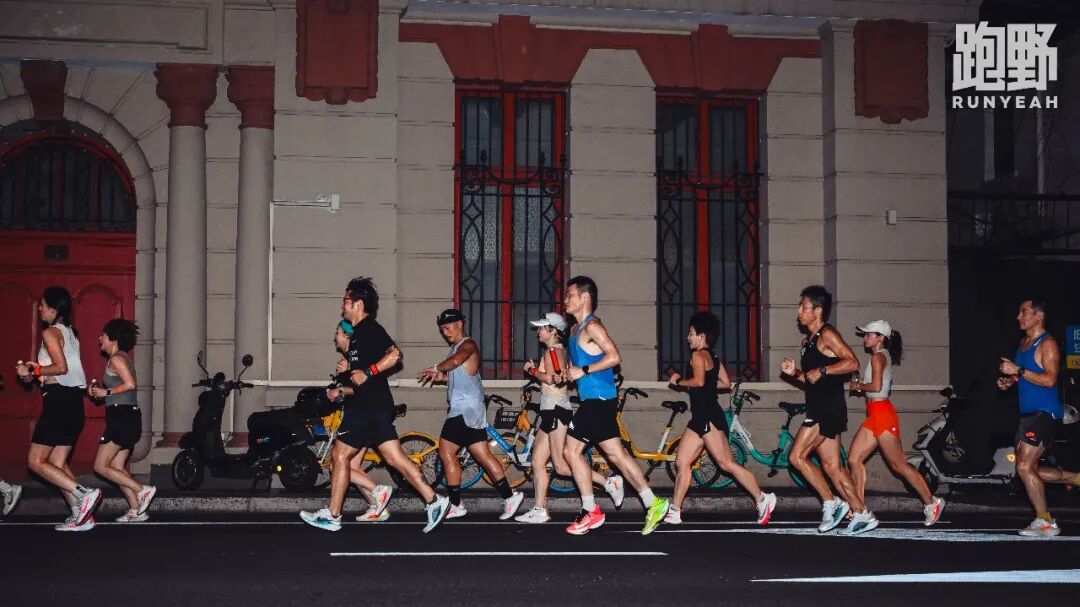
Therefore, when planning race strategy, you can't directly apply the temperature-based slowdown ratios used by elite athletes. For recreational runners, ambient temperature rising by 1°C, often means you need to reduce pace earlier and more proactively, keeping heart rate and core body temperature within sustainable limits.





The limitations imposed by high temperatures cannot be overcome by willpower alone. For runners and coaches, a more effective approach is to identify weather-related risks in advance and change race strategy from"rigidly sticking to pace"to"managing thermal load".

First, don't judge your hot-weather performance by cold-weather paces. During summer training or high-temperature races, the most common mistake is using winter training paces as a rigid standard. If race day is hotter than training by 8°C, it's not uncommon for heart rate at the same pace to be 10—15 bpm higher, and that doesn't mean your ability has declined. At such times you should rely on heart rate, perceived fatigue, and breathing, rather than mechanically chasing pace.
Second, proactively lower your target pace.For recreational runners aiming for a steady finish or consistent performance, when the ambient temperature exceeds 15°C after that, consider for every 1°C rise 1°C, slow your target cruising pace by about 1.5—2 seconds. Be even more conservative when humidity is high, sun exposure is strong, or wind speed is low. Running a bit slower in the first half often beats suffering a blowup in the second half.

Third, start fueling and cooling early — don't wait until you're thirsty or overheating to act. In hot races, hydration, electrolyte intake, sponge cooling, dousing with water, and choosing shaded lines are all part of your pacing strategy. An effective heat strategy starts controlling the thermal load before the start, not as a remedy after dehydration or other symptoms appear.
Fourth, accept performance variability. Being able to finish consistently in hot conditions is itself a skill. A truly mature runner doesn't blindly 'grit their teeth and push through' in every condition; they learn to factor temperature, humidity, heart rate, and perceived exertion into their training decisions.

Text:trail running / Editor:xiaocai