
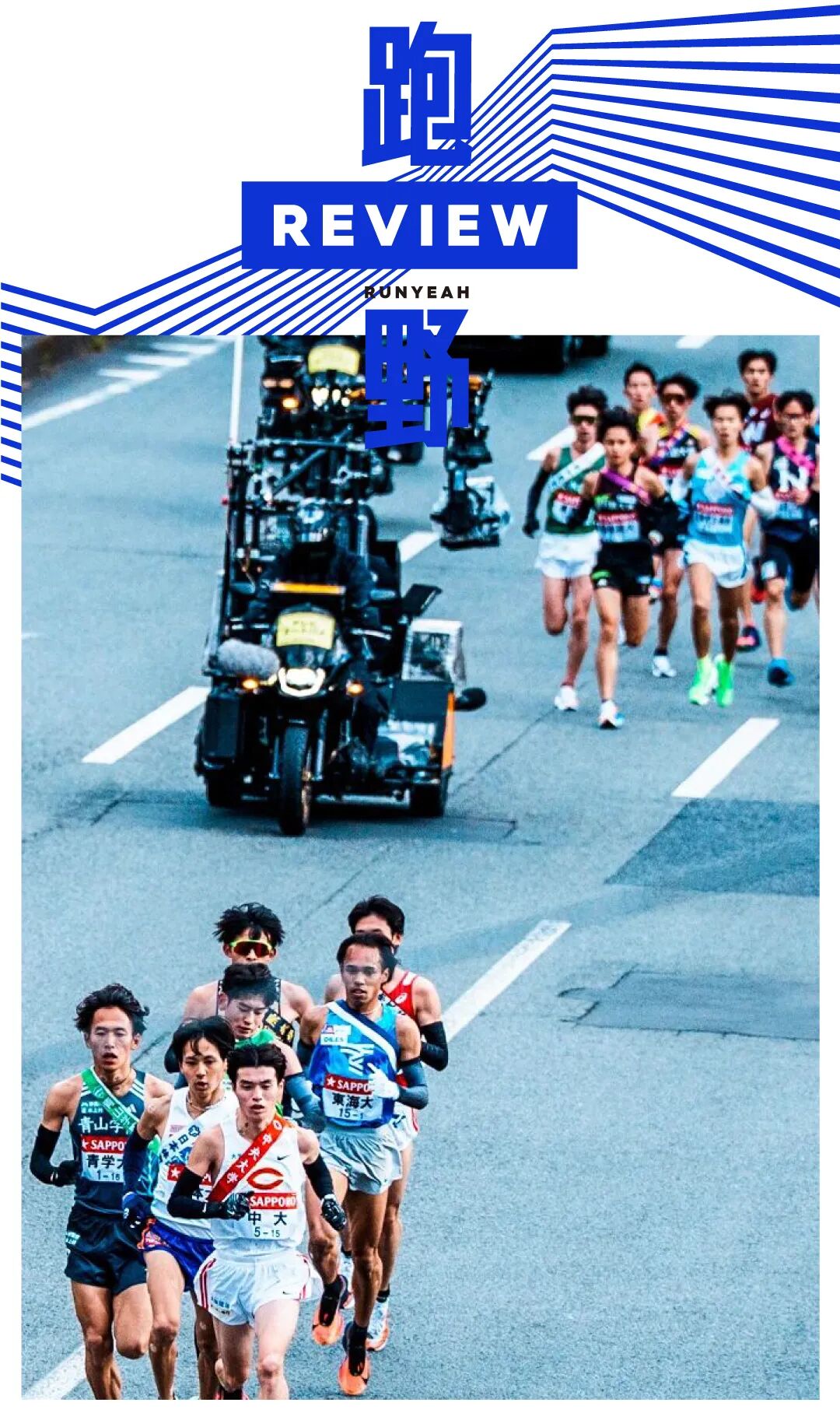
January 3, 2026, Otemachi, Tokyo. When Aoyama Gakuin University's second-year rising star Sota Orita crossed the finish line in front of the Yomiuri Shimbun with a confident smile and arms outstretched, the clock stopped at the astonishing 10 hours 37 minutes 34 seconds.
At that moment, the cheers seemed set to shatter the winter sky. This was Aoyama Gakuin University's third consecutive year lifting the Hakone yosegi marquetry trophy, and the ninth overall championship in the school's history. But this title carried the weight of Mount Tai —a new outbound record, a new return record, a new overall record. Coach Susumu Hara and his 'Green Army' delivered an almost perfect performance, ushering the Hakone Ekiden into a brand-new 'ultra-fast era'.
This year's 102nd Hakone Ekiden was destined to go down in history for "speed" and "passion." From the sensational start by Kokugakuin University's Rui Aoki in Section 1, to the summit showdown in Section 5 featuring a new-generation "Mountain God," and then Juntendo University's dramatic comeback on the return course, every moment was enough to get the blood pumping.
The romance of the Hakone Ekiden lies in that it always has stories to tell, in a year hailed as the full takeover by the "Strongest Generation", we use 10 standout moments to tellthe epic sweep of these 217.1 kilometers.

If you only look at the result, you might think this was another Aoyama Gakuin-style "cruise" performance. But rewind the clock to 8 a.m. on January 2 in Tokyo, and the air in Ōtemachi was thick with anxiety among Aoyama Gakuin supporters.
Leg 1 has always been a fiercely contested battleground. However, Aoyama Gakuin's start nearly fell apart. The originally scheduled 荒巻朋熙 was unable to compete due to gastroenteritis, and the second-year student thrust into the role at the last minute, 小河原陽琉, was swept up in the chaotic melee of the fastest-ever Leg 1.
At the 15 km mark, when the lead group began to accelerate, Kohara Haru fell off the pace, ultimately handing over in 16th place for the section, nearly two minutes behind the leader Kokugakuin. For the reigning champions aiming for a three-peat, this was undoubtedly a nightmarish start. According to historical data, teams that drop out of the top 15 in Section 1 have less than a 5% chance of winning.
However, that's precisely what makes this "New Aoyama Gakuin" so formidable. From the 2nd leg onward, they displayed a suffocating ability to chase. They continued closing the gap in the 3rd and 4th legs; although they didn't claim any leg prizes, their overall placing improved.
The real turning point came in the fifth leg — when the tasuki was passed to captain Asahi Kuroda, Aoyama Gakuin still trailed leaders Chuo University by a massive 3 minutes 24 seconds.
What followed was the now-legendary 'Lake Ashi Great Comeback'. Asahi Kuroda not only erased that two-minute deficit, he actually established a lead by the outbound finish. On the return leg, Aoyama Gakuin, holding the advantage, gave their rivals no chance.
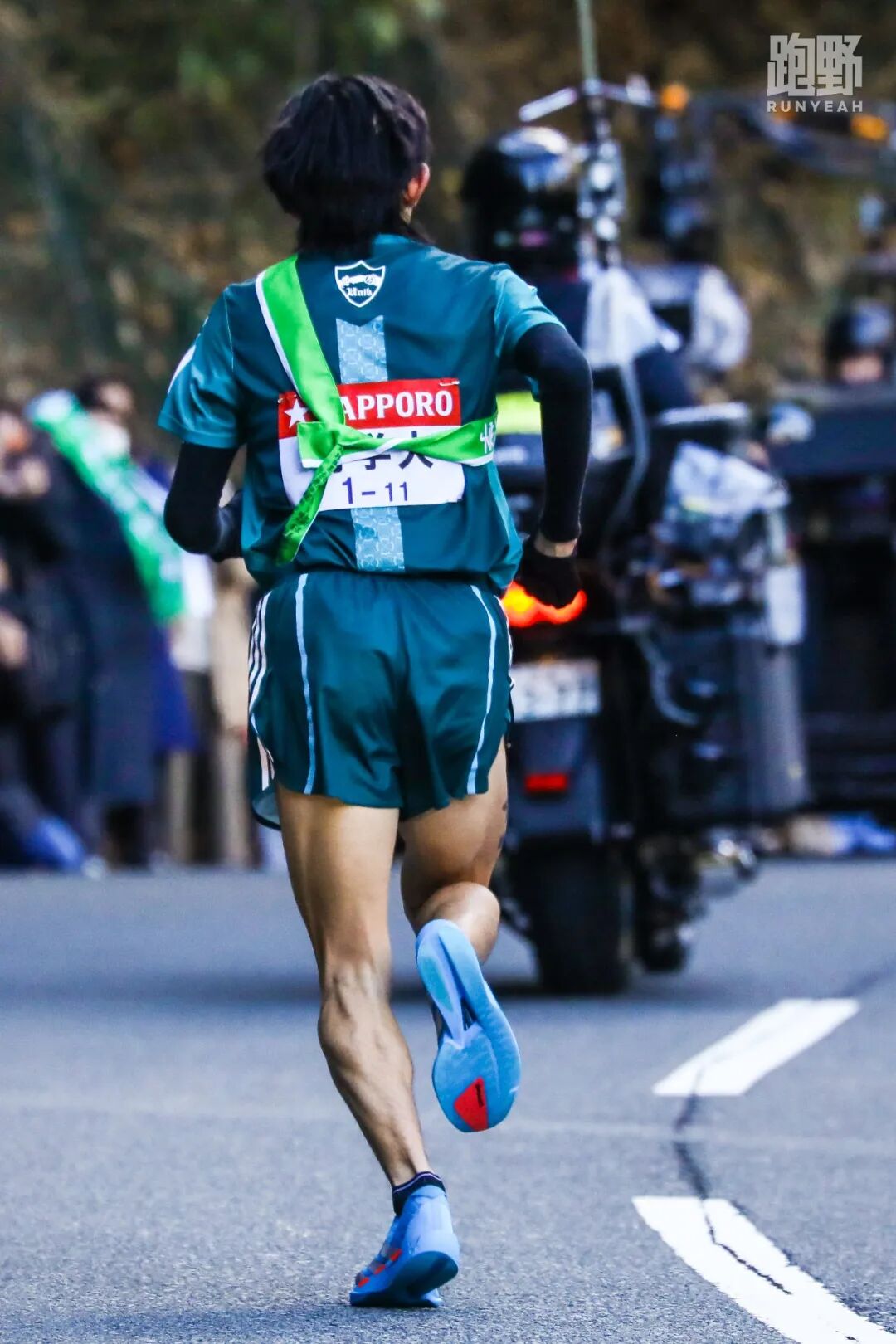
First-year runner in section six Hiroki Ishikawa, Shota Shiode in section eight who completed a three-peat of the section prize, and fourth-year Yuichi Sato, making his first and only appearance, extinguished every remaining doubt with one flawless run after another.
This title is not just a three-peat; it's Aoyama Gakuin's absolute dominance in the face of adversity. Coach Susumu Hara said excitedly in a post-race interview: "This is Aoyama Gakuin's true strength! The kids today are the real champions."

The mountains of Hakone are never short of legends. But the Hakone of 2026 belongs to just one person — Asahi Kuroda of Aoyama Gakuin University.
As the heir to last year’s "Mountain God" title, Kuroda this year carries the heavy responsibility of saving the team. Ahead of him is Waseda University’s prodigious climber, nicknamed the "Mountain Detective" — Shinsaku Kudo.
Shinsaku Kudo looked flawless in the early part of the fifth leg, at one point making it seem the outbound title was already in Waseda's pocket. However, Asahi Kuroda put on a performance that defied physics. On Hakone's steep slopes he ran paces as if it were flat. According to the broadcast data, on the section from Hanrei Tunnel to the large plateau, his pace astonishingly held at around 2:50/km.
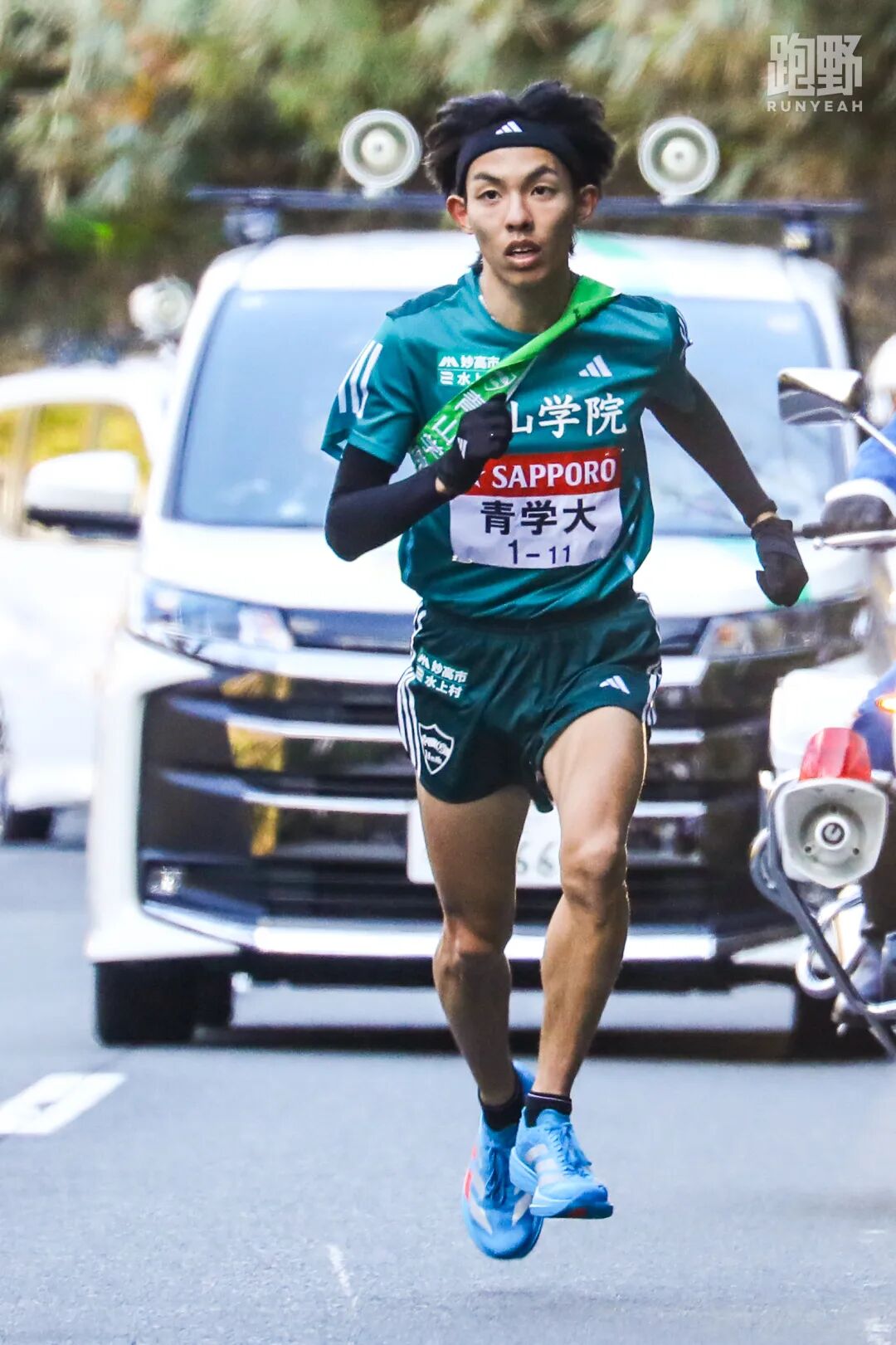
At 19.3 km into the course, that green figure finally appeared behind Shinsaku Kudo. No tussle, no probing—when Kudo turned to look at the chaser behind him, Kuroda slipped past from the other side and instantly left him in the dust.
1 hour 07 minutes 16 seconds. When that time appeared on the screen, the crowd erupted. It didn't just break the stage record — it shaved a massive 1 minute 55 seconds off the previous mark! This is a performance considered "impossible" in this era. Asahi Kuroda redefined human limits on Hakone's slopes with his own feet and was officially crowned the undisputed "new-generation mountain god".

Under Aoyama Gakuin's dazzling spotlight, Kokugakuin University (Kokugakuin Univ.) quietly wrote its own history. Overall second place — this is the highest finish the school has achieved in the Hakone Ekiden since its founding.
Kokugakuin's opening leg was nothing short of spectacular. In section 1, ace Rui Aoki (Rui Aoki) did not choose a conservative approach; at 16 kilometers,Rui Aoki discarded his equipment,boldly took the lead, ultimately finishing in 1 hour 00 minutes 28 seconds to set a new sectional record. That run completely disrupted every school's tactics and established Kokugakuin as a front-running contender.
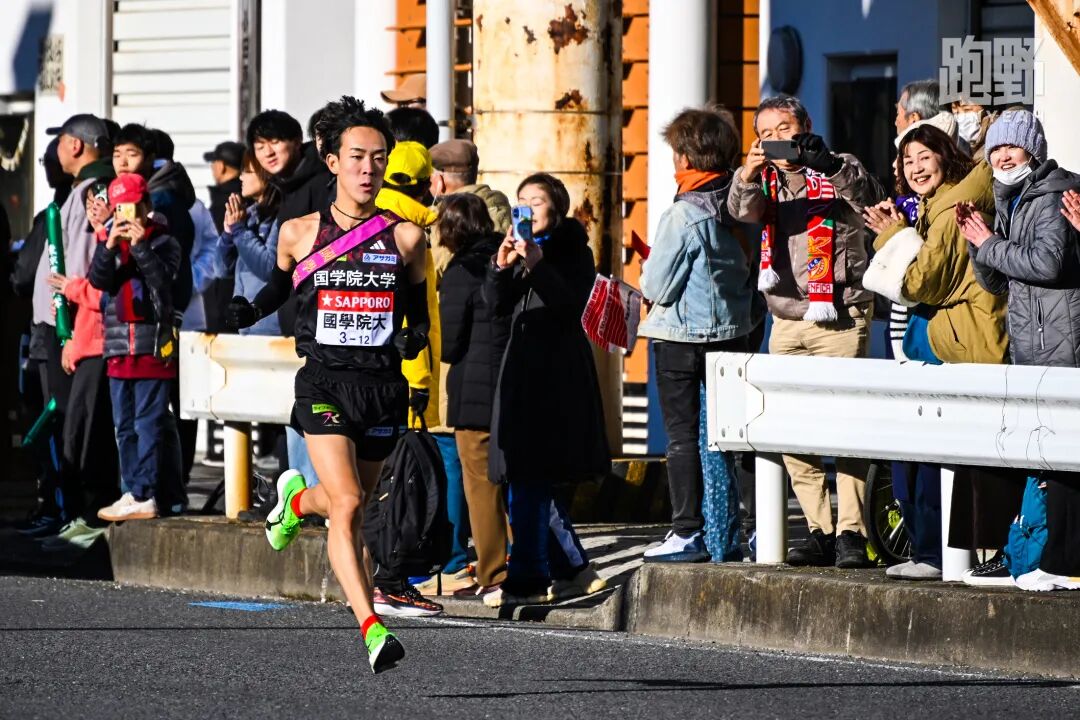
On the return leg, Kokugakuin showed unprecedented resilience. Goki Takayama, running the seventh leg, became the key man. Trailing Waseda University and Chuo University, he pulled off two consecutive overtakings and, with a leg-award-worthy surge, brought Kokugakuin up to second. Although they couldn't dent Aoyama Gakuin's advantage, they successfully held off Juntendo University and Waseda University behind them, preserving that honor.
Head coach Maeda shed tears of emotion after the race: “We have finally proven that Kokugakuin is not only the king of Izumo, but at Hakone we also have the strength to contend for the title.”

The second section (23.1 km) is every year the battleground for each school's ace. This year, however, Josai University’s international student Victor Kimtai took that battle to another dimension.
Before the race, people were expecting Waseda’s Tomonori Yamaguchi to take on the foreign recruits from other schools. However, from the moment Kimtai received the tasuki he switched into "solo mode." Taking over on the 7th leg, he proceeded to overtake several runners one after another.
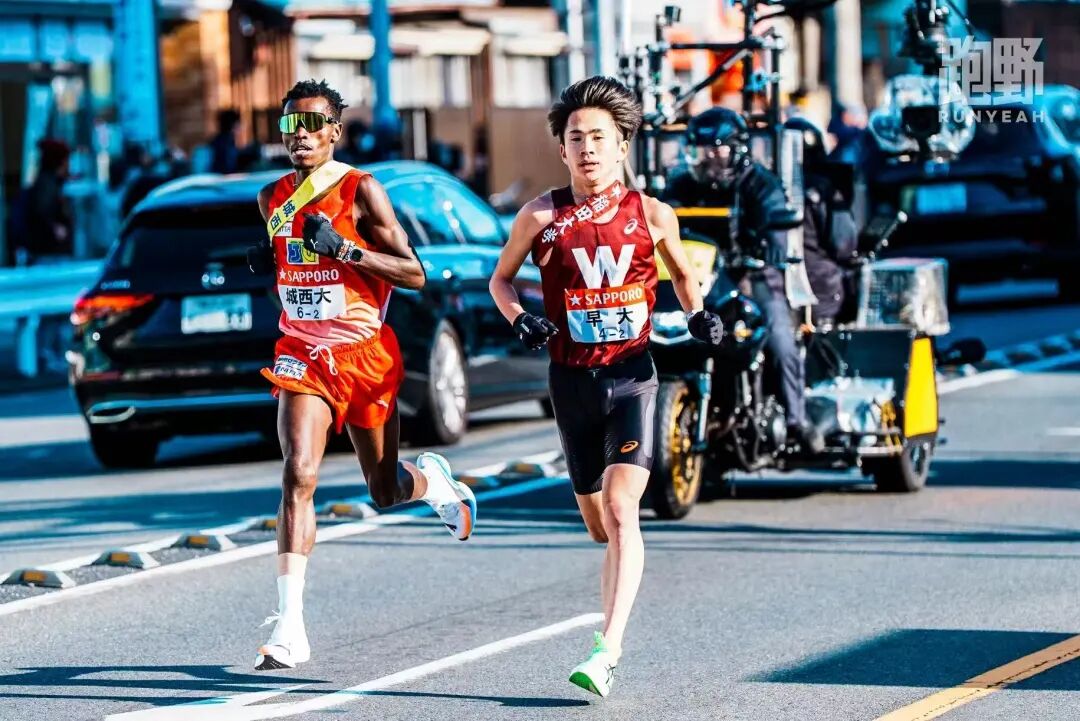
On the tough climb of Quantai Hill, his stride remained terrifyingly light. In the end,He finished with 1:05:09 to blast a new section record. How terrifying is that time? It's nearly half a minute faster than last year's Section 2 record. Kiptai's dominant showing not only helped Josai University briefly move into contention, but it also reignited the debate over whether "Section 2 has become the exclusive domain of foreign recruits." Regardless, this was a run that deserves a hat-tip — a truly great performance.

For Waseda University (Waseda Univ.), this may be the most bittersweet Hakone Ekiden in recent years.
They almost had a perfect start, a perfect second leg (Tomonori Yamaguchi held onto a top-three spot), and a perfect fourth leg (Ryuin Suzuki took the section prize). When the sash was handed to the fifth-leg "mountain detective" Shinsaku Kudo, Waseda led Aoyama Gakuin by more than two minutes. Kudo himself was in great form; he quickly overtook Chuo University up ahead and went clear.
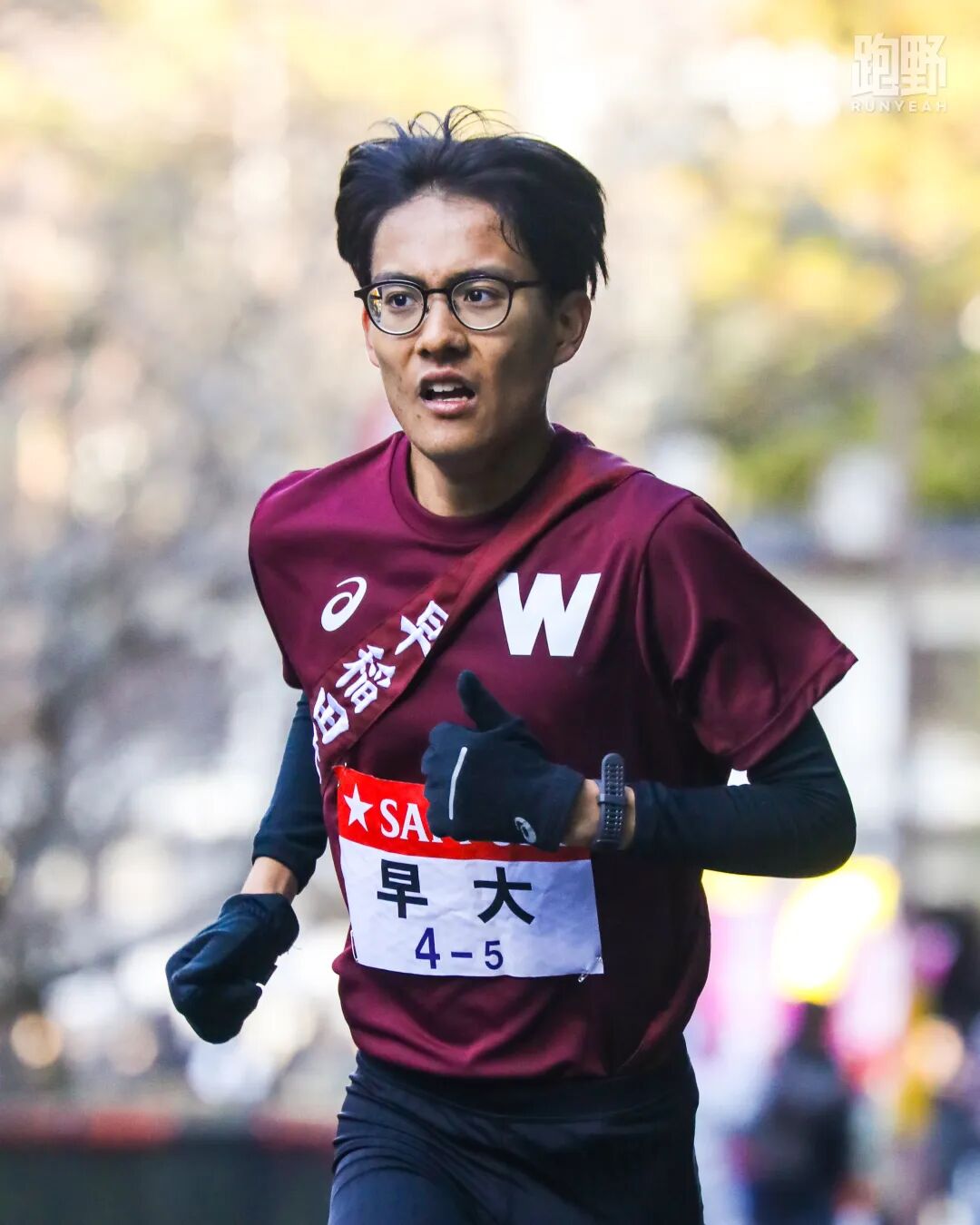
At that moment, Waseda alumni were perhaps already beginning to dream of a long-awaited repeat champion. Shinsaku Kudo wasn't running slowly up the mountain; one could even say he was very fast.
Sadly for him, he ran into the 'on-fire' Asahi Kuroda. Being overtaken a few kilometers after the highest point, so close to the finish, is a huge psychological blow; the runner who finished second, Shinsaku Kudo, didn't even perform his trademark finish-line gesture. In addition to Asahi Kuroda, Josai's Sho Saito also pushed ahead of Kudo with a time of 1:09:28. Kudo, who had seemed invincible for a long time, became Hakone's disappointed man today.
In the return leg, Waseda may have been impacted by the morale hit of being overtaken on the outbound leg, or by how they distributed their energy, and were gradually passed by Kokugakuin and Juntendo University, ultimately finishing a disappointing fourth overall. Though they didn’t take the title, Waseda’s signs of revival—and the poignant silhouette of Shinsaku Kudo—became one of the most moving images of the event.

At the end of the outbound leg, Juntendo University was only in sixth place, seemingly some distance from the top three. However, this "Deep Blue Brigade," which had once dropped as far as the preliminaries, showed an astonishing ability to adjust on the return leg.
After the return leg began, they made steady, measured progress. The decisive turning point came on the final, tenth leg. While most teams were hitting a wall, Juntendo's Yamamoto Yu produced one of the top-three legs, and, taking advantage of Waseda and Chuo University's runners slowing, completed a crucial overtake in the last few kilometres.
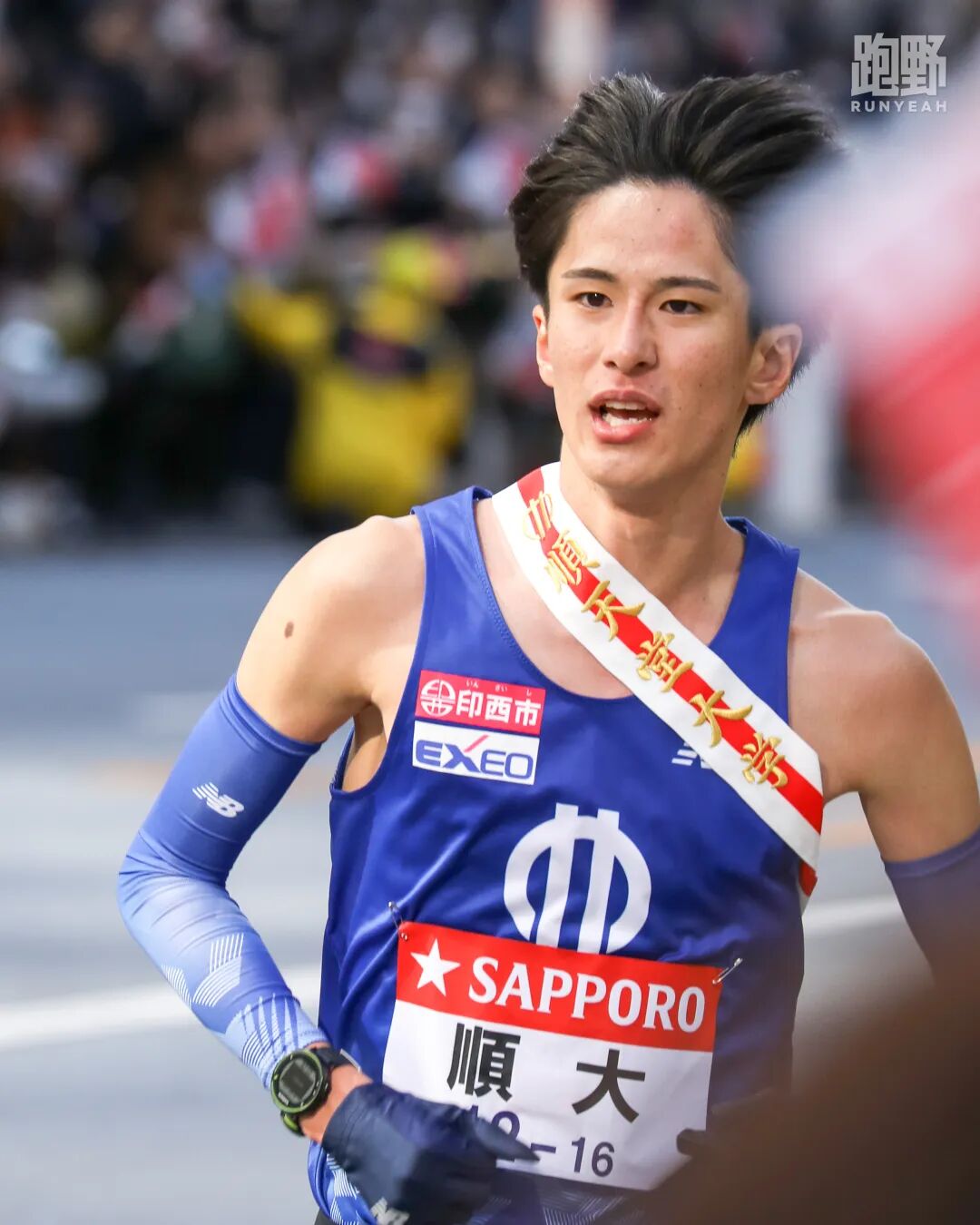
They ultimately finished third overall, with Juntendo University once again proving its consistency in long-distance relay events. For this team, which is currently in a generational transition and has experienced dramatic ups and downs over the past two years, this bronze is especially meaningful and a real shot in the arm.

As one of the favorites to win in recent years, Komazawa University (Komazawa Univ.) produced a surprising result this year — sixth overall. This is also the first time in recent years that Komazawa has fallen out of the top three.
Supervisor Atsushi Fujita had said before the race that the team was in good shape, but the race unfolded with the team repeatedly constrained. They failed to establish an advantage on the outbound leg, the main runners performed tepidly, and on the return leg they lacked the explosive chasing power.
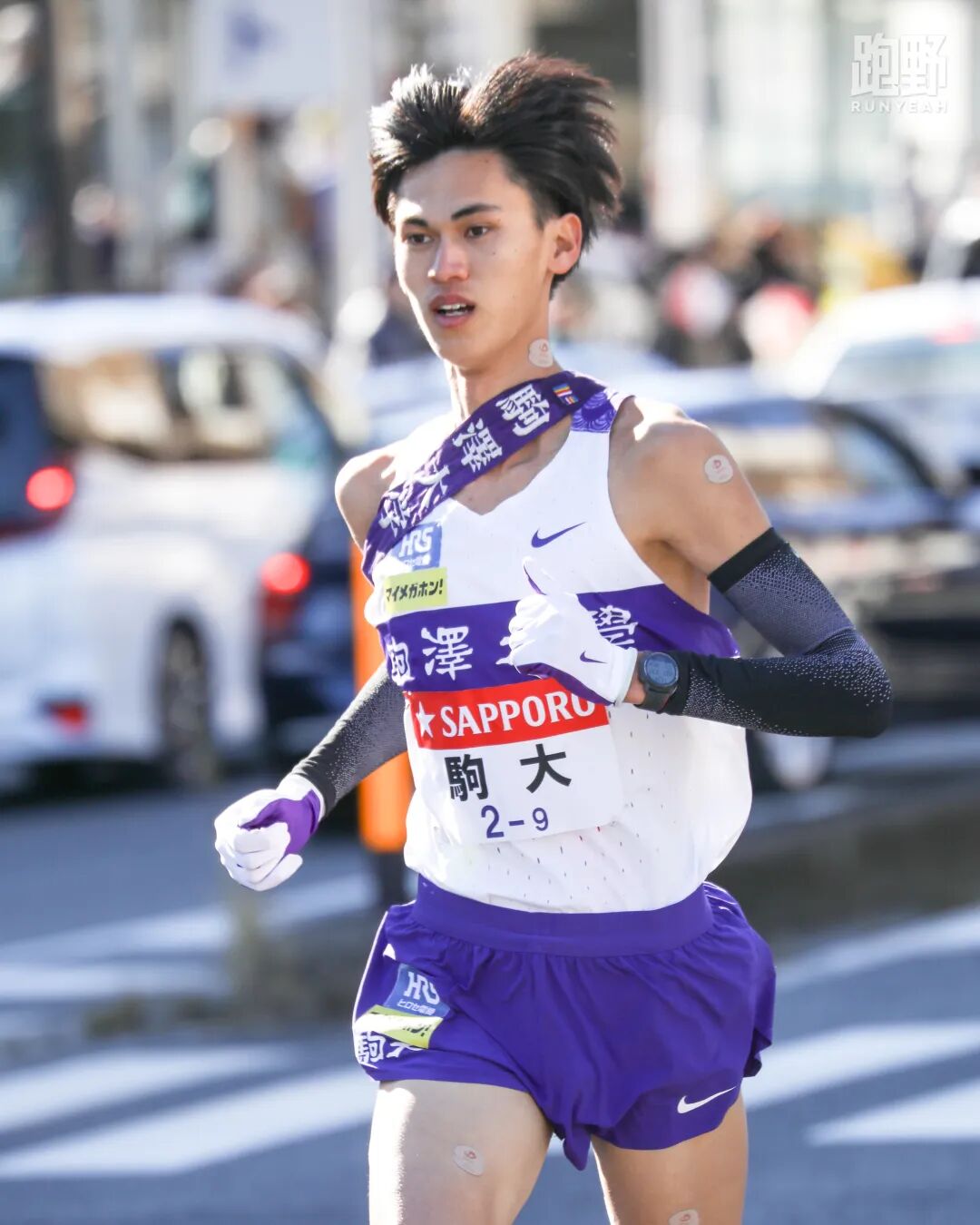
Komazawa trailed the leader by more than three minutes at the end of the outbound leg. Historical data from Hakone shows the probability of overturning a deficit of more than three minutes on the outbound leg to win is almost zero. The "three-minute curse" struck again. For the Purple Army, accustomed to victory, this defeat may be a painful but necessary wake-up call — as Aoyama Gakuin evolves, standing still amounts to falling behind.
With Keita Sato, Aoi Ito and Takuma Yamakawa about to graduate, Komazawa's incoming newcomers will face even tougher challenges.

Hakone Ekiden is not just a game for the championship; for mid-tier schools, a top-10 "seed" is a red line that determines a school's honor and the fate of next year's admissions.
At this year's 10th-leg finish line, an extremely brutal scene unfolded. Nihon University (Nihon Univ.) hovered on the edge of 10th place on the return leg. In the final few kilometers, their runner's face contorted as he fought with the last of his strength. Ultimately, Nihon Univ. held on to 10th place by a narrow margin and secured the precious seed.
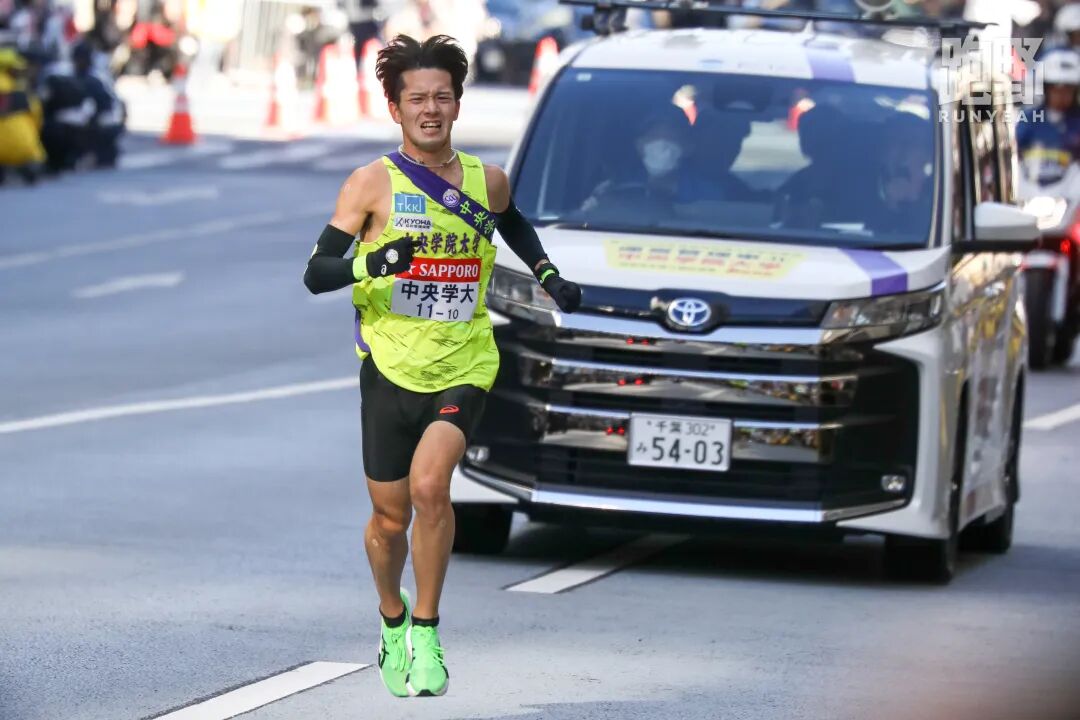
The protagonists of the tragedy were Chuo Gakuin University. They chased desperately on the return leg, at one point catching sight of the top 10's backs. However, the finish clock showed they had only 14 seconds or so, leaving them in 11th place. The sight of the athletes sobbing at the finish line moved countless spectators. This is the world of victory and defeat — a 14-second gap is the distance between heaven and hell.
Meanwhile, Teikyo University, thanks to a steady performance on the return leg, safely finished in 9th place, continuing their 'tenacious' team style.

At this year's Hakone Ekiden, the biggest surprise was the all‑round breakout by the underclassmen, especially Aoyama Gakuin University's "super sophomores" and "golden freshmen."
In the crucial sixth leg (the downhill section), Aoyama Gakuin deployed first-year runner Ishikawa Hiroki. On a stretch that demands extreme technique and bravery, Ishikawa ran like a seasoned veteran — not only did he make no mistakes, he actually extended the gap with Waseda.
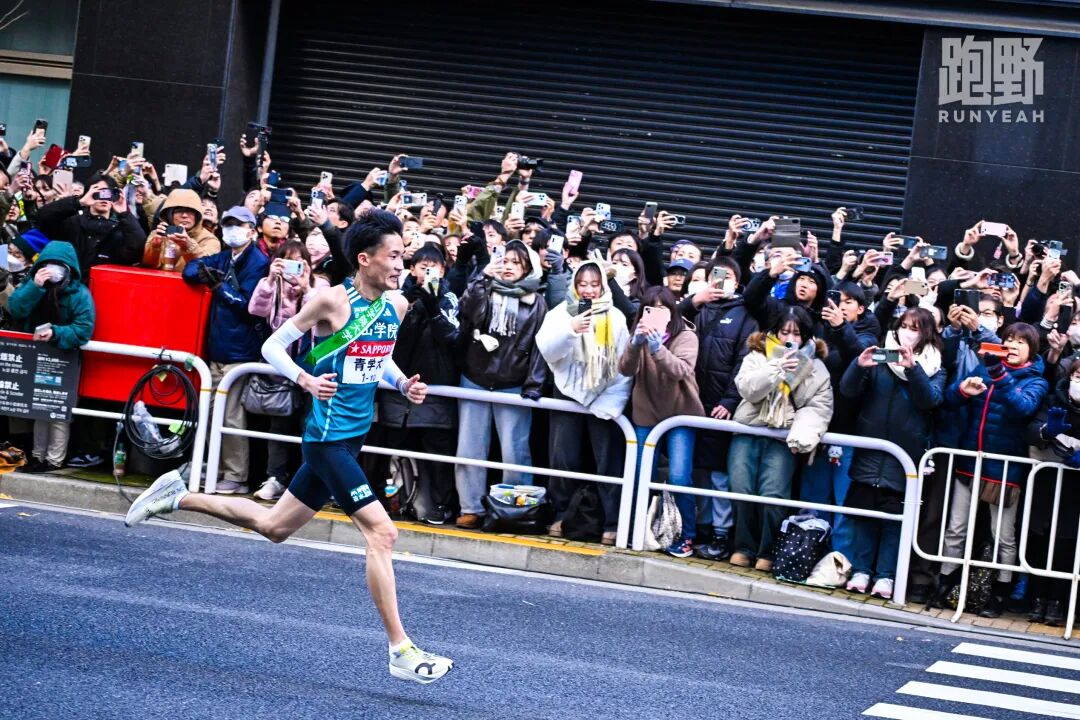
The decisive tenth leg went to second-year Orita Sota. A former high-school distance standout, Orita took on the "encore" responsibility in only his second year at university. In the final sprint he showed no hint of fatigue and even smiled as he engaged with spectators along the course. His composure and strength suggest Aoyama Gakuin could continue to dominate Hakone for the next two years.

After the first and second legs, few could have imagined any link between Teikyo and the seeded berth. After all, Yuta Hara and Yoshihiro Kusunoka had collapsed so completely that they were at the very bottom, nearly ten minutes behind the leader. Even with a fightback from the third to fifth legs, by the end of the outbound leg they were still 17th, 4 minutes 15 seconds behind 10th‑placed Tokai University.
The fate of competing at the airport next year seems to be decided, but what is the spirit when strong winds blow? It's to never give up!
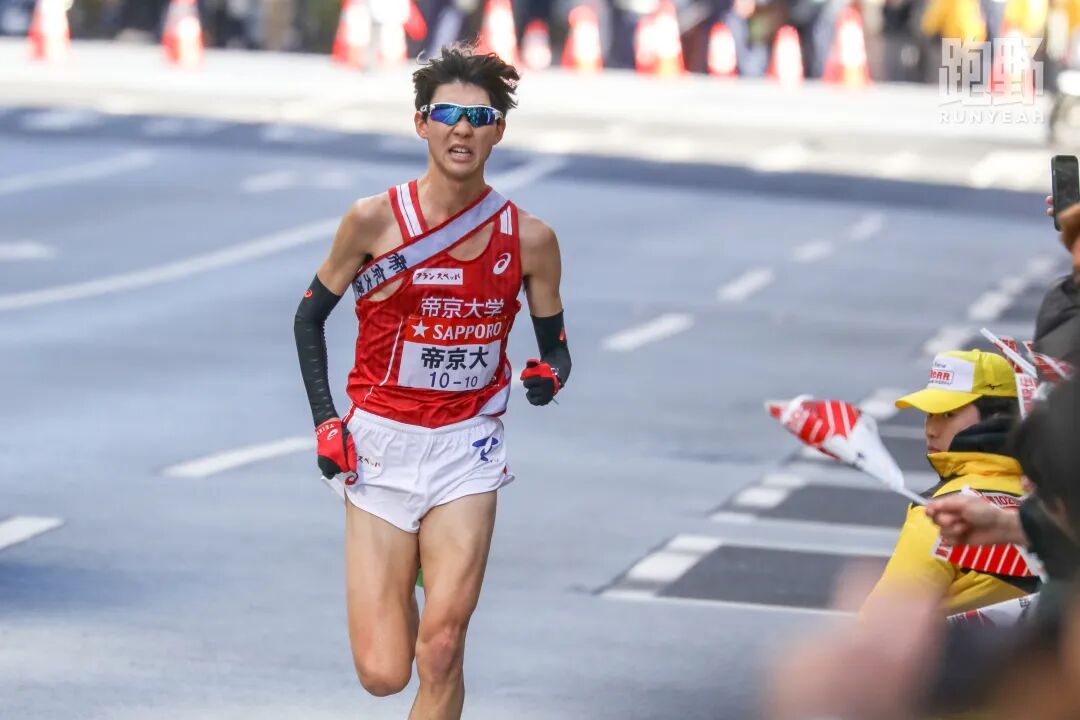
A faint hope set the stage for a miracle — Teikyo's runners Riku Hirota, Ryota Shibato, Hajime Matsui, Jinya Ozaki and Daiki Yarita brought manga to life. At the handoff for the ninth leg, Teikyo was only 27 seconds away from a seeded spot, and Yarita Daiki on the anchor leg kept the chase, ultimately overtaking into ninth to secure the seed.鎗田大輝持续追击,最终反超至第九,拿下种子权。
Finally, let’s return to that chilling overall time:10 hours 37 minutes 34 seconds.
A few years ago, when the total time broke 10 hours 45 minutes, people proclaimed the arrival of the 'high-speed era.' Today, Aoyama Gakuin has pulled that benchmark down into the 10-hour-30-minute range. Behind this are the continual iterations of shoe technology, the refinement of scientific training methods, and above all the leap forward in the overall standard of Japanese collegiate middle- and long-distance running.
In this year's race, not only the champions but the teams finishing in the top positions recorded significant improvements. New leg records have sprung up like mushrooms after the rain, and this year five new leg records were set. This marks a complete 'version update' for the Hakone Ekiden. For future runners, sheer grit alone will no longer be enough to reach the Hakone podium—you must possess world-class speed.
I believe the next Hakone Ekiden will be even more exciting.
Text:Trail Running / Editor:David
Image:Trail Running Explosion / Visual:Five-Year Trainee