
On April 20, 2026, the 130th Boston Marathon arrived as scheduled on this Massachusetts Patriots' Day. When the starter's gun fired in the cool early-morning air of Hopkinton, no one could have fully foreseen that a "perfect storm" worthy of a place in marathon history was about to unfold.
In this Boston Marathon — hailed as the "fastest ever" — 13 men broke the 2:06 barrier, utterly smashing historical marks; American domestic elites erupted collectively in an unprecedented display; and defending champion John Korir stunned the world with an astonishing 2:01:52, dramatically slicing down a course record that had slept for 15 years.
On this 130-year-old course, renowned for its punishing undulations, how did they manage to run so fast? Below is our exclusive, in-depth professional analysis based on key race information.

As a classic point-to-point course, the Boston Marathon's results are often deeply tied to the day's weather conditions.
This is also the fundamental reason why World Athletics does not recognize the Boston course for world record certification——A strong tailwind can shave several minutes off the finishing times of top runners.
On that day in 2026, nature had prepared for all the elite athletes standing on the start line what might be a once-in-a-career perfect gift: temperatures held around 4–6 °C, accompanied by a sustained tailwind blowing from west to east.
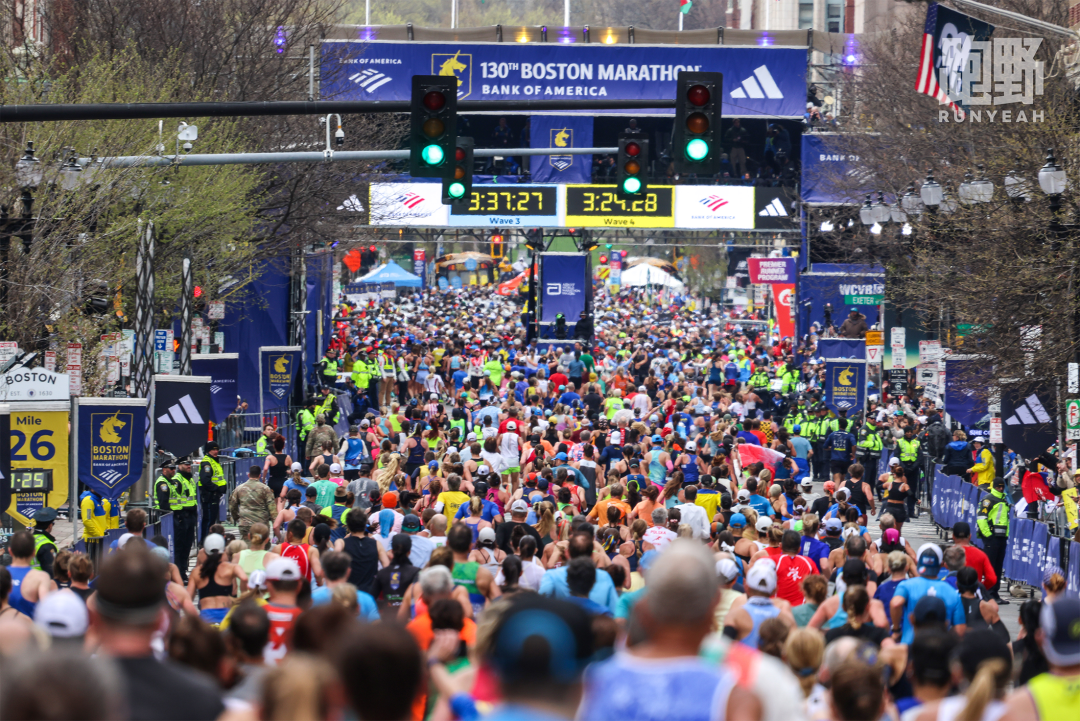
The most direct effect of a tailwind is to weaken the risk of hitting the wall. With the wind at their back, maintaining a high pace reduces relative oxygen cost and muscle load, which allowed those who dared to follow aggressively in the first half to reap a historic windfall.
This exceptional "weather advantage" not only reduced athletes' aerodynamic drag in physical terms, but also acted like a shot in the arm psychologically, completely changing the pre-race tactical game among the elite field.
With 2:04:35 to take seventh overall and massively lower his PB the American rising star Charles Hicks (Charles Hicks) said after the race thatthese weather conditions greatly raised everyone's expectations of their own limits and also pushed many to adopt aggressive early front-running tactics, in any other race the cost of such tactics would be devastating. But today, that cost was negligible.

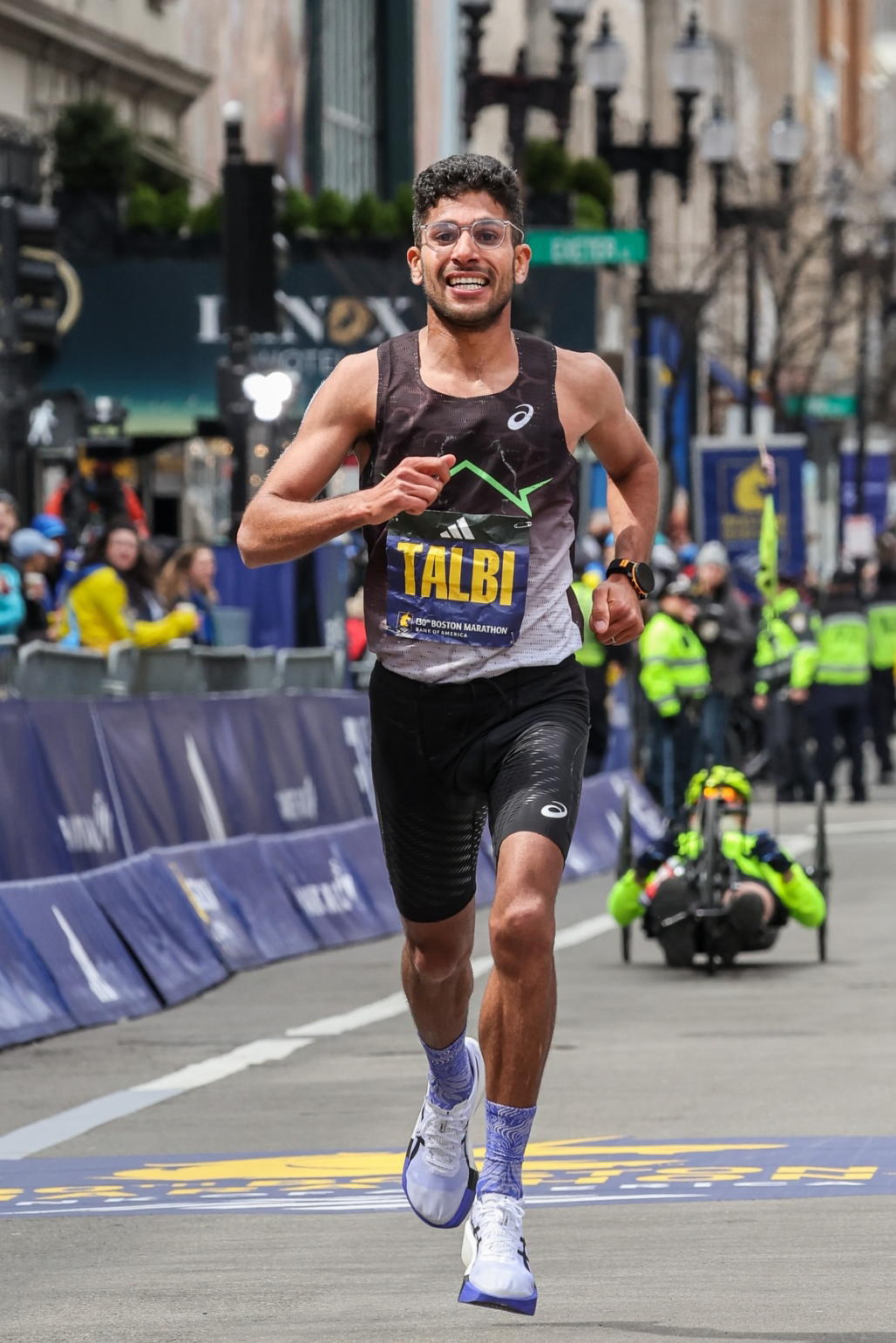
"A tailwind is indeed a huge advantage for running a good result," Zouhair Talbi, who finished fifth in 2:03:45 and set the fastest 'all-conditions' marathon by a U.S. citizen, said in an interview, "but the actual race paceis still decided by the leaders. In Boston, without official pacemakers, you can only choose to follow. In the early stages of the race many athletes were actively pushing the pace."
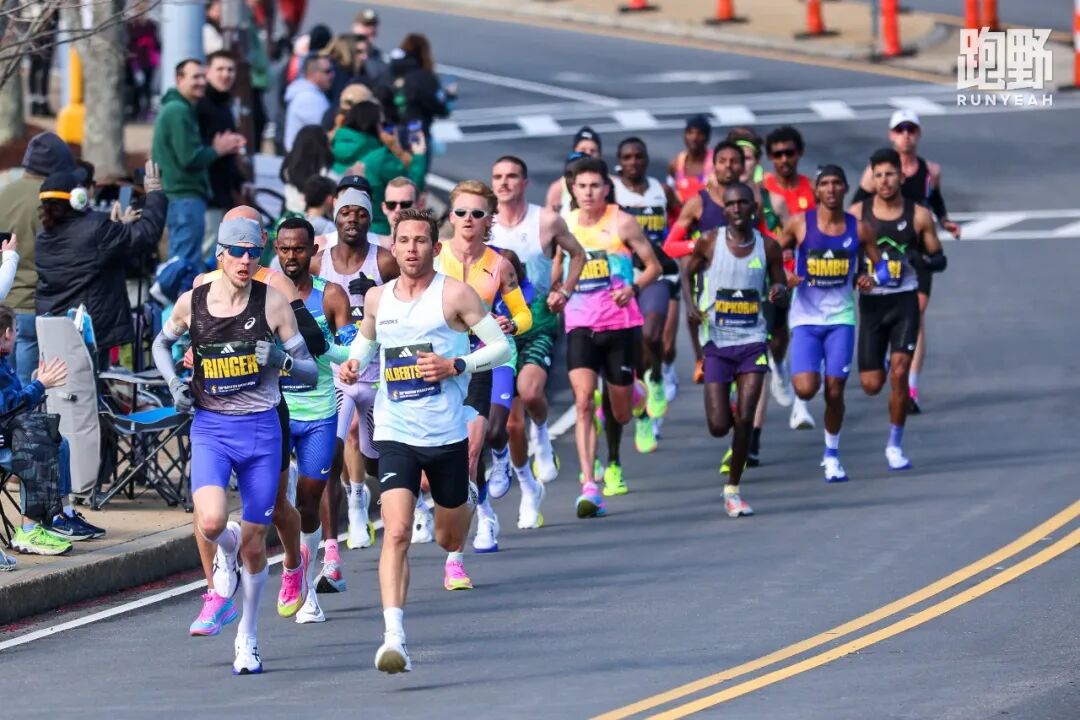
The early race dynamics confirmed Talbi's judgment. In the large, fast-moving lead group, German runner Hendrik Pfeiffer quickly stepped to the front and became the head of this high-speed train. At 15 km the split was just 43:45, and an astonishing 24 runners were still within 5 seconds of the leader. At 20 km the time was 58:40, projecting a finishing time of 2:03:46.
Then 2016 Boston Marathon champion Lemi Berhanu suddenly surged after the 20 km feed station, stretching the big pack into a long line. When Berhanu passed the halfway timing point first in 61:43, he was closely followed by a large chase group — the top 22 runners' half splits were all within 62:00.
A half marathon time of 61 minutes 43 seconds was astonishing, but in pure numbers it was only 9 seconds faster than the 61 minutes 52 seconds set in 2025 by a 16-man lead group. However, what made the 2026 race truly terrifying was that these top athletes, after entering the Newton Hills in the second half, still clung stubbornly to that extremely harsh pace red line.
On Athletics Club (OAC) head coach Dathan Ritzenhein gave his two proteges before the race — Ryan Ford (who ultimately finished 12th in 2:05:46) and Joe Klecker (who ultimately finished 13th in 2:05:56) — what could be called a heroic tactical order: “No matter what happens, we must stick with the lead pack(We gotta go with the pack no matter what).”
With thecarbon-plate running shoe technology and near-perfect weather, jumping on this insane half-marathon train became the only way to break through today. Those who chose to trust and follow it almost all received historically generous rewards.

But to make a race one of the greatest in history, a tailwind and a fast pace alone aren’t enough — it also needs a champion who can deliver the decisive blow. For a second straight year, that role belonged to 29-year-old Kenyan assassin John Korir.
By the 65th minute of the race, Korir had quietly closed the gap on leader Belhanu, and the two began running side by side. The real killer move came on the Boston course’s most feared "Heartbreak Hill" (Heartbreak Hill).
As the steepest, most soul‑crushing uphill on the course, Korir at that moment displayed a chilling dominance. He launched an earth‑shattering long‑range surge, in this brutal uphill at the 33rd kilometer he unbelievably surged to about 2:55/km pace, instantly ripping open a massive 22‑second gap in the lead group.
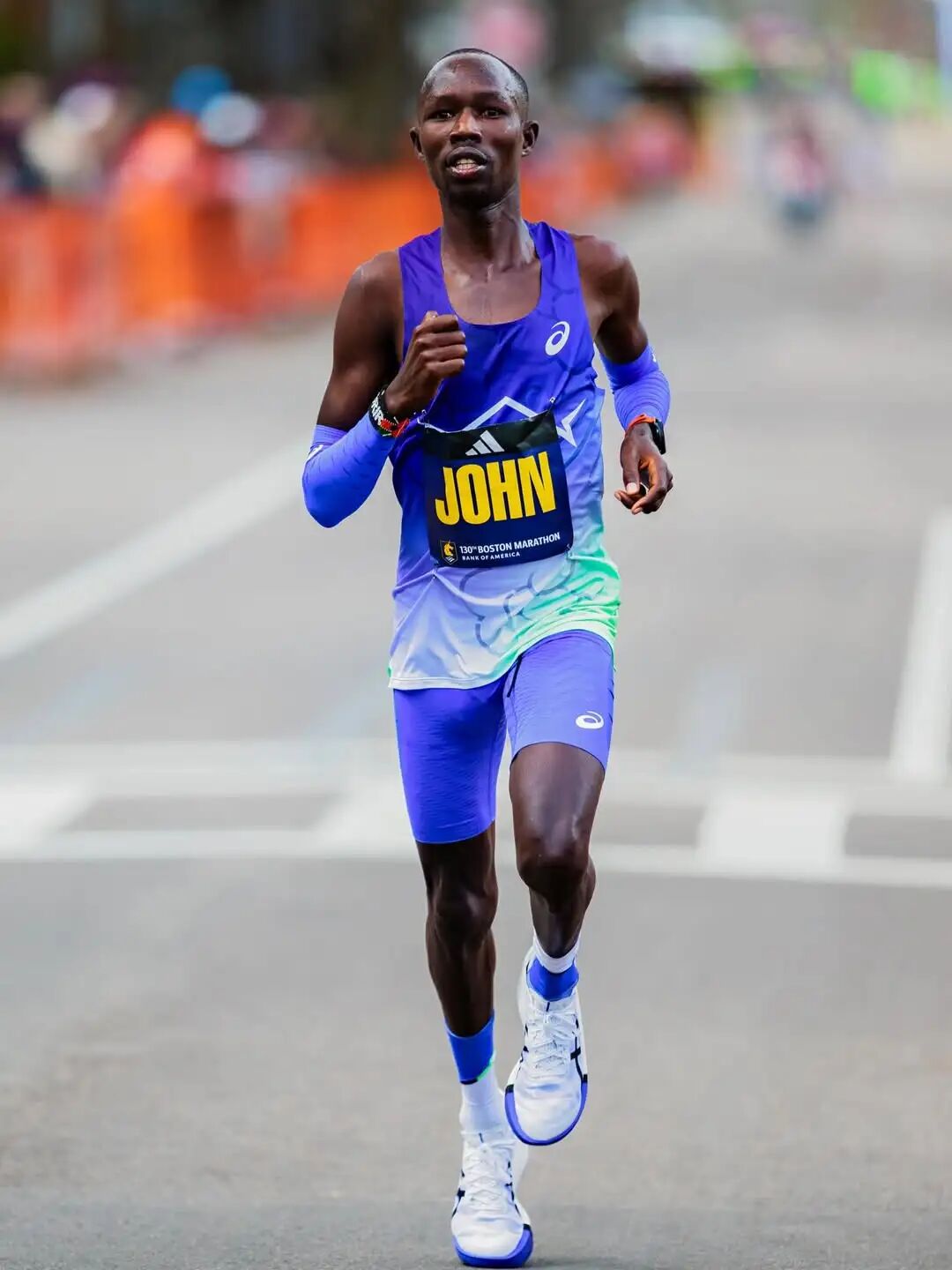
This scene felt familiar. At the 2025 Boston Marathon, Korir made his decisive move at the same spot, surging to a 3:00/km pace and ultimately winning in 2:04:45. But the Korir of 2026 showed no sign of slowing after cresting Heartbreak Hill. Riding the push of the tailwind, he turned the second half into a personal visual feast.
A 61:50 first half, followed by an astonishing 60:02 second half! This is a very large negative split (Negative Split).
When Korir finally crossed the line on Boylston Street, the clock stopped at 2:01:52. That time not only earned him $150,000 in winner's prize money, but also an additional $50,000 for breaking the course record.
He trimmed more than a minute off the 2:03:02 course record set by his compatriot Geoffrey Mutai(Geoffrey Mutai) in that same tailwind 'miracle year' of 2011. This was also the longest-standing course record in World Marathon Majors (WMM) events, and it is now history.
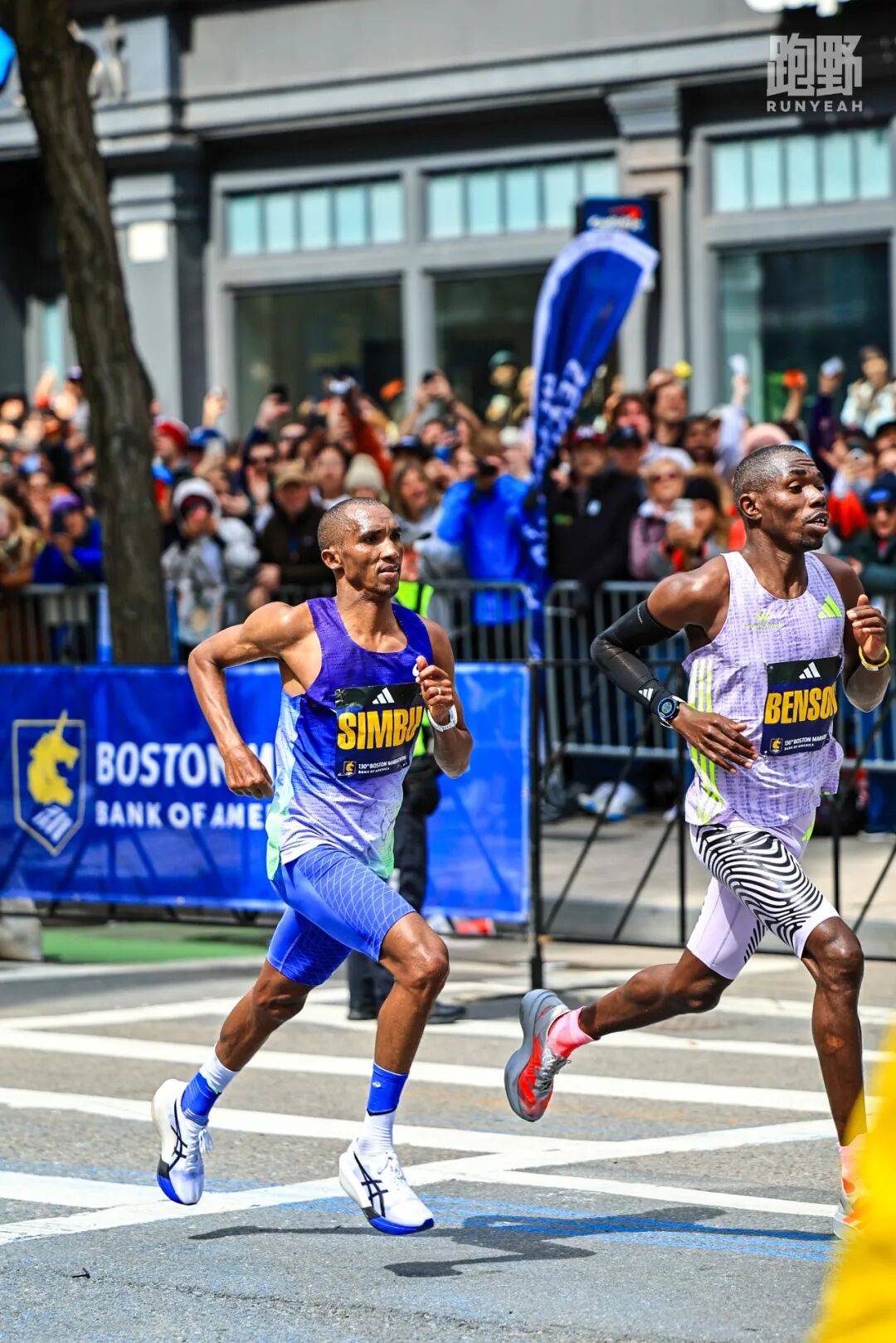
Korir ultimately finished 55 seconds clear of the runner-up, and the athletes he beat were no pushovers — the runner-up was Tanzanian star and world championships gold medalist Alphonce Felix Simbu(Alphonce Felix Simbu) in 2:02:47, while third place went to 2021 Boston Marathon champion and former New York Marathon winner Benson Kipruto(Benson Kipruto) in 2:02:50.
In Boston Marathon history, the top three all finished under 2:03 in the same race — this is the first time it has ever happened.

Korir's performance has utterly shocked the industry. As the fifth man in history to run under the 2:02 barrier in the men's marathon, is he already the world's "No. 1 marathoner" today?
Looking back at Korir's career, he was once a fairly average professional runner (only 1 win in his first 8 marathons, with a fastest time not under 2:05:04). But now, in the past year and a half he has collected four titles — including the 2024 Chicago Marathon 2:02:43, 2025 Boston 2:04:45, 2025 Valencia 2:02:24, and this Boston Marathon.
After the race, a LetsRun reporter interviewed Korir’s coach Ron Mann (Ron Mann). When asked whether he was surprised by Korir’s astonishing second half of 60:02, Mann replied no.
"No. Not at all surprised." Mann said calmly, "He has that kind of reserve of strength. I had already told you the level of strength he has now. Combined with his currentmileage(Mileage)和训练体量,这个成绩我一点也不意外。我们知道他有这个能力。而且,今天的天气确实无比完美。”
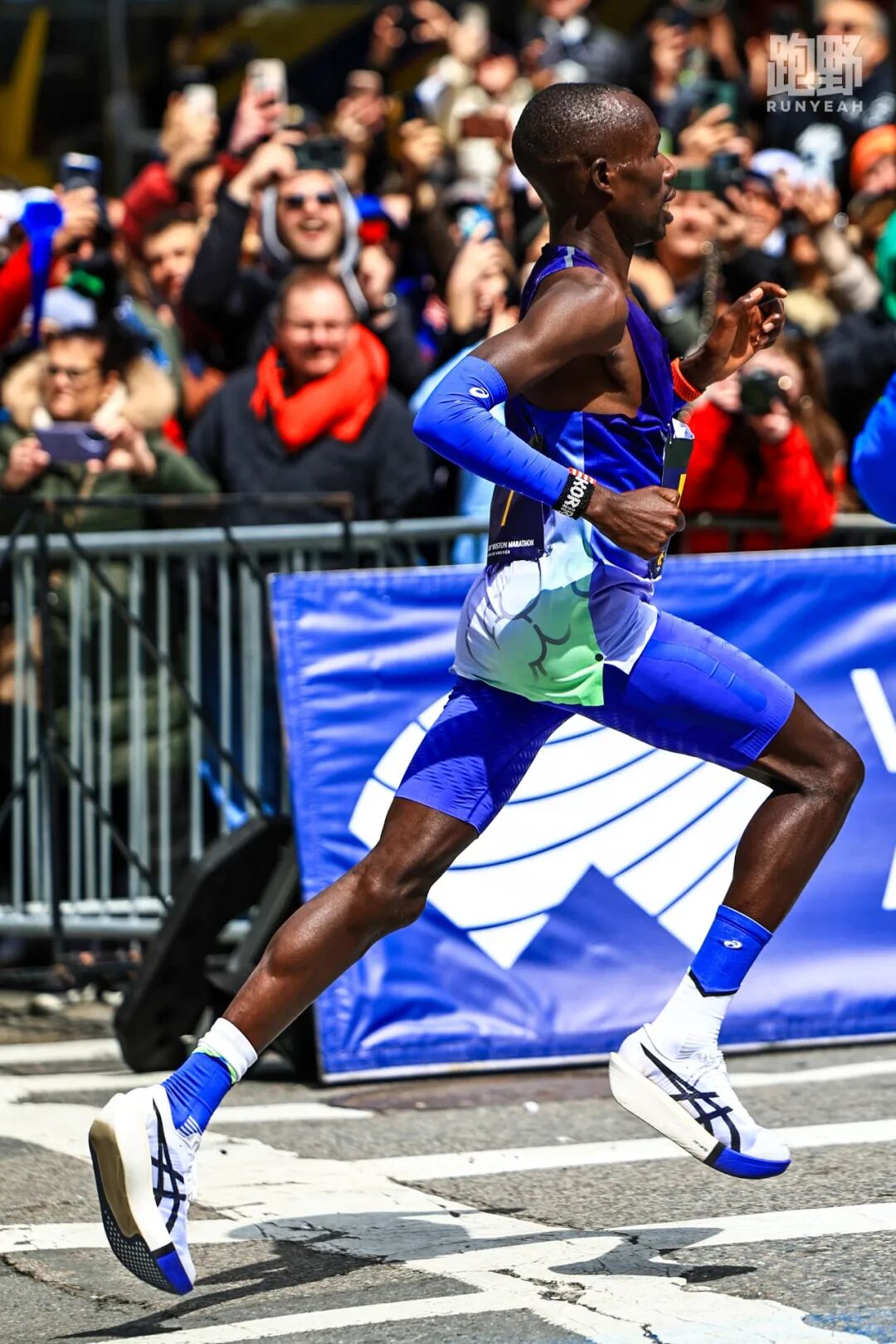
Mann detailed the evolution of this scientific training: "He didn't have enough strength before. When we first took him on, his weekly mileage was about 112 km, and now his weekly mileage has reached 257 km.
But you must never try to achieve it overnight, because if you chase quick results you'll ruin him. This is the so-called 'specific adaptation to imposed demand' (Specific adaptation to imposed demand) — if you apply too great a load too quickly, the athlete will collapse."
Korir's rise has filled the recent void at the top tier of the marathon. With Eliud Kipchoge's natural decline in form and the tragic passing of prodigy Kelvin Kiptum, Korir, alongside Sawe and Kiplimo, has become a dominant force in the new era of men's marathon.
Last year in Chicago, Korir ended up DNF after an ill-advised surge to challenge Kiplimo, but that painful lesson clearly transformed him into the cold, ruthless tactician he was on the Boston course.

If Korir's victory proved the combination of raw talent and scientifichigh-mileage training, then this race represented a historic reshaping of the strength of American men's marathon running.
Before the morning of April 20, 2026, in the entire history of American marathon running (across all courses), only four male athletes had ever broken the 2:06 barrier. Yet on that day, five American runners ran under 2:06 in the same race! It was a collective eruption that left the entire U.S. track and field community stunned.
31-year-old Zouhair Talbi (formerly represented Morocco; 5th at the 2023 Boston Marathon; winner of the 2024 Houston Marathon in 2:06:39) ran an astonishing 2:03:45, finishing fifth overall。This result instantly became the fastest marathon record by an American citizen (American citizen) in all-weather conditions.
Right behind him was Charles Hicks. The young rising star who won the 2022 NCAA cross country championship for Stanford ran an outstanding 2:04:35 in only his second marathon as a professional, taking seventh place, his personal PB improved by a full five minutes (his New York debut five months earlier was 2:08:59).
Notably, Hicks's time even bettered American legend Ryan Hall's 2:04:58 — the best-ever course time by an American — set at the wind-assisted 2011 Boston Marathon.
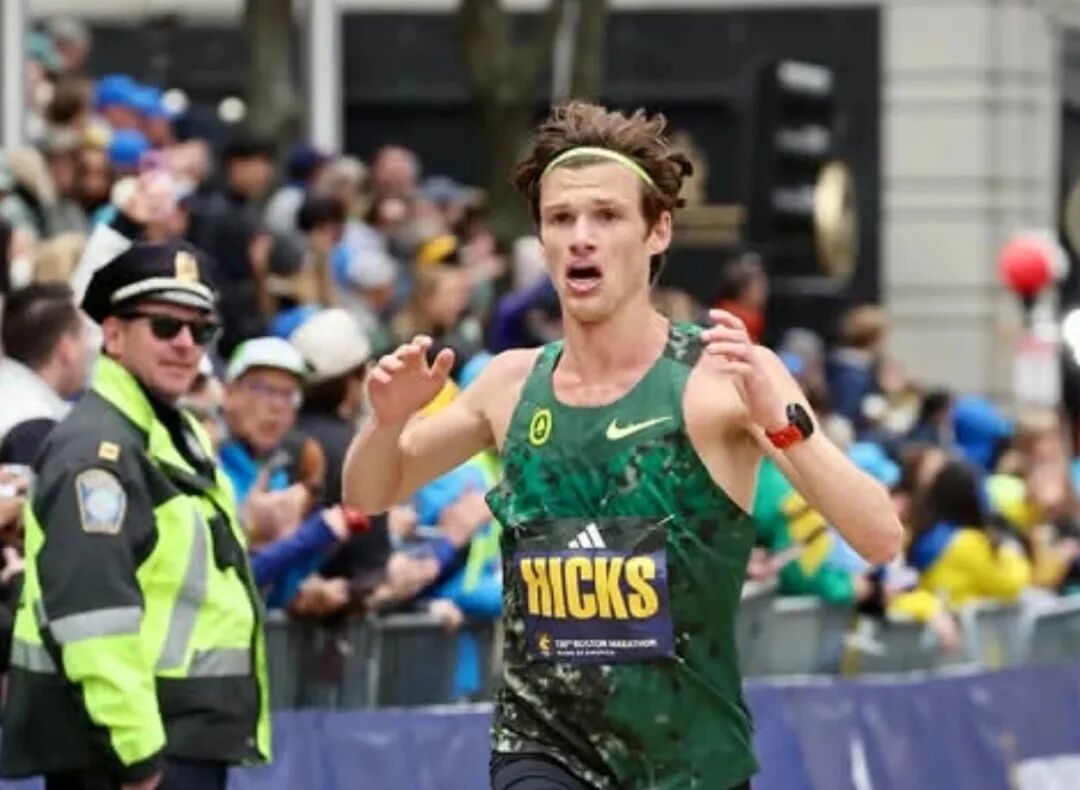
Additionally, Ford (2:05:46) and Clarke (2:05:56) both dipped under 2:06. Bear in mind that this was accomplished even with the United States' current top marathoner, Conner Mantz — who ran 2:05:04 here last year to finish fourth and set the U.S. national record of 2:04:43 in Chicago — withdrawing due to injury.
“There were five or six American runners today trying to push the pace, and in the end we had five people run into the 2:06 range — it's truly unbelievable,” Talbi said excitedly after the race. “I think this is just the beginning. If you can run 2:05, 2:04, or even my 2:03, you'd absolutely want to try a flat course to see if you can replicate that result, or go even faster.”
Talbi and Hicks are currently in the process of switching allegiance to represent the U.S. national team. Although they are not yet eligible to compete for the United States at international events, it is clear that at the U.S. trials for the 2028 Los Angeles Olympics they will be among the strongest contenders for places on the American team.
The men's superstar showdown was certainly eye-catching, but the women's competition was equally stirring. In this record-shattering event, the women's elites also capitalized on the excellent weather and delivered a high-quality spectacle.
Kenyan standout Sharon Lokedi demonstrated unrivaled command of the course. In the latter stages, when the race tightened, Lokedi unleashed a decisive attack on the downhill between 35 km and 40 km, producing a staggering 5 km split of 14:48 (with the 24th mile hitting an incredible 4:35 pace!).
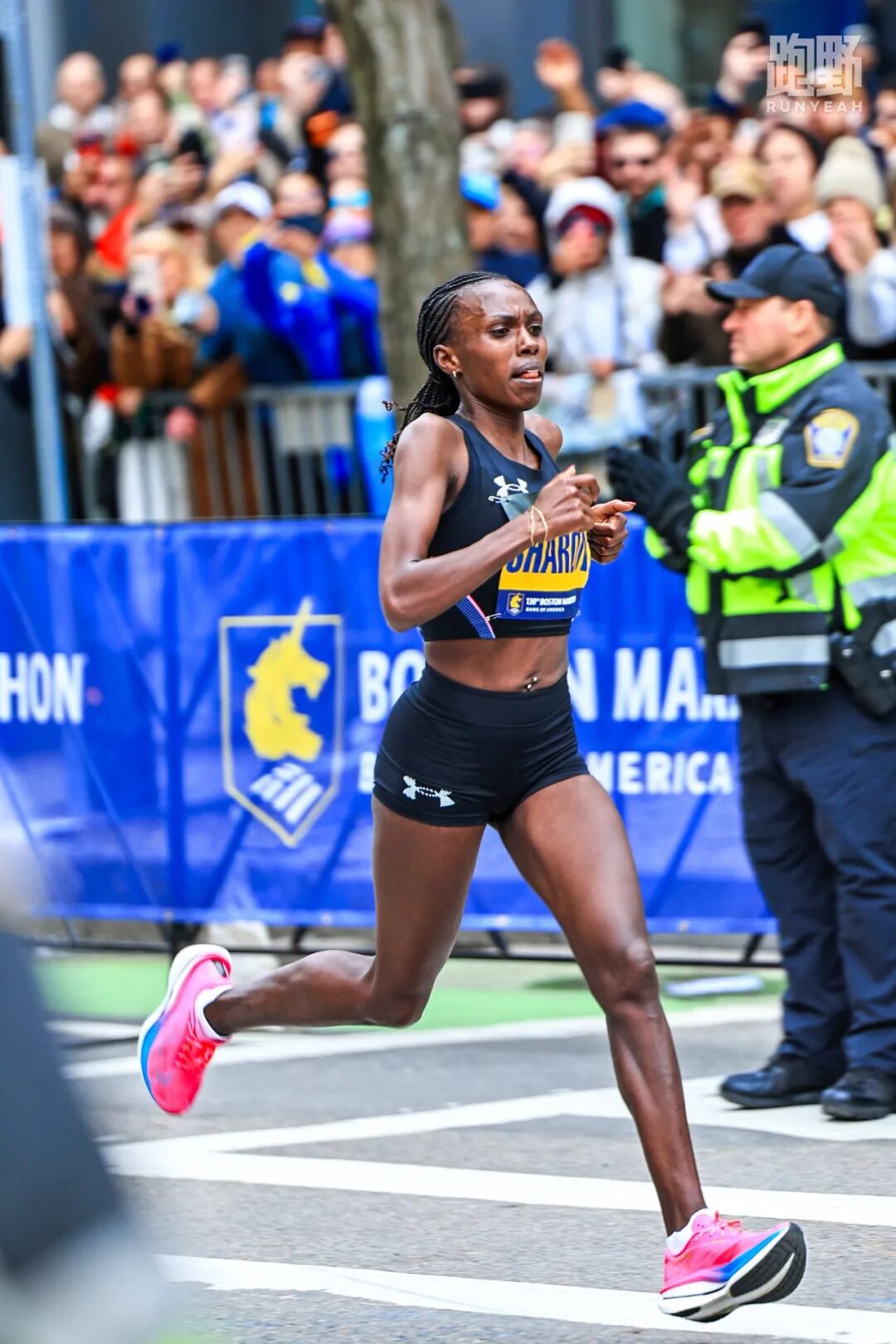
With that decisive surge, Luokedi successfully dropped all her rivals and powerfully defended the Boston Marathon women's title in 2:18:51. This is also the second-fastest winning time in Boston women's history. The runner-up was also Kenyan Loice Chemnung in 2:19:35, while third place went to Mary Ngugi-Cooper (2:20:07).
For the U.S. women's running scene, this was likewise a day to remember. American standout Jess McClain staged a brilliant "second-half comeback." With the aid of a tailwind, McClain ran a perfect negative split (first half 71:02, second half 69:47) and ultimately finished fifth in 2:20:49.
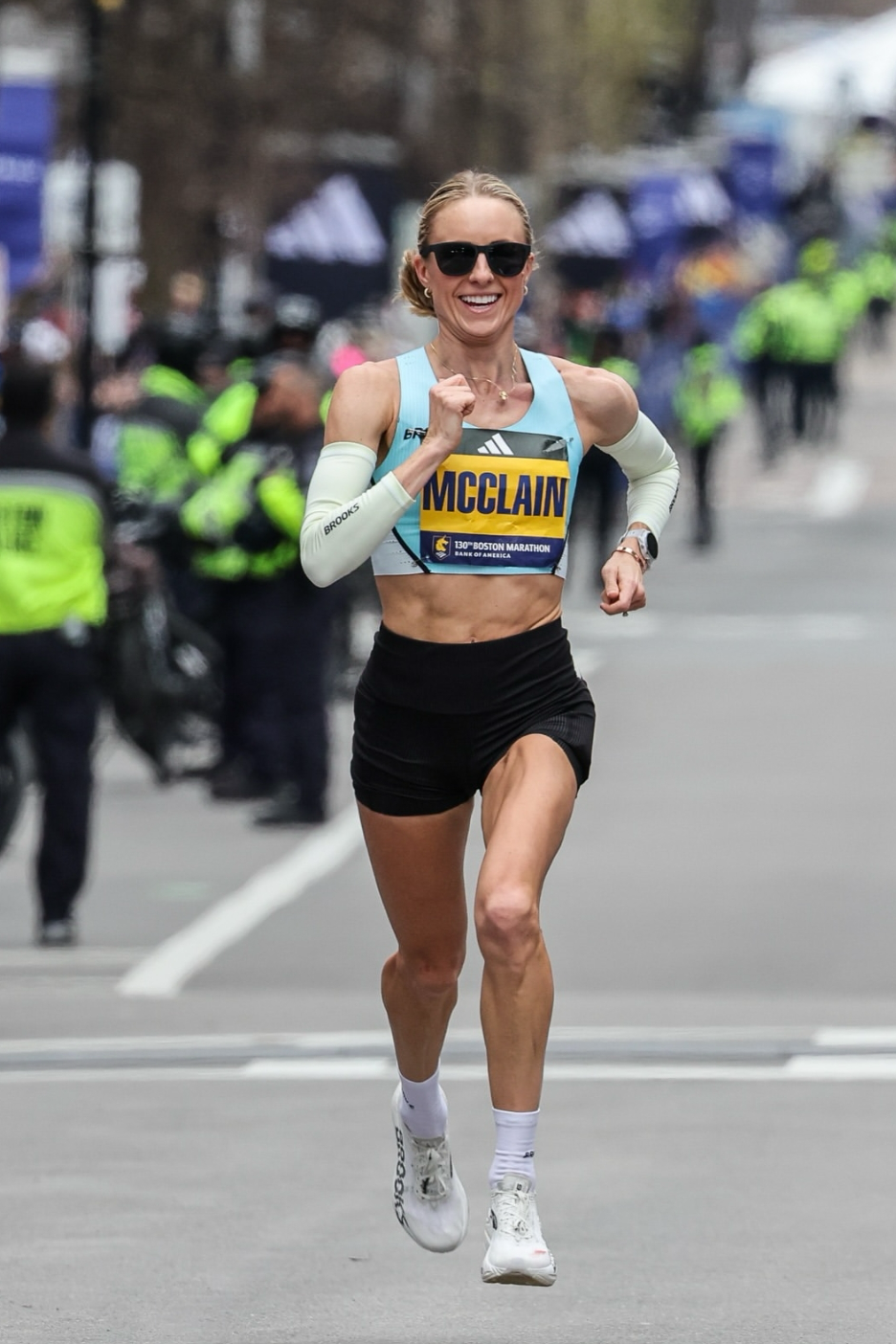
This performance broke the U.S. women's all-comers course record of 2:22:02 set by U.S. great Shalane Flanagan in 2014.
"The tailwind had a huge impact on our tactical plan," McLean said, visibly moved after the race. "You don't get this kind of dream weather every year. So if you want to go all-out (Full-send) and 'live in the moment, seize the opportunity' (Carpe diem), this year was definitely the best time."

The greatness of a marathon is often measured within a historical context. The 2026 Boston Marathon will, without question, stand alongside 1994 and 2011 as one of the three major milestones in this race's 130-year history.
In 1994, with similarly strong winds helping, Cosmas Ndeti ran 2:07:15 — just 25 seconds off the world record at the time — and led 11 runners to sub-2:10. In 2011, with winds reaching 20 mph, Geoffrey Mutai and Moses Mosop both posted times that were under the world record at the time by less than a minute (2:03:02 and 2:03:06), while Ryan Hall set the fastest time ever by an American to that point (2:04:58).
Although the 14 km/h winds in 2026 were not as fierce as those in 1994 and 2011, they were steady and sustained, directly producing an unprecedented depth (Depth) in Boston's history. Data show that across the previous 129 editions of the Boston Marathon, only 11 men in total had ever broken 2:06; yet on that single morning in 2026, as many as 13 men did it!
Among the day's top 20 male finishers, an astonishing 16 set personal PBs.
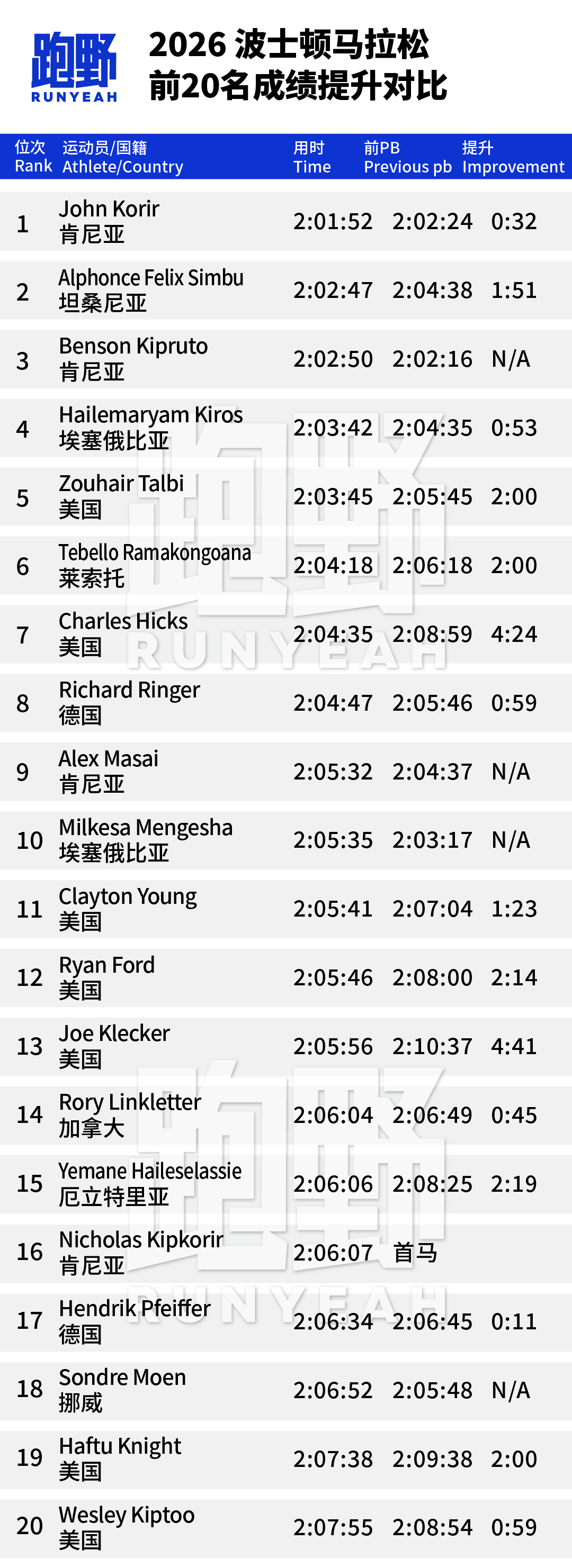
Of last year's top ten finishers, seven returned to compete this year (one withdrew), and their times this year were on average 2 minutes 07 seconds faster than in 2025.

However, behind this collective "Great Leap Forward" revelry, the brutal nature of marathon competition still remains. Canada's Rory Linkletter is a case in point. Today he ran a full 58 seconds faster than last year (2:06:04 finish), yet he was dismayed to find his placing had plunged from 6th in 2025 to 14th this year.
"It's a contradictory feeling — today I produced a B-level effort but faced A-level intensity," Linkletter said with a wry smile. He felt his fitness this year was far better than last year's and had hoped for a bigger breakthrough.
As a fellow elite, Linklater gave very high praise to champion Korir's performance, even suggesting Korir still had something left in reserve: "I fully believe that if Korir had wanted to run more honestly and harder in the first half, or if someone else had been willing to push him, he could easily have run an even 2 hours (2:00) today. I think John Korir is currently the best marathoner in the world."
In this perfect storm with no losers, whether it's immortal course records being smashed or a large group of elites collectively breaching new pace barriers, the 2026 Boston Marathon is destined to become a phenomenon-level battle that will be revisited and celebrated in the running world for decades to come.
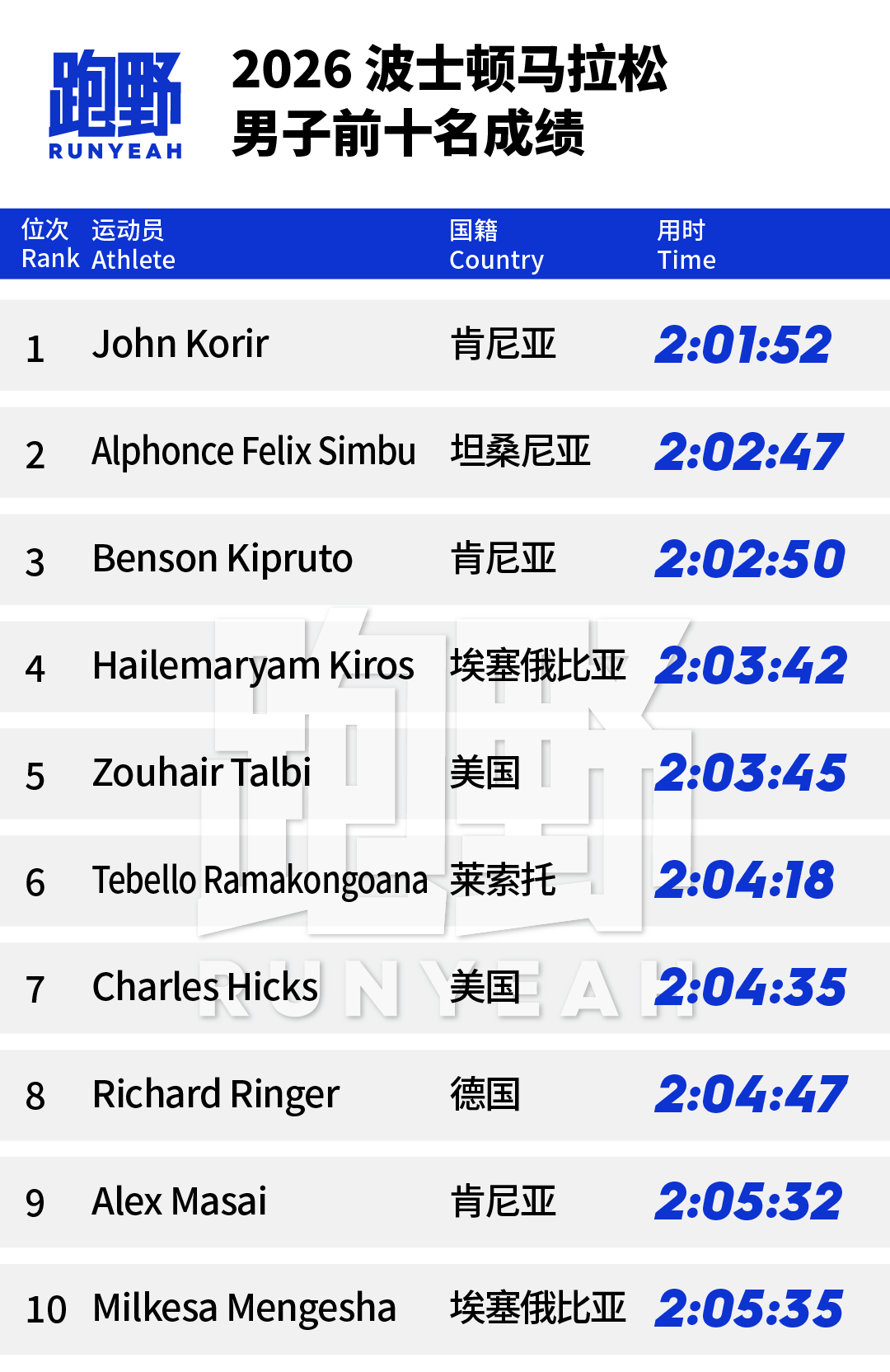
Appendix: Final Top 10 Results — 2026 Boston Marathon (Elite Field)
To fully convey the exceptional depth of what was the fastest race in history, below is the official final Top 10 results list for the event: