


STORYHome

What’s it like to be a U.S. national champion at 17?


At the long-distance running stronghold in Kapseret, Kenya, Savi has the striking nickname “the silent assassin.” And across the ocean in the United States, a 17-year-old boy is causing a stir on the world athletics stage in an equally “abnormal” way. He once dreamed of becoming the quarterback for the Dallas Cowboys; now he holds a World Indoor Championships gold medal and last weekend won the U.S. Championships.

He is Cooper Lutkenhaus, a name that has already rewritten American track history.


01

The “abnormal” teen and his “frantic” parents
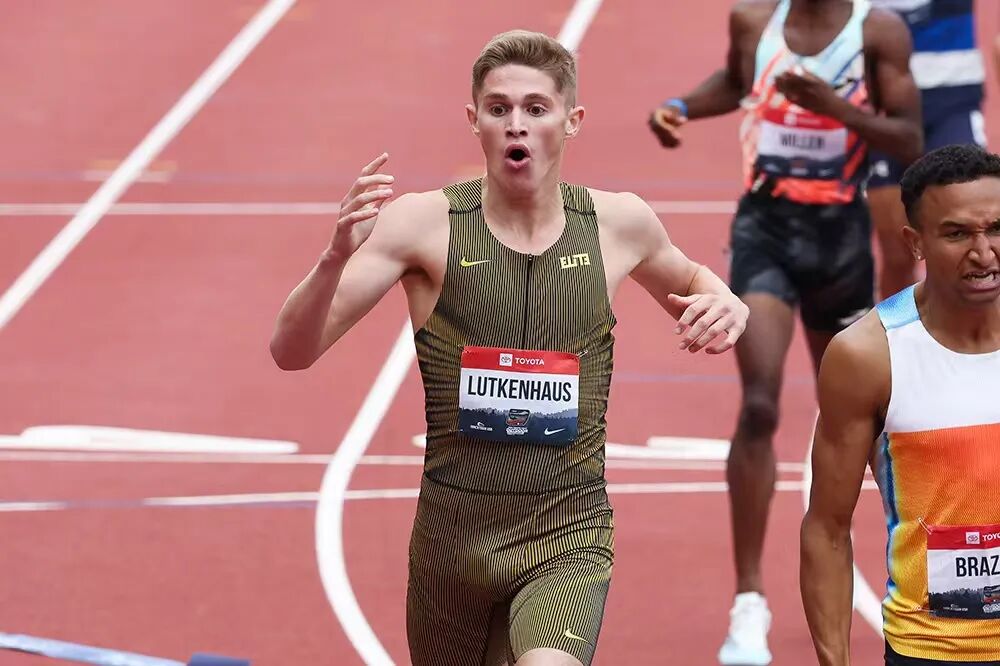

The story begins last summer. Immediately after the U.S. Track & Field Championships 800m final, the Lutkenhaus family was rushing to the airport. The car was tense, except for 16-year-old Cooper, who sat in the back with headphones on, seemingly detached. His mother, Tricia, couldn’t help asking her husband George: “Are you okay?”

“No, I’m not okay!” George answered, agitated. “What just happened was so abnormal! And he was just calmly sitting back there…”

Image source: ig@c


George’s anxiety was not without reason. Just hours earlier, Cooper had crossed the line in second place and earned the right to represent the U.S. senior men’s team at the World Athletics Championships in Tokyo. That alone was astonishing, but what stunned everyone most was his time: 1:42.27. That was more than a second faster than the previous U18 world record, and Cooper wasn’t even 17 yet.

George had run in college and is now the athletics director at Cooper’s Texas high school. Cooper’s mother Tricia is the school principal and was once a track star herself. They knew exactly what that performance meant — it was decidedly not “normal.”


02

From a football dream to world champion


The talent was real. Between 2018 and 2019,he joined the famed Nike Oregon Project under Alberto Salazar — at the time Sifan Hassan was also part of that training group. It was the daily, brutal work on the track during that period that laid the strongest foundation for her later breakout on the marathon roads.
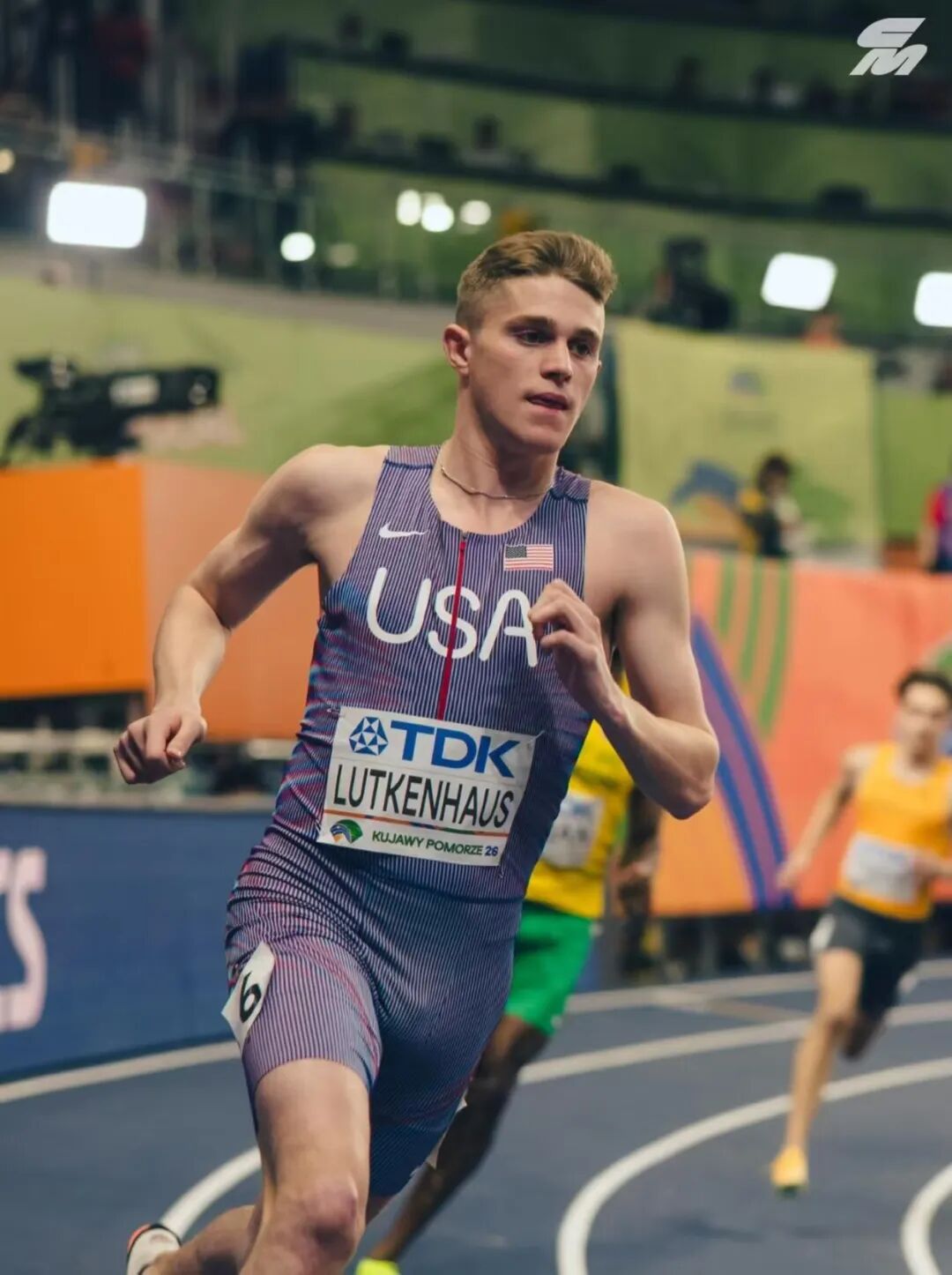

Cooper’s athletic gifts did not come out of nowhere. Both his parents have track backgrounds, so the family genes were full of potential. In eighth grade he could already run 800m in 1:53. But before that he was a multi-sport kid who hadn’t focused on track — he was passionate about football instead.

Image source: ig@c


“My brothers and I tried many sports,” recalled his older brother Andrew (Andrew Lutkenhaus). “But he was playing football in fifth grade — I didn’t start until seventh.”

Cooper admits he was a persistent 10-year-old. “The reason I could start football so early was because I nagged and nagged my dad. I’d say, ‘Please, please let me play!’” Back then track was not yet his dream. “I thought I’d play football forever.”

Did he even imagine becoming the Dallas Cowboys’ quarterback? “Yeah, that’s what I wanted. But when I ran 1:47 at 15, I thought, ‘Maybe not. Maybe I’m better at running. Time to hang up the helmet.’”

Image source: ig@c


From high schooler to world-class athlete, Cooper’s leap was almost a loss of innocence. George had mapped out a “normal” path for him: run 1:45 last year, then continue training at college with Andrew — who was about to graduate — acting as his assistant coach. But whenCooper ran 1:42, George’s heart skipped — there’s a universe of difference between 1:45 and 1:42..

Cooper “complained”: “You can blame my dad for entering me in the U.S. Championships! I was ready to rest. I had run 1:45 and broken national records twice; I was happy and felt there wasn’t much left to chase. My IT band was inflamed, but he said, ‘If you recover, we’ll give it a shot.’ I’d never run back-to-back 800m races (in heats and semis), so making the final was thrilling, and I thought, ‘One more race and I’m done!’ After finishing second I thought, ‘Wait — there’s another race?’ I asked my dad, ‘Are we going to Tokyo?’ He said, ‘Of course!’”


03

The new normal: world champion and anti-doping checks
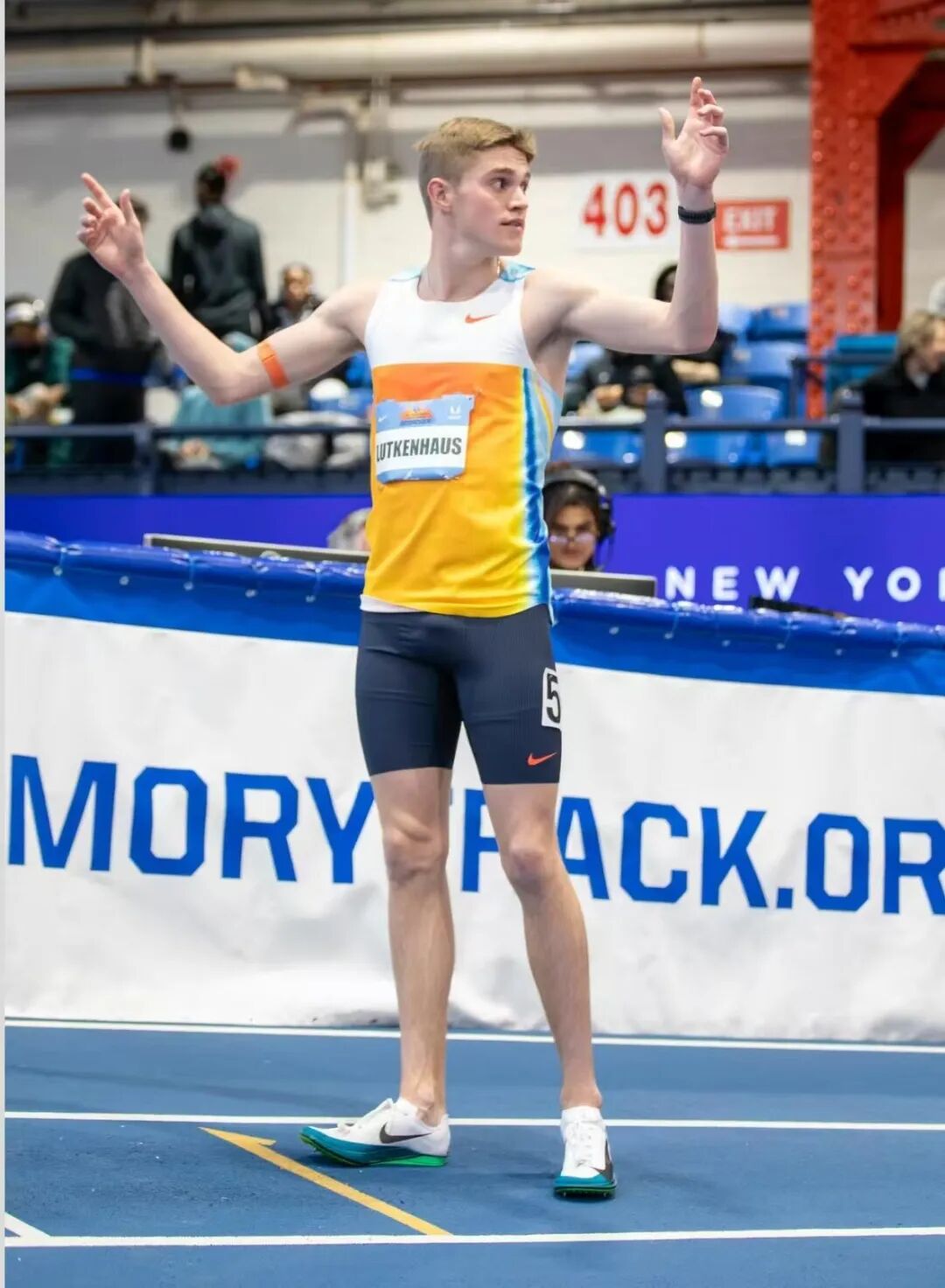

The joy came with George’s worry. “When he ran 1:42 I was excited for about 30 seconds, then I realized: ‘He won a medal, so he’s now in the testing pool.’” George was referring to mandatory doping tests. Elite athletes must be available for testing within a designated one-hour window each day — an essential responsibility, but a nerve-wracking one for any parent of a 16-year-old, because missing the required time can lead to a two-year suspension.

“I didn’t know what the testing pool was,” Cooper said. “I didn’t know how the ‘whereabouts’ system worked until one day I got a message: ‘Fill this out.’ That wasn’t the worst part. But in high school I might go hang out at a friend’s house and then need to ask, ‘Wait, what’s your address? How long will we be there?’” — suddenly going to a friend’s house involved compliance considerations.

Image source: ig@c


Although the Tokyo Worlds proved a bit beyond him — he was eliminated in a tactical opening round in 1:47.68 — in March this year he won the 800m gold at the World Indoor Championships in Toruń, Poland, becoming the youngest world champion in indoor track history, once again proving his star status.

This summer he beat Olympic champion Emmanuel Wanyonyi and 2023 world champion Marco Arop at meets in Oslo and Stockholm, and improved his personal best to 1:42.08, further cementing his strength.

At last week’s U.S. Track & Field Championships, Cooper won in 1:43.48, running a negative split (first 400m 52.26, second 400m 51.23) and finishing more than a second ahead of the runner-up — the largest winning margin in the U.S. Championships 800m since 2014.


04

Balancing superstar life and ordinary living
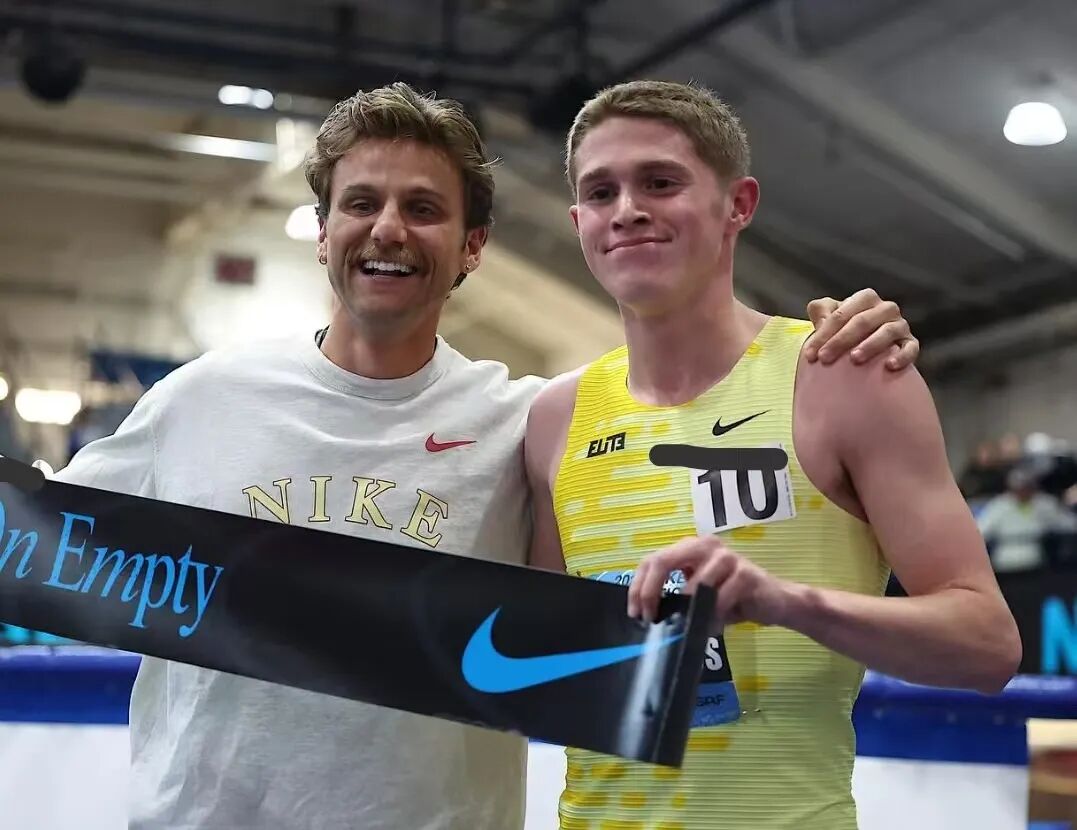

Now the Lutkenhaus family is adjusting to this “new normal” — a 17-year-old superstar living under their roof. Nike contracts need negotiating, anti-doping requirements must be handled, and being mobbed at European meets has become a “pleasant surprise.”

Of course, life is not entirely wrapped in a superstar halo. Cooper still trains with classmates from Northwest High, enjoys American history, and is considering majoring in exercise science in college. However, he no longer competes for his high school or plans to compete in college because he signed a contract with Nike and gave up amateur status.

Image source: ig@c


In Justin, north of Dallas, the Lutkenhaus family life still carries Texas warmth. When reporters visit, they’re invited to the nearby Lonesome Spur roadside café for breakfast after Cooper and Andrew’s morning run. Andrew himself has run 800m in 1:48.01, is currently studying at the University of Tulsa on scholarship, and serves as part of the family support system.


05

Looking ahead to Los Angeles 2028: pressure and focus


The arrival of the 2028 Los Angeles Olympics is likely to bring huge patriotic pressure and mainstream media attention to quiet Justin. Mary Decker-Slaney experienced something similar at the 1984 Los Angeles Games and ultimately buckled under pressure; Carl Lewis and Michael Johnson, by contrast, rose to the occasion and shone.

Given that the U.S. will host the Summer Olympics for the first time in 32 years, if Cooper can sustain his current upward trajectory, the Lutkenhaus family’s profile will undoubtedly far exceed the attention they received at small European stadiums.

Image source: ig@c


“I haven’t really thought about the Los Angeles Olympics yet,” Cooper said. “It’s not my focus. Obviously it’s in the back of my mind — it has to be — but right now I’m focused on the next training session. You can have a grand goal, but you need many small goals to get there step by step.”

George added: “For him, the most important thing is to stay healthy and get a series of high-quality training sessions in. He understands very clearly that when it comes to pressure, the only real pressure is the pressure you put on yourself.

As for outside noise, “we sometimes see comments online and say, ‘Can you believe what this person said?!’ and then we just laugh it off. Some people try to avoid it, but I think it’s unavoidable. You have to deal with it the right way.”

Image source: ig@c


Cooper nodded: “You can’t let people who ran 2:00 in high school tell you how to do it.”

Indeed. When you can run 1:42 at 17 and beat Olympic champions, you don’t need keyboard warriors’ advice. Besides, next year he’ll still be graduating high school, going to prom, hanging out with friends, and doing homework.

This “extraordinary-yet-ordinary” Lutkenhaus family will likely become a global phenomenon for a long time to come. The Beijing World Championships, the Los Angeles Olympics — perhaps they belong toCooperLutkenhaus’s story is only beginning.


[End interaction]

Do you think he can become the 800m champion at the Los Angeles Olympics?#


Text/Editor: RunYeah/Cia

Image source: online

Visuals: Max


RUNYEAH 跑野大爆炸
RUNYEAH
RUNYEAH · RUN WILD RUN FREE
Content from WeChat Official Account RUNYEAH
© 2026 跑野大爆炸 RUNYEAH. All rights reserved.