
Last summer, adidas (adidas) senior apparel designer Patrick Jacobson(Patrick Jacobson)派遣了一个团队前往肯尼亚,向包括世界纪录保持者塞巴斯蒂安 Sawe(Sabastian Sawe)在内的顶尖马拉松选手,展示了品牌耗时近十年研发的创新跑服——Techfit Endurance Suit.
After the demonstration, team members sent a memo back to the company headquarters located in southern Germany (Herzogenaurach), reporting the runners' reactions.
The memo began with the following:"We showed them this racing kit, and then they all laughed."
In fact, Jacobsen's reaction to this was not unexpected. The Endurance Suit,is a tight, structured bodysuit that covers from the shoulders to the knees. It combines in-depth biomechanical research and cutting-edge materials technology, using thermoplastic polyurethane(TPU)strips to stabilize the pelvis and hips. adidas claims this design can effectively reduce fatigue during long-distance running and improve by more than 1% in running economy.
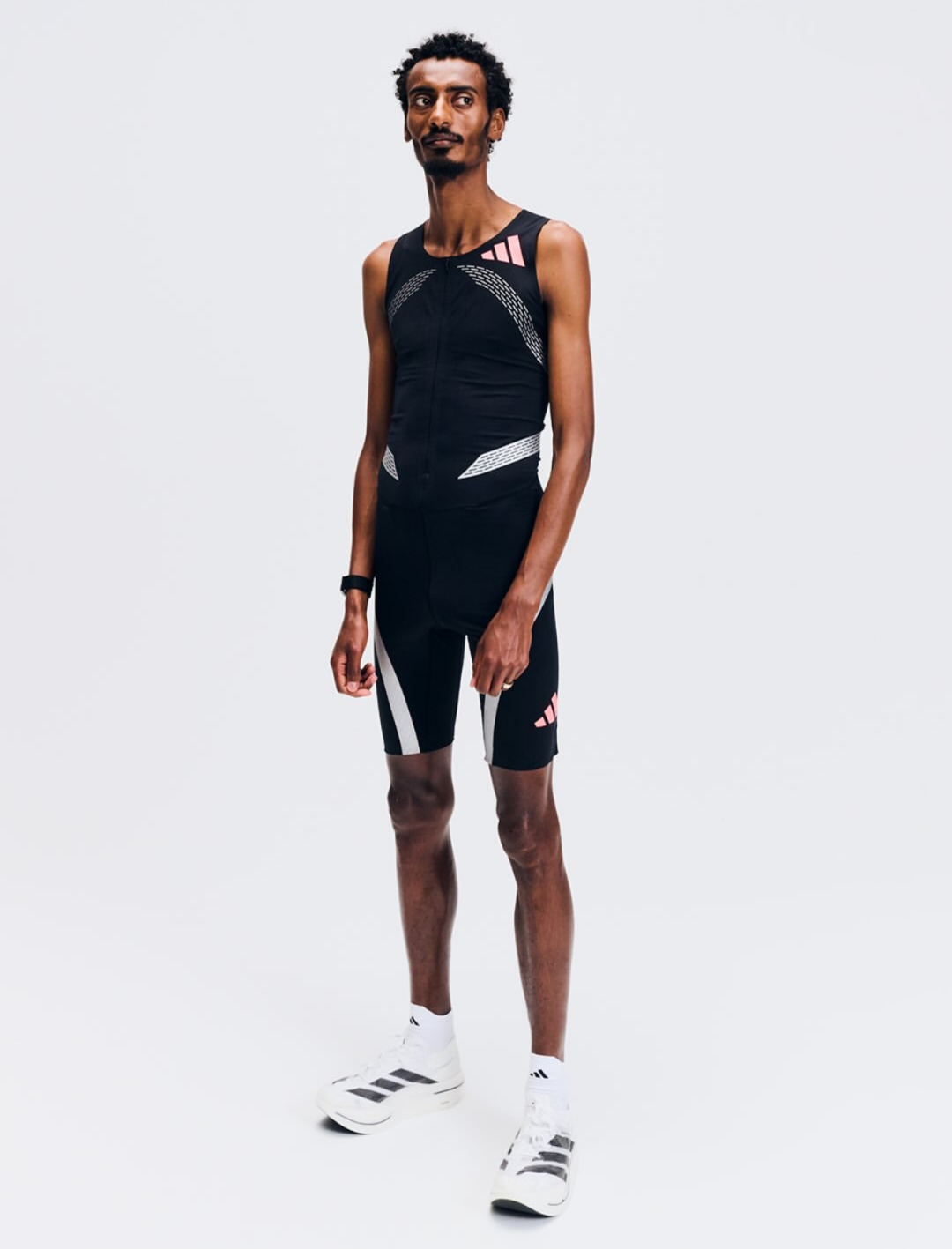
This kit is worlds apart from the shorts and singlets favored by elite runners (many of them from Kenya and Ethiopia)."Every time we showed this kit to the athletes, they would burst out laughing,"Jacobsen recalled,"several times this kit nearly'died before it ever got off the ground'."
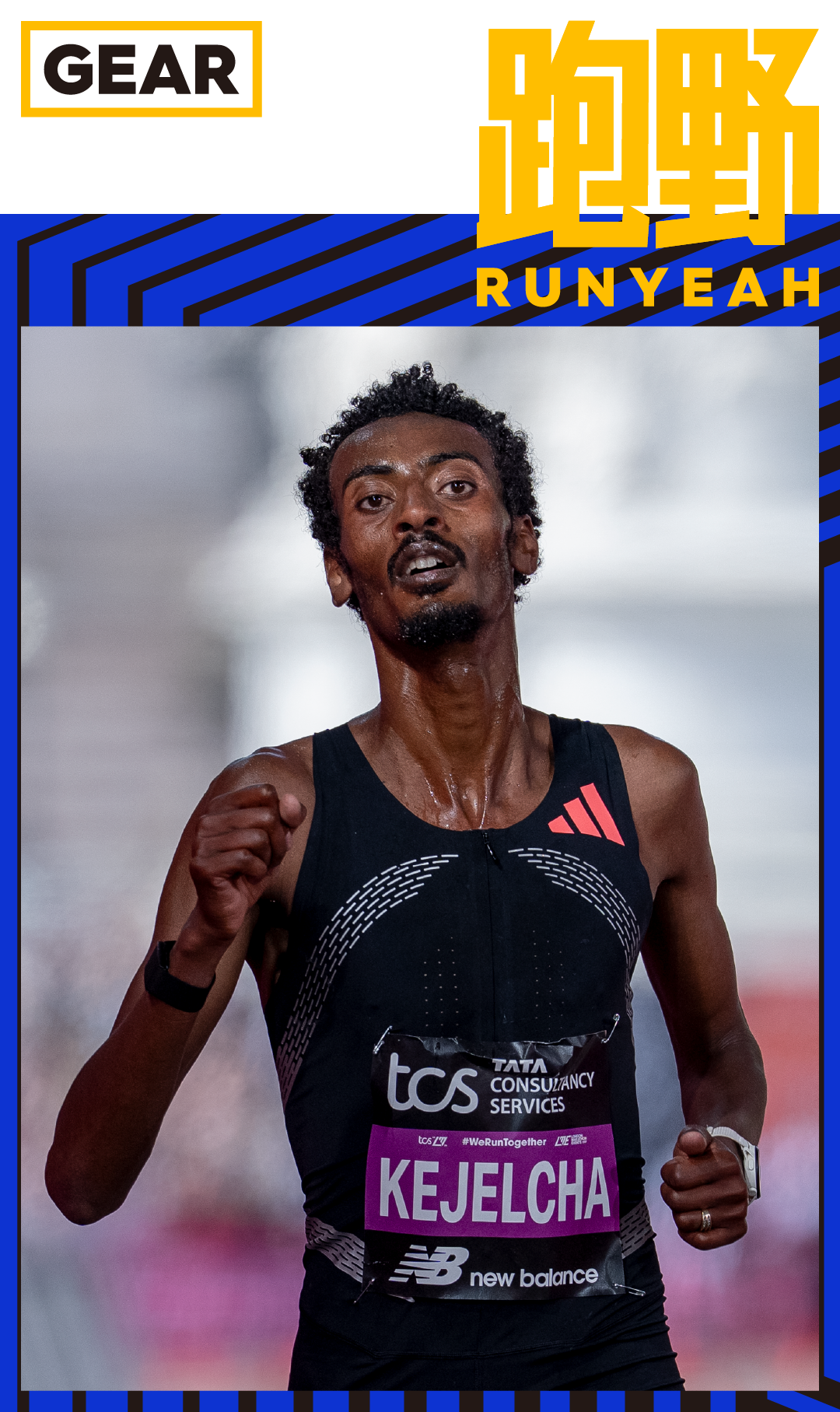
However, just last month, two adidas-sponsored athletes——Sawe (Sawe) and Yomif·Kejelcha (Yomif Kejelcha)——at the London Marathon, finished respectively in 1 hour 59 minutes 30 seconds and 1 hour 59 minutes 41 seconds, becoming the first men in history to complete a marathon in under two hours.
Before the race, Sawei had been training in Endurance Suit and seemed likely to race in it. It wasn't until Jacobsen saw him at the start line wearing a vest and black shorts that he realized Sawei had ultimately abandoned the suit.
“I thought, today isn't the right time.”Jacobsen told himself.
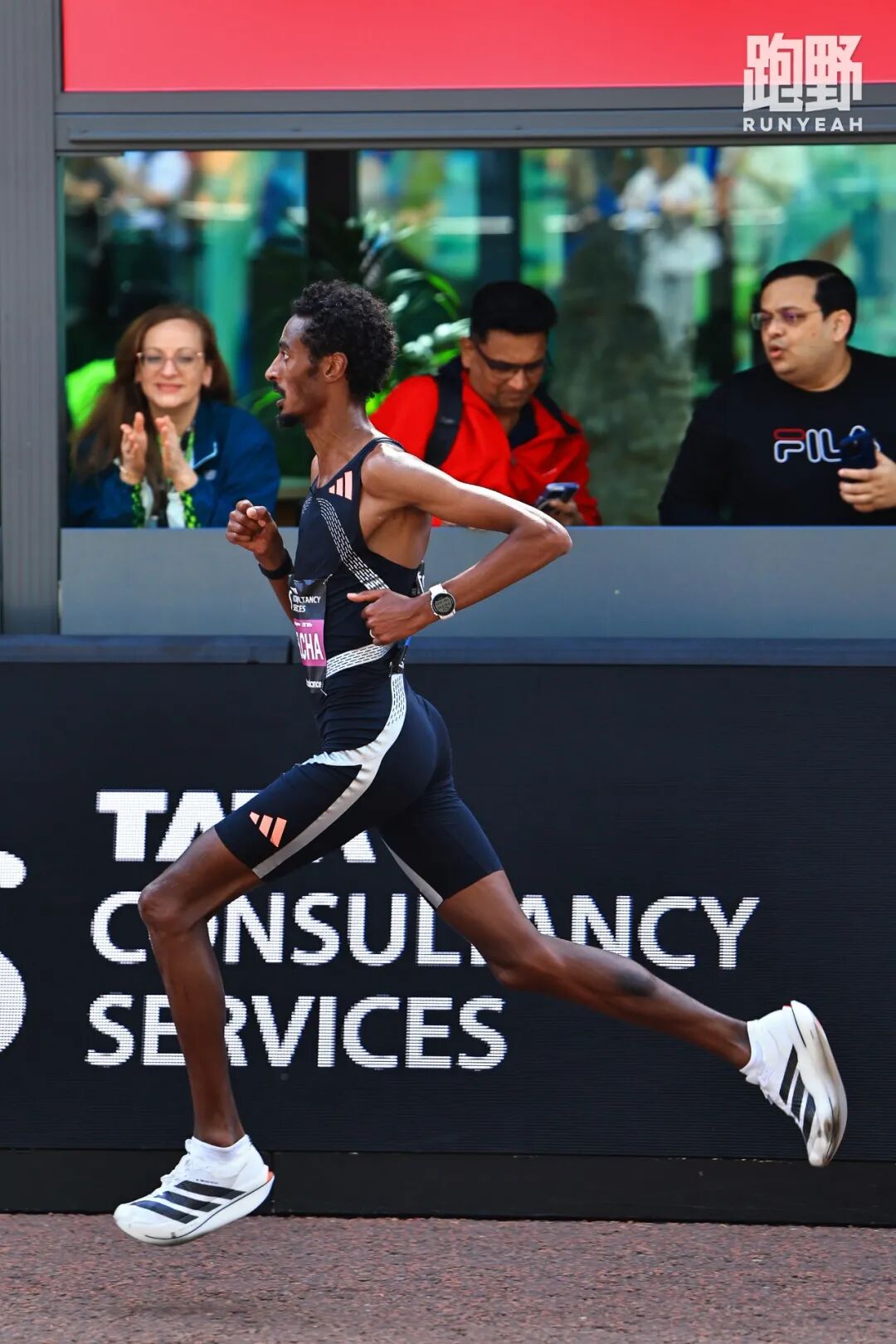
But surprisingly, Kejelcha (Kejelcha) chose this racing kit.
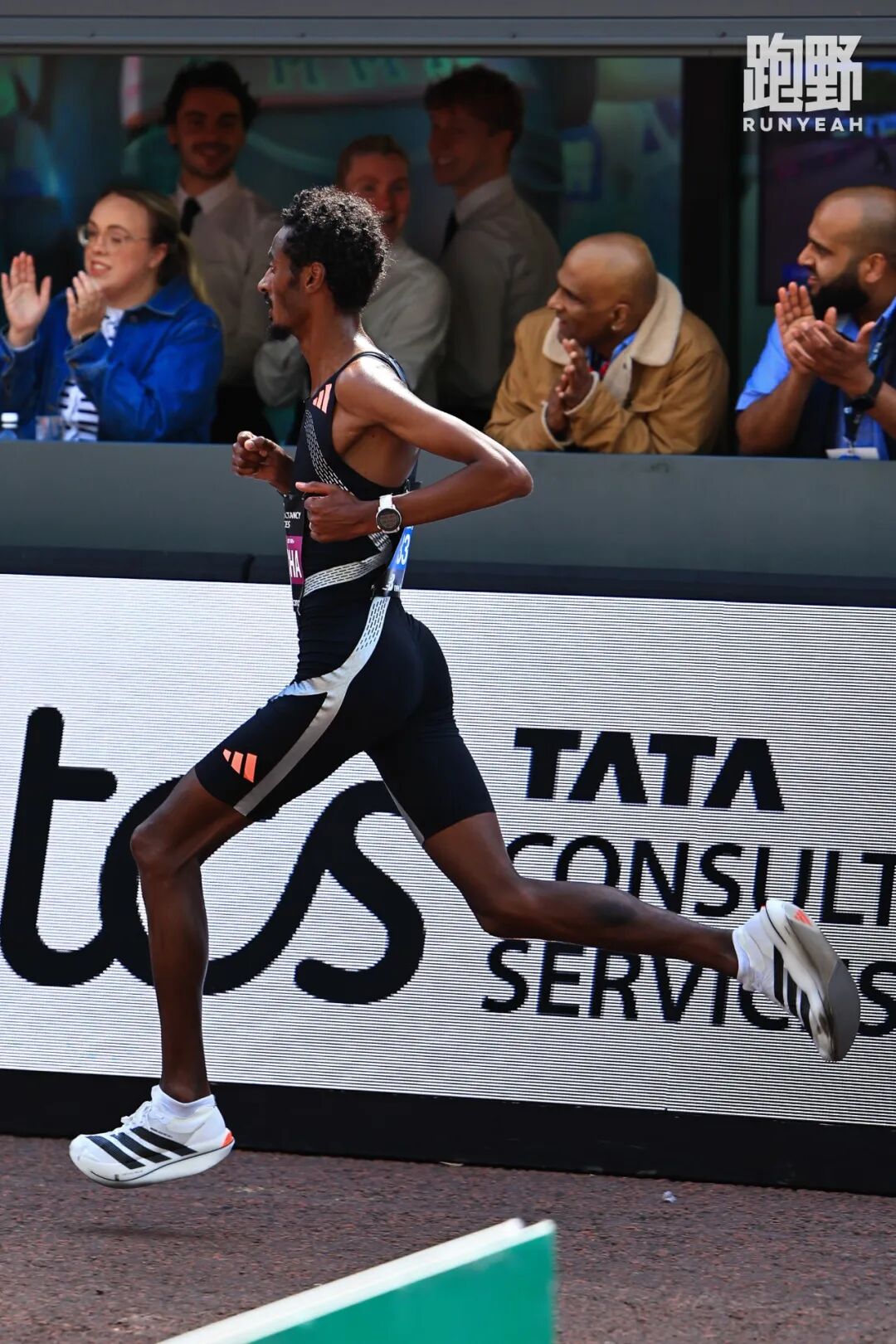
"When I first saw this kit, I wanted to wear it in training,"Kejelcha said,"I could feel the support it gave my hips and back, so I decided to wear it in the race as well. For me, it's very special."
Although we cannot precisely quantify how much this suit affected Kejelcha's performance, if we calculate based on an estimated 1% improvement, then this 1% difference would be enough to distinguish between his 1 hour 59 minutes 41 seconds and 2 hours 01 minutes 00 seconds. In other words,Endurance Suit very likely was the crucial“driving force”, helping Kejelcha surge across the finish line before the historic two-hour mark.
In fact, apparel designers long ago realized there was huge potential to improve the performance of runners' apparel. As early as the late 1980s , Nike's sport research laboratory director Martyn Shorten(Martyn Shorten)就提出了一个名名为“zonal aerodynamics”的概念。
He believed that runners could benefit from a full-body"race suit" to their benefit, with each body region using different materials to cope with the varying airflow and drag produced during motion. However, the technology at the time was not mature enough to realise this idea, so the concept was shelved until 1999, when Nike revived it while preparing for the Sydney Olympics.
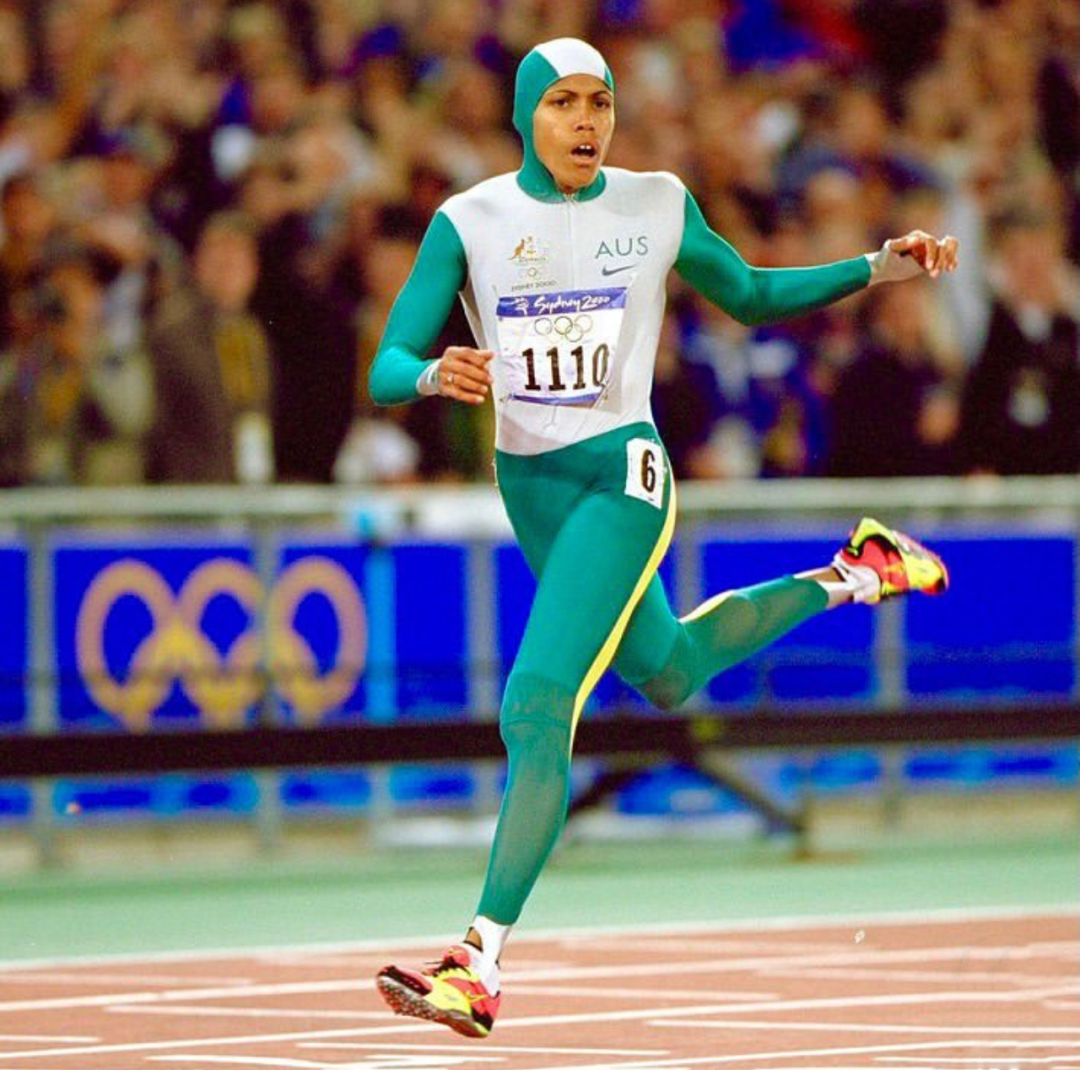
At the Sydney Olympics, Nike introduced Swift Suit, a hooded polyurethane-coated one-piece suit. Australian sprint star Cathy·Freeman(Cathy Freeman)wore this suit to win the women's 400 meter gold medal.
This bright green, streamlined Swift Suit looks like an astronaut's or superhero's outfit, but its purpose is not aesthetic; it's purely mechanical performance."The basic premise is that the skin itself is'slow',"Former Nike aerodynamics researcher Jorge Carbo (Jorge Carbo) explained,"If you cover the skin with the right texture, you'll get a better boost."
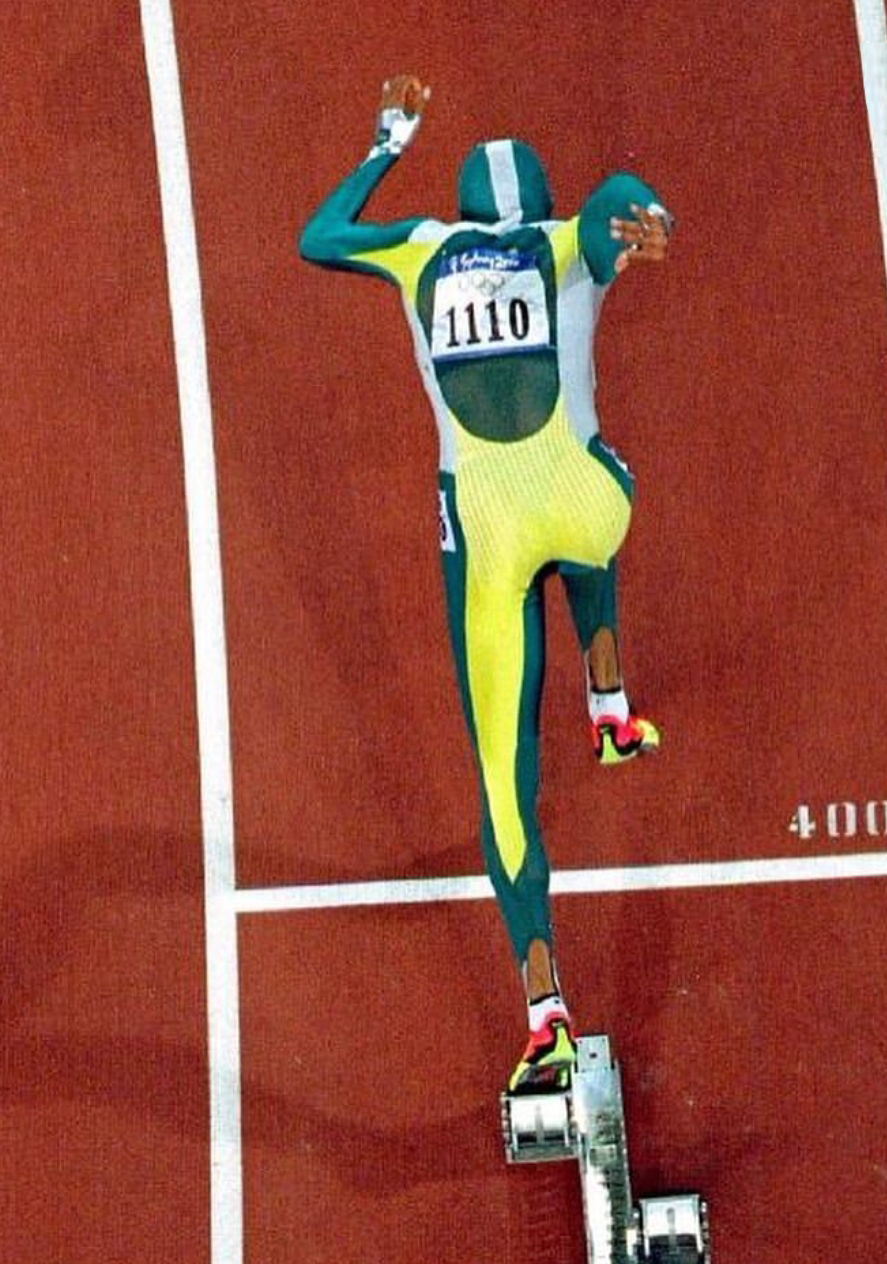
Although Freeman (Freeman) won, Swift Suit never really caught on——partly because runners disliked the restrictive feeling, and partly because the measurable benefits it delivered were negligible.
However, these findings were quickly applied to other, faster sports, including cycling and speed skating. In those disciplines, garments using zoned aerodynamic principles Swift Suit -style garments became the norm."It performed brilliantly in speed skating,"Nike Sports aerodynamics consultant Len Brownlie(Len Brownlie)said,"At 2002 Salt Lake City Winter Olympics, the male skaters wearingSwiftskinsuits swept all the gold medals. It really worked; I think it changed the sport."
In running, Nike has turned its focus to providing aerodynamic support through other means."No one is going to wear a full-body suit just to run a two-hour marathon," Carbo(Carbo) said, "So we started thinking about how else we could apply those textures to the skin."
They developed an aerodynamic tape called AeroSwift that can be applied in thin strips to the arms and legs, and also designed mid-length tights with aerodynamic nodules distributed along the thighs.
In 2017 when Eliud Kipchoge attempted to break the two-hour marathon barrier at Nike's Breaking 2 challenge, he wore AeroSwift tape and three-quarter tights.
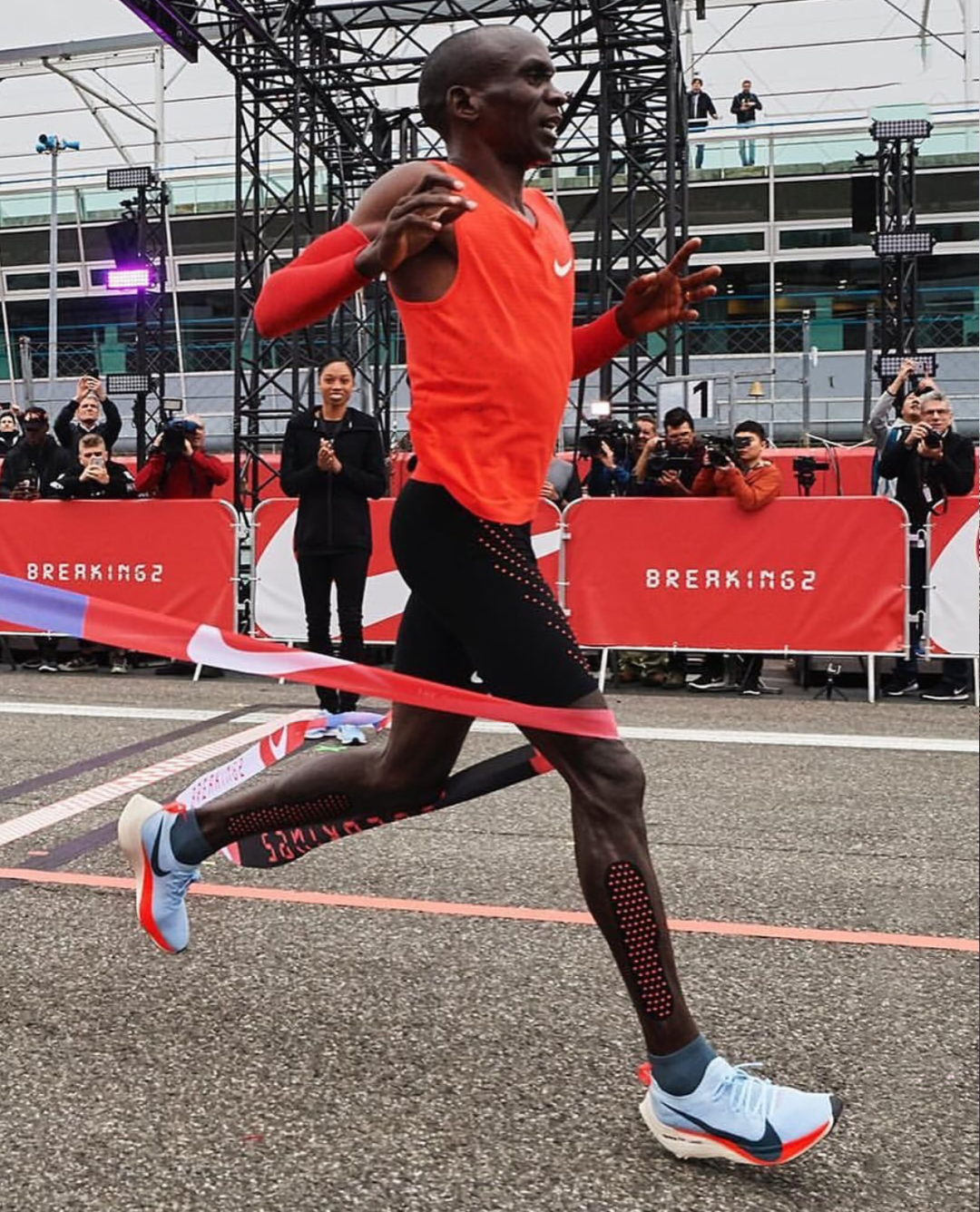
Adidas' Jacobson(Jacobson)said this was a breakthrough. "Before Eliud(Eliud)ran Breaking 2 we tried to get our marathon athletes to wear mid-length tights, but they simply ignored us," he said. "They either wear split shorts, or nothing at all.
But when Eliud Kipchoge(Kipchoge)nearly broke the two-hour barrier, and did so wearing tights, only then did runners realize:'Alright, maybe there's something to it.'If it weren't for Eliud Kipchoge(Kipchoge)'s example, wearing a full-body suit in the marathon——would have been pure fantasy.
Jacobson said that although the Breaking 2 attempt did not succeed, it inspired Adidas. It pushed his team to look beyond aerodynamics for other ways apparel could improve performance, including cooling, airflow and more precise structural support.
A few years ago they developed a pair of graduated-compression tights intended to delay fatigue by promoting blood flow in the legs, but the project became costly because of expensive woven materials from an Italian supplier. Jacobson said that although he learned a lot from it, the project “did not achieve the expected results.”
About four years ago, adidas athlete performance manager Jessica G. Hunter (Jessica G. Hunter) began researching the effects of "rigid support elements" in endurance running apparel. At the time, internally the company was skeptical that apparel could have a significant impact in the marathon."Leadership didn't believe we could improve running economy through apparel," Hunter said,"because no one had successfully done it before."
Hunter found that these stabilizing elements help runners go faster and last longer."We're trying to leverage the connection between the muscles that stabilize the pelvis and trunk and the muscles that stabilize the hips, and how those muscles coordinate to provide pelvic and hip stability,"she said,"To do that, you have to have a structure that covers the whole body. And the only way to achieve that is to wear a full bodysuit."
Her work was then handed over to Jacobsen's team in Germany, who fine-tuned these laser-cut TPU strip support elements to find"the optimal balance between science and performance, while also ensuring comfort," Jacobsen said.
Jacobsen said the completed Techfit Endurance Suit can"correct and enhance"an athlete's running form during competition. Its function is similar to the high-tech LZR Racer swimsuit launched by Speedo in the late 2000s, which reinforced swimmers' abdominal muscles and helped them maintain a more horizontal position in the water.
LZR Racer swimsuit was so effective that it was banned from competition as soon as it debuted—Although dozens of world records had already been set with the help of that suit, the emergence of in the late 2010s"super shoes" prompted the emergence prompted World Athletics to introduce new rules banning running shoes with sole thickness exceeding 40 millimeters and with more than one carbon plate, but currently marathon running has no specific regulations on clothing. These "super suits" are currently completely unregulated, perhaps partly because few top runners actually adopt them.
"We had hoped to build a kit so revolutionary that people would go crazy for apparel the way they do for running shoes,"Hunter said.
"So far it hasn't happened, which is a bit disappointing,"she admitted,"If Kejelcha hadn't finished second, this racing kit might not have attracted so much attention."