
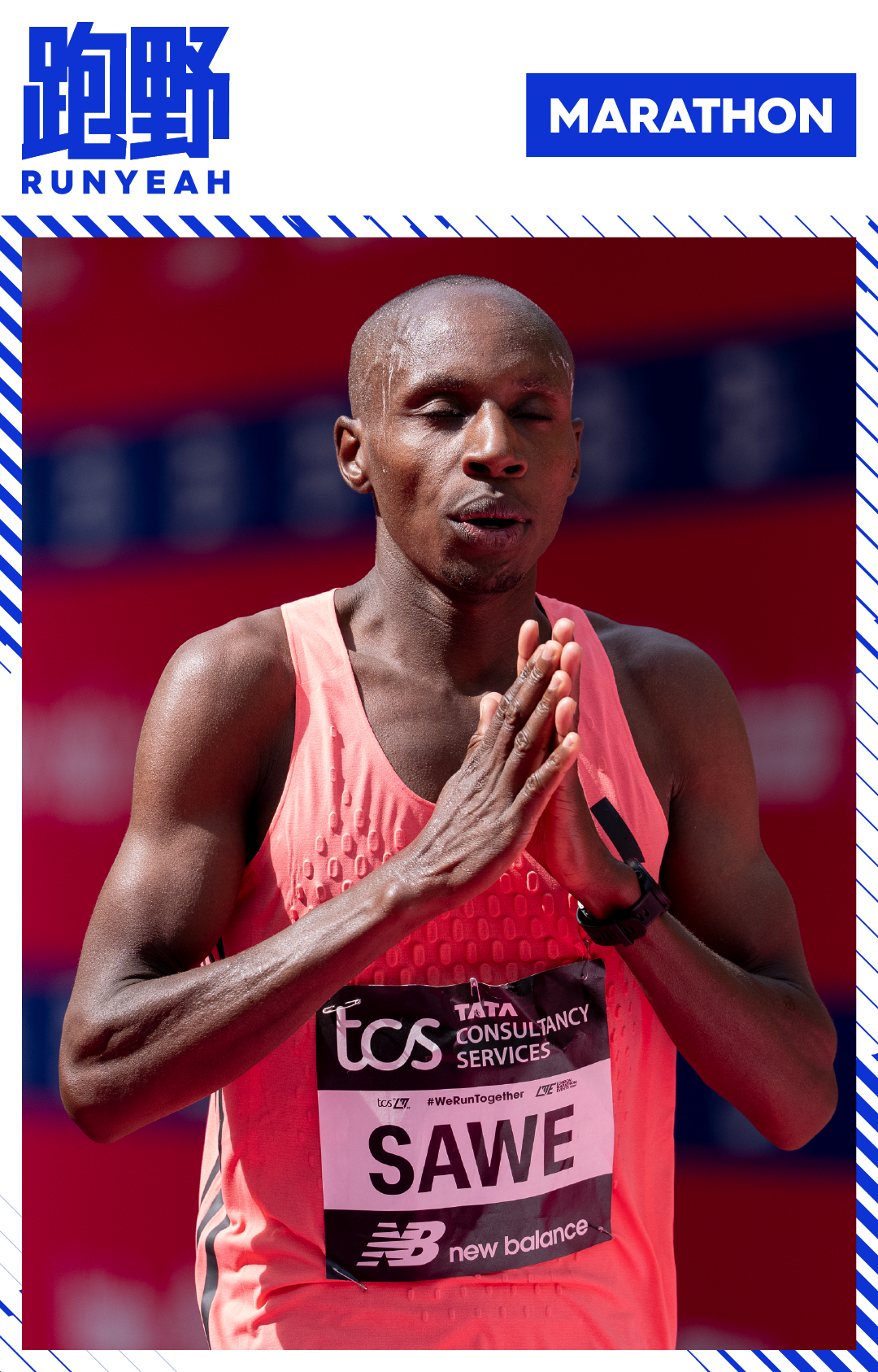
How far can the mortal human body push its limits?
In the history of athletics, some numbers have stood like forbidden zones set by the gods, long looking down on human ambition and the bounds of science. In 1954, Roger Bannister broke the medical superstition of running a mile in under 4 minutes; in 2009, Usain Bolt stunned the world by fixing the human 100m limit at 9.58 seconds.
And in long-distance running, breaking 2 hours for the full marathon (42.195 km) has long been hailed as the supreme "Holy Grail" of marathon sport. This is not only the ultimate test of physical ability, but a seemingly insurmountable chasm spanning exercise physiology, biomechanics, and human imagination.
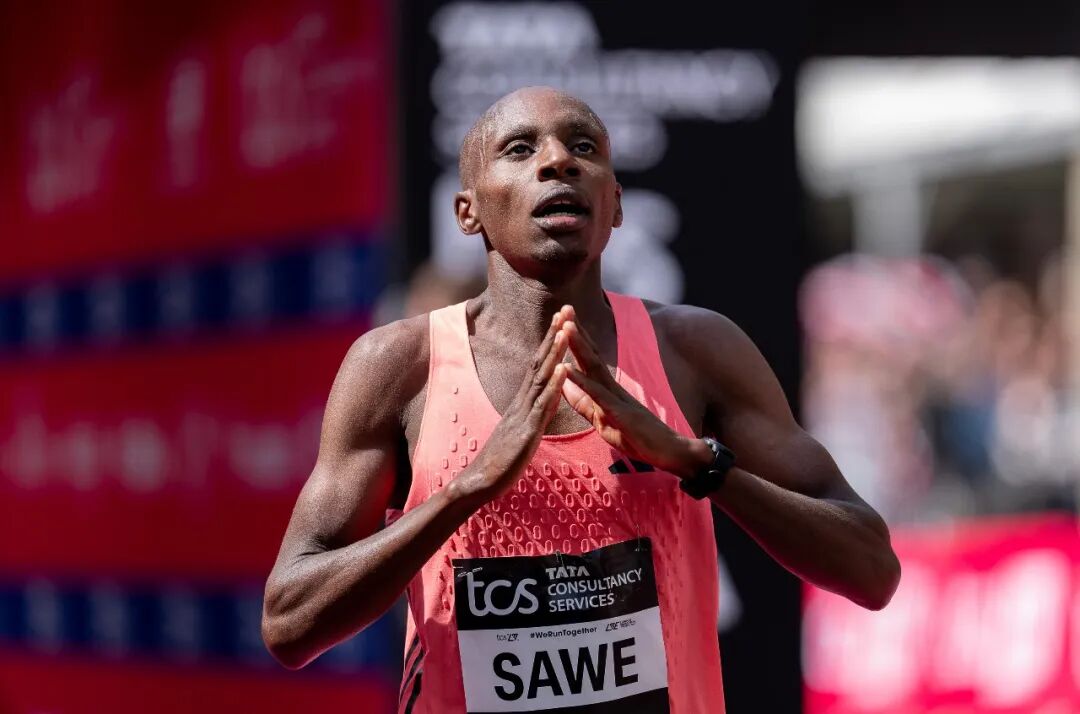
However, when the date arrived on April 26, 2026, in London, United Kingdom — a day destined to be written into the annals of human history. At the globally watched 2026 TCS London Marathon, 31-year-old Kenyan star Sabastian Sawe (Sabastian Sawe) displayed an almost violent and ruthless level of form, shattering the ultimate barrier that had haunted humanity for more than half a century.
1 hour 59 minutes 30 seconds!
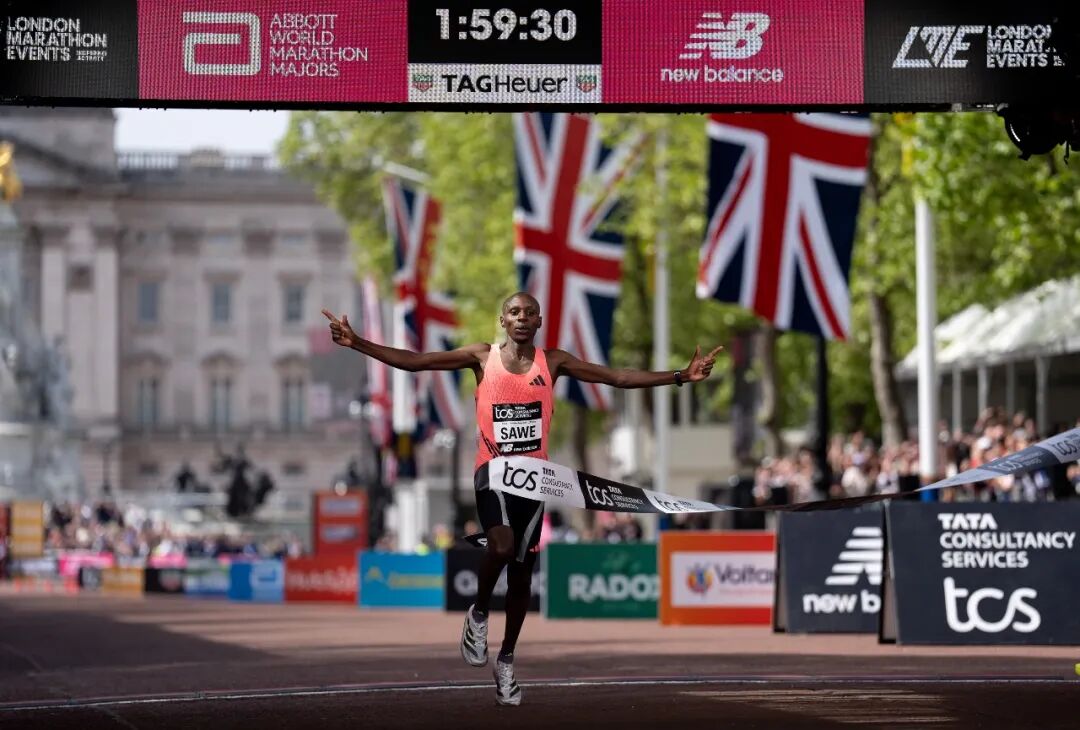
Not only did he successfully defend his title, he also — in a World Athletics–certified official race — became the first legitimate marathoner in human history to break the 2-hour barrier! Sawe didn't just lower the world record of 2:00:35 set by the late prodigy Kelvin Kiptum (Kelvin Kiptum) at the 2023 Chicago Marathon by a full 1 minute 05 seconds; he was even a full 10 seconds faster than Eliud Kipchoge's (Eliud Kipchoge) 1:59:40 performance in the unratified 2019 Vienna sub-2 challenge!
This is a pulse-pounding moment that will make any running-loving soul tremble. Today, let’s deep-dive into this race destined to be remembered for centuries, dissect Savina’s astonishing pacing data, and step into the little-known, tumultuous preparation of the new-generation marathon god nicknamed “The Silent Assassin.”

To gauge how monumental Savina’s 1:59:30 was, we have to turn back the clock and look at what sacrifices humanity has made in pursuit of this target.
For a long time, exercise physiologists have insisted that, based on humans’ limits in maximal oxygen uptake (VO2 Max), lactate threshold, and running economy, a human breaking 2 hours in an official, non-assisted marathon would not happen until around 2075 or even later.
To break that cold scientific prediction, marathon legend Eliud Kipchoge twice mounted assaults on it with the scale of research projects. In 2017, as part of the "Breaking 2" program on the Monza circuit in Italy, he ran 2:00:25; in 2019, during the "INEOS 1:59" challenge in Vienna, he finally ran 1:59:40 and showed the world "No Human is Limited".
However, those two challenges used rotating pacemaking formations, a pace car that projected a laser-guided pace line, and bike-to-hand water delivery throughout, so under strict World Athletics rules the performances could not be ratified as official world records.
A genuine sub-2 in an official race remains a perilous no-man's-land.
In October 2023, prodigious newcomer Kelvin Kiptum burst onto the scene; at the Chicago Marathon he ran a stunning 2:00:35, bringing humanity to within a mere 36 seconds of that barrier. The whole world held its breath, hoping he would make that final leap in the years to come.
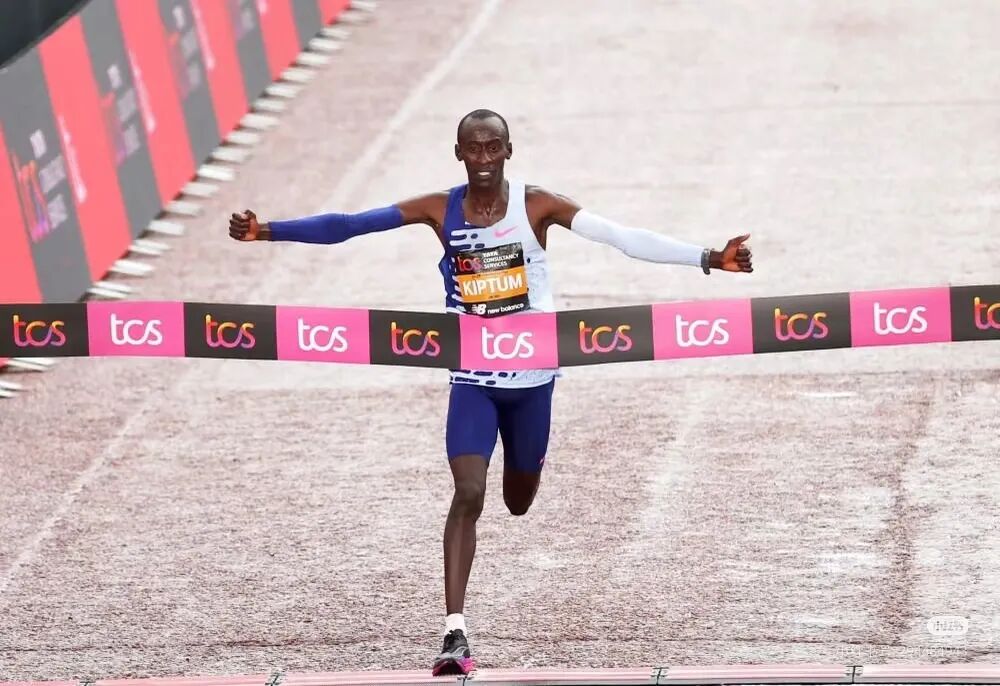
However, fate played an extremely cruel joke: a car crash in February 2024 took Kelvin Kiptum’s young life, plunging the entire marathon world into immense grief and bewilderment. The heavy task of "breaking 2" seemed to have lost its sharpest spearbearer overnight.
Until Sebastian Savi appeared. This late-blooming Kenyan great may not have shone as brightly as Eliud Kipchoge before, but he took up the heavy baton of history with a flawless, perfect performance.

In Kenya's famed long-distance stronghold, the Kapsabet training camp, Savi has a resonant nickname — "The Silent Assassin". He is not a man of many words, rarely speaks at length to the media, and seldom courts attention on social platforms; he pours all his edge and sharpness, without reservation, onto the asphalt.
Looking back over Savi's marathon record, it's practically a flawless piece of art. Before arriving in London 2026, he had run only three full marathons but maintained a terrifying 100% win rate. In his 2024 debut at the Valencia Marathon he stunned the field with a 2:02:05 victory; in 2025 he was crowned at the London Marathon with 2:02:27; that autumn he also won the Berlin Marathon under unusually hot conditions. Despite his glittering results, the notion of breaking 2 hours seemed, before the race, to have little to do with him.
In fact, Savi's road back to London was strewn with thorns and despair. His legendary coach Claudio Berardelli told the media that Savi suffered a metatarsal stress fracture after his Berlin victory last year. For marathoners, a foot fracture usually means months of complete rest. As if that weren't enough, after a difficult rehab in December he was forced to stop training entirely for 10 days due to severe back discomfort.
It wasn't until February 2026—less than three months before the London Marathon—that Savi truly began a systematic, high-volume buildup and specialized high-intensity training program.
“We will not utter the words ‘world record’—our goal is simply to keep the title, perhaps try to challenge Kiptum's 2:01:25 London course record from a few years ago.” The coaching team deliberately downplayed external expectations before the race.
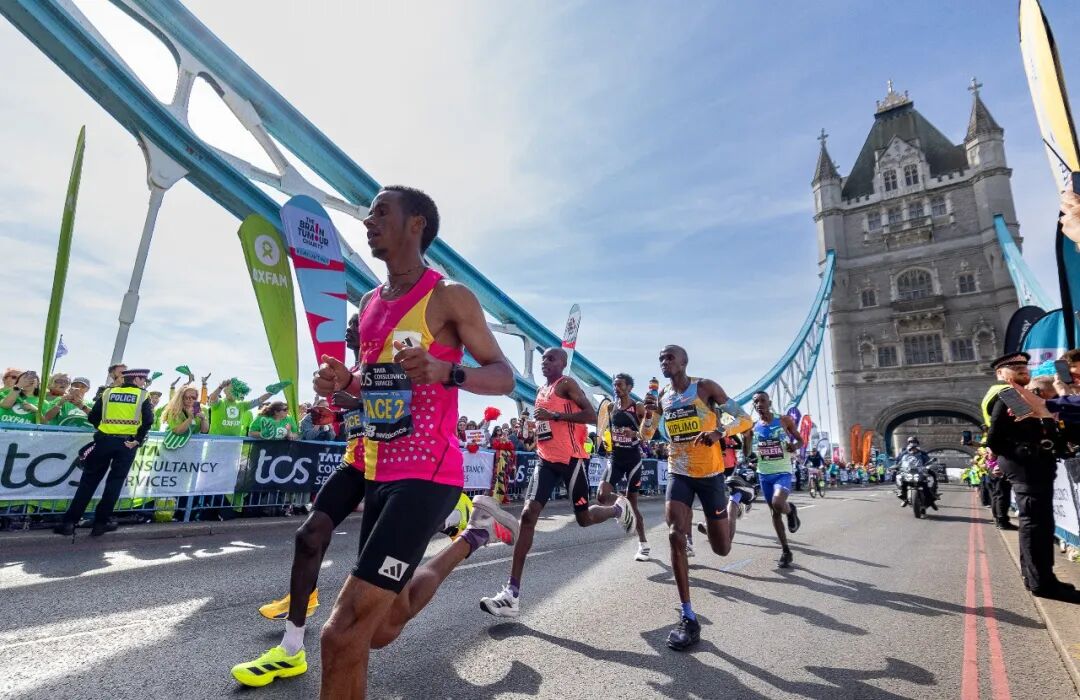
Carrying the unknown physical risks of returning from injury and facing a pack of hungry top contenders—including Ethiopian track prodigy and marathon debutant Yomif Kejelcha, who holds two World Championship 10,000m silver medals and the indoor mile world record, and Uganda's half marathon world record holder and World Cross Country champion Jacob Kiplimo—Savi stepped up to the start line on London's Blackheath.
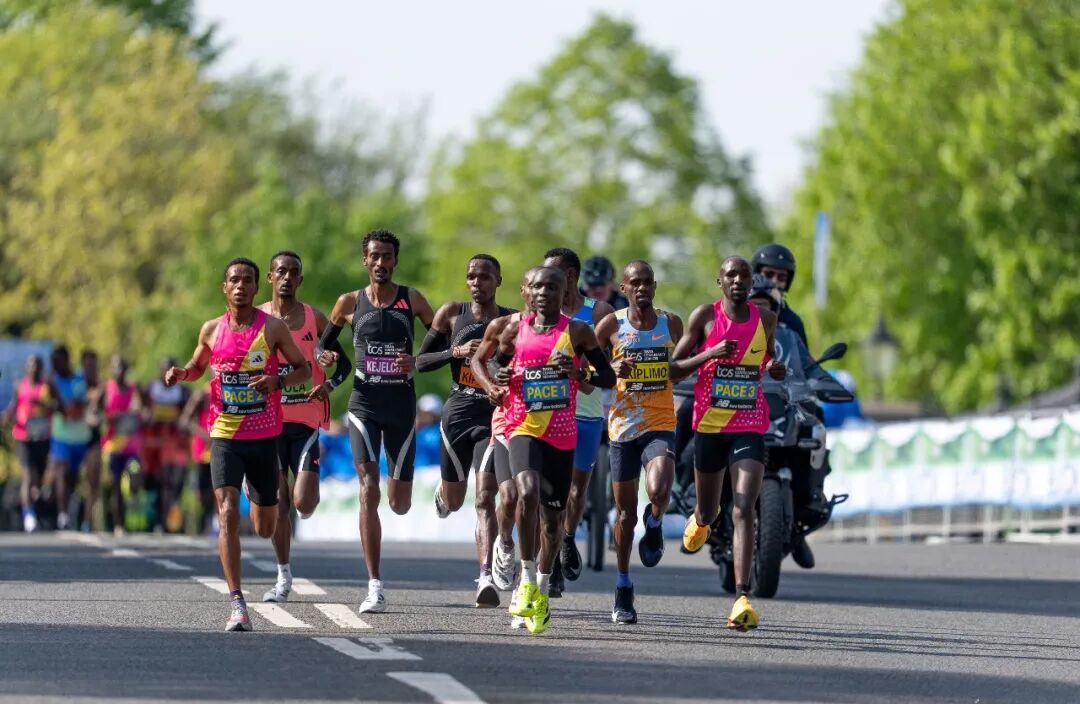
No one knew what kind of earth-shattering anaerobic onslaught this "silent assassin" was about to unleash on this classic course.

On the morning of April 26, 2026, London woke to a slightly raucous but near-perfect spring day. From the outset, the race carried a suffocating tension.
Led by three top pacemakers carefully arranged by the organizers (including Jacob Kiplimo's brother Oscar Chelimo), the lead group of six African elite runners moved forward with a steady yet aggressively assertive pace. 5 km 14:14 (equivalent to a 2:00:03 finishing pace), 10 km 28:34, 15 km 43:10. When they passed the half marathon split in 1:00:29, everything was under precise control.
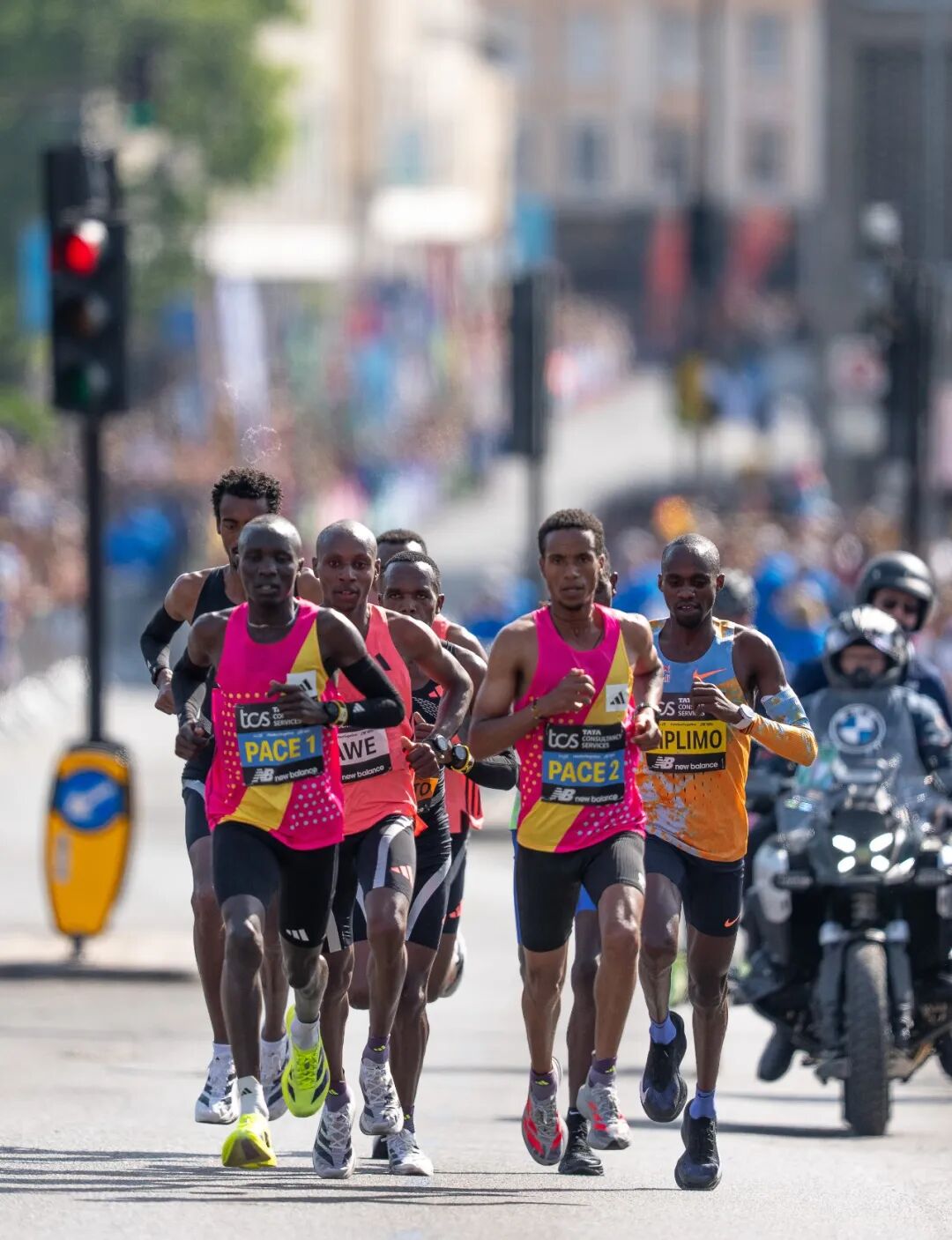
The real contest in the marathon always begins after the 30 km "wall" phase. At that point, the first group's half split means that if a runner wants to break 2 hours, they must produce an even more extreme negative split in the second half than in the first. Physiologically, that's equivalent to forcing top-gear sprinting under extreme fatigue, with muscles flooded with lactate and glycogen nearly depleted.
As the last pacemaker dropped out exhausted at mile 17, the race turned into a close-quarters battle. By the 30 km checkpoint (1:26:03), the brutal pace began to punish the field and the lead group quickly splintered.
The decisive 5 kilometers that will determine the outcome are about to begin.
From 30 km to 35 km, Sawei suddenly surged, running an astonishing 13:54!That terrifying surge immediately put half marathon world record holder Jacob Kiplimo more than 20 seconds adrift. At that moment, only the fearless track king Kejelcha stubbornly clung to Sawei's shoulder.
If you think a 5K in 13:54 is already shocking, then look at the next numbers. From 35 km to 40 km, Sawei and Kejelcha were locked in an all‑out anaerobic duel, and together they produced a staggering 13:42 split!
To give a clearer idea: that 5 km time was even 2 seconds faster than the Parkrun (5 km park run) world record set by Irish national team athlete Nick Griggs! After already having charged through 35 km, they were somehow final-kicking at an average pace of 2:44 per km!
When the race reached the Victoria Embankment along the Thames — the very stretch where Eliud Kipchoge has repeatedly launched decisive attacks in London — Savi, aided by a tailwind, unleashed all the pent-up fury.
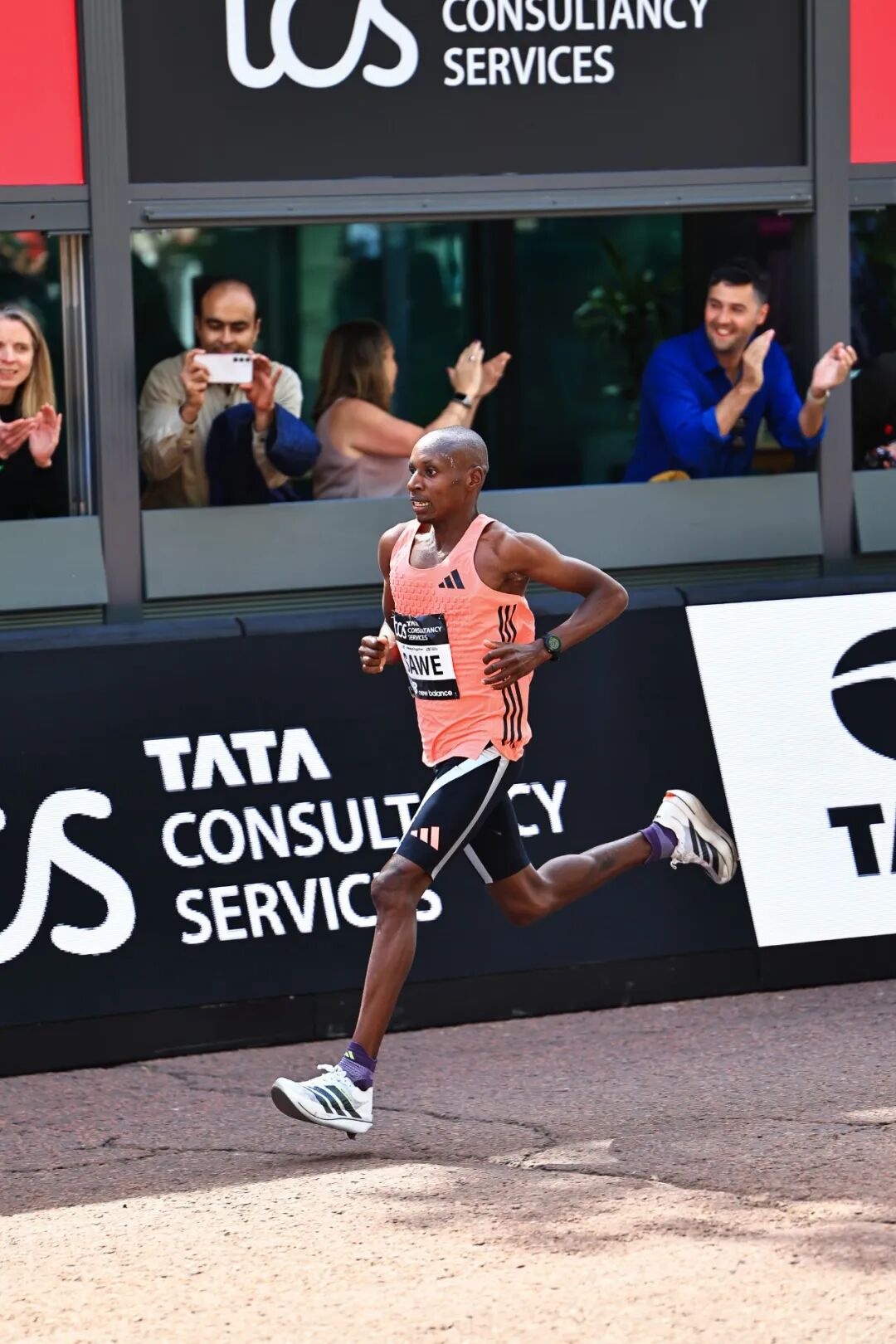
Mile 24 (around 38.6 km), Savi's one-mile time: 4 minutes 12 seconds!
Converted to kilometer pace, this is a hair-raising 2:36/km! This is the fastest single-mile pace ever to appear in official marathon data! At that peak, a human could still unleash such a savage, track-race level speed, and even more incredible, marathon debutant Yomif Kejelcha was shadowing him step for step.

It wasn't until the 25th mile, when Savi continued the brutal pressure at a 4:33 per mile pace, that Kejelcha's body finally raised the alarm. After the race Kejelcha recalled with lingering fear: “Before 41 km I felt great, I was even enjoying it — my body felt fantastic. But right at 41 km my body suddenly shut down. I tried to force myself to push, but my legs were completely gone.”
After shaking off his final follower, only the ticking guide clock stood in front of Sawei, along with the more-than-half-century "2-hour" curse looming over humanity.
In the final 2.195 kilometers, Sawei ran like a runaway horse, his powerful torso still holding the strong running form he had at the start. He covered the last stretch in 5 minutes 51 seconds (an average pace of 2:39/km), at least 10 seconds faster than anyone in history has recorded during a marathon finishing sprint!
When Savi thundered across the finish line like a streak of black lightning, the time irreversibly froze at——1:59:30。
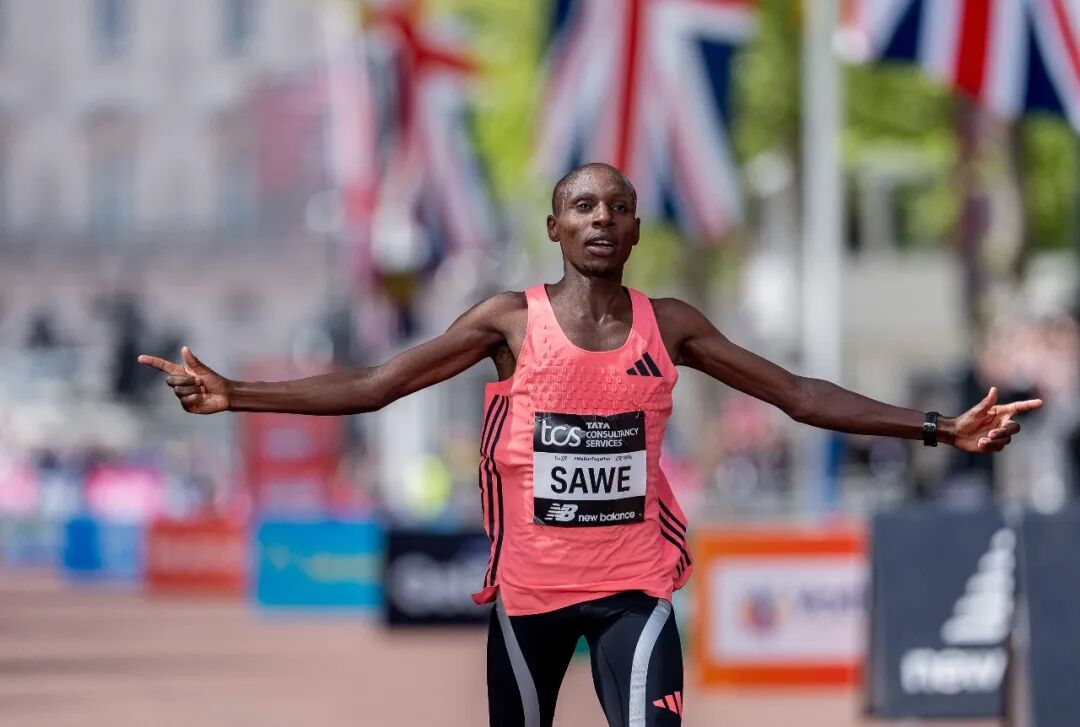
Let's marvel at this string of numbers destined for the sports textbooks:
Overall average pace:about 2 min 50 sec/km. Average speed:21.18 km/h. First half time:1:00:29. Second half time:59:01! (This performance is even faster than American star Conner Mantz's U.S. national half marathon record of 59:17, and Sawei produced it back-to-back after completing an extremely high-intensity half marathon.) Final 12.195 km performance:average pace 2 min 44 sec/km, which converts to a staggering full marathon capability of 1:55:30!

The 2026 London Marathon can be called "the greatest marathon battle in history" not just because of Savi alone. It was an epic intertwining of the "Twilight of the Gods" and the arrival of the new gods.
Runner-up Kejelcha, in his first marathon, posted a time of 1:59:41 ! Not only did he closely follow by breaking the 2-hour barrier, he also thoroughly smashed Kiptum's previous debut marathon world record (2:01:53).
He and Sawei were separated by just 11 seconds at the finish, marking the smallest margin between first and second in a world‑record battle in nearly 23 years since Paul Tergat edged Sammy Korir by 1 second at the 2003 Berlin Marathon.
Third-placed Jacob Kiplimo also produced an extraordinary 2:00:28 performance. That means that in the same race thetop three on the podium all broke Kelvin Kiptum's previous world record of 2:00:35! This unbelievable depth of the field has left the entire athletics world in profound shock.

On the women's side, a miracle also arrived this weekend. Ethiopian star Tigst Assefa successfully defended her title in 2:15:41, breaking the world record for a women-only marathon. In the same day, multiple men's and women's historic records fell — London's asphalt was thoroughly transformed into a cathedral of human potential.

“When I had 600 metres to go and I saw the clock at 1:58, I was just overwhelmed,” Sawei said after crossing the line to BBC cameras, still showing his reserved and humble character. “I realised I had not only won the race but also broken the world record. I want to thank the spectators — your cheers gave me strength. What I achieved today belongs not just to me but to all of us here in London. This is a day my family and I will remember forever.”
When the dust of history settled, former sub-2 pioneer and veteran Eliud Kipchoge was the first to send his heartfelt congratulations. The legend who once showed all of humanity what limits could be wrote: "Breaking the two-hour barrier in the marathon has long been a dream for runners around the world, and today you have made that dream a reality. In the INEOS 1:59 challenge we showed the world it was possible. Seeing two athletes on London's city course truly break this magical barrier proves that when talent, progress and an unwavering belief in human potential come together, we have only just begun to touch the edge of possibility. Let this achievement inspire the next generation and remind every person in the world — no human is limited!"
In this moment, Kipchoge's indomitable philosophy has been continued, and Kiptum's unfinished legacy has been most perfectly inherited. The most glorious baton in the history of human long-distance running completed its sacred handover in the breeze by the Thames.

Once, two hours was an impenetrable iron wall, coldly blocking humanity's view of its own physical limits. Now, Sebastien Savi, with a thunderous strike of 1 hour 59 minutes 30 seconds, has blown that wall to pieces.
Maybe in our lifetime we will never reach even one tenth of the pace of the top elites, but the ultimate charm of the marathon has never been just the passing of distant world records. It’s about how you overcome inertia to run on every sleepy dawn; about how you grit your teeth through the wall at 35 km and refuse to back down; about how you repeatedly break your own PB (personal best), whether striving to go sub-4 or sub-3, or simply crossing the finish line for health and love.
Savi’s breakthrough tells us that so-called limits are nothing but the next starting point waiting to be broken. Injuries, doubts and the shackles of common sense cannot confine a heart that longs to fly.
On this planet, on the streets of London, on every road where you sweat:
Always believe that no human is limited (No Human is Limited).