
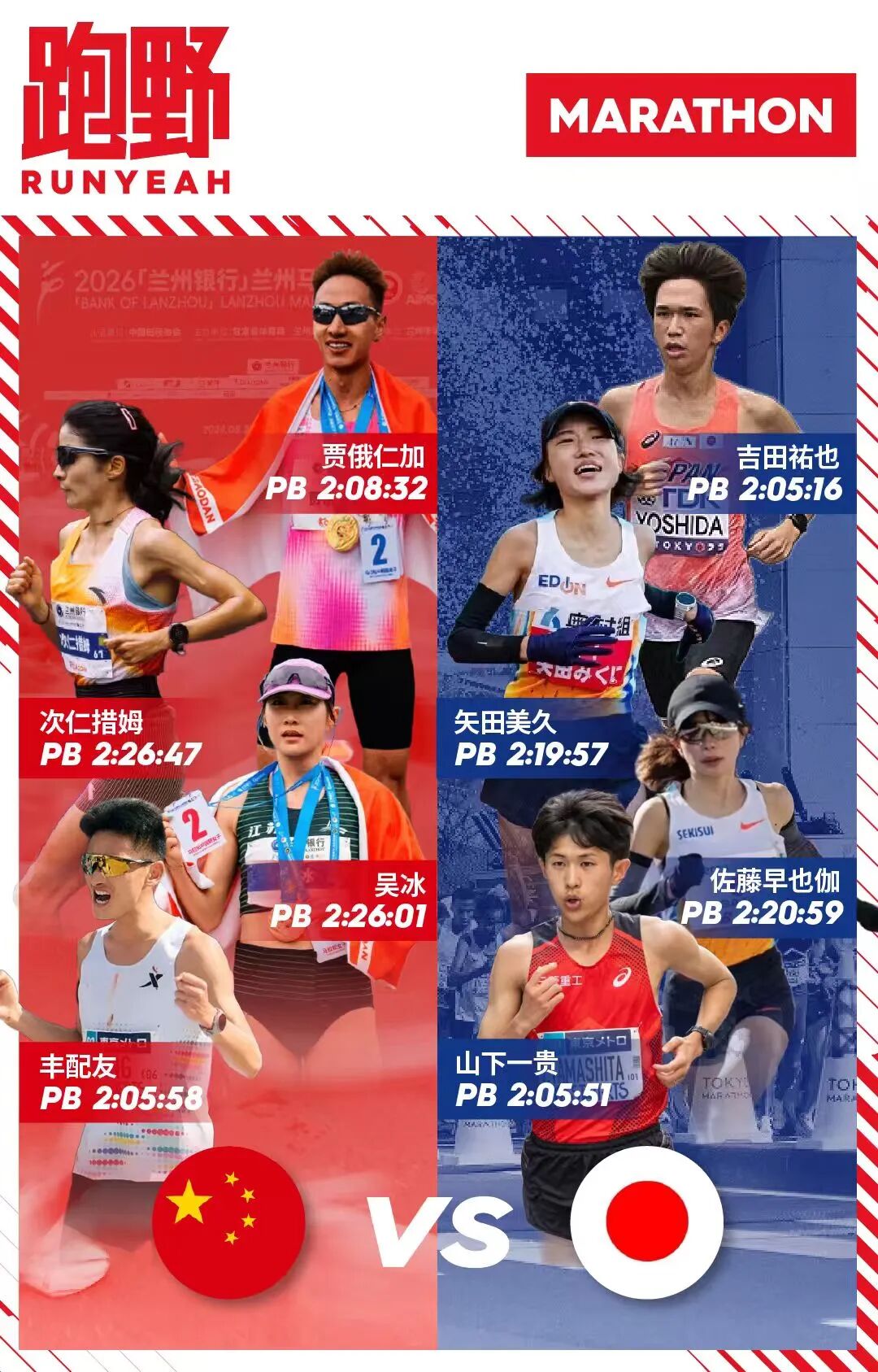
At the previous Asian Games on home soil, China's team He Jie, Zhang Deshun and Yang Shaohuimade history with 1 gold, 1 silver and 1 bronze, decisively beating Japan'sYohei Ikeda,Toshiki Sadakata,Mirai Waku andHikaru Onishi.
Back in Nagoya this time, Japan, as the host, fielded a noticeably stronger lineup andis determined todefend its home turf.
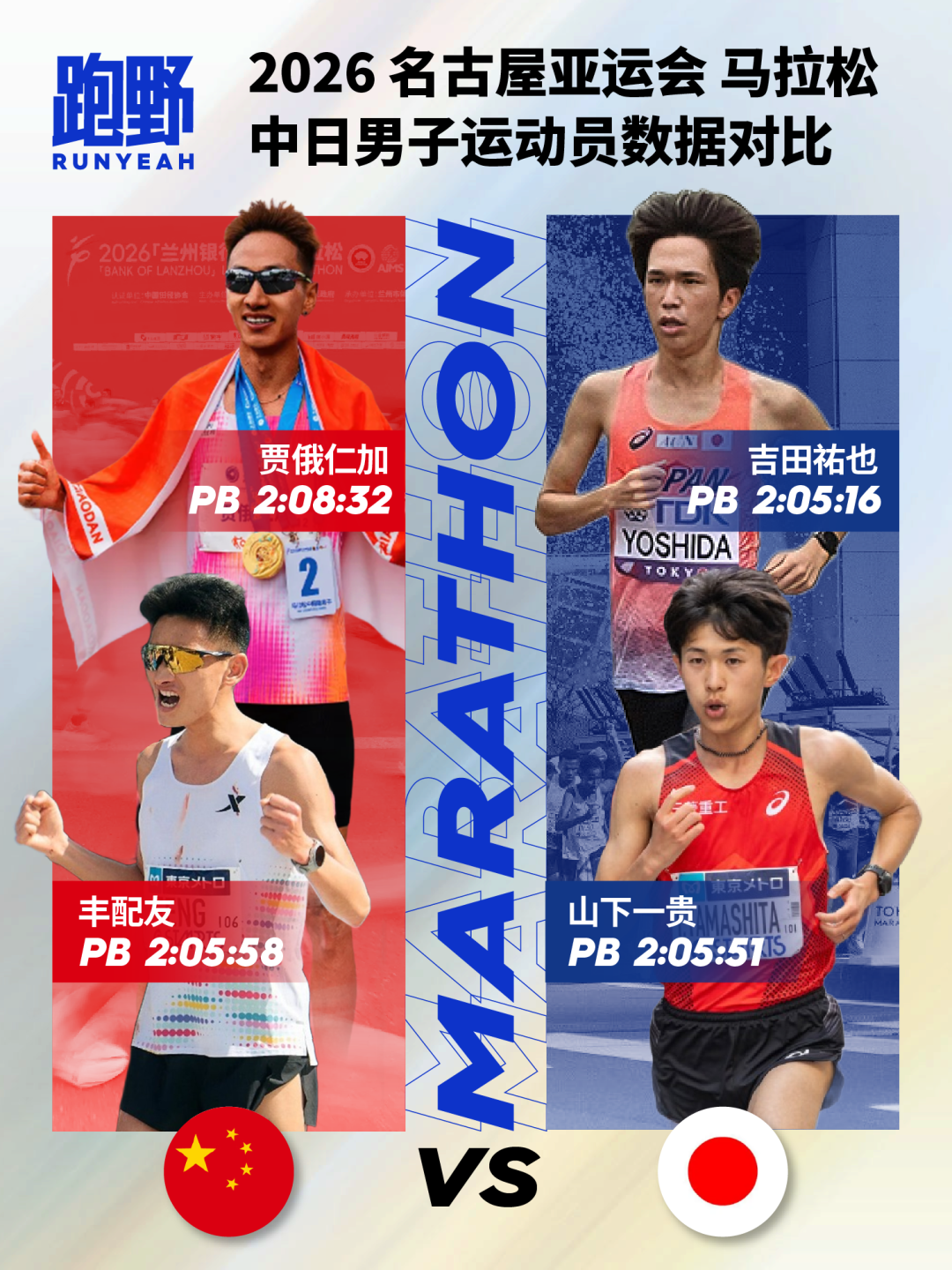
Fourth-fastest in Japanese history, Yuya Yoshida (PB 2:05:16), paired with 2023 Tokyo Marathon's top Japanese finisher Yamashita Kazutaka (PB 2:05:51), China's male runner at the same level is only Feng Peiyou (PB 2:05:58) at the same level.
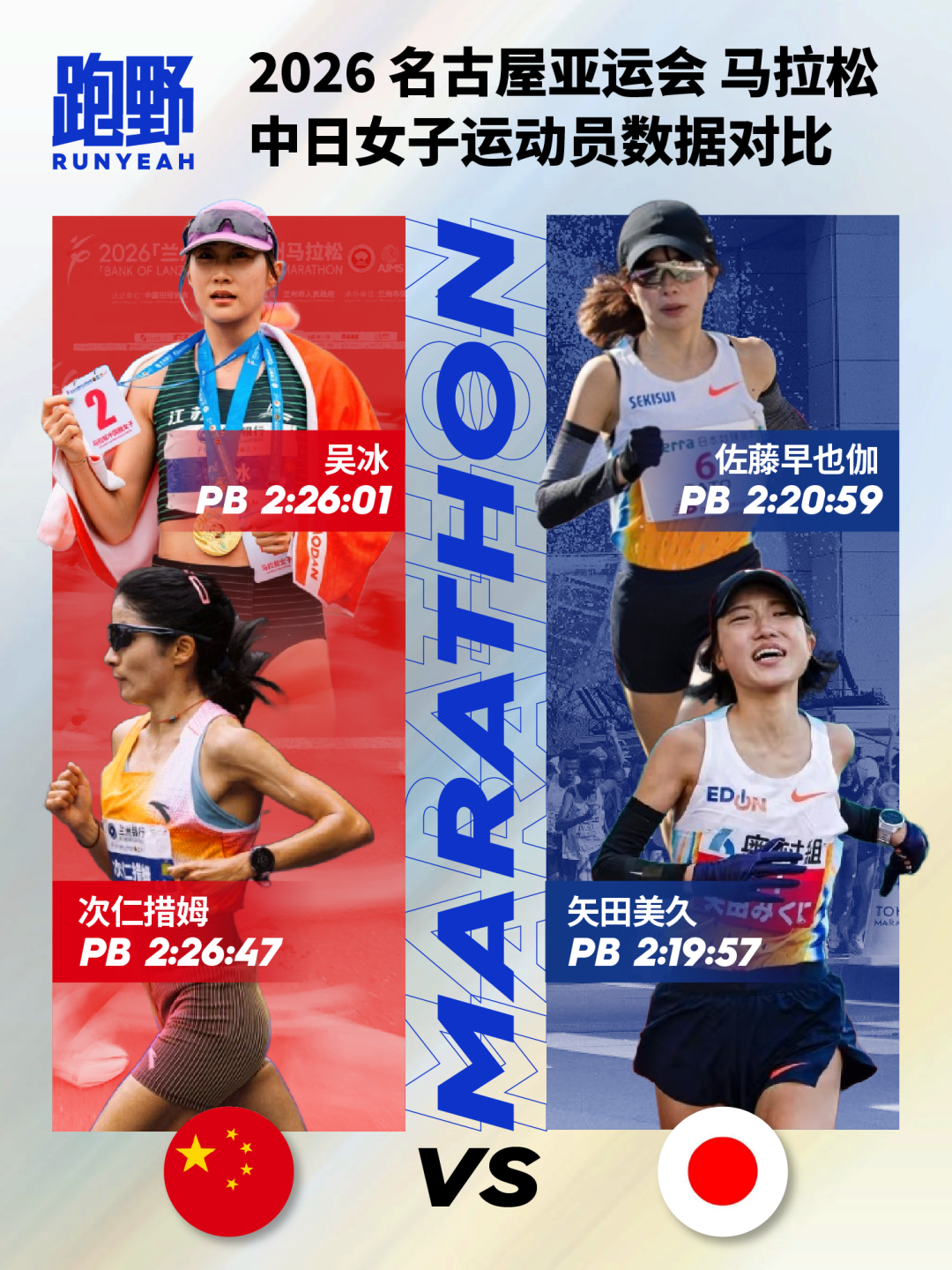
Sayaka Sato and Miku Yada, who set a record in her debut marathon, are two Japanese women at around the "2:20" level, while the best Chinese female results are around "2:26," a gap of about six minutes.
However, a championship like the Asian Games, which is focused on placing, is different from fast courses designed for PBs; on-the-day tactical choices and execution can sometimes dramatically change how a race unfolds, and thus affect the final rankings.
Although Japanese runners' PBs are outstanding, Chinese men's marathoners have shown accelerating momentum this year, and Feng Peiyou is the clear representative among them.
Feng Peiyou set a national record of 2:05:58 at this year's Tokyo Marathon . Compared with the Japanese entrants, he finished only 42 seconds behind Yuya Yoshida; their PBs don't differ much.
From 2023 to 2026, Feng Peiyou has 10 performances under 2:10,a remarkably consistent record; he is also the domestic athlete with the most Sub-2:10 performances.
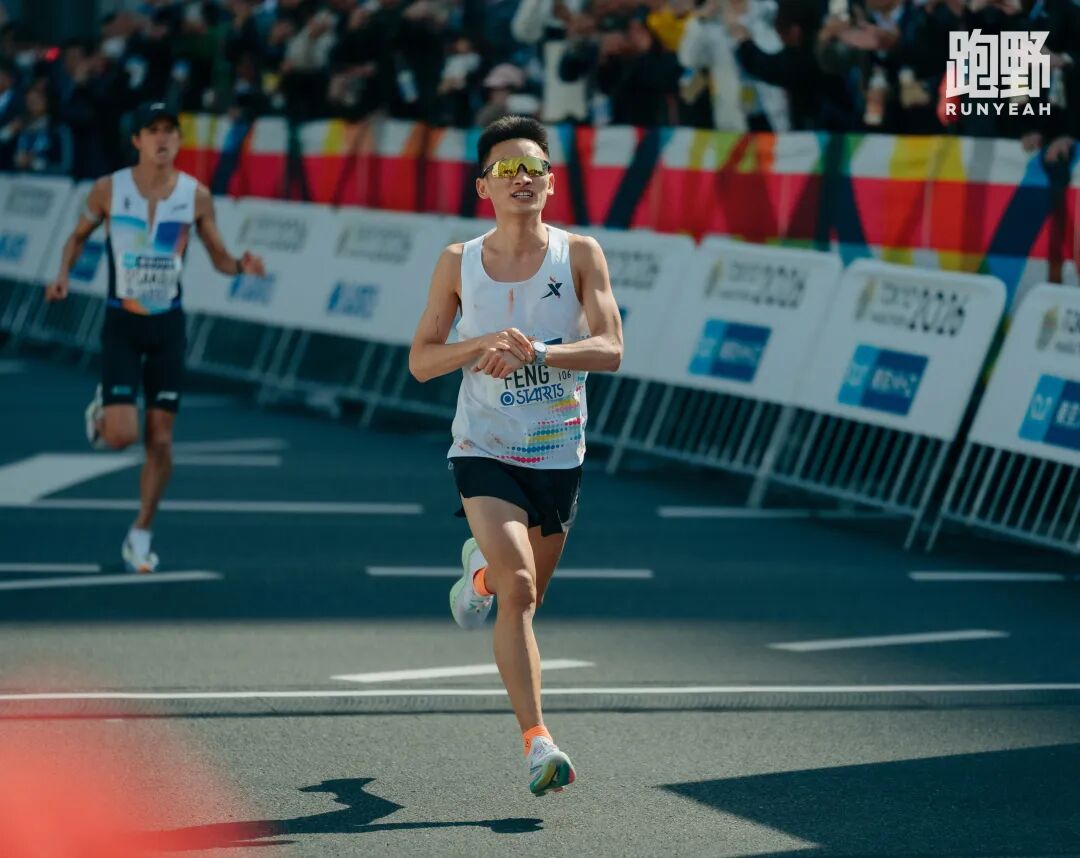
Feng Peiyou has extensive experience in overseas competitions, in Fukuoka, Valencia, Tokyo, and Osaka marathons he has produced sub-2:10 results. Especially in Tokyo, Feng Peiyou beat Japan's Suguru Osako and Kengo Suzuki, two of Japan's all-time top two; such a performance will undoubtedly give him huge confidence.
Jia Erenjia, who broke through in Lanzhou, is likewise one of the domestic elite athletes with the richest overseas racing experience.
He has conquered the Berlin Marathon three times; at the 2024 Berlin Marathon he set a personal PB of 2:08:32 . He has also raced overseas in the Osaka, New York, Chicago and Boston marathons, and judging from his racing style he is adept at producing strong results on difficult courses — the Lanzhou Marathon is the best example. Last year in Boston he ran 2:10:22, the best result by a Chinese athlete on that legendary course.
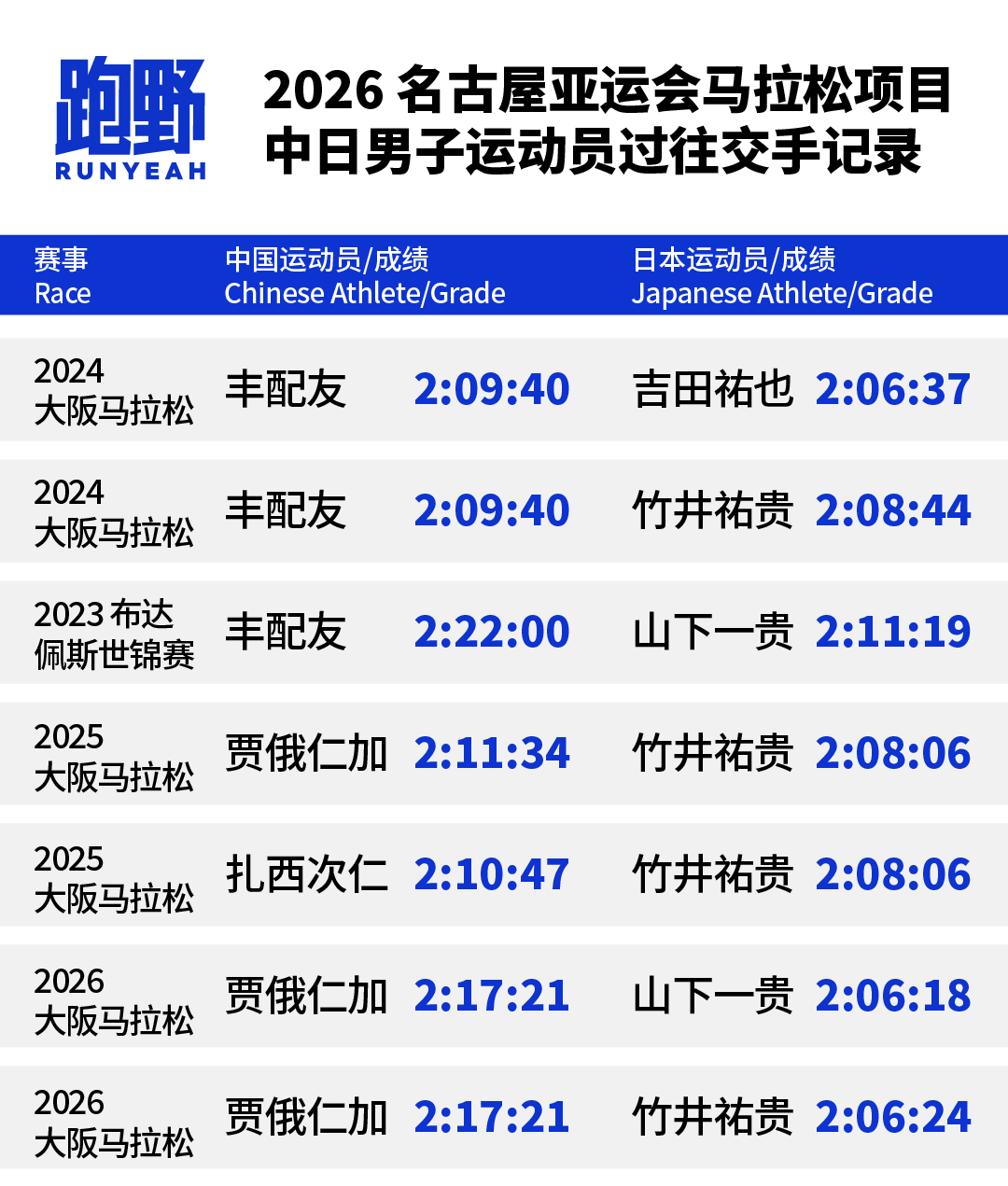
At this year’s Osaka Marathon, Feng Peiyou, Jia Erenjia and Japan’s Yuya Yoshida and Kazutaka Yamashita raced together; the Japanese athletes were generally stronger. However, the Asian Games race has no pacemakers, so the race rhythm and style are completely different.
Both Japanese runners Yuya Yoshida and Kazutaka Yamashita favor a steady, conservative racing style — they usually stick with the pack for the first half and only push all-out after 30 km. However, with superior PBs and the home advantage, they might opt for a more aggressive, savage tactic.
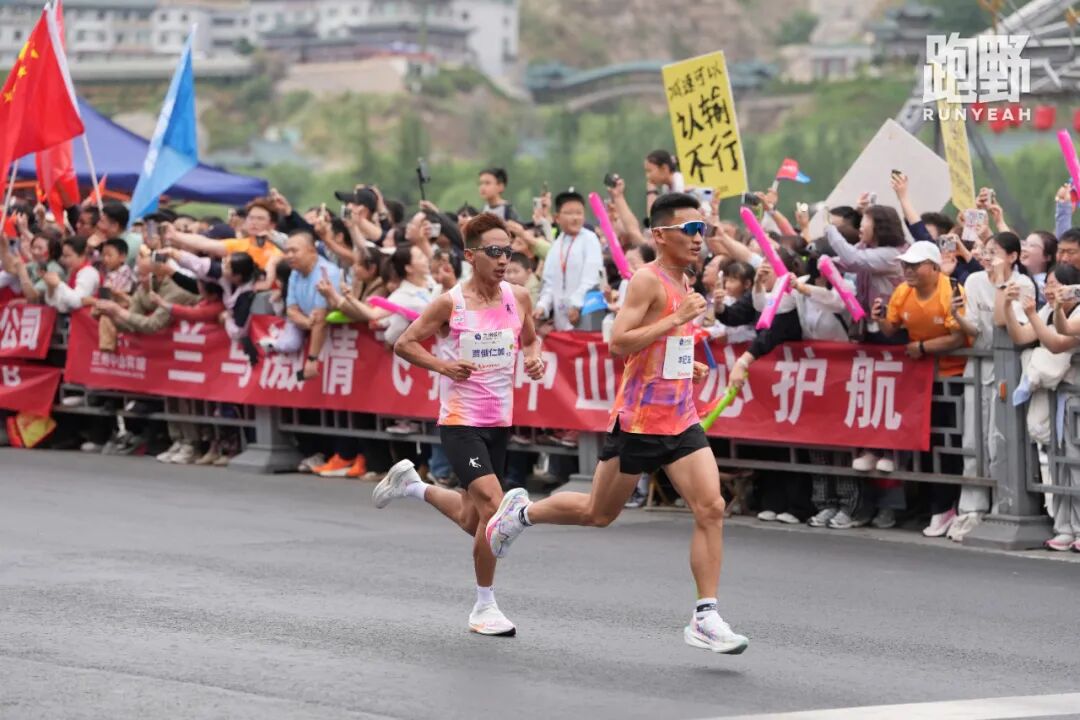
How long the cooperation or mutual pacing between 贾俄仁加 and 丰配友 can last will to a large extent affect the race dynamics, so 贾俄仁加's performance is critical.
丰配友’s victory in Tokyo came from a decisive acceleration after 30 km — that timing completely changed the situation, and the chasers Suguru Osako and Kengo Suzuki were ultimately unable to close the gap. So will 丰配友 have the opportunity to replicate that tactic?
The marathon at the Asian Games will be held on September 26, 2026 in Nagoya, Japan. Temperatures in Nagoya at the end of September are usually above 25°C, and the likelihood of rain also increases due to typhoons and similar systems; this "hot and humid" weatherwill be a major challenge for the athletes.
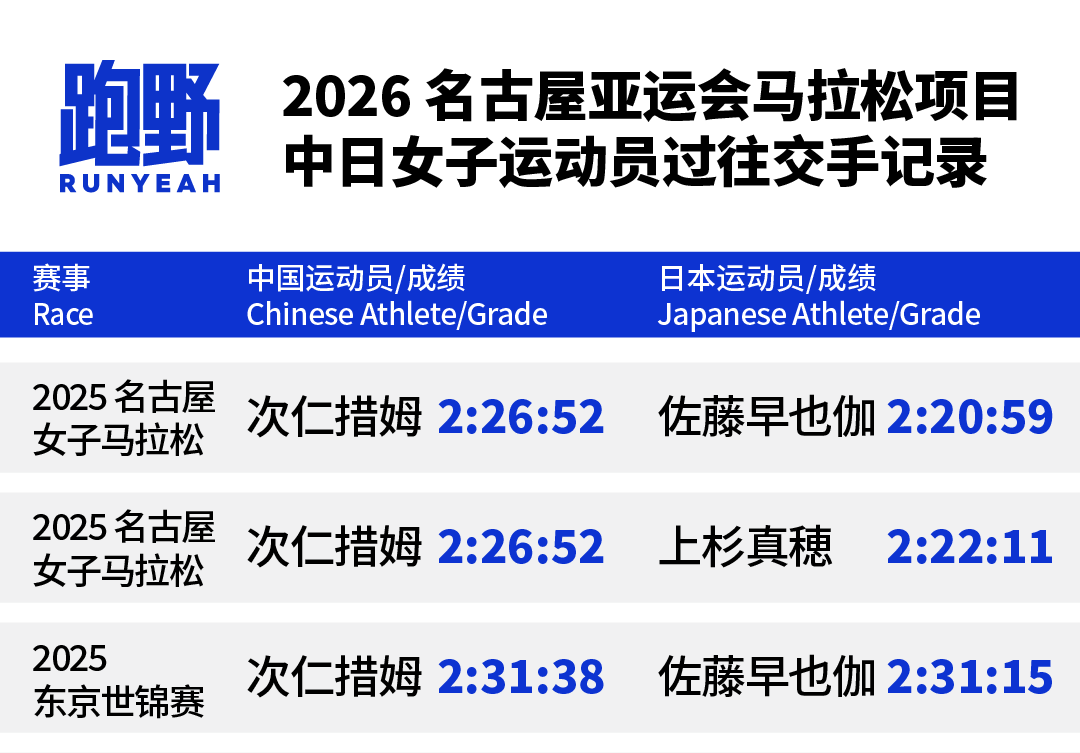
Although there is a significant PB gap between Chinese and Japanese women's marathoners, the women's marathon at the 2025 World Championships in Tokyo — where Ciren Cuomu lost to Sato Sayaka by just 3 seconds — illustrates the point.
Wu Bing won the 2025 Asian Championships in Jiaxing in 2:26:01, taking the title and setting a PB. She overtook North Korean runner Li Guangyu in the final 300 meters; Japan's Kawamura Kaede was only fifth. Those competitors' pre-race PBs were nearly four minutes faster than Wu Bing's.
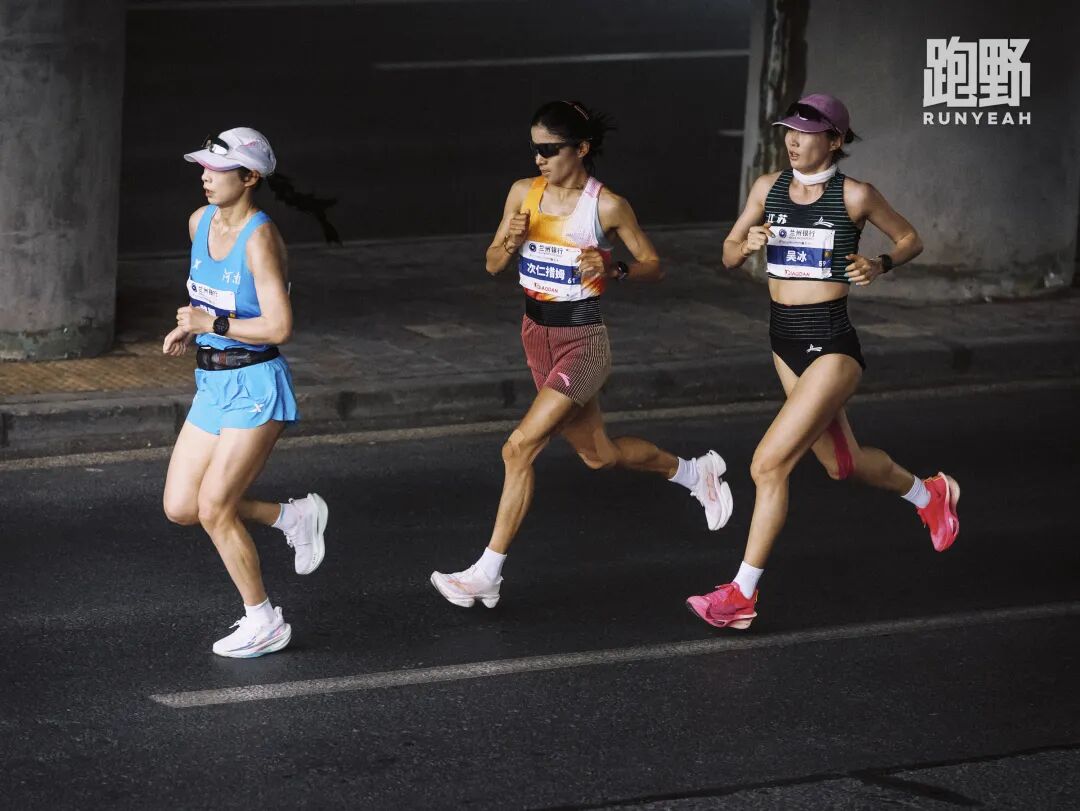
So, an individual PB does not determine the final placing; that is the charm of the marathon,and at international competitions what matters more is the athletes' performance on the day and their physical condition.
The Chinese women's marathon team is not without a chance to stage an upset; by training in high heat before the racethey can turn the race's X factor into something controllable, often producing above-par performances in competition — which may be the key to deciding the outcome.