

Last week the 2026 Millrose Games concluded. At this 118th edition of the indoor track meet, it still retained that American, physical, elbow-to-elbow style of racing. The much-anticipatedmen's 2-mile was the best illustration of that slightly old-school style.
Before the race, expectations were that the event would be targeting a world record. That's because last year Briton Josh Kerr ran the indoor world record of 8:00.67 on this very track.
This year's field, thanks to the super‑shoe boom, is as stacked as the World Championships or the Olympics; besidesJosh Kerr, there's Paris Olympic 1500m and Tokyo World Championships 5000m championCole Hockerand America's record‑crusherGrant Fisher, for a moment you'd think a meet at Tokyo's National Stadium had been moved tothe wooden 200m track at The Armory in New York.
Races are always full of variables; one was Grant Fisher's absence due to illness, whichdirectly robbed this race of its 'speed backbone',the anticipated blistering times never materialized; instead,the race's trajectory veered towarda tactically cruel showdown.
When the pacemaker Fisher wasn't on the course, sure enough the pacing wasn't secure; the first half was run at a 4:07 pace — a tempo that was not only conservative, but carried an inexplicable sense that everyone had their own agenda.
Another variable in the race came from the 22-year-old former NCAA 5000m championParker Wolfe,who was competing at the World Cross Country Championships just 20 days earlier. While the athletes were stillcalculating when to launch their final 200m kick, thisyoung man, who had just pulled his legs out of the muddy championship course, was clearlymuch more aggressive than the other favorites.
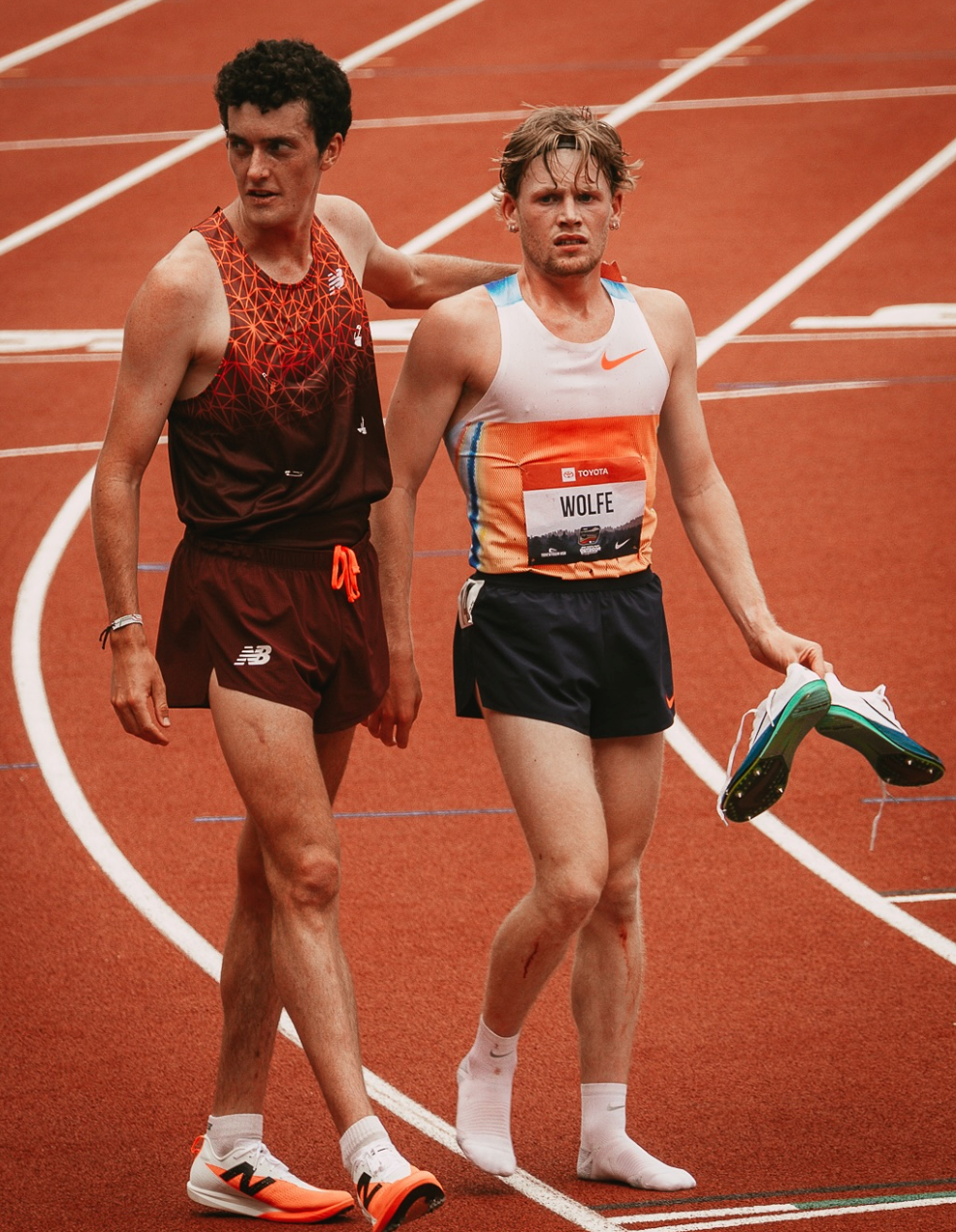
As the race entered the tense final two laps, Wolfe made the first move. He launched an almost suicidal surge that tore through the professionals' rhythm. That sudden pressure even seemed to unnerve the current world record holder.
"I wasn't thinking that much; I just wanted to see how fast these world champions really are." Wolfe's post-race candor was precisely the most captivating turning point of the race — he wasn't running tactics, he was running for his life.
Being young and fearless can come at a cost.Hock, who had been lurking at the back,at the crucial moment displayed the terrifying race instincts of an Olympic champion; he followed Wolfe, first pinning Cole tightly in the final bend, then into the last straight, the screams at Amory Athletics Stadium nearly tore the roof off.
Entering the final bend, Wolff perhaps sensed the pressure from behindfrom the outside attack byHock applied; he instinctively took a half-step outward, and that was the price he had to pay, because hegave up the most valuable inside line.
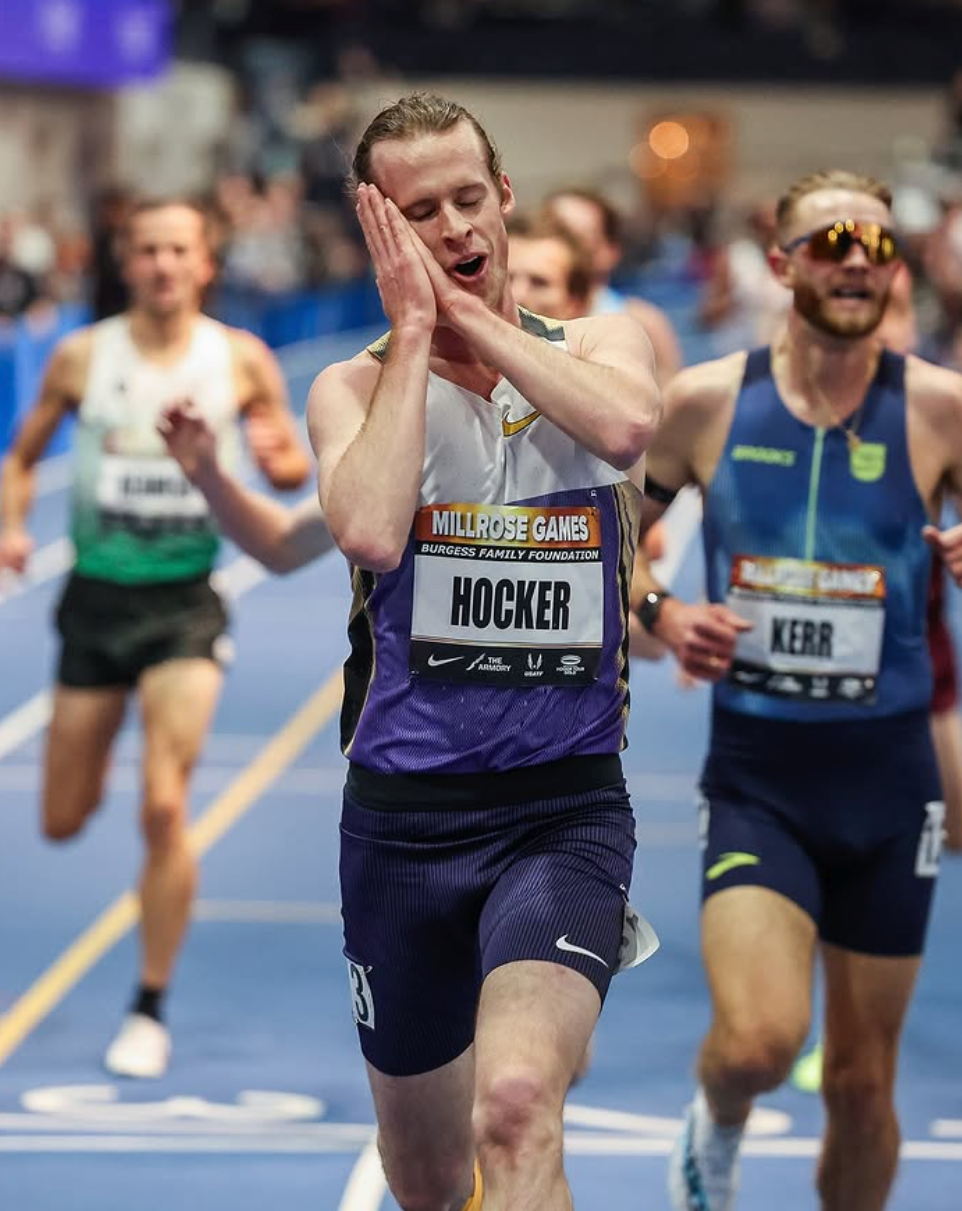
Wolff's "fatal mistake" not only failed to stop Hock from taking the win in 8:07.31 to claim the title, but also handed the inside lane to Cole behind him, who finished second by 0.15 seconds, whilean all-out Wolff took third — he almost recreated Jakob Ingebrigtsen's late collapse in the 1500m final at the Paris Olympics.
If you only look at the 8:07.31 result, this year's Millrose may seem "nothing special." However, the appeal of athletics often isn't entirely a simple numbers contest. Calm positioning and tactical battles are often more worth anticipating, and Wolfe's bold front-running and Hocker's opportunistic moves — the clash of different racing styles brings unexpected excitement.