
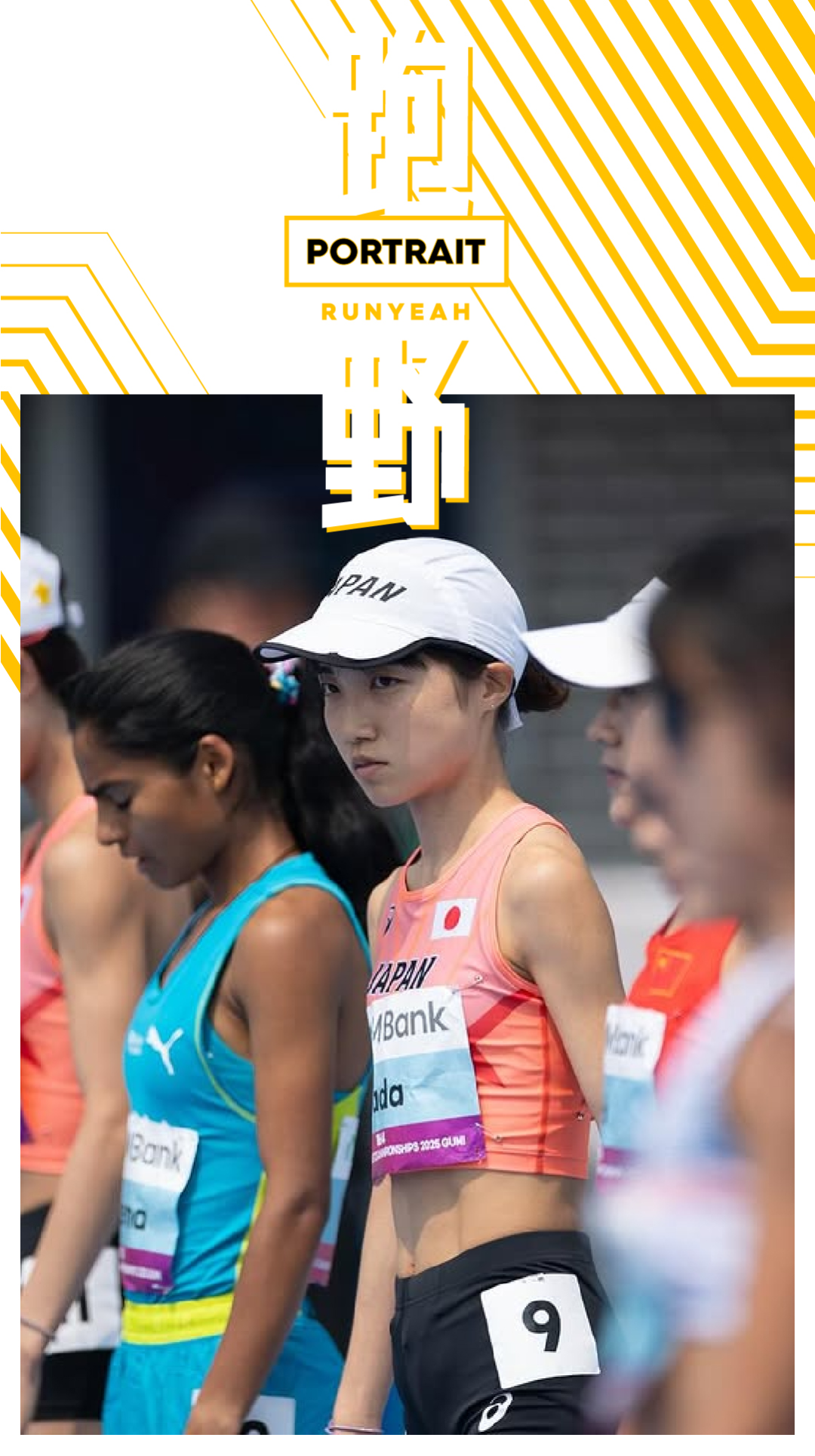
January 25, 2026, at Osaka Nagai Stadium. When the broadcast camera focused on Mikuni Yada at the starting line, many commentators felt a slight incongruity. Among the runners around her, who looked grim and were repeatedly adjusting their breathing because it was their first marathon, Yada was smiling. She was even waving to her coaching staff behind her; that relaxed demeanor felt more like preparing for a local spring road race in her hometown.
More than two hours later, when she ran 2:19:57 to set a new Japanese women's debut marathon record, people only then realized that the smile wasn't from underestimating her opponents, but because she had finally “escaped”.

In a video interview, Mikuni Yada spoke about her anxiety for the first time in a long while.
“When I ran 5000 m and 10000 m, I always felt like I was tucked inside a ‘shell’,”she made a contracting gesture to the camera. Even at the peak when she broke 5000 m indoor Asian record, that sense of being confined on the 400 m synthetic track never disappeared. Every breath had to be calculated for cadence, every lap she had to fix her eyes on the clock; she felt her explosive power was becoming a burden.
2025 The disastrous defeat at the World Championships in Tokyo was the final hammer blow that shattered that fragile shell. After being outpaced and dropped by the world's top runners, she told herself in the locker room:“If I can't beat them with speed, I'll switch to road racing and win with sheer will.”
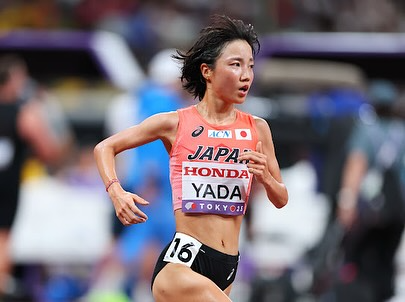

After switching to Edion(Edion)marathon team, her coach was known as"Cold-Faced Ninja", Yuka Ando.
In videos from the training base, you can see this contrasting pair: Ando leads in front, quiet like a shadow; Yada follows behind, but her footsteps are loud. Ando once gave a sharp rebuke:“Mikuni, your body is talking; that means you're wasting energy.”
During a six-month training retreat, Ando taught her not how to speed up, but how to“become still”. They ran side by side on Boulder’s high-altitude mountain trails, and Yada recalled in the video:“Ando never gave me long lectures; she just told me to focus on the small of her back. In those quiet tens of kilometers, I came to understand, a marathon isn't a race against opponents, it's a‘noisy’dialogue。”
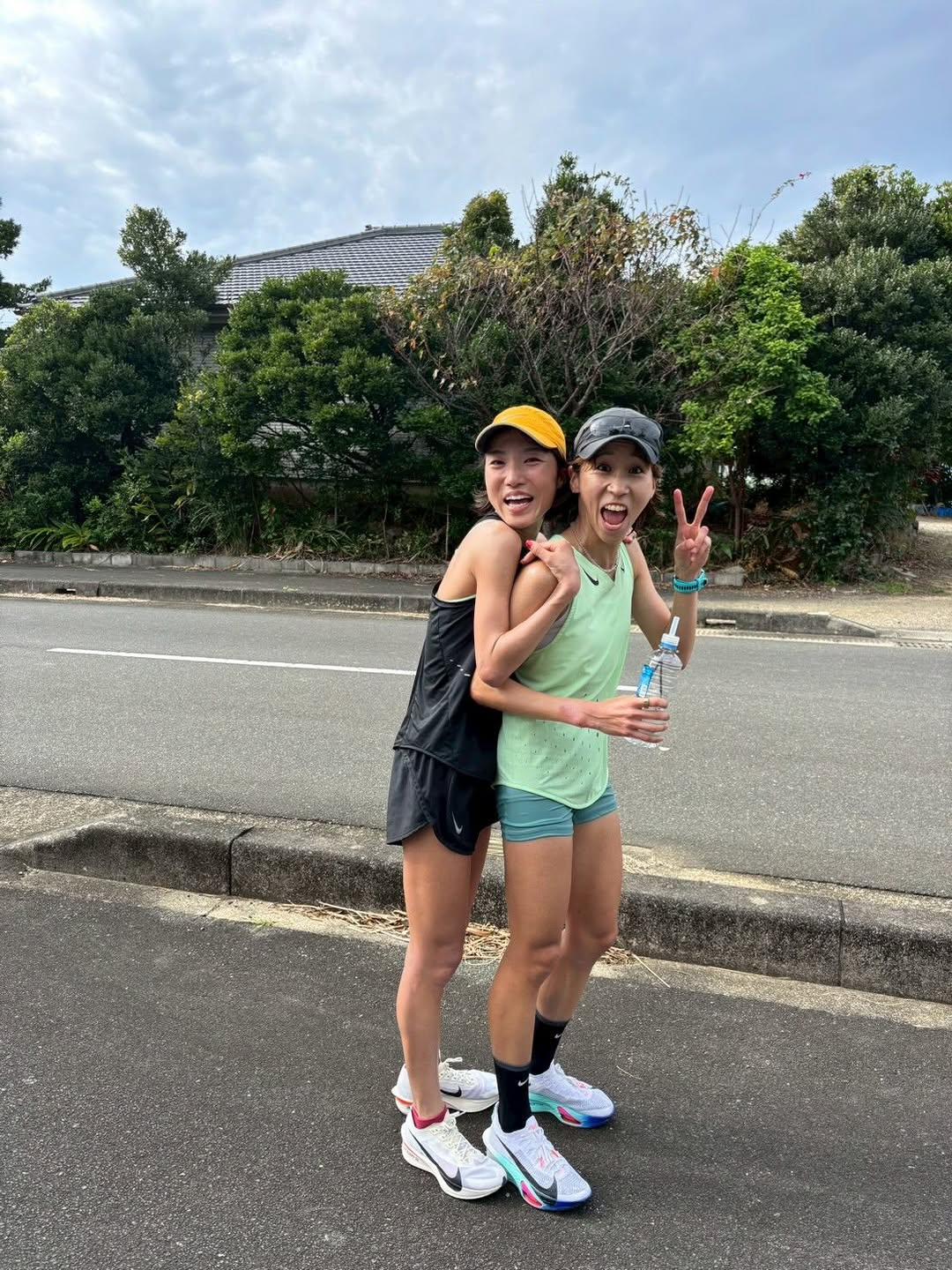

The most moving moment in the video is when she talks about her fear of the “30 kilometer wall”.
“Everyone told me the real hell starts after 30 kilometers,”she said with a laugh,“So I decided that, before entering hell, I'd just be the one to lead the way ‘devil’.”
At the 30 kilometer on the Osaka course, when the official pacers dropped out and the field hesitated, Yada made the decision that shocked all of Japan: she surged straight into the lead.
This wasn't rookie recklessness, but what she mentioned in the video“aggressive marathon”——At the point of greatest fatigue, she used proactive attacks to numb the pain. In that moment, she not only ran the steadiness Ando taught her, but also carried with her that never-give-up“Kumamoto grit”。

At the end of the interview video, the reporter asked her:“Is the Los Angeles Olympics your dream?”
Yada's smile faded; his gaze grew unusually clear:"No, the dream is too distant. For me, the Olympics is a concrete'goal', it can be broken down into each day's training and every bottle of aid."
This shift from“admirer”to“doer”has been her biggest development over the past six months. She is no longer the prodigious girl on the track who agonized over a few seconds; she has become a marathon artisan who can precisely allocate her inner energy across the long 42 kilometers.
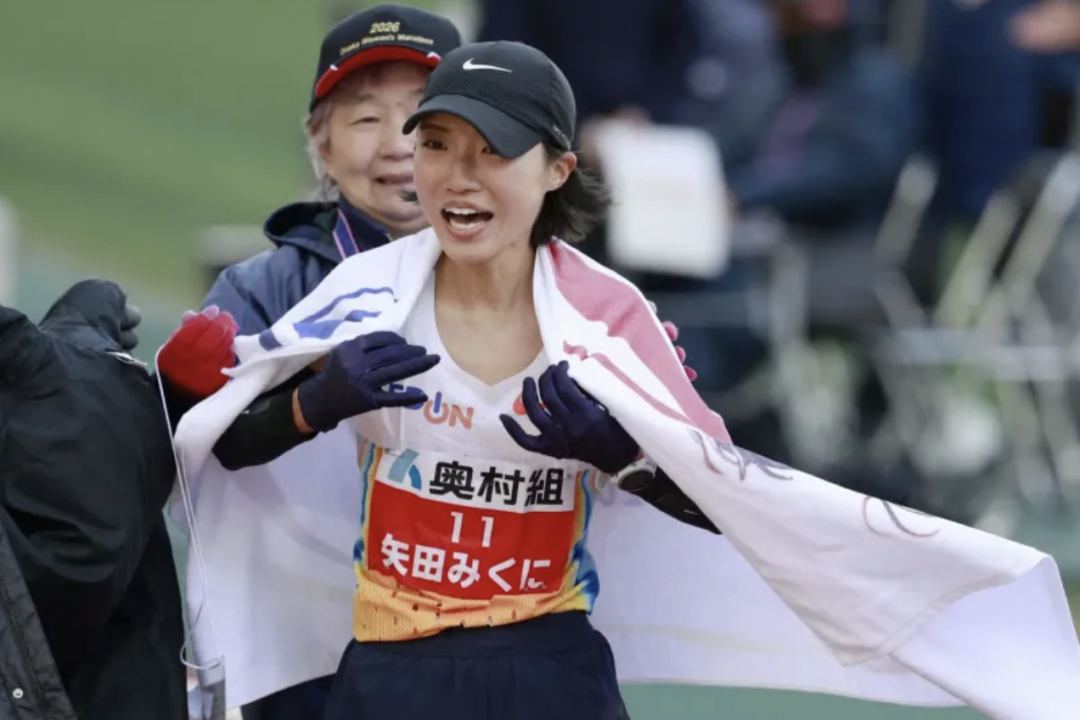

Finally, we return to that moment of crossing the finish line.
Yada ran toward Yuka Ando, and the two embraced tightly. Ando whispered in her ear:“Welcome to this world.”
In the outtake of that exclusive interview, we learned their post-race secret: Japan's strongest marathon mentor-protégé duo had agreed that if they ran under 2 hours 20 minutes, they'd head out into the streets of Osaka to treat themselves to an extra-large bowl of ramen.
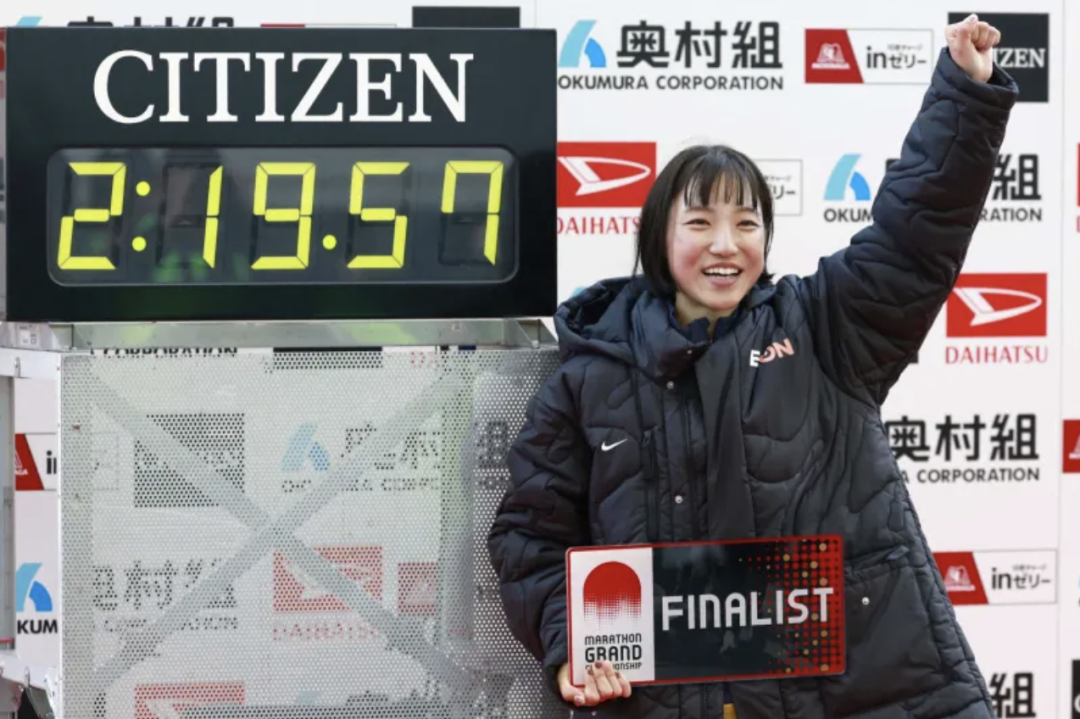
Mikuni Yada's 2:19:57, is more than just a record. It tells the world that Japanese distance running is no longer defined solely by"grind". It can be joyful, it can be assertive and attacking, it can be a girl breaking out of her shell and, facing the wide-open road, letting out a long, triumphant howl.