For a female marathoner who has already reached 2 hours 20 minutes level, she has entered the ranks of the world's top elite athletes, sitting at the edge of human athletic performance limits, the marginal returns from training to break her personal PB again are minimal.At this point, race selection(includingcourse metrics, weather conditions and the depth of competition)以及the athlete’s preparation status, will all become key factors in whether she can successfully break her PB.Under the ultra-high pacing requirement of 3:19 per kilometer (2:20:00 finishing pace), athletes' sensitivity to environmental conditions increases exponentially. When choosing races in the second half of 2026, what factors should be considered?
Choose a relatively flat course (total ascent kept within 80 meters, and preferably no sustained climbs steeper than 1.5%), and the fewer turns and out-and-back sections the better, so thatthere is less extra energy expenditure for athletes.
Race-day start temperature should be between 6°C to 11°C , with relative humidity preferably below 60%, and ideally without strong winds.
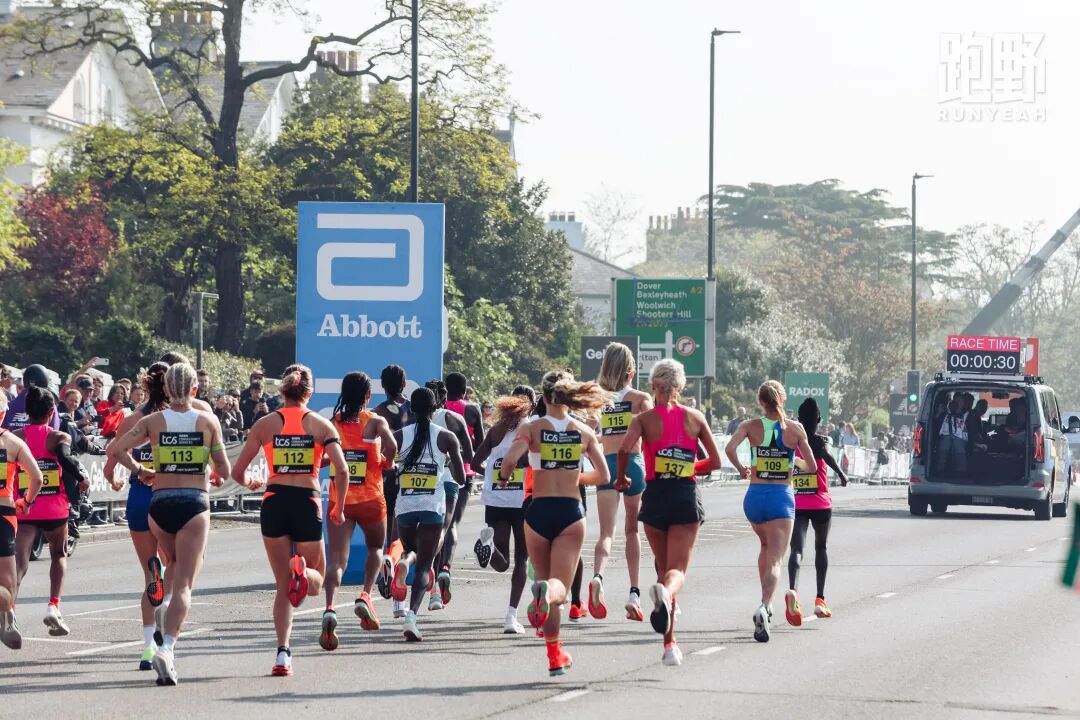
In the awkward 2 hours 20 minutes range, women runners often find themselves“left to fight alone”. If a race provides pacers running 3:16–3:18 per kilometer, with pacers breaking the wind, women drafting behind them conserve energy, and only then can a late-race surge offer a slim hope.
Having strong competitors in a race is also crucial; the atmosphere created when athletes battle each other in the latter stages often pushes them to their limits.
Because temperatures are high from June to August and the load of high-intensity training is enormous, race dates should not be too early; priority should be given to mid-October to early-December events, so that duringthe golden autumn (September–October ) to complete high-quality, race-specific high-intensity sessions.
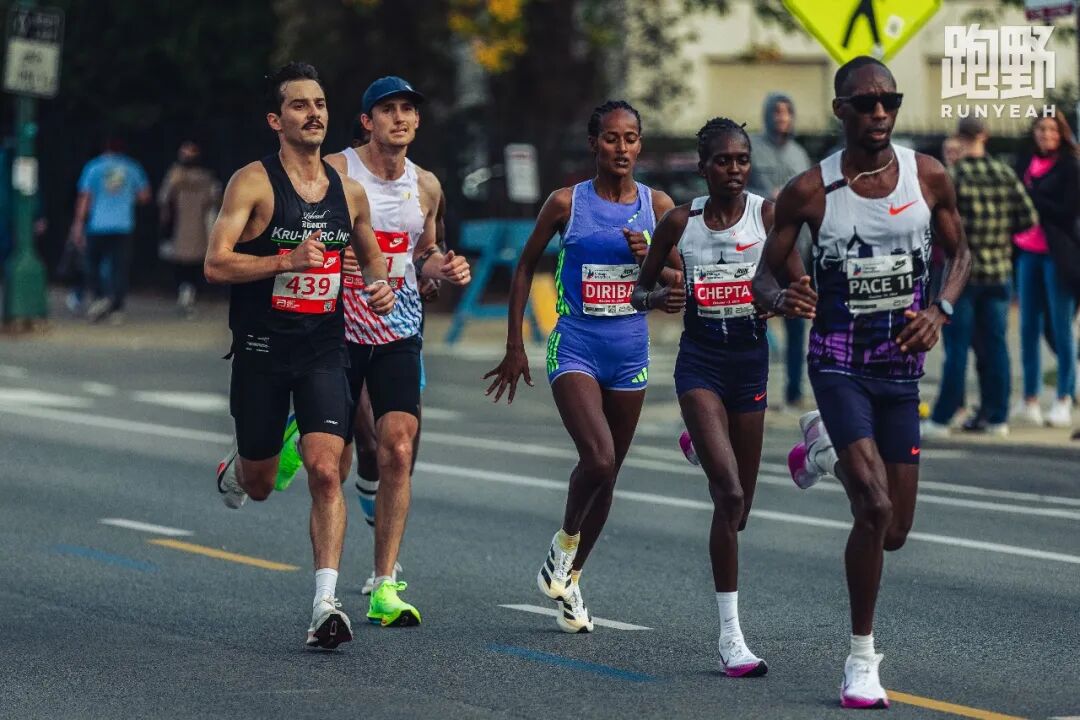
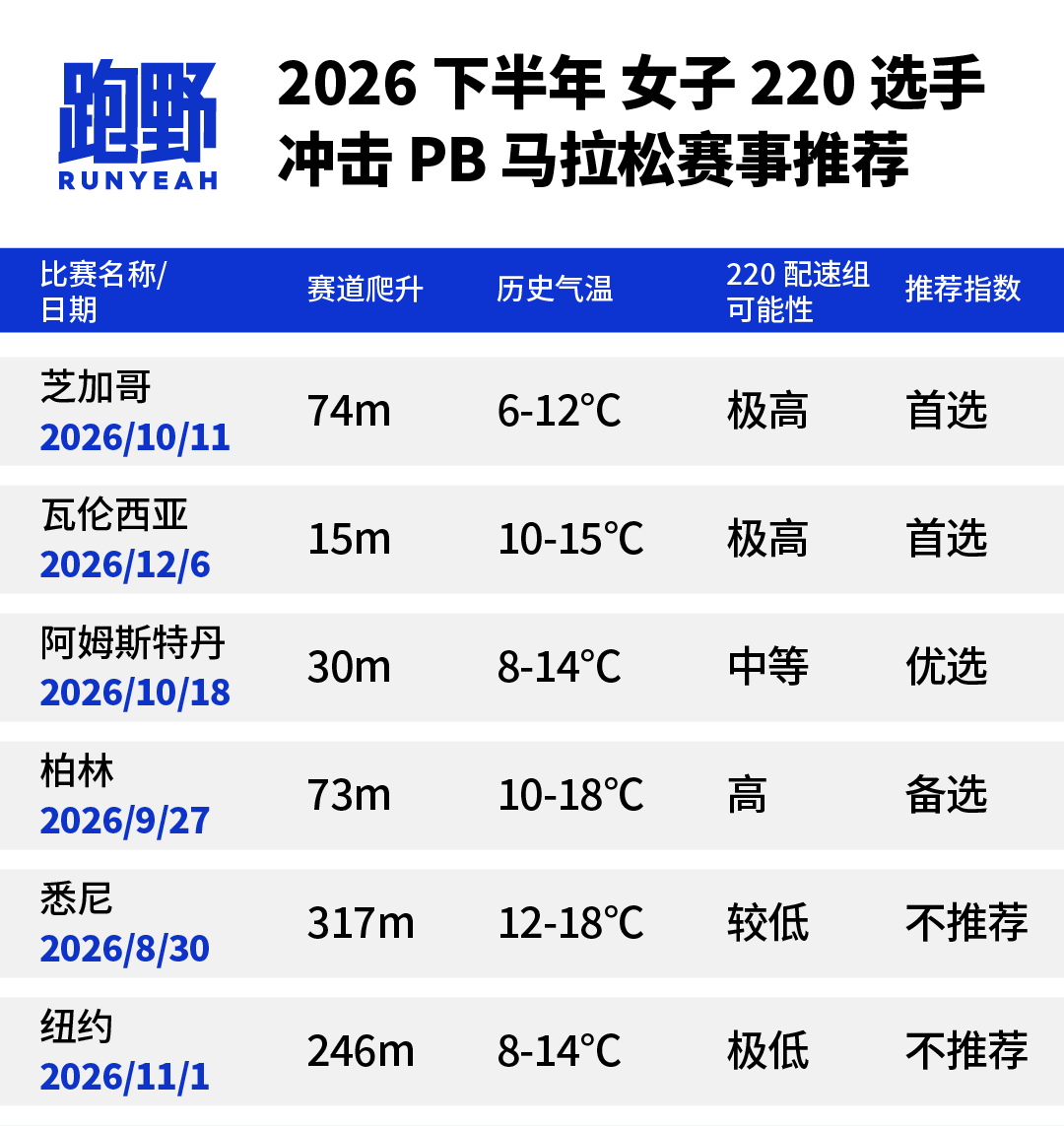
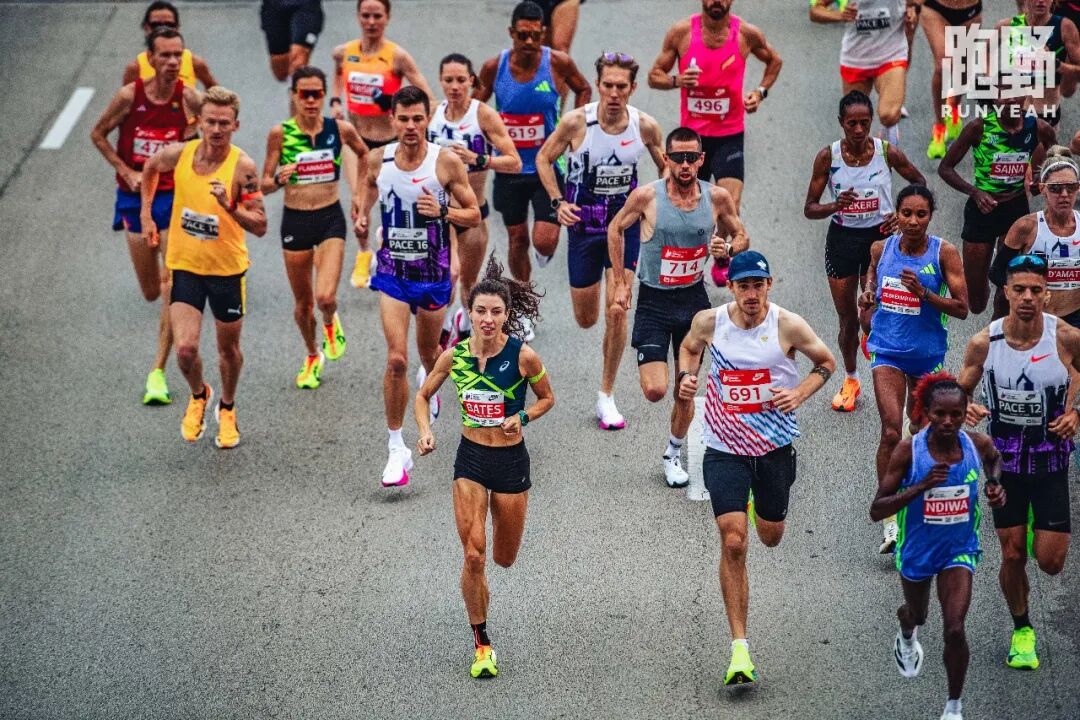
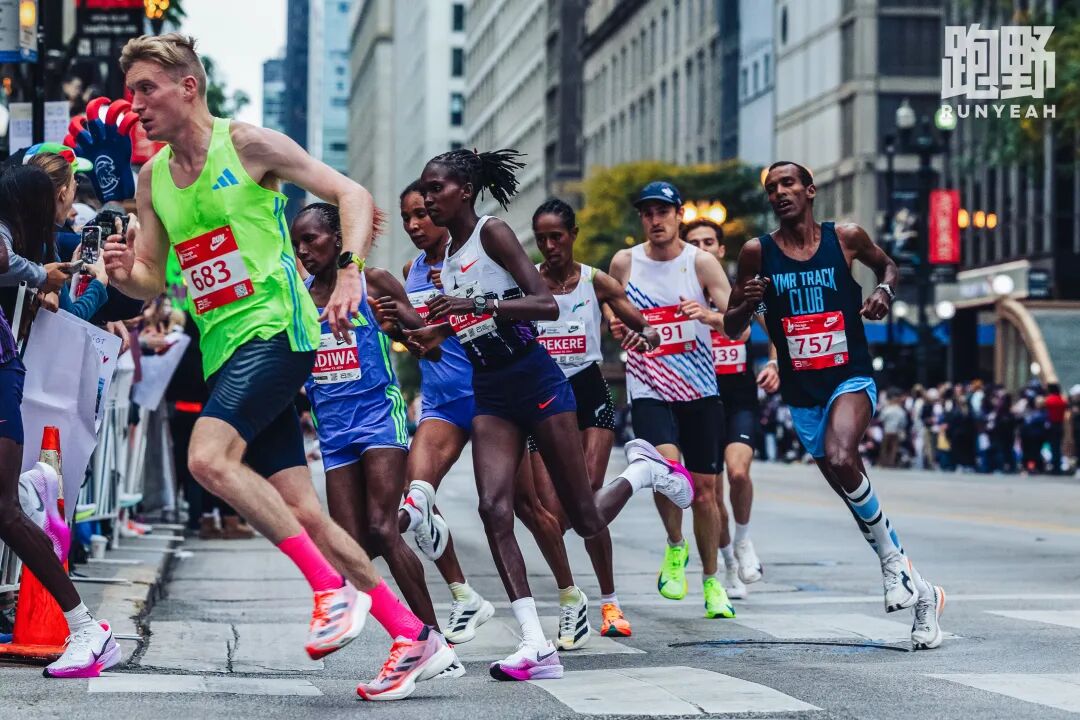
In the second half of 2026 there are six of the world’s most high-profile courses — Chicago, Valencia, Amsterdam, Berlin, Sydney and New York — with so many races, which marathon is the best choice for a PB?The Chicago Marathon on October 11, as one of the World Marathon Majors, is the undisputed top choice. In 2019 Brigid Kosgei(2:14:04)and in 2024 Chepgetich(2:09:56)were both immortalized here, breaking the women’s marathon world record.The Chicago course is virtually flat throughout, with 74 meters of elevation gain, wide streets and large-radius turns, which help maintain a steady cruising pace. In mid-October Chicago’s temperatures often range from 6°C to 12°C, the golden range for optimal human heat dissipation.Because every year many women target the 2:20 barrier at the Chicago Marathon, the organizers usually set up multiple groups of precise male pacemakers, and there are also a large number of male mass-elite runners at that level who naturally form a drafting pack — a prime PB opportunity for female athletes.The Valencia Marathon in December is the world's undisputed "record factory"。In 2025, Jepkosgei and Jepketchil finished first and second in 2:14:00 and 2:14:43 respectively, each setting a new personal best.
The course has only 15m of elevation gain, making it one of the flattest courses in the world. Average temperatures are around 10°C–13°C, there's virtually no strong wind, and the training cycle is long enough.Valencia is also the race with the highest“sub-2:30” and“sub-2:20” runner density in the world. The organizers have an almost obsessive pursuit of records and will arrange male pacers for key targets like 2:15, 2:18, and 2:20; athletes are never left to race alone here.
Female runner No. 220 wants to go for a PB in the second half of 2026. The Chicago Marathon in October is undoubtedly the first choice; if preparation time is insufficient, the Valencia Marathon in December is also a good option. John Korir once regrettably dropped out of the 2025 Chicago, and at the end of the year staged a triumphant return in Valencia, clocking 2:02:24 to improve his personal best by about 20 seconds.2:02:24 刷新个人最好成绩约 20 秒。Amsterdam Marathon(10 月 18 日),气候宜人,精英女子深度都适配,但是如果选择该赛事,必须赛前单独和组委会沟通,确保配备专属的配速员。Berlin MarathonAlthough the elite women's field is extremely deep, the weather at the end of September can be on the warm side — last year's temperatures in Berlin were a nightmare for most participants, soit's still suitable as a backup option.Sydney Marathon is at the end of August, with temperatures between 10–19℃, which is on the high side. More problematic are the course's significant undulations, noticeable wind on the bridges, and it does not have 2:20 pacemakers;New York City Marathon although held on November 1 with suitable conditions, has no official pacemakers. It's a pure competitive race and not suitable for athletes aiming to go after a PB, so these two World Marathon Majors are not recommended.When athletes run for long periods on an extremely flat course,the loading angles on the muscle groups are almost identical, and without changes in slope to alternately relieve muscle fatigue, this can easily lead tolocal fatigue in the quadriceps and iliotibial band after around 30 km.
When training, choose relatively flat surfaces to simulate the race; training the muscles' fatigue resistance under a single loading pattern will be more effective.
For female runners aiming for sub-2:20, the biggest challenge is energy depletion. During high-speed running, blood flow to the gastrointestinal tract can decrease by more than 80%, and the body's ability to absorb carbohydrates faces a major challenge.
The gut's ability to absorb carbohydrates isn'tinnate; to push the limits you need a scientific nutrition strategy,to ensure that at a 3:19/km pace you can consistently absorb 80–90 g of carbohydrates per hour without cramping.
I hope the women's marathon 220 athletes will have favorable timing, conditions, and support in the second half of the year and successfully surpass themselves. I also wish every runner in the coming months to run with confidence and with style!
Text:Trail Running Explosion / Editor:MP
Images:Trail Running Explosion / Visuals:Max