

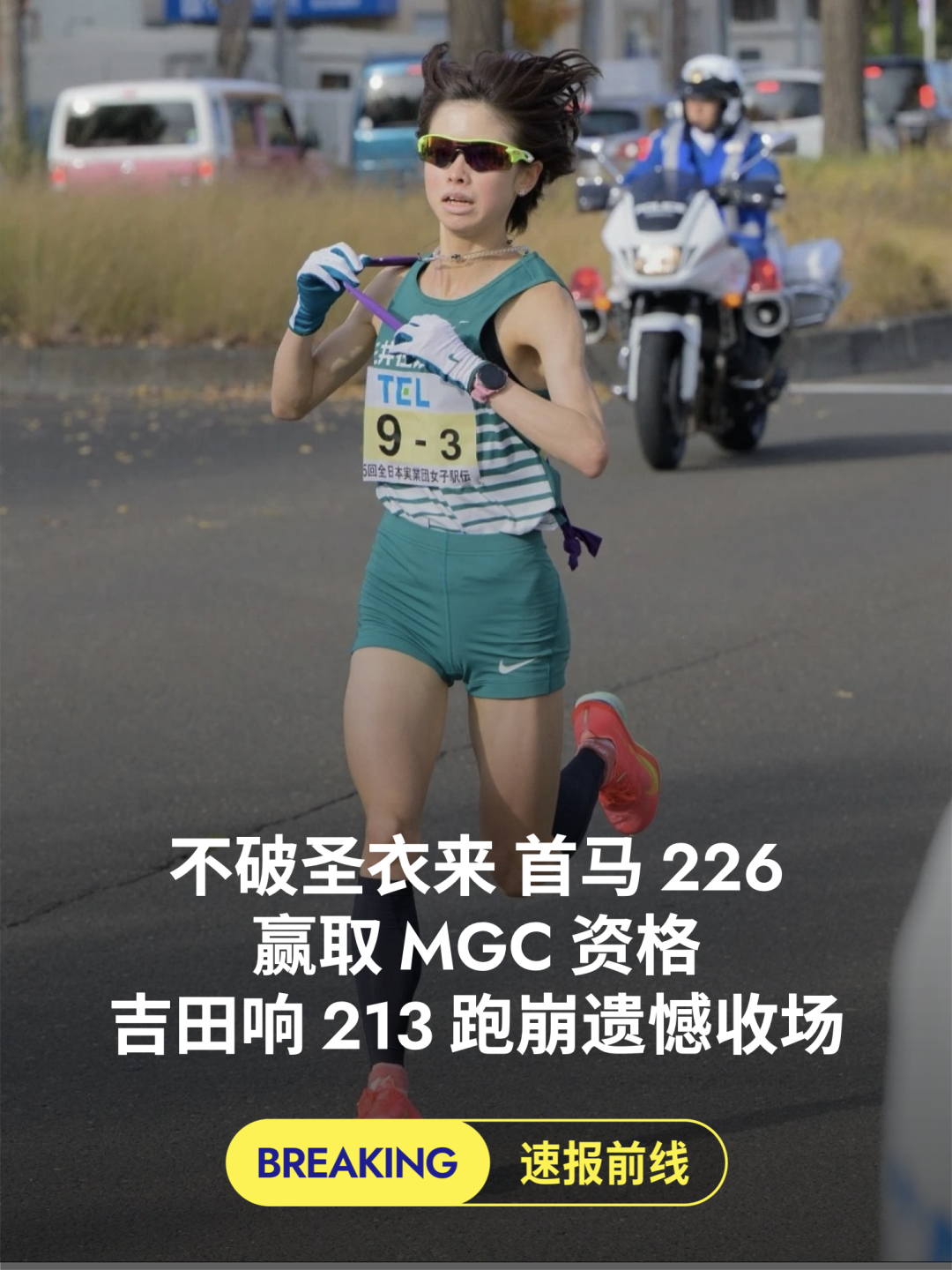
This morning at 8:30 Japan time, Japan’s only large-scale full marathon held in the height of summer — the Hokkaido Marathon — started from Sapporo Odori Park.
In this race, Seira Fuwa, a graduate of Takushoku University, will attempt her first full marathon; the “Phiten‑patch king” — Hibiki Yoshida — after crashing at this year’s Osaka Marathon (2:09:35), is taking on his second full marathon. Will he blow up again this time due to poor fueling or an overly aggressive strategy?
At the same time, one of Japan’s leading women’s distance runners, Hitomi Niiya, is also on the entry list — what kind of performance will she produce here?
01
Race highlights
Seira Fuwa, making her first full marathon, has largely recovered from previous Achilles and hip issues with the help of her corporate team. She arrived at the start injury‑free and completed several long key workouts in preparation.
For a “young prodigy” who runs 10,000m in 30:45.21 and a half marathon in 1:09:39, she said before the race that her primary goal is to secure an MGC spot (women: 2:32:00 or top three Japanese) and to run under 2:30.
Her biggest rival — and possibly the one to push her on the course — is Hitomi Niiya, the Japanese record holder in the women’s half marathon (1:06:38) and 10,000m (30:20.44).
What kind of sparks will those two produce? We’ll be watching closely.
On the men’s side there’s also our “Phiten‑patch ace” — Hibiki Yoshida. At this year’s Osaka Marathon he produced a frightening 2:09:35 debut, but that time came after his “suicidal” pacing blew up around 32km.
This is his second full marathon. He aims to go under 2:08, break the men’s course record (Naoki Okamoto’s 2:11:29 from 2018), take the win and secure MGC qualification.
After some time to settle, can he hold a steady rhythm, adopt a more measured tactic and ultimately achieve his targets?
02
Race progress
Today in Sapporo, Hokkaido, the weather was overcast with temperatures between 17–22°C. For the two athletes we’re focusing on — Seira Fuwa and Hibiki Yoshida — the conditions were fairly suitable.
0–10km
Hibiki Yoshida, Takayuki Iida and others ran in the first men’s pack, passing the 5km timing point in 15:30 with everyone bunched tightly; Seira Fuwa and Hitomi Niiya passed at a 17:27 tempo.
At 10km the leading men’s and women’s groups went through in 30:35 and 34:28 respectively.
10–20km
Yoshida and Fuwa stayed in the leading men’s and women’s groups. Masato Arao and Daisuke Higuchi were driving the men’s pack, with Yoshida consistently tucked in fourth; Fuwa rotated the lead with Hitomi Niiya and Shiori Yoshizono.
The 15km split for the leading men’s and women’s groups was 45:56 and 51:35.
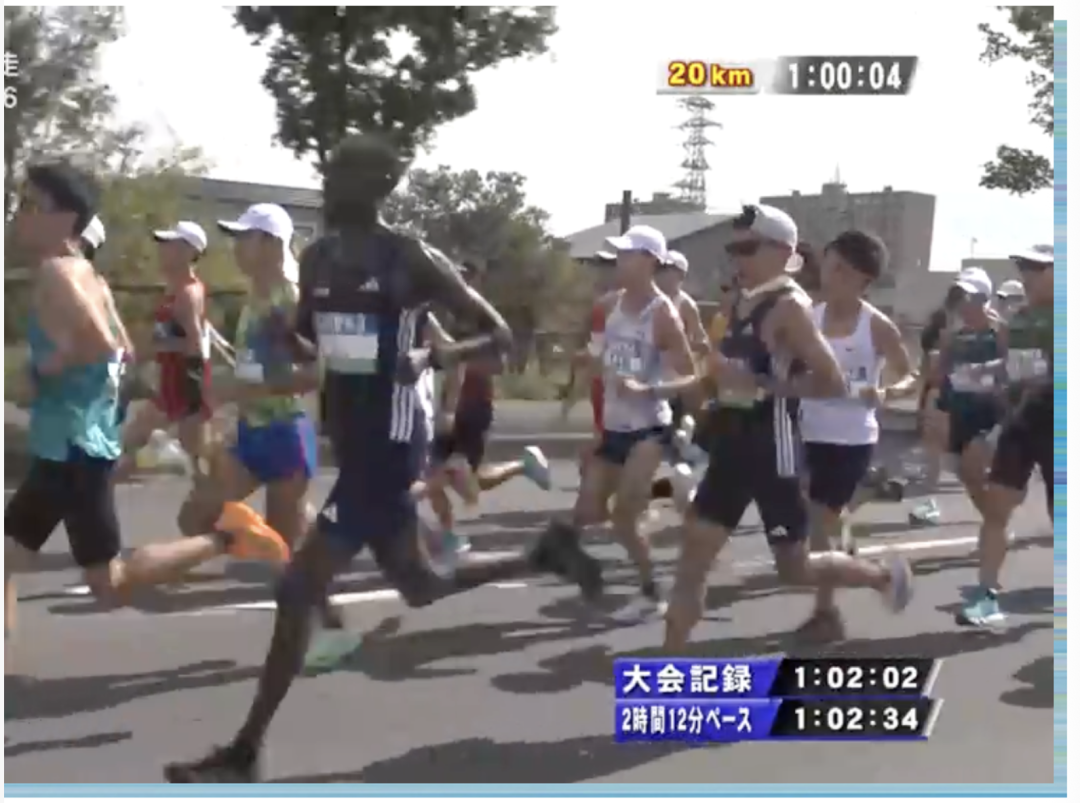
At 20km the men’s lead group passed in 1:00:04 — roughly 2 minutes faster than the race’s recorded 20km benchmark — while the women went through in 1:08:42.
20–30km
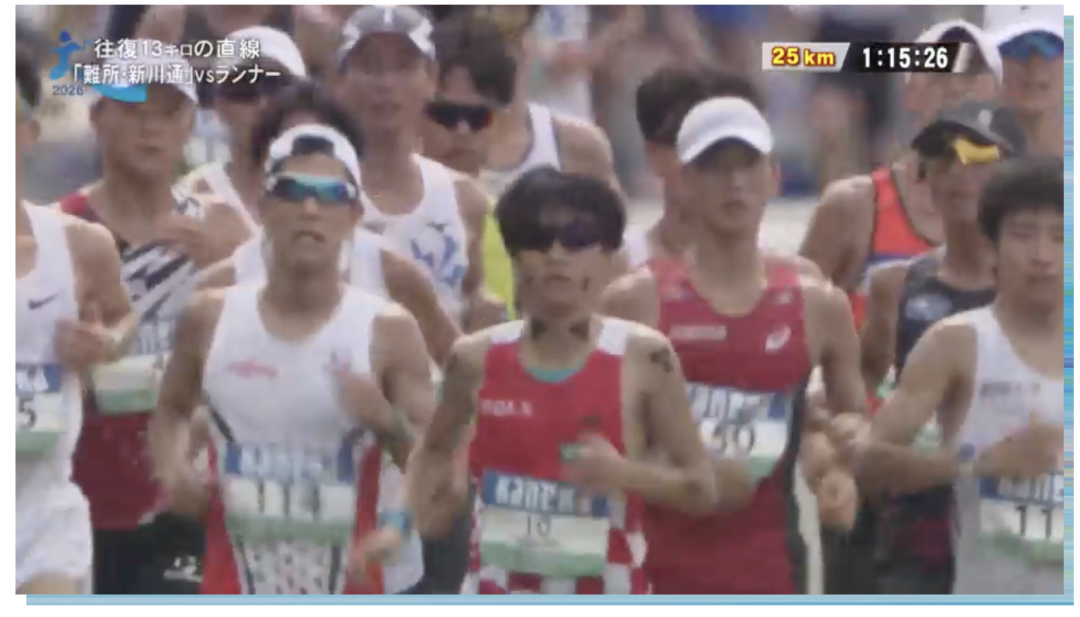
25km — Minoru Kameda passed in 1:16:22, opening a gap of nearly 20m on the men’s lead group that included Hibiki Yoshida.
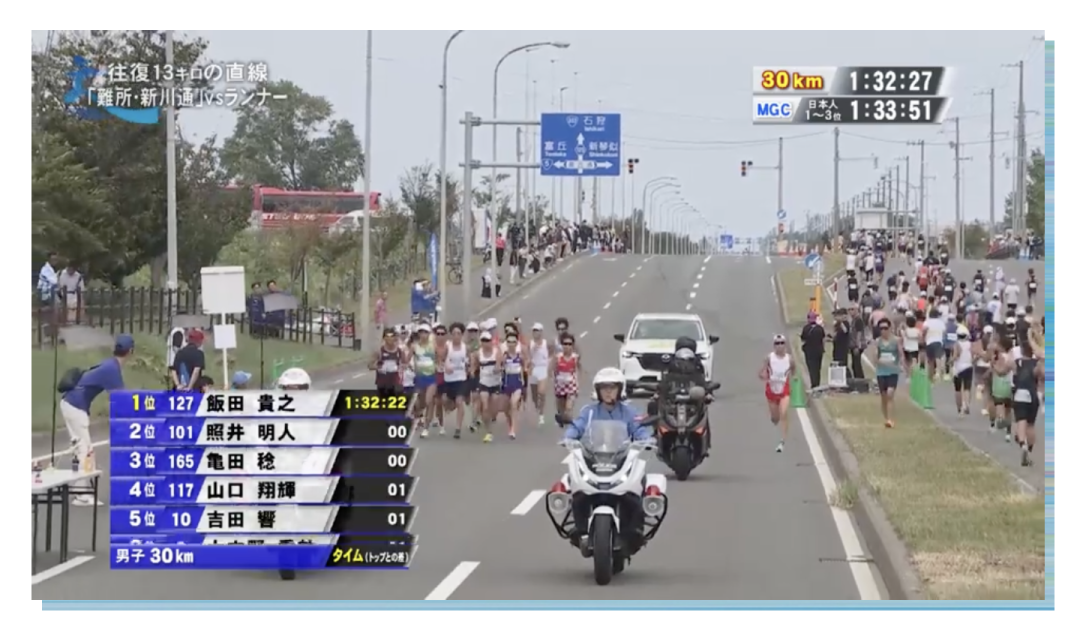
By 28km the men’s group, led by Takayuki Iida, had caught the solo leader Kameda and passed the 30km timing mat in 1:32:22.
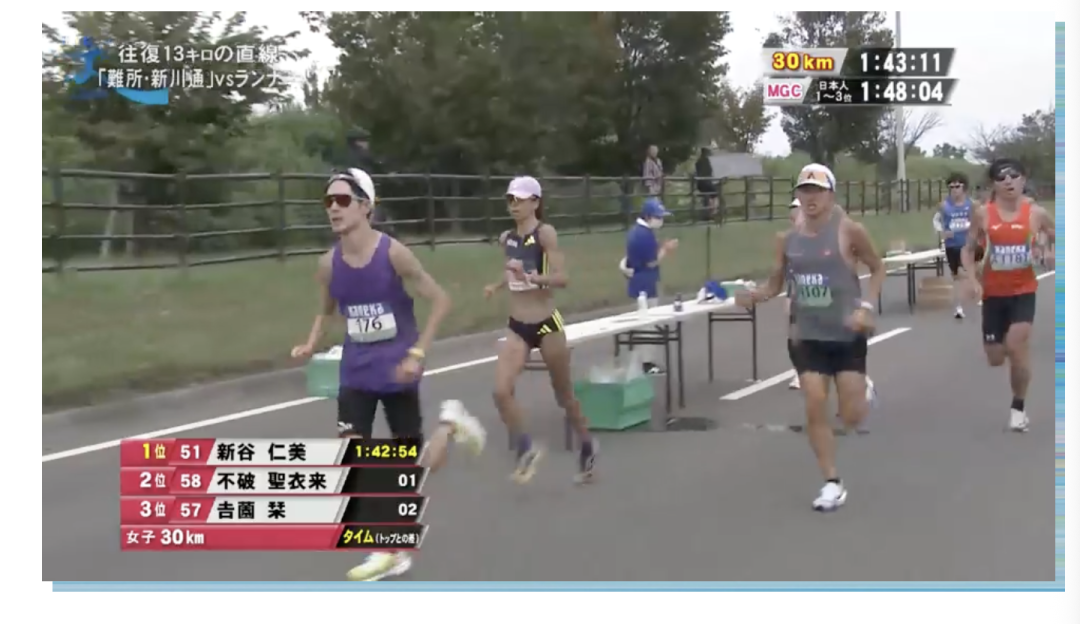
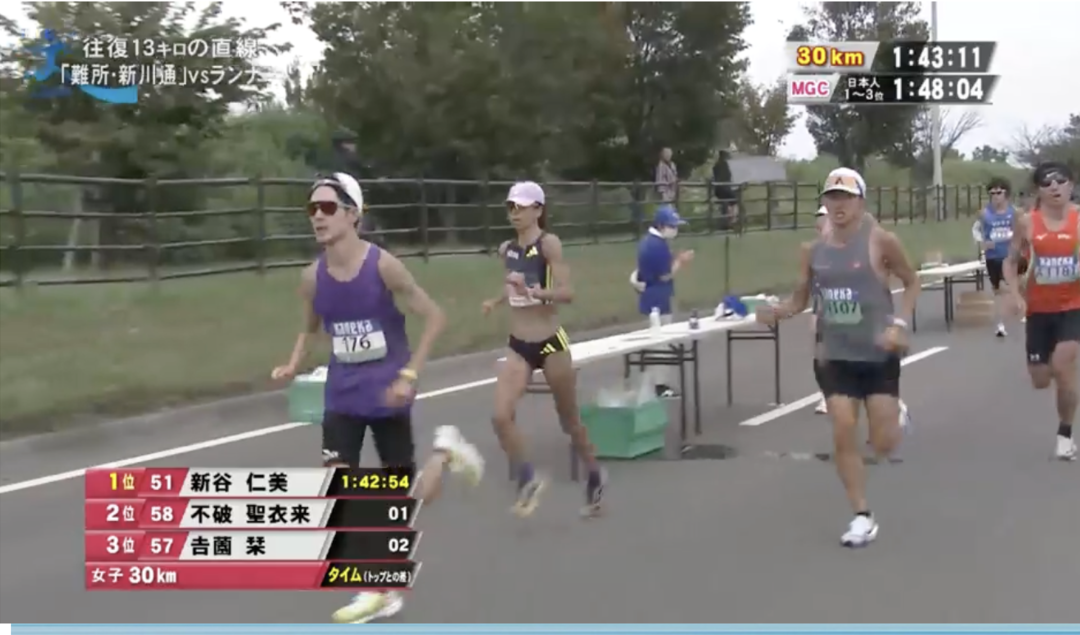
The women’s group remained tightly contested — Seira Fuwa and Hitomi Niiya were still dueling up front, while Shiori Yoshizono showed signs of dropping back.
30–35km
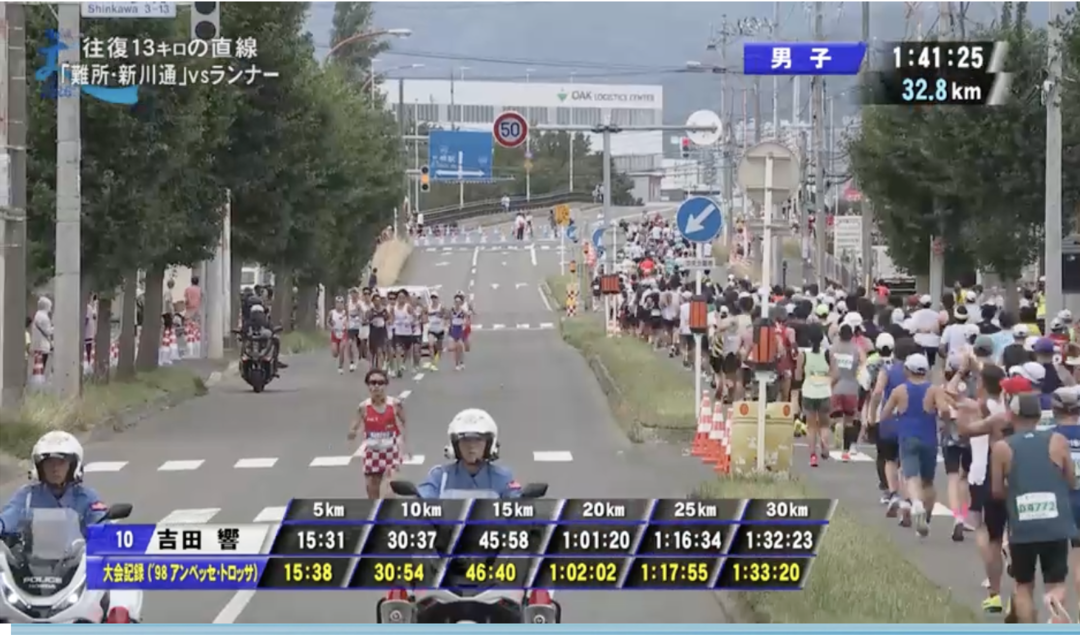
At 31km Yoshida began to accelerate and broke away from the main group. Compared with the overly aggressive tactics he used at Osaka, this time Yoshida had stayed with the pack for a long spell before launching his move.
03
Results
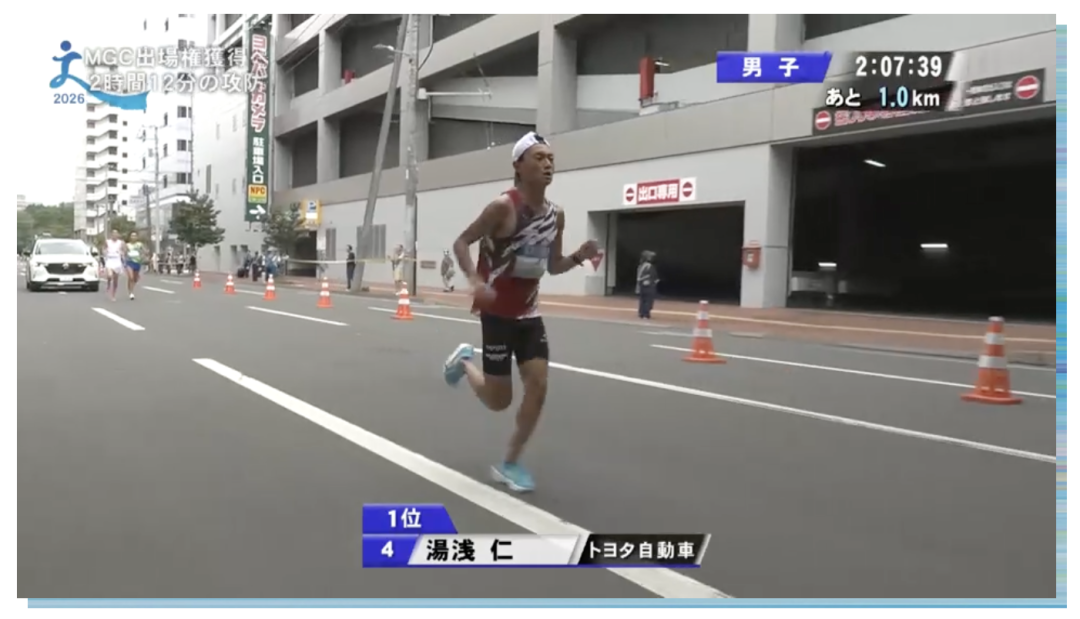
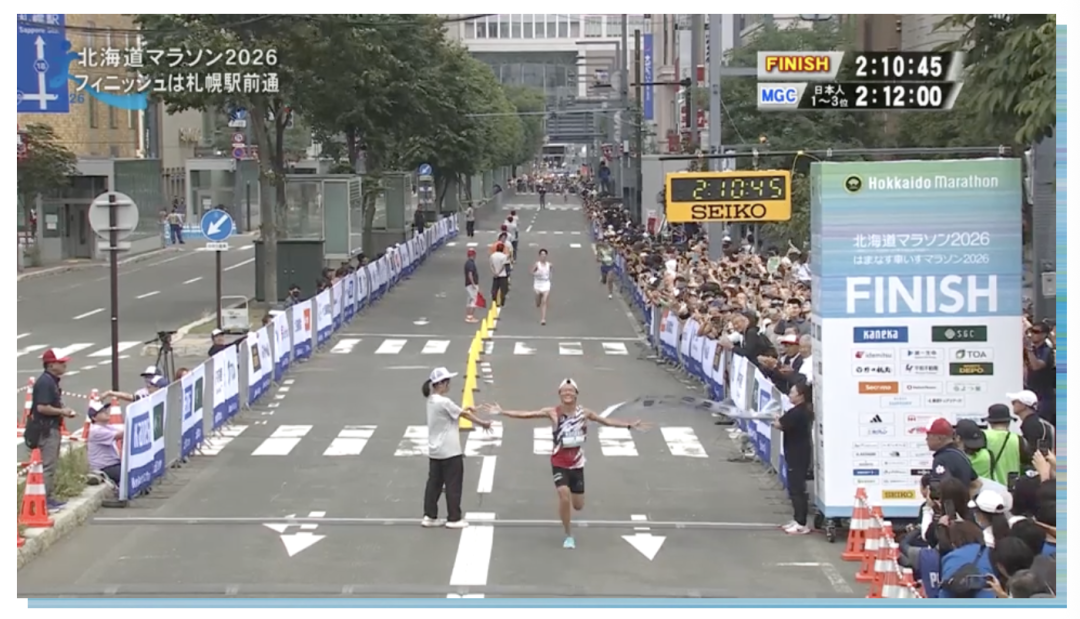
In the end Jin Yuasa won in 2:10:45, breaking the men's course record2:11:29. The other two from the lead group,Ken Tansho,Miu Arao also finished second and third in 2:10:54 and 2:10:58 respectively, also under the course record — the top three all secured MGC qualification.
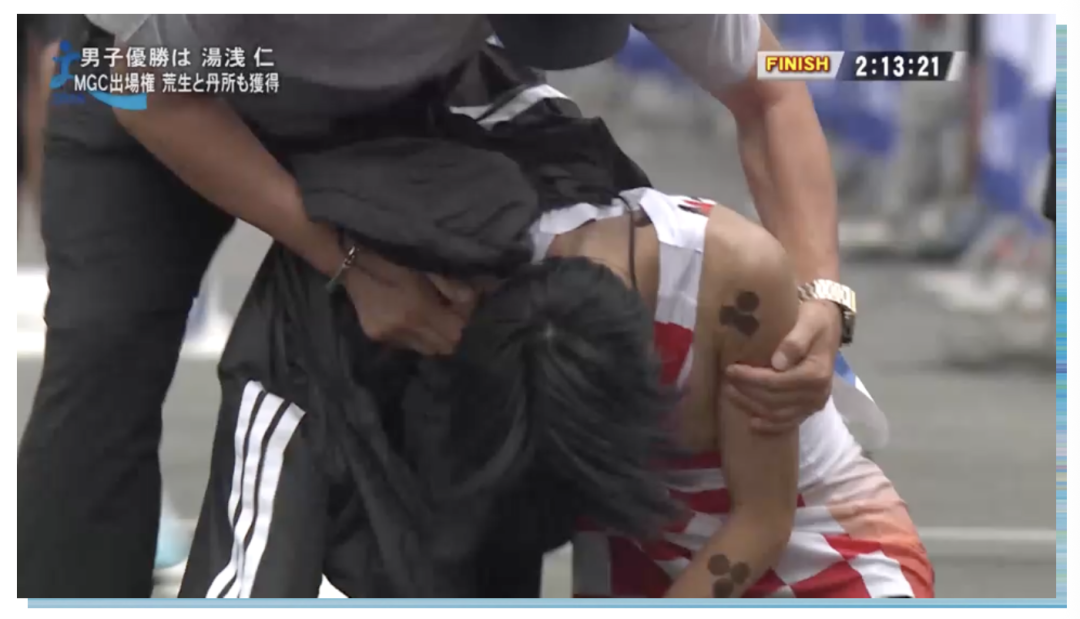
Hibiki Yoshida suffered greatly in the final 3–4 km, ultimately finishing 9th in 2:13:15.
Today his race strategy was better than at the Osaka Marathon. He followed steadily early and used his speed to make a move at 31 km. Unfortunately, for various reasons he couldn't hold on to the end, and his pre-race target of “breaking the course record + securing MGC qualification” ended up going separate ways.
Perhaps he should be more conservative, learning from runners like Jin Yuasa who start accelerating at 40 km — accelerating 11 km early was indeed a bit hasty. Still, we admire this kind of “impulsive” Japanese racer — “whether I blow up or not, I’ll give it a go” — that worldly philosophy makes the race highly entertaining and suspenseful for spectators.
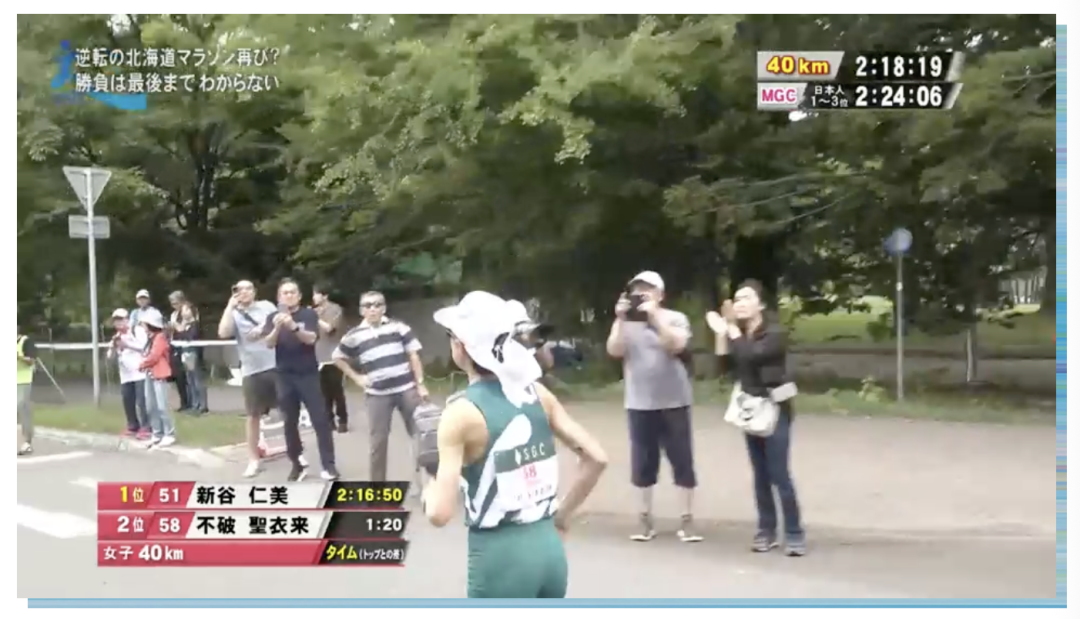
On the women's side, Hitomi Niiya won in 2:24:14,breaking the former course record of 2:25:10 set by Kiyoko Shimahara in 2009,Seira Fuwa, in her debut marathon, took second in 2:26:03; both earned MGC qualification.
Shiori Kizono, who had been in the top three through 40 km,was overtaken by Kaena Takeyama from behind; Takeyama took third in 2:28:07, while Kizono finished 2:28:42 and sadly dropped off the podium.
The reason it's regrettable for Shiori Kizono is that although her time met the MGC standard, only the top three within the qualifying time get spots — she therefore lost out on MGC qualification at the last moment.
In the end, Seira Fuwa got her wish in her debut marathon — she secured MGC qualification, finished in the women's top three, and even produced an unexpectedly strong 2:26 time. Truly congratulations!
Hibiki Yoshida showed tactical improvement, but races are like that — you need both form and luck to get good results. Hopefully he'll make a breakthrough next time.
[End-of-article Interaction]
Text/Editor: Cavendish
Images: Hokkaido Cultural Broadcasting, Instagram
Visuals: Max