


In the world of athletics, the mile is a very special event.
Although it is not an official Olympic or World Championships distance, it carries a kind of classical athletics romance. It demands near-800m top speed while also requiring aerobic base and speed endurance. In a sense, the mile is the most direct—and the most brutal—litmus test for middle-distance runners.
And the men's one-mile world record has been asleep for27 years.
In 1999, Moroccan legend Hicham El Guerrouj ran 3 minutes 43 seconds 13 in Rome. Since then, the world of middle distance has gone from African dynasties to the rise of Jakob Ingebrigtsen and then a new generation including Yared Nuguse, Josh Kerr and others constantly attacking El Guerrouj's mark—but it has remained unshaken.
On July 18, 2026, at the London Diamond League, Britain’s Josh·Kerr will step to the line and openly challenge this long-sealed record.
01
A long wait
27 years without a new mark
For athletics, the men’s one-mile world record staying stagnant for so long is undoubtedly a historical anomaly. The first one-mile world record recognized by World Athletics was set by John Paul Jones in 1913 at 4 minutes 14 seconds 40. In the following 86 years up to Hicham El Guerrouj's current mark of 3 minutes 43 seconds 13 set in Rome in 1999, the record was broken 31 times—in other words, on average a new breakthrough came in under 3 years.
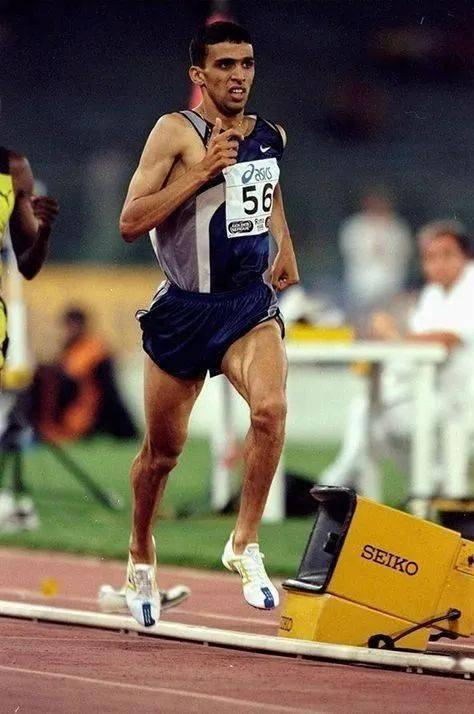
1999, El Guerrouj set the one-mile world record of 3:43.13 in Rome, sealed ever since
By comparison,1999 to now is a particularly long27 years.
During this time, the 1500m has remained exciting. Olympic and World Championship finals have produced classic battles, and more athletes have broken 3:30. In 2025 there were even 14 athletes who ran under 3:30 for 1500m. Yet the mile record has been frozen at 3 minutes 43 seconds 13, a towering monument in middle-distance history—approached many times, but never surpassed.
02
Why so 'unchallengeable'?
Why is El Guerrouj's record so hard to shake? Josh Kerr's coach Danny Mackey gave a very straightforward answer when asked: because it's really hard.
Yes—it's that blunt. 3 minutes 43 seconds 13 means maintaining roughly 55 seconds and 45 hundredths per 400m for four consecutive laps. In the past 27 years, athletes who have actually run inside 3 minutes 45 seconds are few. Besides El Guerrouj, only Jakob Ingebrigtsen and Yared Nuguse ran near that mark at the 2023 Prefontaine Classic—Ingebrigtsen with 3 minutes 43 seconds 73 and Nuguse with 3 minutes 43 seconds 97. That race was already great, but still a bit short of the world record.

There is also a practical reason the mile record is hard to break: there simply aren't many high-level one-mile races. The core of modern middle-distance is the 1500 metres, and opportunities to race the mile on the pro circuit are limited. For a long time, the most important outdoor mile races have been scheduled early in the season, when athletes may not be at their peak. For middle-distance runners, breaking the record requires not just ability but the right timing, pacesetters, opponents and peak condition all aligning.
That helps explain why an event seemingly less than a second away has been sealed in history for so long.
03
"PROJECT 222"
Kerr likes to be loud. Before the outdoor season began he publicly announced his bid to challenge the one-mile world record. The plan has been named “PROJECT 222”—the goal is explicit: to run the mile within 222 seconds, i.e. in the 3 minutes 42 seconds range. For this race,Kerr and sponsor BROOKS have launched new spikes, custom kit, and even produced training video content around the project.

On the surface it's a commercial package similar to Nike's Breaking4, butKerr's real strength is peaking at major races—this is the confidence behind PROJECT 222.
From 2021 to 2024 he has delivered high-level performances at four consecutive global championships, taking an Olympic medal and a World Championship gold, and he ran his 1500m PB of 3 minutes 27 seconds 79 in the Paris Olympic 1500m final. That 1500m time roughly converts to a mile in about 3 minutes 44 seconds. So,Kerr is not fancifully far from the world record, but he still needs to take a very difficult extra step forward.

Mackey believes Kerr is now more mature. He combines pre-championship speed with a stronger body and better tempo-running ability than before. Unlike preparing for a World Championship or Olympics, this timeKerr doesn't need to prepare for complex championship tactics. He doesn't have to deal with slow finals, sudden surges, being boxed in, or chaotic final-kick scrambles. He only needs to prepare for one style of race: a steady, even effort to get as close as possible to world-record pace over the mile.
04
Let's see who smiles last
A one-mile world record isn't something one person can do on a whim. Especially over the first 1000 metres, the role of pacesetters is critical. If the target is inside 3 minutes 43 seconds 13, the first 800 metres need to be controlled at about 1 minute 50 seconds 90. If it's too slow, it's hard to make up; if it's too fast, the final lap can collapse.
OriginallyKerr's team hoped to find a world-class miler as a pacemaker, but that plan didn't materialize. In the end,Kerr will be paced by Brooks Beasts teammate Kidd and Slovenian pacer Rudolf. Rudolf is experienced and has paced many high-speed 1500m races. Ideally Kidd will lead up to around 950 metres, Rudolf will take over for a short stretch, and thenKerr must face the final challenge alone.
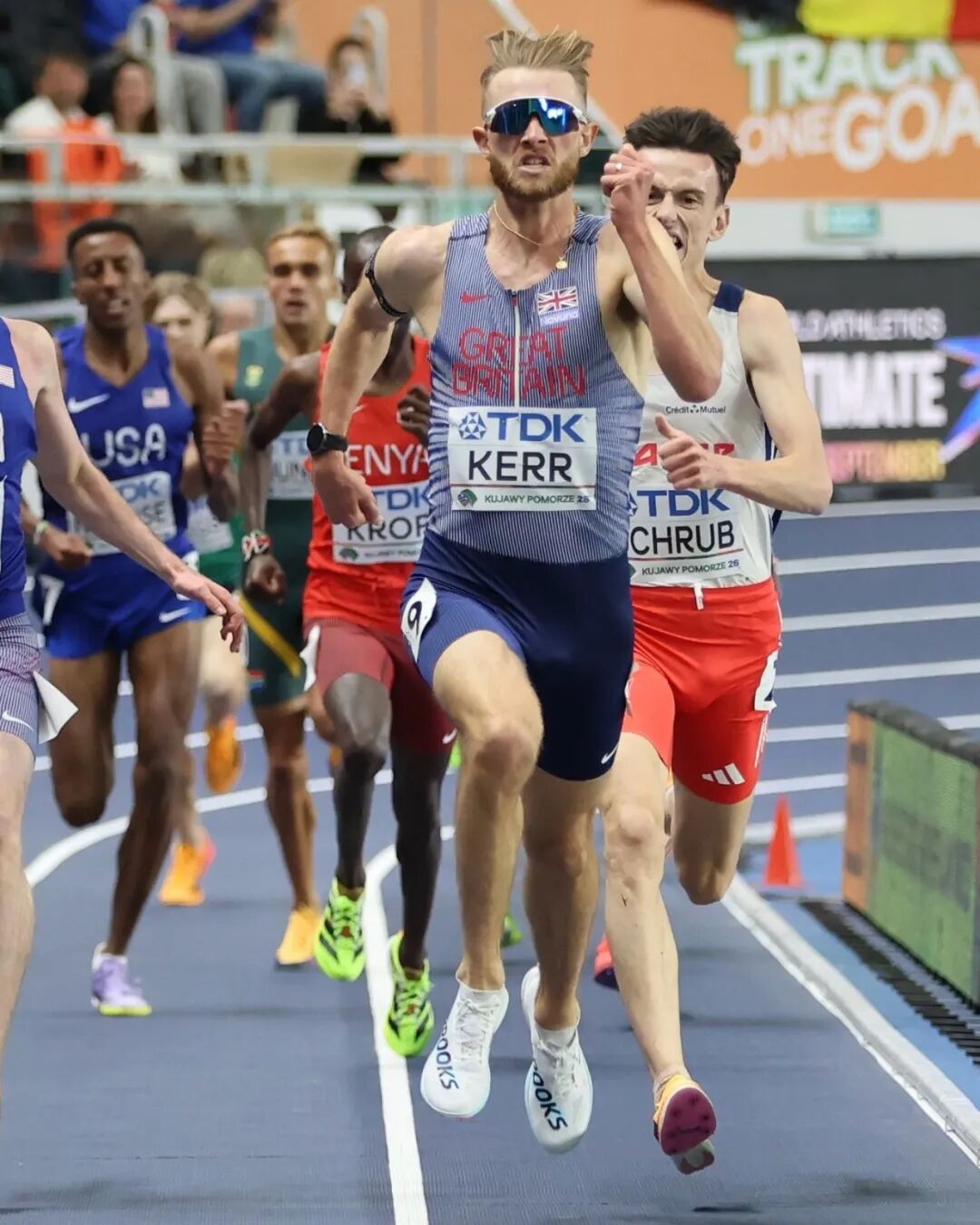
The forecast for race day is sunny, around 24°C with light wind. But at this level of attempt, even a single gust of headwind, a broken rhythm or a tiny drop in speed can let the record slip away.
The London mile is not a solo show forKerr. On the start line are Yared Nuguse, Hobbs Kessler, Nathan Green, Simon Bernbaum and other strong rivals.
Among them, the most important person is undoubtedly Nuguse.
Nuguse ran 3 minutes 43 seconds 97 in 2023, one of the closest performances to El Guerrouj's world record. His coach has made it clear that Nuguse will do whatever it takes to stick to the pace—he isn't afraid of Kerr, nor of failure.
That is both a threat and an aid to Kerr.
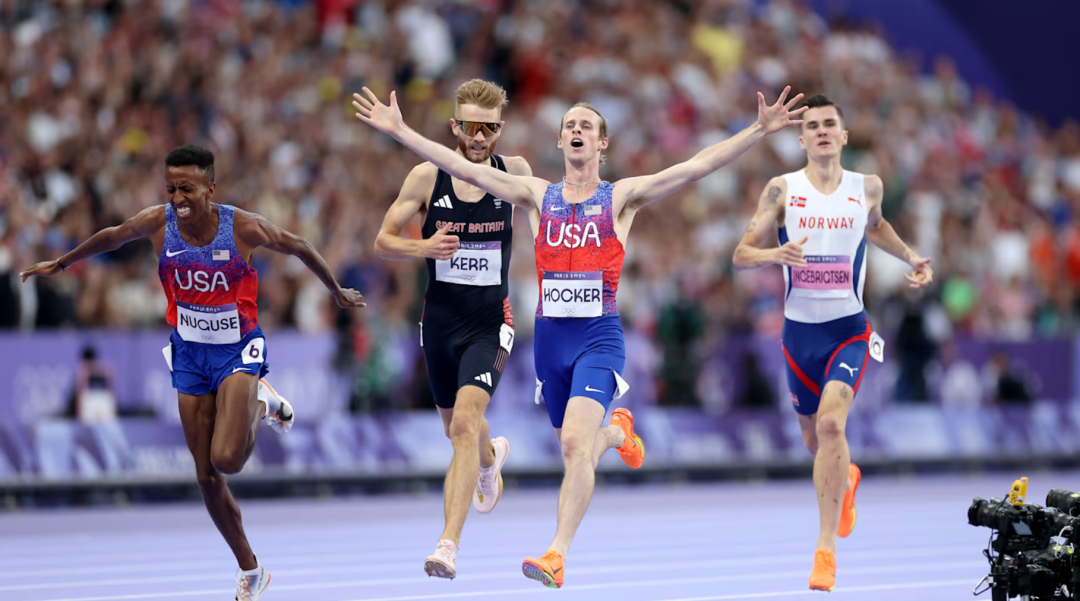
Many great middle-distance records in history weren't born in solitude. In 1985, when Steve Cram ran under 3:30 for 1500m in Nice, he was chased hard by Saïd Aouita; in 1999, El Guerrouj's mile record was set with Noah Ngeny almost on his shoulder—notably, both El Guerrouj and Ngeny broke the world record that day.2023 performances by Ingebrigtsen and Nuguse at Prefontaine were similar in that respect.
Mackey understands this, so if someone can hold on in the final kick,Kerr, that could actually become the final extra force needed to break the record.
05
More than a record
Kerr's ability to break the world record is still an open question.
In terms of ability, a 1500m PB of 3 minutes 27 seconds 79 shows he is already very close. Add consistent championship performances, scientific tempo-specific training, pacer support, equipment and other modern aids, and he has better external conditions than predecessors.
But looking at the record itself, 3 minutes 43 seconds 13 still feels like an unbreachable gulf. It demands not only superior ability but also that the athlete be able to unleash every ounce of their capability within less than four minutes, under perfect alignment of timing, venue, people and condition.
That's the gap between great performances and world records.
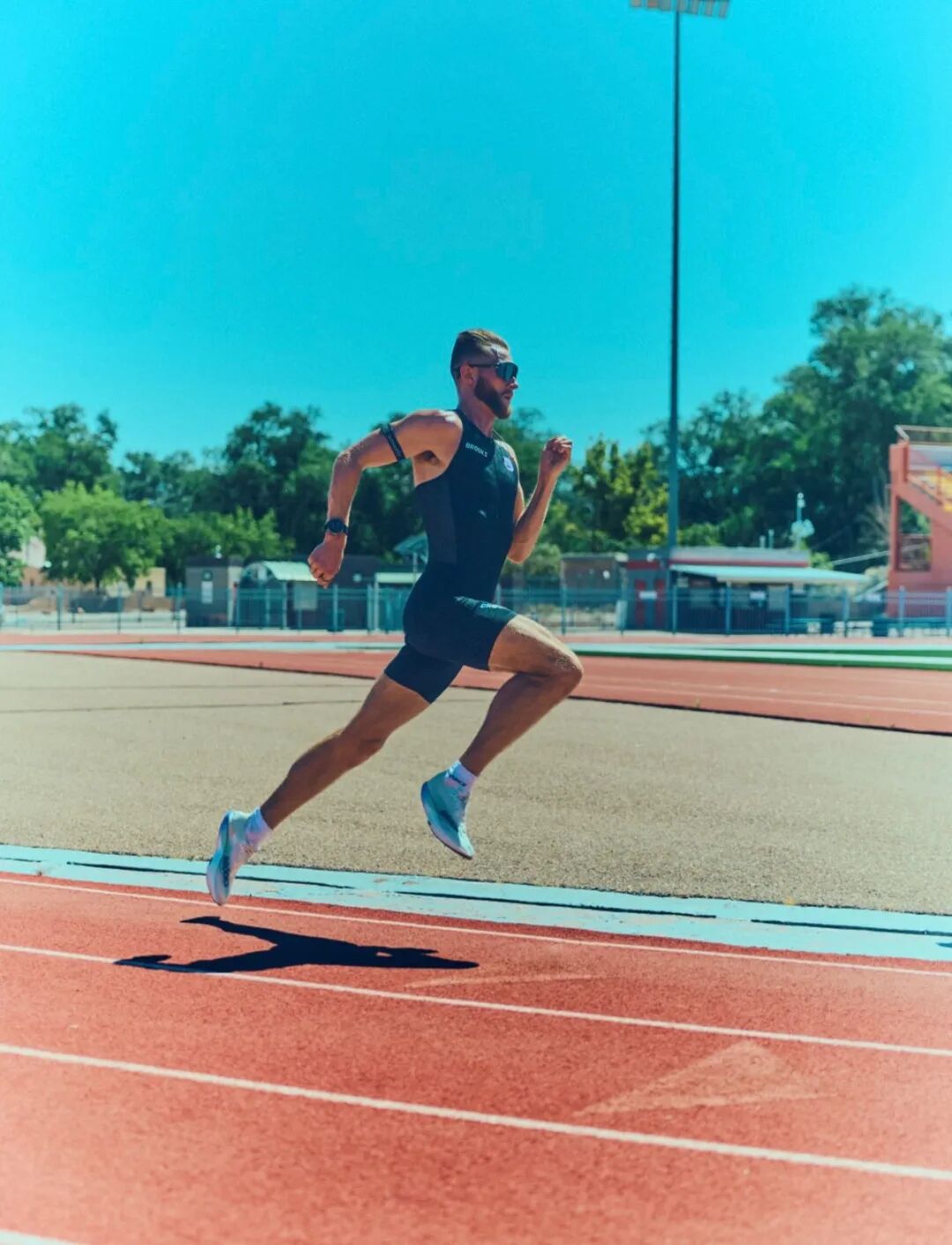
For the past 27 years the men's mile has been waiting for a new name. Now,Kerr arrives in London with “PROJECT 222” and stands on the same start line as a field of rivals.
If everything goes well, Saturday afternoon in London could witness a long-overdue rewrite in middle-distance history. We'll be watching.
[Endnote Interaction]
Text/Editor: JOJO
Image sources: RunWild Big Bang, brooks
Visual: Max