


Many runners believe that only when every training session leaves them drenched in sweat and gasping for breath is it considered a proper workout. As a result, their easy runs (Easy Run) are often too fast, with their heart rate remaining in Zone 3 (moderate intensity). In exercise science this zone is called "junk miles" or the "grey zone".

Physiological research shows that training at this intensity often leaves the body in an awkward state: it’s not intense enough to effectively stimulate the lactate threshold (Lactate Threshold) or improve VO2 Max, yet not light enough for aerobic metabolism to efficiently clear metabolic waste. This leads to fatigue accumulation and impedes repair of micro-damage in the muscles.
A true easy run should be kept in Zone 2, which we often call the "second-zone heart rate" (aerobic endurance zone, typically 60–70% of maximum heart rate). In this zone the body mainly uses fat as fuel and can maximally promote the growth of mitochondria (Mitochondria) and increases in capillary density. Mitochondria are the cell’s "power plants"; their number directly determines how wide your aerobic endurance base is.
Therefore, in training we can apply the '80/20' rule — that is, 80% of your running should be easy and enjoyable (you should be able to talk while running), and only 20% should be high intensity. Understand that "slower now means faster later."

Although the 5K is an aerobic event (about 90–95% of the energy comes from aerobic metabolism), the remaining 5–10% of anaerobic energy often determines whether you can break through a plateau.
Many runners focus only on "adding mileage," running the same distance at the same pace every day. This single-minded training approach leads to stagnation in neural and muscular adaptation. When you try to speed up in a race, your legs feel like they're filled with lead because your nervous system has essentially "forgotten" how to coordinate rapid muscle contractions.Therefore, to run a good 5K, you need to improve neuromuscular efficiency and VO2max. Gradually incorporating the following speed sessions into your regular training can help you effectively improve your speed.
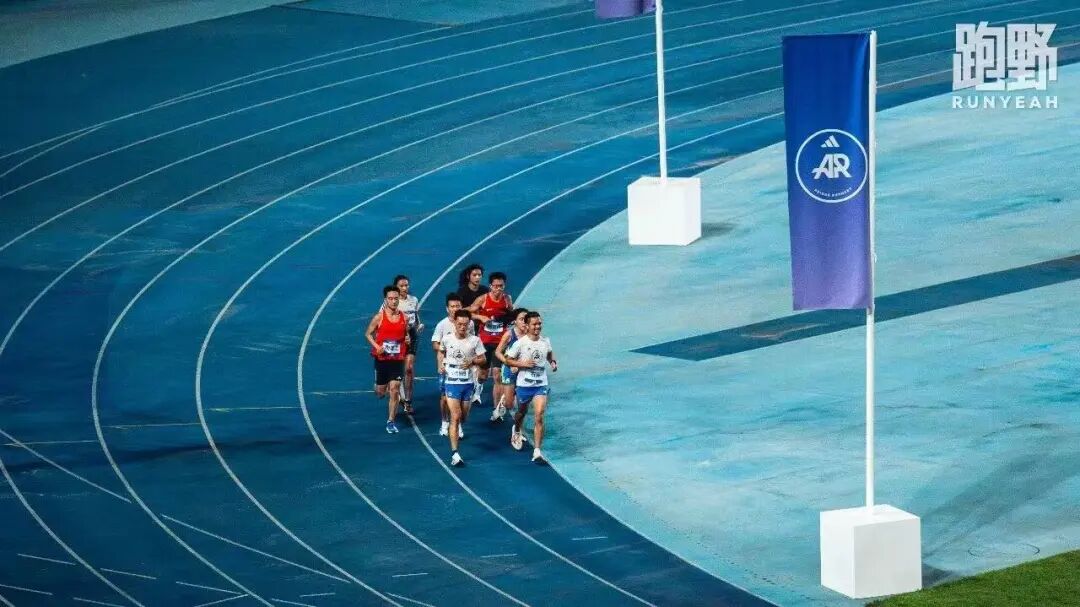
One option is progressive accelerations (Strides): after an easy run, do several 15-20 second quick sprints (not all-out, about 95% perceived effort). These activate fast-twitch muscle fibers, improve running economy, and don’t cause excessive lactate accumulation.
The other is the familiar interval training (Intervals), for example 5x1000m (pace slightly faster than your target 5K pace), with ample recovery between reps. This kind of workout directly improves your VO2 Max, allowing you to maintain speed during the "extremely painful" phase in the second half of a race.
Don’t be afraid of speed. Start with one strides session per week and gradually progress to structured interval training. Teach your body to "operate comfortably under high pressure" so you can successfully get through performance plateaus.

Tactical mistakes in races are common among less experienced runners, the most typical being'suicidal' starts, running the first 1 km of a 5K race at PB pace — this is not a thrill, but the beginning of a disaster.
Because the excitement and adrenaline surge at the start often mask the body's fatigue signals, a too-fast start will cause lactate levels to spike early, prematurely depleting valuable glycogen stores. By the 'wall' after 3 km, with large lactate accumulation your muscle function will crash, your pace will steadily fall, and the final result will be a mess.

And when we analyze race data from the world’s top distance runners, the vast majority of world records are set with negative splits or even pacing. That means the second half is faster than the first, or the entire race is run at an extremely steady rhythm.
Therefore,plan your pacing scientifically,even pacing is the best race strategy. For example, hold back the excitement in kilometer 1 and run 3–5 seconds slower than your target pace; kilometers 2–3 should settle at target pace as you find your cruising rhythm; only in kilometers 4–5 does the real racing begin — use the reserves you preserved earlier to pick up the pace slightly, and sprint as hard as you can in the final stages. This kind of race strategy lets you tap your full reserves and greatly increases the chances of a PB.

Some runners are too busy at work to run during the week and cram a ten‑plus kilometre run on the weekend; others stop running for two weeks after one bad workout. Physiological adaptations require continuous stimulus. Building the aerobic system is like constructing a building — it needs to be built brick by brick.
Long periods of interruption cause blood volume to drop and mitochondrial enzyme activity to decline, wiping out previous gains.Also, irregular training readily leads to an imbalance in the acute/chronic workload ratio, which is a primary cause of stress fractures and tendinitis.

Frequency is often more important than single-run distance. Rather than running 15 km once a week, run 5 km three times a week. Build a sustainable training schedule (for example, 3–4 sessions per week) and stick with it long-term. Even on an off day, heading out for a 20-minute easy jog is far better than doing nothing. Consistency is the only shortcut to a PB.

You only run one hour a day — what are you doing during the other 23 hours? That's what determines your recovery and progress. Many runners focus only on the numbers on their watch, neglecting strength training, sleep, and nutrition. Running requires not just the cardiorespiratory system but also muscular strength; a lack of strength leads to injury, and insufficient recovery keeps the body in a fatigued state, making improvement and breakthroughs difficult.
In terms of strength training, attention should be paid to the gluteus medius and the core muscles. Running is a single-leg alternating activity. If the gluteus medius is weak or the core is unstable, the pelvis will wobble with each footstrike, which not only wastes energy but also increases stress on the knees and ankles. Research shows that Heavy Resistance Training and Plyometrics can significantly improve running economy (RE), allowing you to run faster at the same oxygen uptake.

For recovery, muscles grow during rest, not during training. Lack of sleep leads to elevated cortisol (the stress hormone), suppresses growth hormone secretion, and hinders recovery.
Therefore, scheduling 1-2 strength sessions per week that focus on single-leg stability (such as single-leg deadlifts and Bulgarian split squats) and core strength is essential. In addition, try to secure 7-9 hours of high-quality sleep each night. Training is not just about depletion; it's about rebuilding stronger.
The 5K is not just a race; it's an art of balance——balancing aerobic and anaerobic work, speed and endurance, training and recovery.
Eliud Kipchoge once said: “Only the disciplined are free.” On the road to a 5K PB, avoid these impulsive pitfalls and arm yourself with scientific training logic; only then can you gain true freedom on the course.

Are you ready now to challenge a faster version of yourself using a more scientific approach?