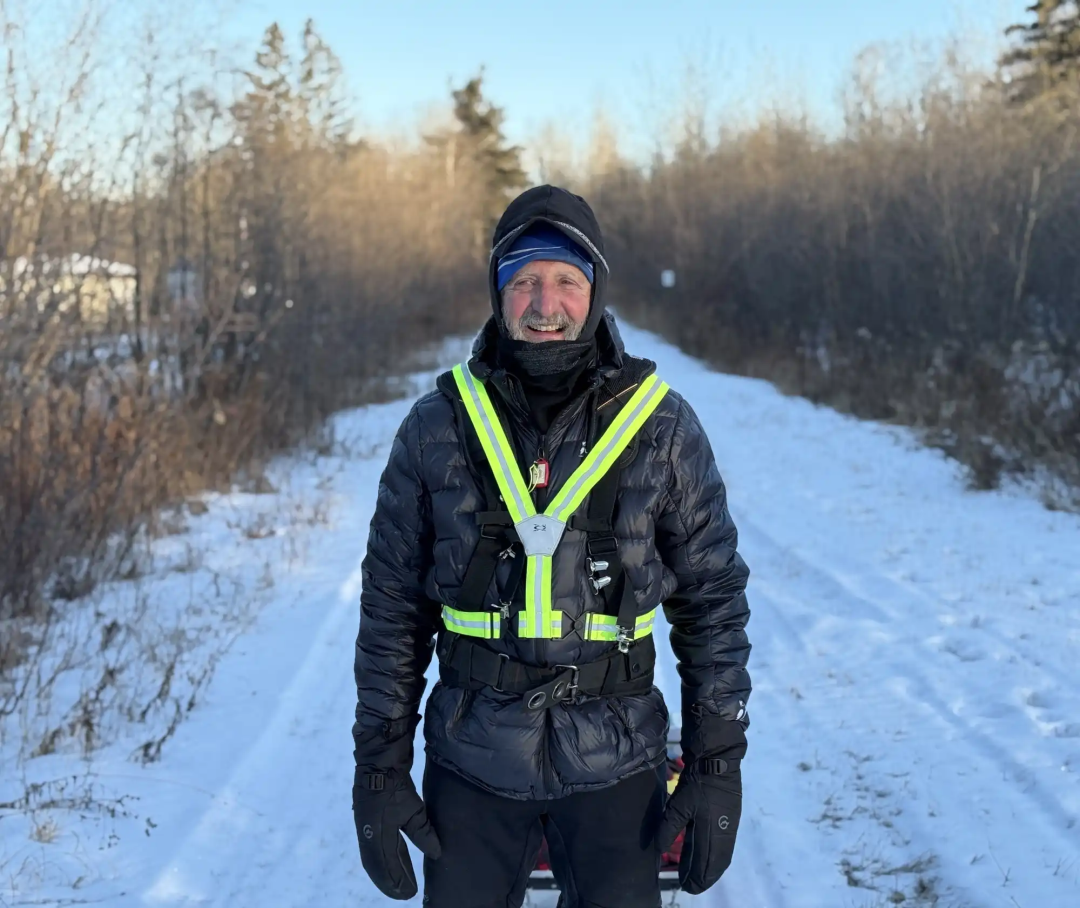
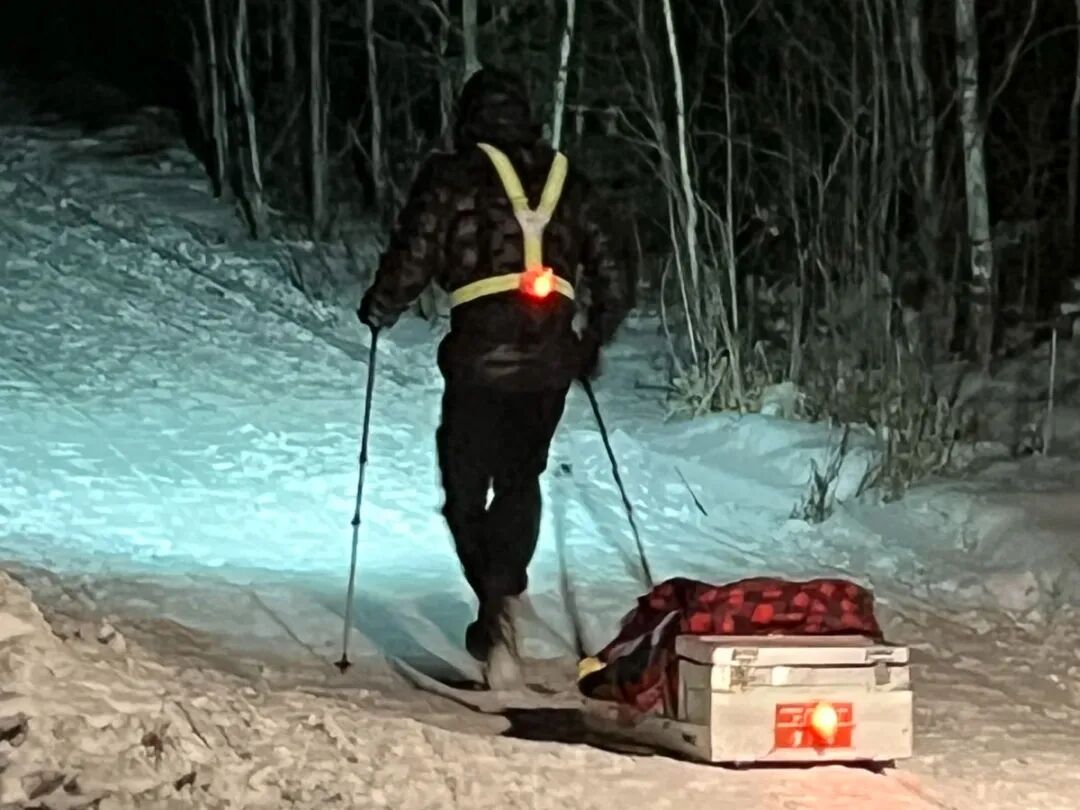
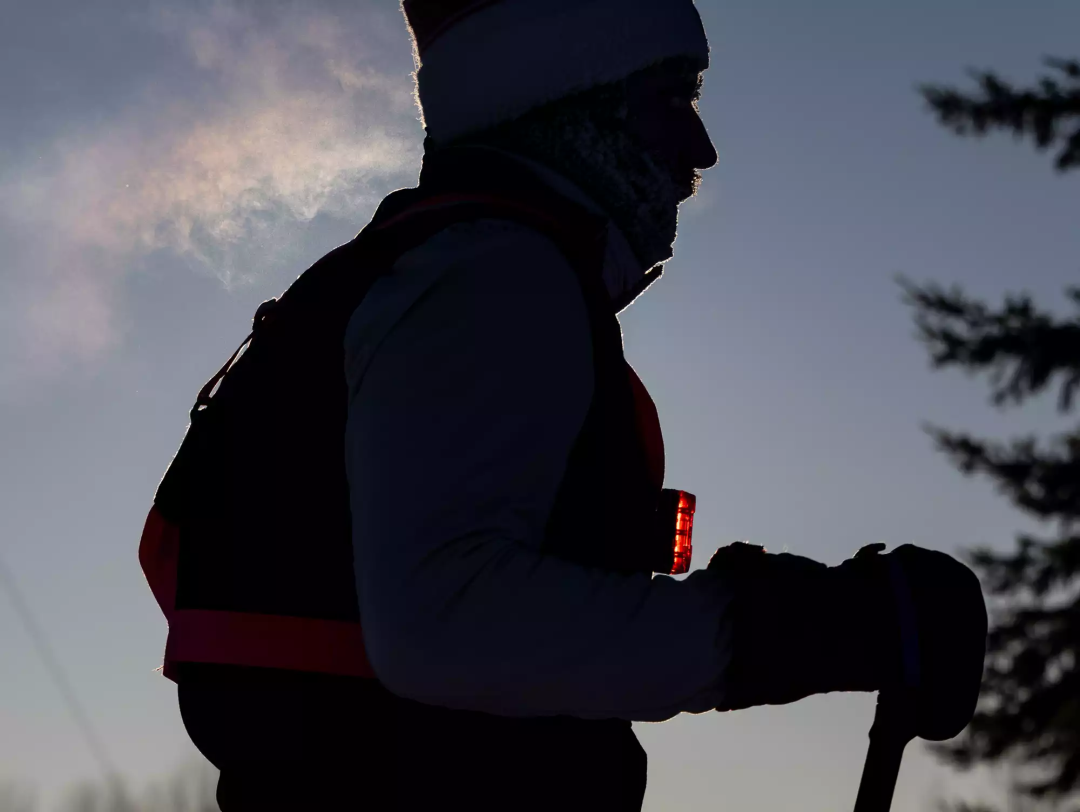
Arrowhead Ultra 135 is widely regarded as one of the toughest endurance races in the world. Competitors must traverse the desolate, bone‑cold snow trails of northern Minnesota—whether by bike, cross‑country skis, or on foot—and face the full 135 miles (about 217 km) challenge. Last year, 74-year-old Michael Koppy had about 11 kilometers left to the finish when he completely "hit the wall" and collapsed on the course; with the help of volunteers he ultimately had to withdraw. For him this was not an ordinary DNF, because the 74-year-old was attempting to become the oldest finisher in the event's history. As a retired university lecturer, Koppy is no amateur. He has competed across the U.S. in multiple 250-mile (approx. 402.3 km) races, and even holds the fastest time on the Superior Hiking Trail for runs of more than 300 miles (approx. 482.8 km). However,Arrowhead Ultra 135 was the most brutal crucible of his career:Participants must pull a sled loaded with survival supplies for the entire course and finish within 60 hours. In the more than 20 years since the race was founded, the average finish rate has even been under fifty percent. This year, 75-year-old Koppy made a comeback, and the challenge hit like an icy wind the moment the gun went off: at the start in International Falls the temperature plunged to -29°C, cutting into faces. In such extreme cold, the balance between staying warm and sweating is dangerously delicate — overheat and you sweat; sweat can freeze quickly overnight, dragging the body toward the abyss of hypothermia. To make matters worse, not long into the race he got off course and ran roughly an extra 800 meters, then suffered a crucial fueling mistake: the vital energy powder wasn’t carried with him in the first half, while his backup supplies were left at an aid station around the 112 km mark. In other words, during the longest, most draining first half he had to grit his teeth and get by on dry, hard energy bars and plain water. Hour by hour the cold and fatigue began to take hold. After nearly 60 hours, Koppy finally appeared, hunched on the horizon: back pain tugging at every step, icicles hanging from his chin, his whole body roughened as if carved by wind and snow. But he didn't stop — behind him was the cutoff time, and ahead lay the finish line that had once felled him. In the end, he reached the finish with only 30 minutes to spare before the 60-hour cutoff, completing the 135-mile (about 217 km) polar test in 59 hours 30 minutes — turning last year’s regret into history with an "on-the-line" finish.
After the finish, Koppy showed little outward reaction; instead he spoke calmly but with quiet intensity: "A lot of people, once they get older, say, 'I probably shouldn't be doing this anymore,' and then give up on their goals. I don't think age should be a shackle that limits you." Maybe that's the cruelest — and most captivating — thing about the Arrowhead 135: it forces you to acknowledge vulnerability and to redefine what's possible. Now it's your turn — if the finish line never asked your age, are you ready to ask yourself again: which goal would you go all out for?