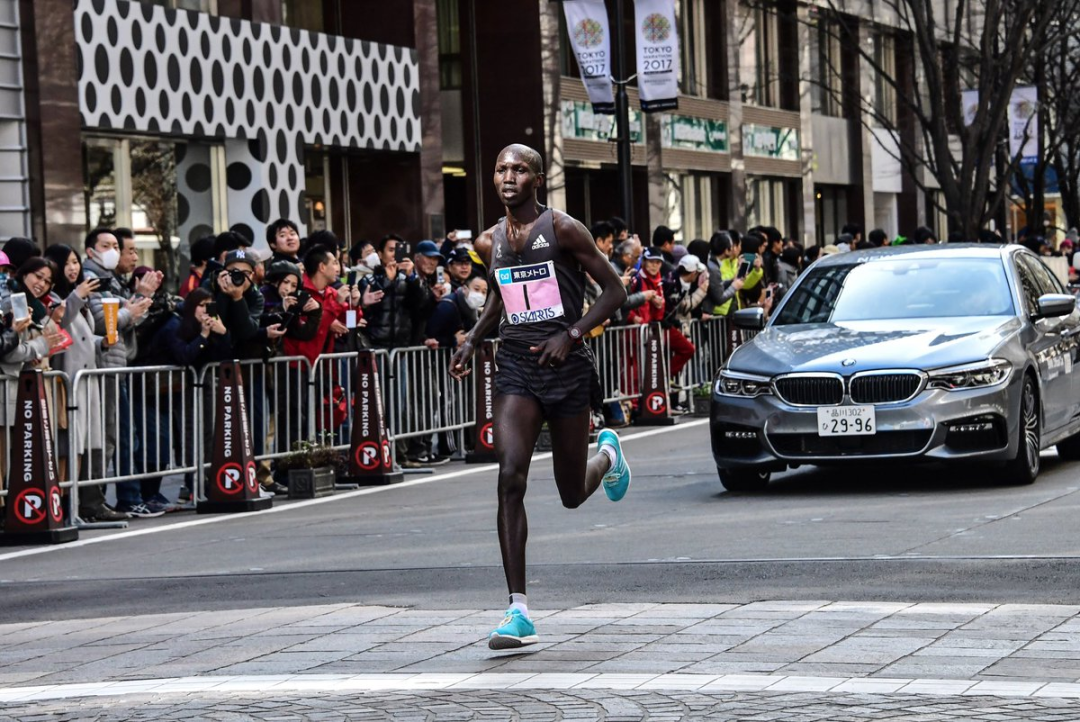
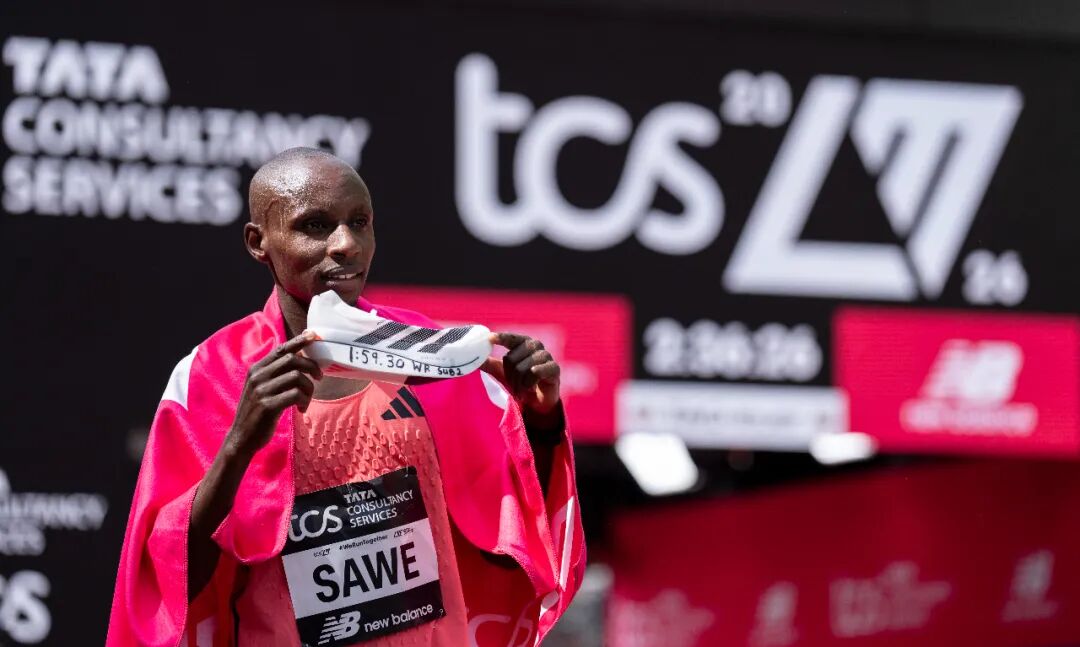
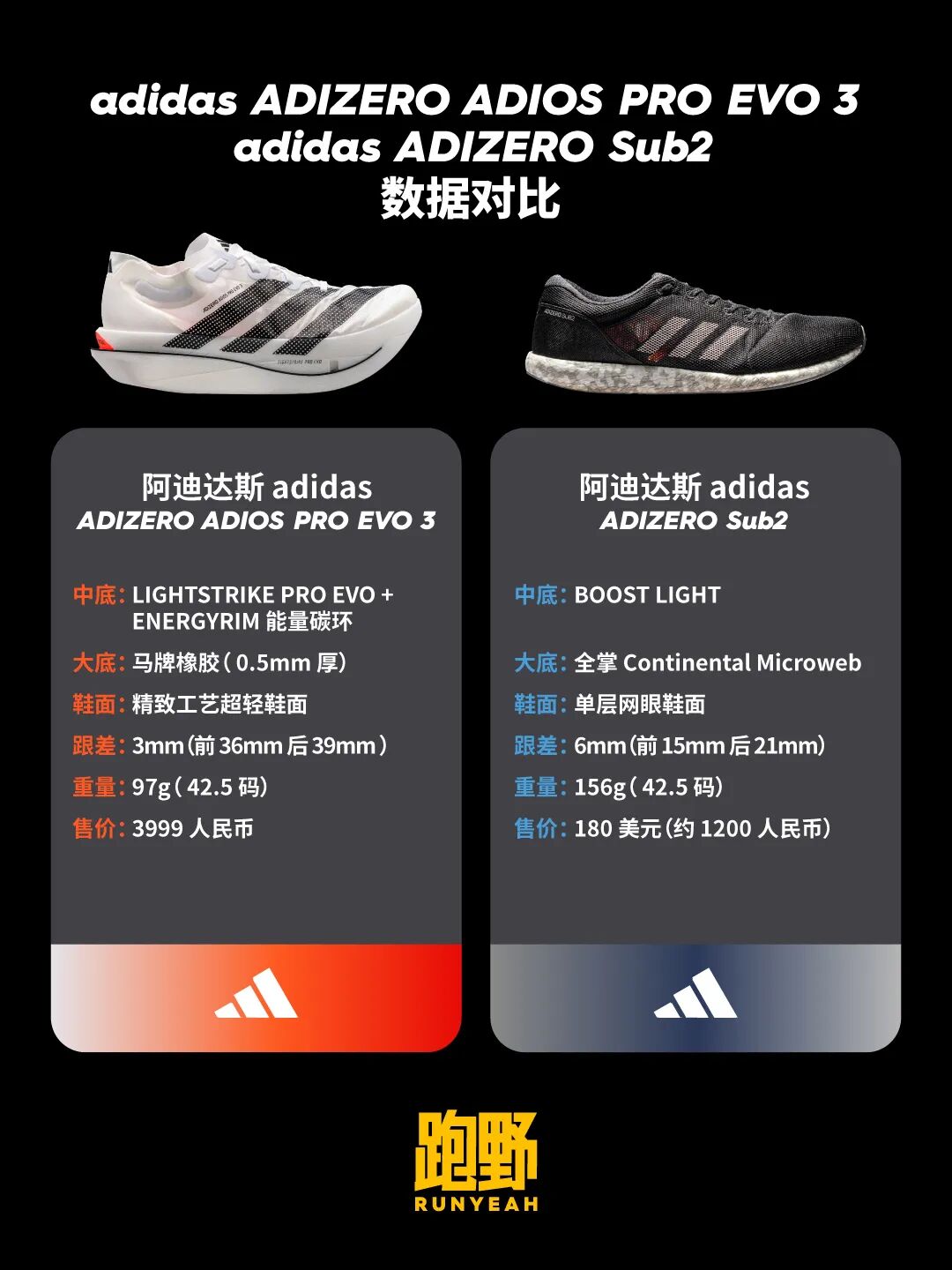
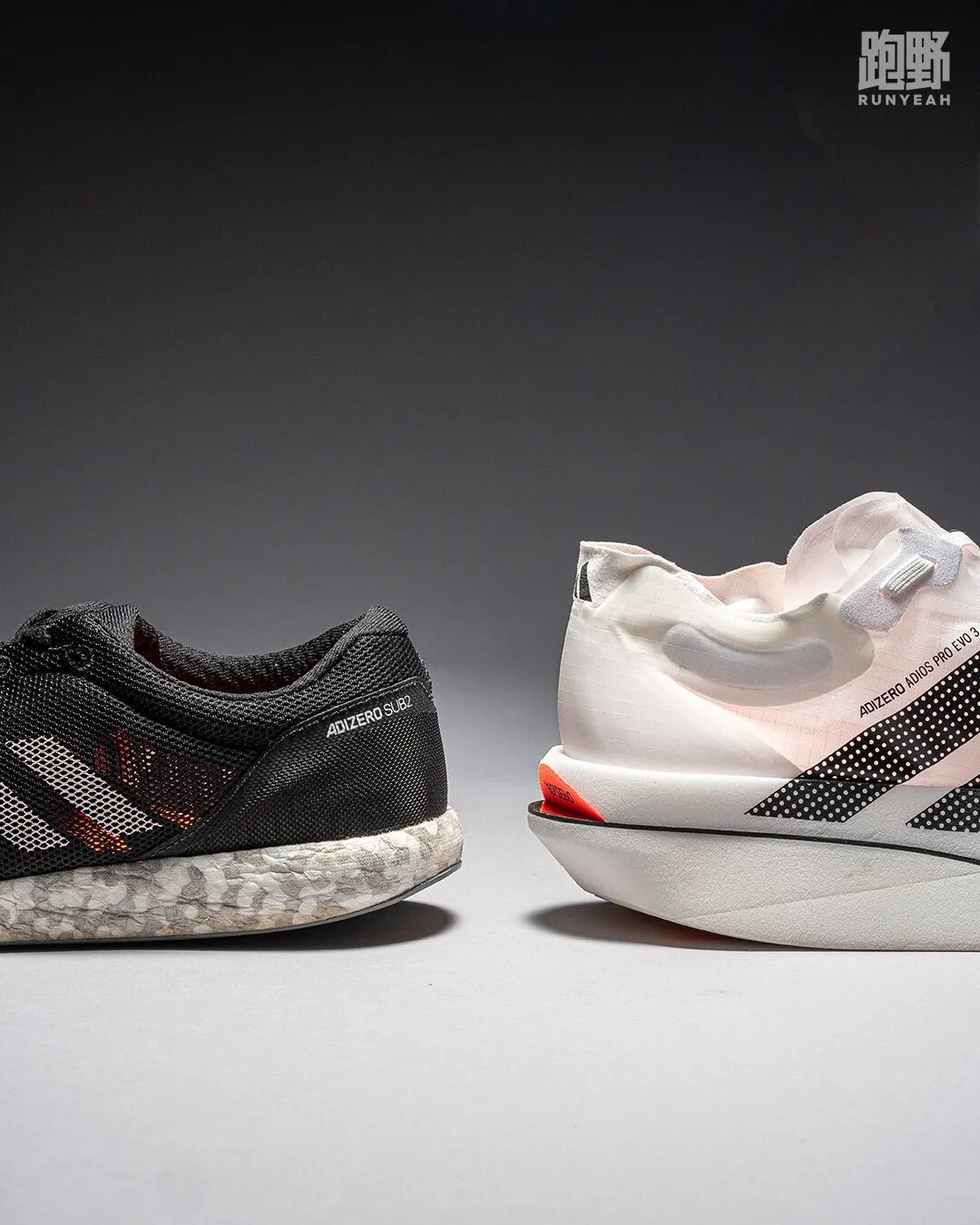
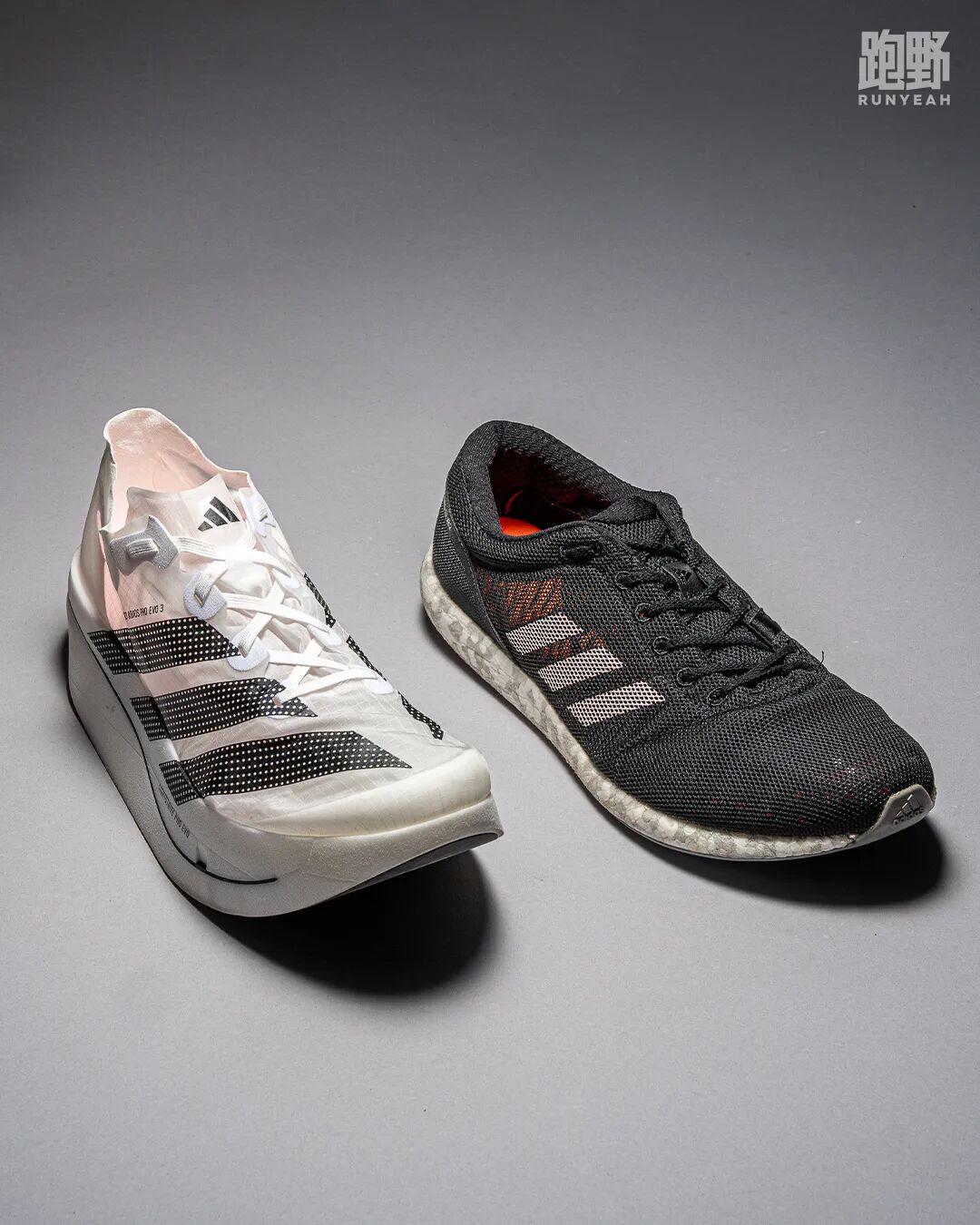
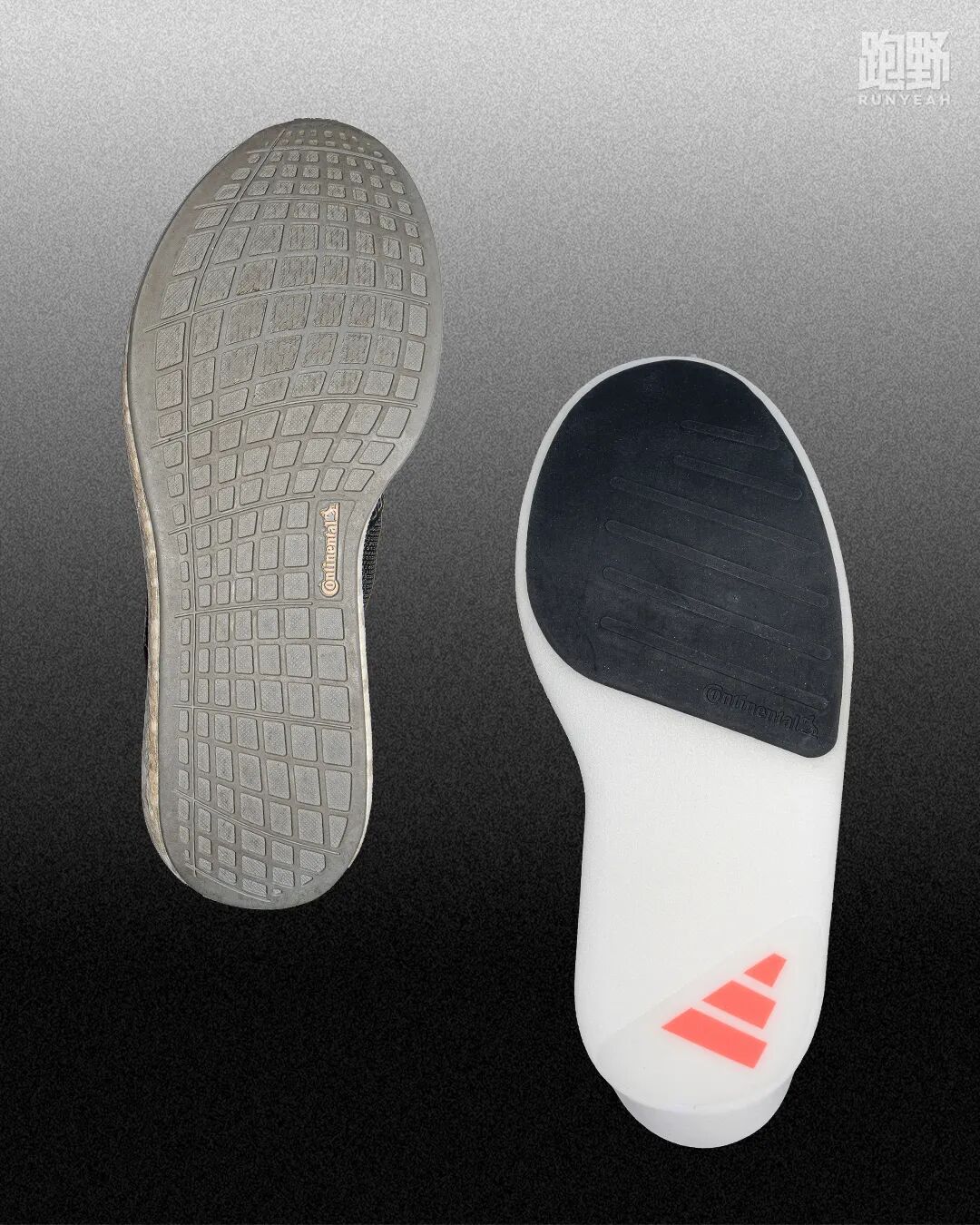
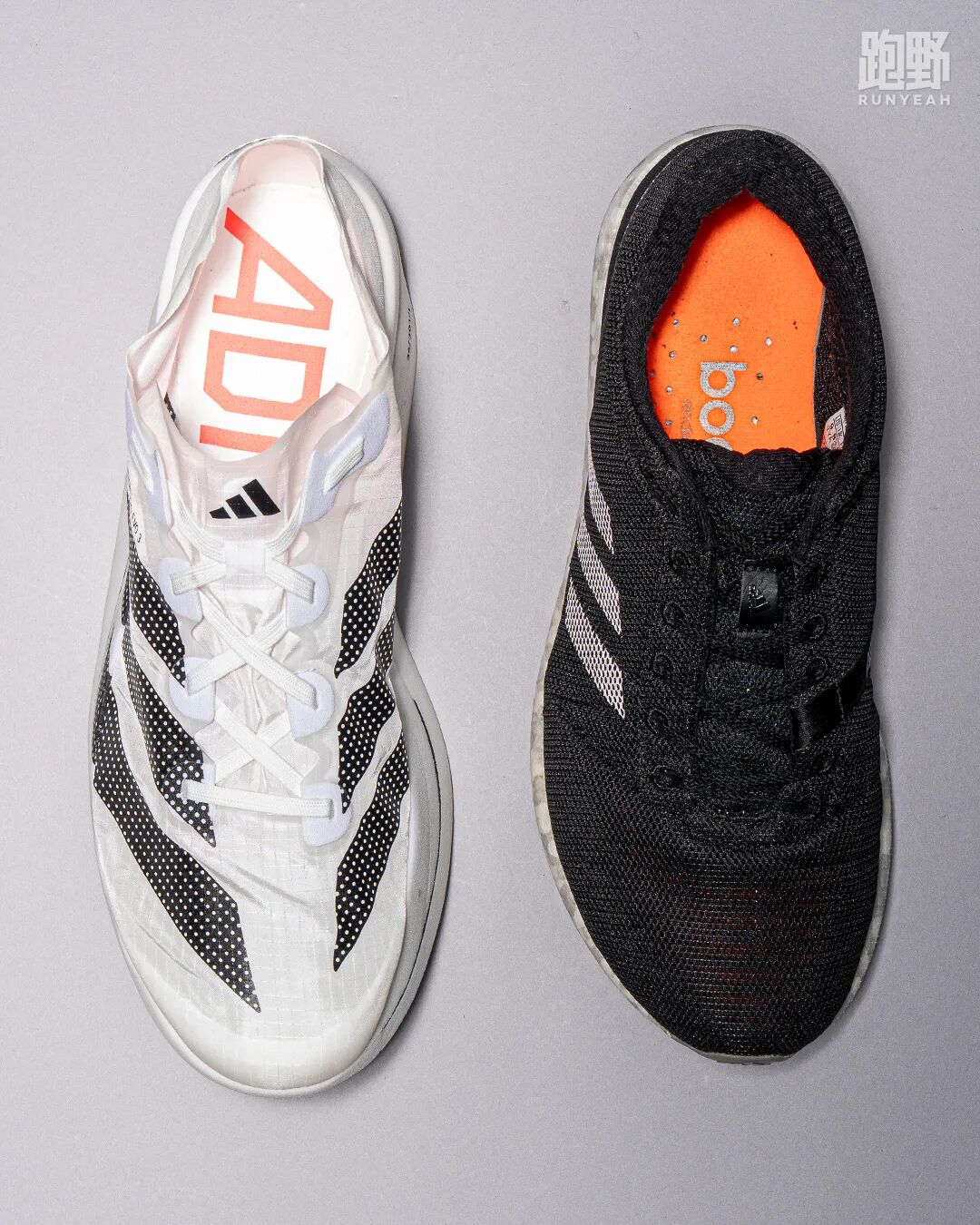
In humanity's long quest to break the marathon two-hour barrier (Sub-2), the evolution of racing shoe technology has played a crucial role. adidas, as a significant participant in this historical process, has introduced iconic racing shoes across different technological eras. 2017 年问世的 adidas ADIZERO Sub2(hereafter Sub2) embodied adidas's initial attempts and exploration of the sub-two program; while the newly released in 2026 adidas ADIZERO ADIOS PRO EVO 3(hereafter EVO 3),则在刚刚结束的 2026 年伦敦马拉松上,助力肯尼亚名将Sabastian Sawe(Sabastian Sawe)跑出 1:59:30 的惊人成绩,成为历史上首款在正式比赛中见证人类打破两小时壁垒的合法跑鞋。 We will conduct an in-depth comparison of these two milestone racing shoes in adidas's racing history, analyzing technical specifications, historical context, and performance across multiple dimensions to explain how running-shoe technology has leapt forward over the past decade. In 2016, as rival Nike loudly announced the "Breaking2" attempt to break 2 hours and launched the revolutionary thick-soled, carbon-plated Vaporfly,adidas felt unprecedented pressure. (Image source: @ekiden_mania) In response to the challenge, adidas launched the adidas ADIZERO Sub2 in early 2017. The shoe made its debut when former marathon world record holder Wilson Kipsang wore it at the 2017 Tokyo Marathon. The Sub2 was developed with extreme lightweighting as its primary goal. At a time when carbon plate technology had not yet become widespread and thick-soled shoes were still controversial, adidas chose a more traditional racing shoe design route: maintaining the road feel of a traditional low-profile racing shoe while using material innovations to reduce weight and improve energy return . It's 2026, and carbon plates and supercritical foaming materials have become standard in top racing shoes. After the huge success of the EVO 1 and EVO 2, adidas spent three years developing and launched the EVO 3. The ultimate goal of this racing shoe is very clear:to create the lightest, fastest racing shoe in adidas history, and to break the two-hour barrier in an official race. The April 2026 London Marathon became the coronation for the EVO 3. Sawei and Yomif Kejelcha both ran sub-2 hours in the EVO 3, stunning the world with times of 1:59:30 and 1:59:41 respectively; meanwhile Tigist Assefa also wore the model to break the women-only marathon world record with 2:15:41. The arrival of the EVO 3 marks a new era for human marathon running. Although both shoes target 'Sub-2', their design philosophies and technical approaches are worlds apart. Below is a comparison of their core technical specifications: The Sub2 featured adidas's then-new BOOST LIGHTtechnology. This is a lightweight version of the classic BOOST material: while retaining BOOST's excellent energy return, it significantly reduces weight and feels firmer than traditional BOOST to meet stability needs at high paces. However, its thickness is only 21mm/15mm, typical of a traditional thin-stack racing shoe. The EVO 3 adopts a new generation of LIGHTSTRIKE PRO EVO foam. According to adidas, this new material is 50% lighter than the foam used in the previous EVO 2. While maintaining the 39mm super-thick midsole (approaching World Athletics' 40mm legal limit), the entire shoe was unbelievably kept under 100 grams (about 97 g). This thick midsole design provides supreme cushioning protection for long-distance running. In the Sub2 era, adidas did not include a carbon-fiber plate in that model. The Sub2’s propulsion relied entirely on the rebound of the BOOST LIGHT material itself and the runner’s own foot strength. This design gives the shoe exceptional flexibility, but it also means it demands a very high level of muscular strength from the runner, making it better suited to relatively shorter racing distances like the half marathon or 10K. The EVO 3 brings a revolutionary innovation — ENERGYRIM. Unlike previous carbon plates or carbon fiber rods (ENERGY RODS), ENERGYRIM is a carbon-fiber support ring that surrounds the perimeter of the midsole. This design not only reduces weight but also provides precisely tuned stiffness and stability without restricting the compression and deformation of the midsole foam. Combined with the all-new foam, the EVO 3’s forefoot energy return is 11% higher than the EVO 2, and overall running economy has improved by 1.6%. To achieve an ultra-light sub-100g weight, the EVO 3 makes radical changes to the upper and outsole. Its upper is inspired by kite-surfing sail fabric and has a semi-translucent texture; not only is it extremely light, even the laces and stitching have been weight-optimized down to the nanometer level. On the outsole, the EVO 3 abandons the much-criticized liquid rubber used on the EVO 2 and returns to the more reliable-grip Continental rubber, but only applies ultra-thin (0.5mm) patches at key contact points. By comparison, the Sub2's single-layer mesh upper and full-length Continental Microweb outsole, while lightweight for their time, still feel conservative next to the EVO 3. The Sub2 represented the pinnacle of traditional thin-soled racing shoes. It offers clear ground feel and direct feedback, suited to elite runners with strong feet and ankles who prefer a natural gait. However, because it lacks sufficient cushioning and rigid support, it taxes runners' muscles heavily in the latter stages of a full marathon. Many reviewers consider it better suited as a racing shoe from 5K to the half marathon rather than as a full marathon weapon. The EVO 3 is the ultimate evolution of modern maximalist super shoes. Up to 39mm of soft foam combined with an ENERGYRIM carbon-fiber ring creates a highly springy, propulsive running experience. The aggressive forefoot rocker design quickly guides runners through transitions and provides forward propulsion. This design significantly reduces muscular fatigue during long-distance runs and is specifically engineered to help break full marathon limits. The price difference between the two running shoes also reflects changes in the market environment. The Sub2, which launched widely in 2018, was priced at $180(about ¥1,200), which at the time was within the normal range for high-end running shoes. And the EVO 3 is priced as high as $500(RMB price ¥3,999), and it was released in extremely limited quantities. This shows that the EVO 3 is more of a “concept-level” production shoe for adidas to showcase its top-tier technology, aimed at a very small audience of elite runners chasing extreme results and obsessive shoe collectors. From adidas ADIZERO Sub2 toadidas ADIZERO ADIOS PRO EVO 3, we have witnessed the disruptive changes in running shoe technology over the past decade. The Sub2 was a bold attempt: within the framework of traditional low‑profile running shoes it achieved extreme lightweight construction, but limited by the materials science of the time, it didn’t truly help humanity break the two‑hour marathon barrier. The EVO 3 is the culmination of the thick‑midsole, carbon‑plate era. Through its breakthrough LIGHTSTRIKE PRO EVO foam and the innovative ENERGYRIM carbon fiber ring, it astonishingly combines a 39mm midsole with a weight of under 100 grams. It’s not just a running shoe, but a masterpiece of human engineering and sports science. With Sawei making history wearing it at the 2026 London Marathon, the EVO 3 has permanently etched its name into the annals of marathon history. Over these nine years, the evolution of racing shoes has been unimaginably fast. It's fascinating to wonder what racing shoes will look like nine years from now.