

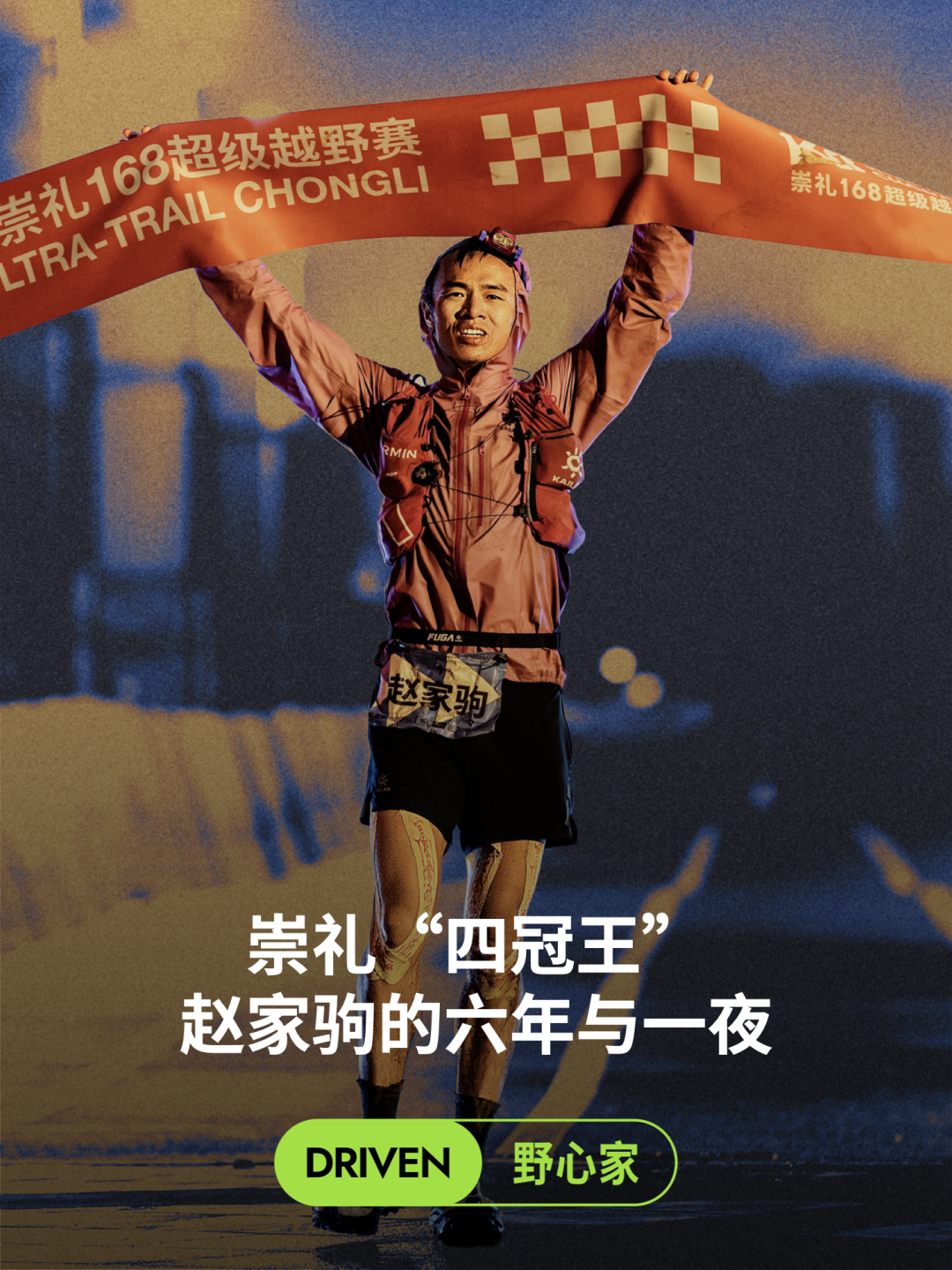
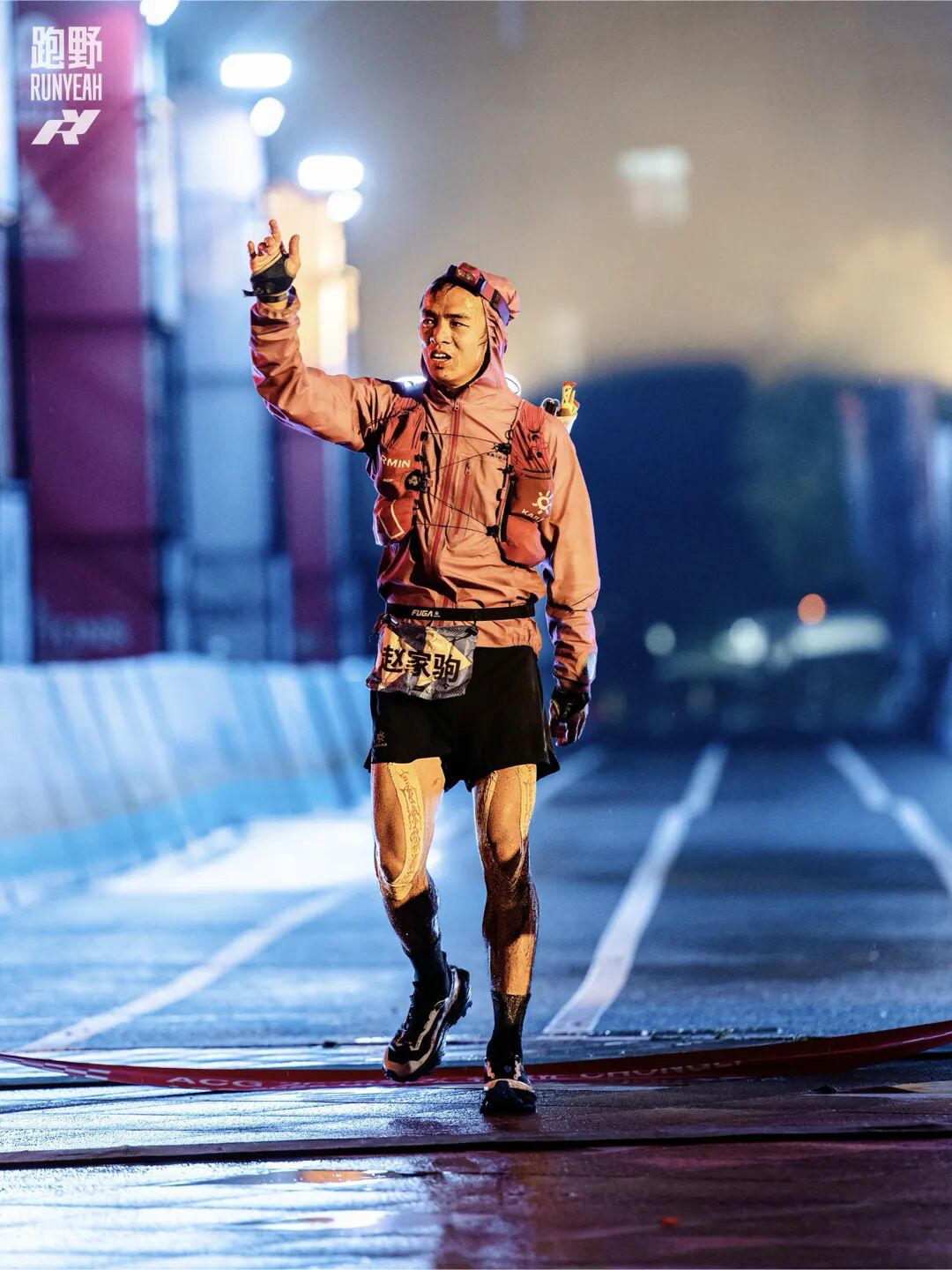
At 17:00 on July 11, 2026, Zhao Jiaju, the winner of the 2026 Chongli 168 hundred-mile category, sat across from us—more than 12 hours after he crossed the finish line at Celebration Square.
He had only slept a few hours and fatigue still lingered on his face, but when he spoke he sounded relaxed and even self-deprecating. Having taken almost 60 energy gels over 19 hours, it’s a little surprising he still isn’t an ambassador for any gel brand.
This was his fourth Chongli 168 title, and six years have passed since his first win. Time changes many things—Zhao Jiaju, the people around him, and the world of trail running.
01
The first time
was truly different
When asked about his first victory, Zhao paused a little, then said, "The feeling the first time was more different." It sounded like he was recalling something from long ago.
For Zhao, the 2020 Chongli 168 was his first real hundred-mile race, and in that race he and his friend-and-rival Liang Jing repeatedly pulled away from each other on the course, trading places and neither willing to give an inch.
At the end of that race, Zhao felt Liang Jing conceded to him, allowing him to take his first Chongli crown. That race left a mark that no later victory could fully erase.
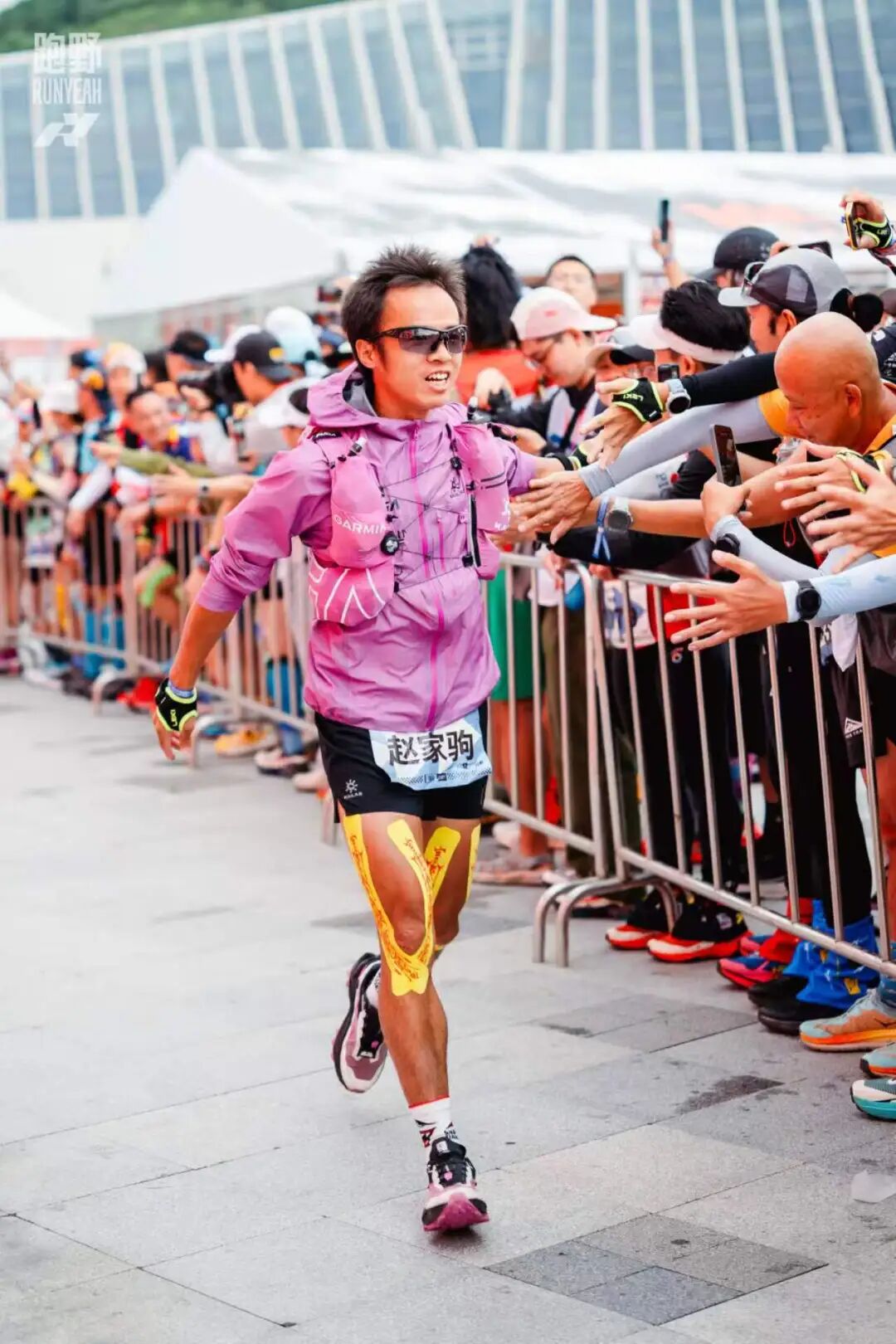
Six years later, he says he's much stronger than back then. When asked "stronger in what way," he didn't cite training data—he simply said: "Mentally I'm definitely much stronger than before. The main thing is the accumulation of races over the years."
What is that accumulation? He can't quite explain, but he recognizes the feeling—when someone opens up a gap of seven minutes on the course, you don't panic anymore. You start to analyze, to wait, to look for your own moment.
02
The voice in his head
Zhao has a habit: at the hardest moments in a race, he issues instructions to himself in his head.
This year's Chongli 168 was hit by heavy rain that disrupted many athletes' rhythms, but the men's lead group didn't slow down. Zhao, his teammate Luo Canhua, and last year's champion, Romania's Ionel Manole, battled for a long time.
At CP9 (around the 110 km mark on the course), his rival Ionel Manole had a lead of about 7 minutes. The rain kept getting heavier and the trail more slippery. Zhao says this time he didn't panic and didn't immediately sprint to close the gap. Instead he told himself one sentence in his head: "The next section is all familiar to me. I'll make up the time on the downhills."
That sentence wasn't for anyone else; it was for himself. He knew his rival was strong on the uphills using poles, so he climbed at his own rhythm, ate, refueled, and waited. Then on the downhills—on those extremely slippery sections where others wouldn't risk running fast—he went for it. "The wetter and slipperier the section, the harder I push, because I know they won't take that risk."
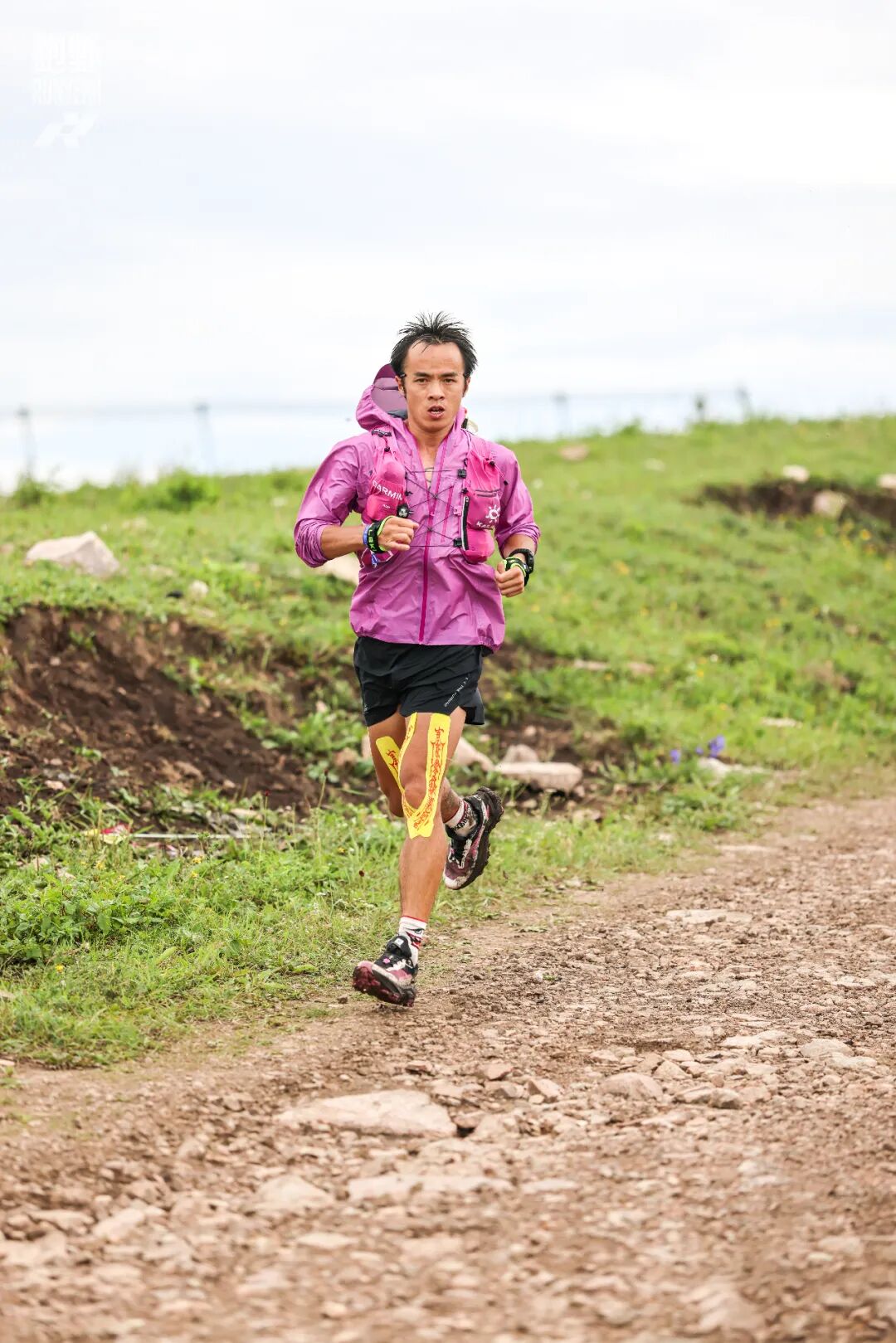
Later, about one kilometer before Yunding, he saw his rival's headlamp on the downhill. He chased harder and the other runner saw him too. They both ran into a personal aid station together, and the more-than-seven-minute gap was erased.
This habit of "giving himself orders" is, in his view, one of the most important things in a race. "You need a voice in your head telling you what to do now, where your strengths are, and which sections you can win back," he says. "If you don't have that voice, you're just running, not racing."
03
Taking gels
is, ultimately, a mental thing
When Zhao won Chongli in 2024, he said he ate about 60 energy gels during the race, and he ate just as many this year. Despite that, no gel brand has courted him, which he finds amusing. He joked self-mockingly: "I can eat the most gels, but no one approaches me. I can't figure it out—maybe I'm just too good at eating them."
Jokes aside, he is serious about taking gels. He says he rarely takes gels during training because they taste too sweet and are hard to swallow, but once a race starts his mind flips a switch: "I have to take them. If I don't, I won't have the energy and I'll get caught. Am I going to skip them just because they taste bad?"
To Zhao, energy gels are like medicine—unpleasant to taste, but effective. That logic sounds simple, but he believes many athletes can't do it. "It's not a stomach issue; it's a psychological issue. If you reject it mentally, your body will reject it too. I don't reject it mentally, my stomach doesn't reject it, and it works out."
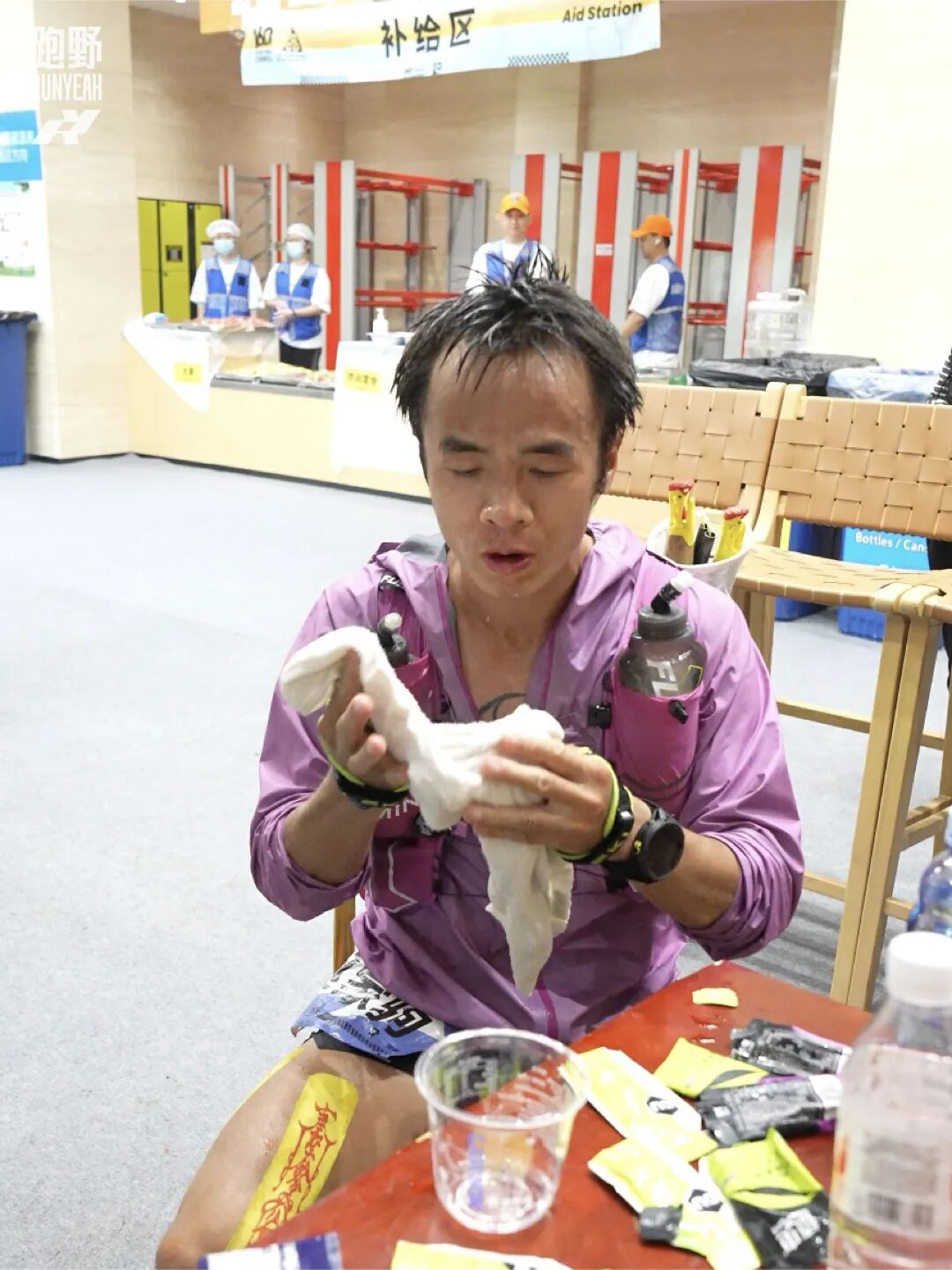
When he says this it sounds like stating the most ordinary fact. But behind that fact is years of forcing himself on the trail to accept uncomfortable, bad-tasting, difficult things and turning them into habit.
04
Consistency,
is the most important thing
There was one line Zhao said when talking about race frequency that sounded casual but carried weight on reflection.
"There was a time when we raced hundred-kilometer events every week—that was before 2020. It's different now. People don't have to live off prize money anymore. You should focus on the races that matter, take care of your body, and sustained racing is the most important thing."
He says racing too often leaves the body unable to recover, makes races feel terrible and depressing, and "affects long periods of psychological rebuilding afterward." So now he races about once a month: prepare seriously, race seriously, and recover seriously.
This is a self-awareness that comes with maturity as an athlete—not trading everything away for short-term gains, but using rhythm to extend a career. He wants to compete for many more years, and he wasn't joking when he said it.
05
The world opened up,
and he changed too
Near the end of the interview someone asked him: is trail running a way for you to explore the world?
He said yes. "Every year we go to different places to race, see different scenery, eat different local foods, and discover things that we might have only seen on TV before—or never seen at all."
Then he said that after the world opened up, he himself changed. "I used to think everyone should take up trail running. But I realized that's not the point. It's not that trail running is best for everyone—everyone can find the sport that suits them or the thing they want to do. Trail running might not be right for you, but there will always be something that is."
Hearing this from a professional trail runner carries a certain weight. He used the prime years of his life to run mountains, and at some point realized that trail running isn't the only answer—it's just his answer.
When the interview ended he said he was going to have dinner and would order something light because "my stomach is full of sweetness from all the gels." He stood up and walked out like an ordinary person heading to find a bowl of noodles.
Except those legs had just run 172 kilometers.
[Endnote Interaction]
#How many years have you been trail running? What changes has trail runningbrought you?#
Text/Editor: David/MP
Photo source: RUNYEAH
Visuals: Max