
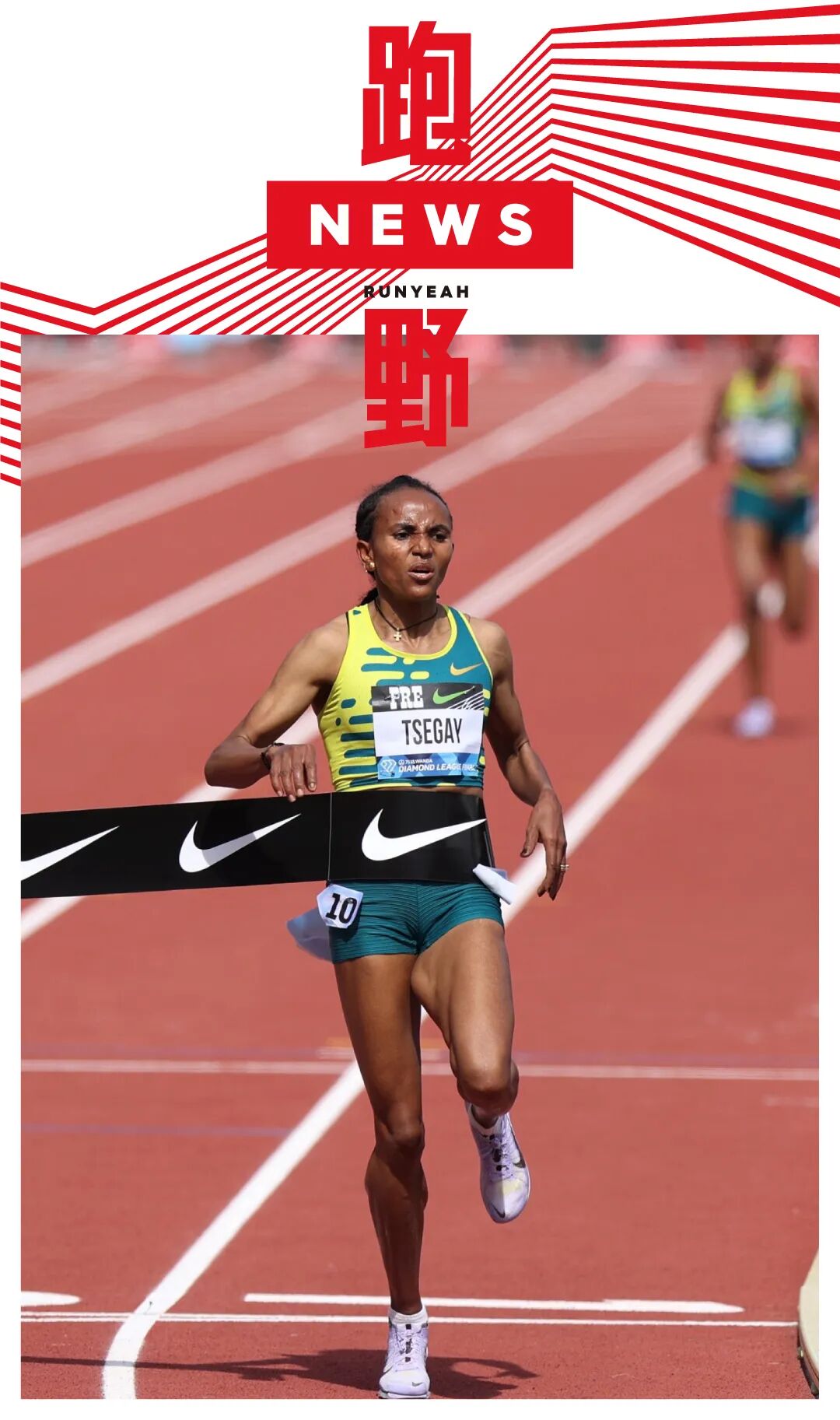
World champion Gudaf Tsegay suspended four months for prohibited medical drug use


Yesterday, the Athletics Integrity Unit (AIU) officially announced that Ethiopian middle- and long-distance star, former women's 5000 m and 10,000 m world champion Gudaf Tsegay, tested positive for metabolites of Letrozole in an out-of-competition anti-doping test, was handed a four-month suspension.

She successfully demonstrated that the substance was used to treat a diagnosed medical condition, but because she failed to apply in advance for a Therapeutic Use Exemption (TUE), she must still serve the sanction and will miss major competitions this season.

After the AIU announced the sanction, Gudaf issued a statement:


"To improve my fertilityI took medication under my doctor's prescriptionI am now pregnant and the pregnancy is progressing smoothly, and I look forward to returning to competition as soon as possible after giving birth".


According to a detailed statement released by the AIU, during an out-of-competition in-flight doping test on 5 December 2025,Gudaf Tsegay's sample was found to contain metabolites of letrozole. Letrozole primarily works by reducing estrogen levels in the body, and it is strictly prohibited both in-competition and out-of-competition.

On 26 January 2026, the AIU formally notified Gudaf Tsegay of a potential anti-doping rule violation (ADRV). Faced with the allegation, Tsegay responded quickly the day after receiving the notice.

She explained to the AIU that her use of letrozole was entirely on medical advice, used to treat a diagnosed medical condition, and she submitted the relevant medical documentation and detailed clinical evidence.


After providing medical evidence, Tsegaye formally submitted a therapeutic use exemption (TUE) application on 17 February 2026. After a strict review, WATUEC confirmed that Tsegaye's treatment regimen meets the requirements of Article 4.2 of WADA's International Standard for Therapeutic Use Exemptions (ISTUE).

Under Article 4.2, obtaining a TUE must satisfy the following three core conditions:

* The athlete can demonstrate that use of the prohibited substance is necessary to treat a diagnosed medical condition;
There is no reasonable and legal alternative treatment available;
The use of the prohibited substance will restore the athlete to a normal state of health and will not produce any additional performance enhancement (i.e., no competitive advantage).

Although Tsegay’s actual medical condition and medication use fully satisfied the substantive exemption conditions under Article 4.2 above, under procedural rules she was required to apply to WADA for a “retrospective” therapeutic use exemption in accordance with Article 4.3 of the ISTUE (i.e., to obtain the exemption after the violation occurred). WADA ultimately rejected the application for a retrospective exemption in this case.


Tsegay ultimately chose to reach a Case Resolution Agreement with the AIU and WADA. She admitted to violating Anti-Doping Rule 2.1 (presence of a prohibited substance or its metabolites or markers in an athlete’s sample) and Rule 2.2 (use or attempted use of a prohibited substance or prohibited method).

Given Tsegay's specific circumstances, the AIU, in exercising its discretion and considering the degree of her fault, determined that a four-month period of ineligibility was an appropriate decision.

Tsegay's period of ineligibility will be calculated from 1 June 2026 (the date she accepted the case resolution agreement) and will end on 30 September 2026.

RUNYEAH 跑野大爆炸
RUNYEAH
RUNYEAH · RUN WILD RUN FREE
Content from WeChat Official Account RUNYEAH
© 2026 跑野大爆炸 RUNYEAH. All rights reserved.