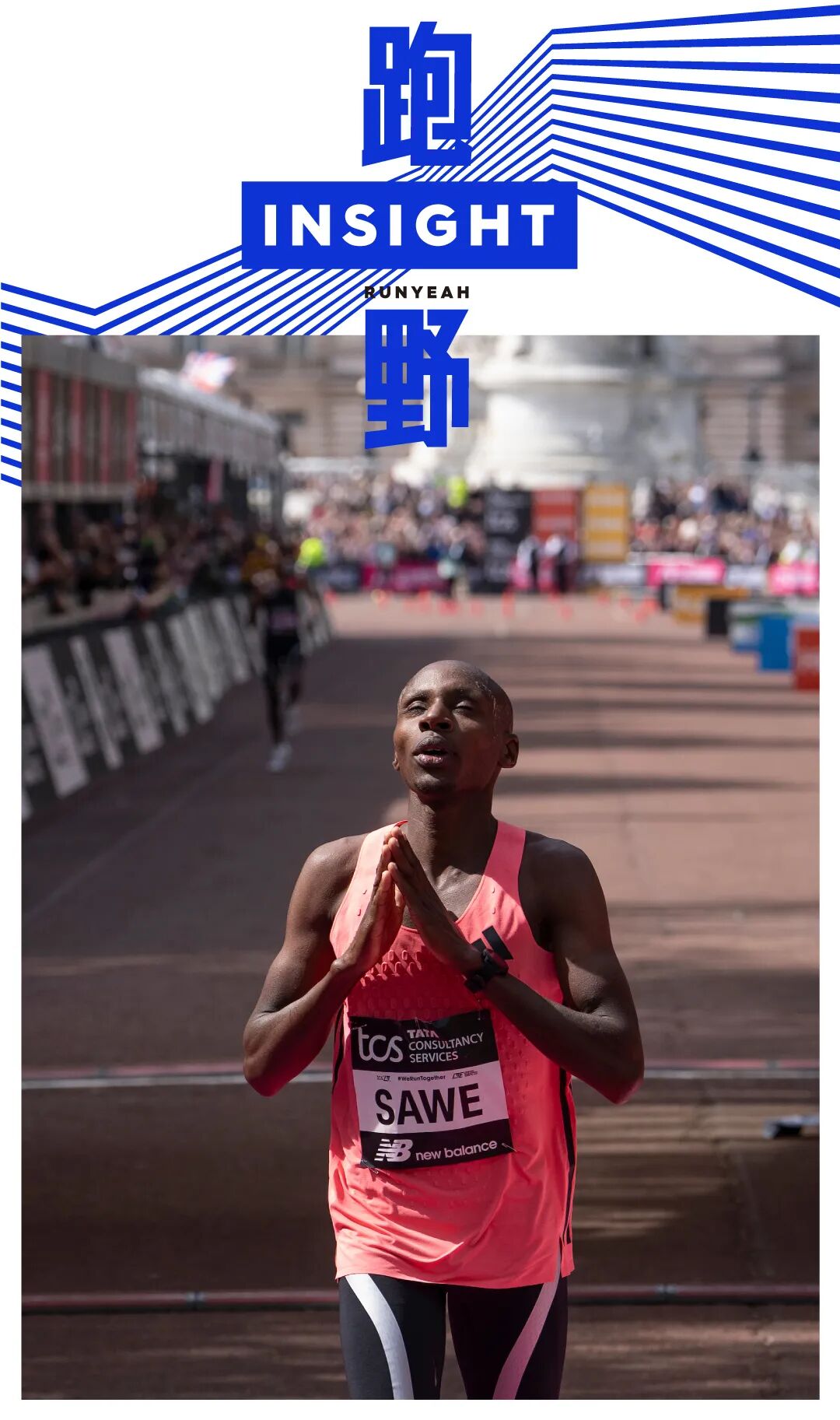
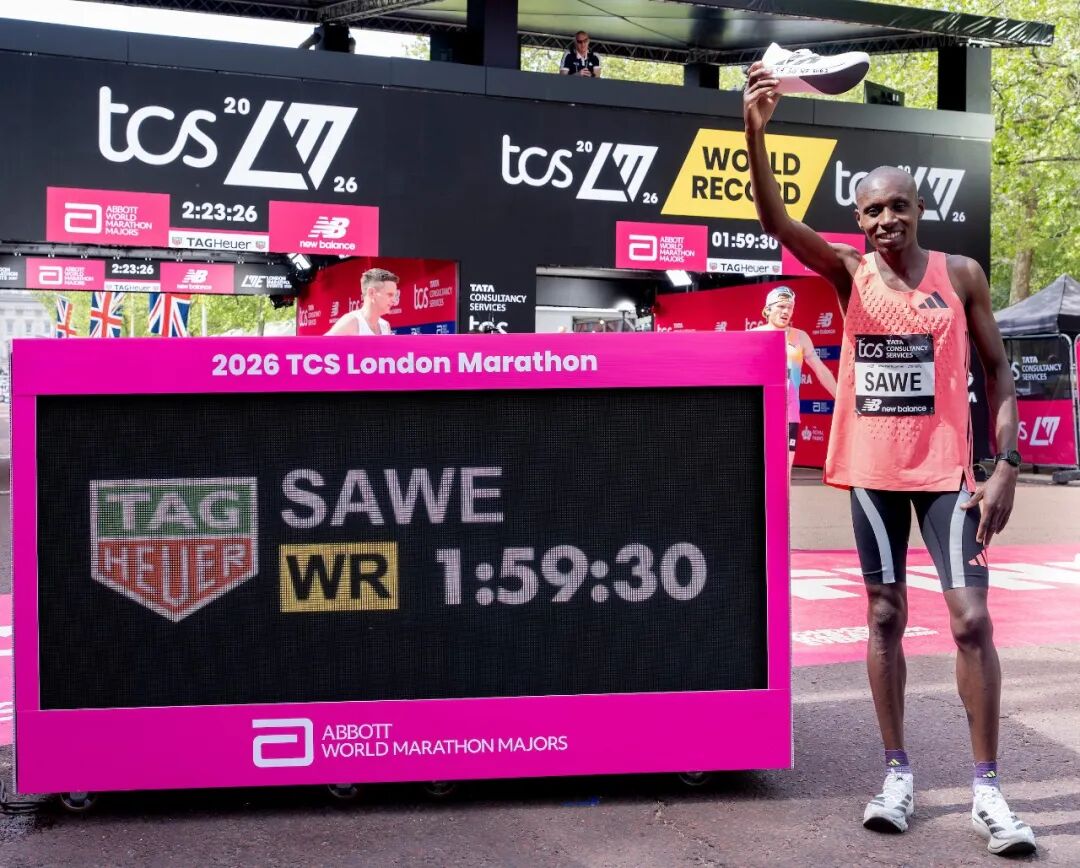
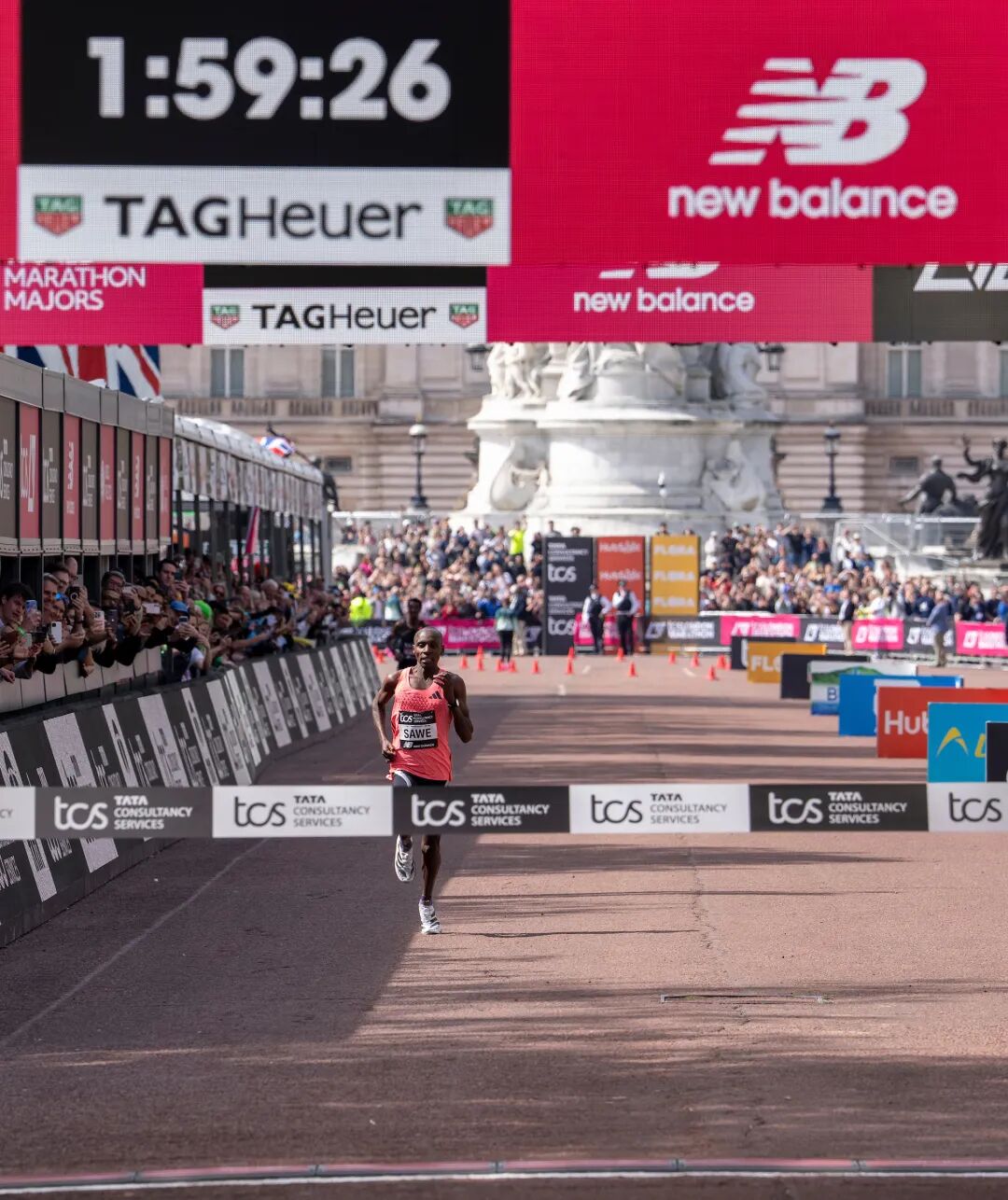
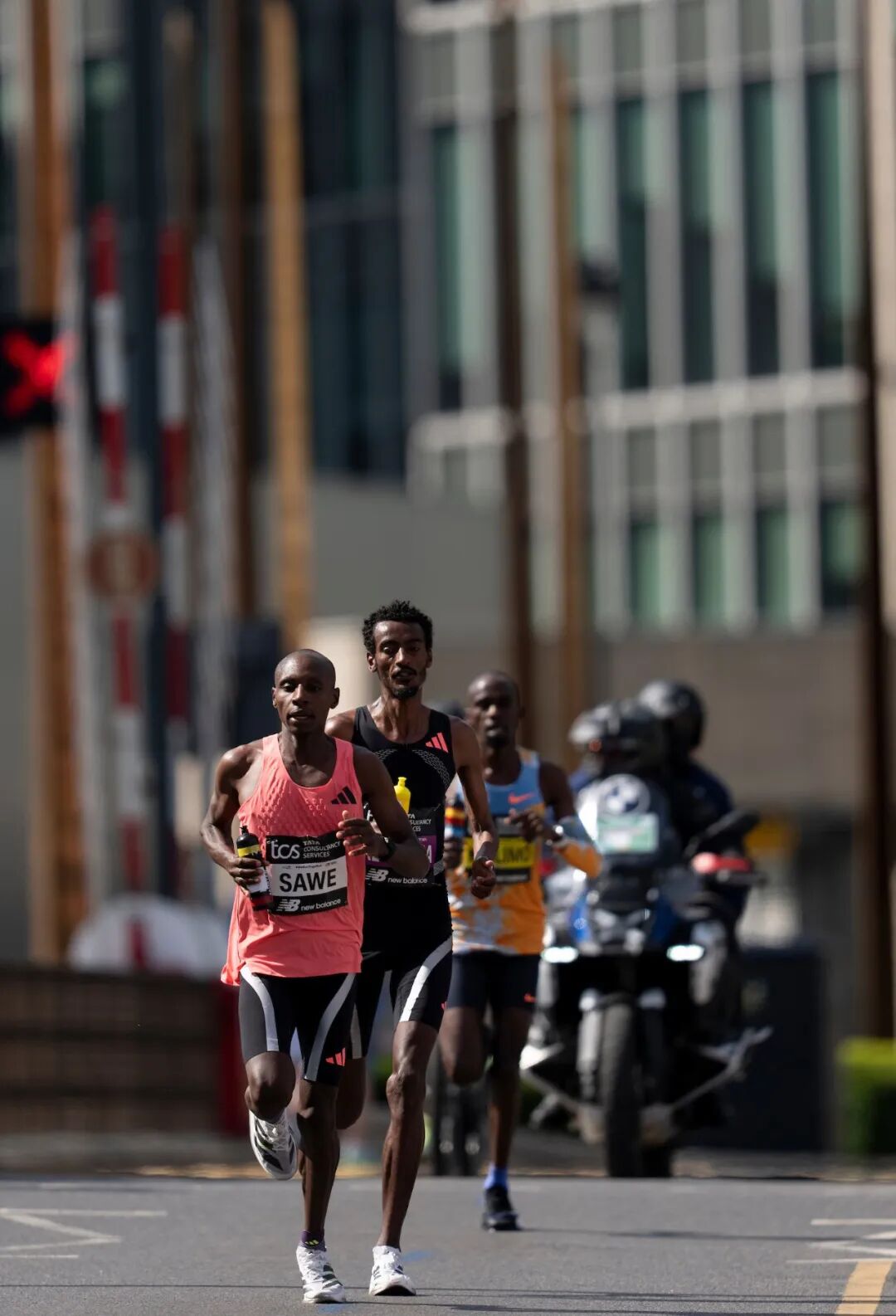
On 26 April 2026, human sporting history reached an ultimate milestone. At the 2026 London Marathon, 31-year-old Kenyan star Sabastian Sawe won in 1:59:30, improving the previous world record of 2:00:35 set by the late prodigy Kelvin Kiptum at the 2023 Chicago Marathon by a full 1 minute and 5 seconds.
He not only became the first athlete in history to break the "Sub-2" barrier in an official, record-eligible race, his time was even 10 seconds faster than Eliud Kipchoge's unofficial 1:59:40 in the 2019 Vienna "1:59 Challenge."
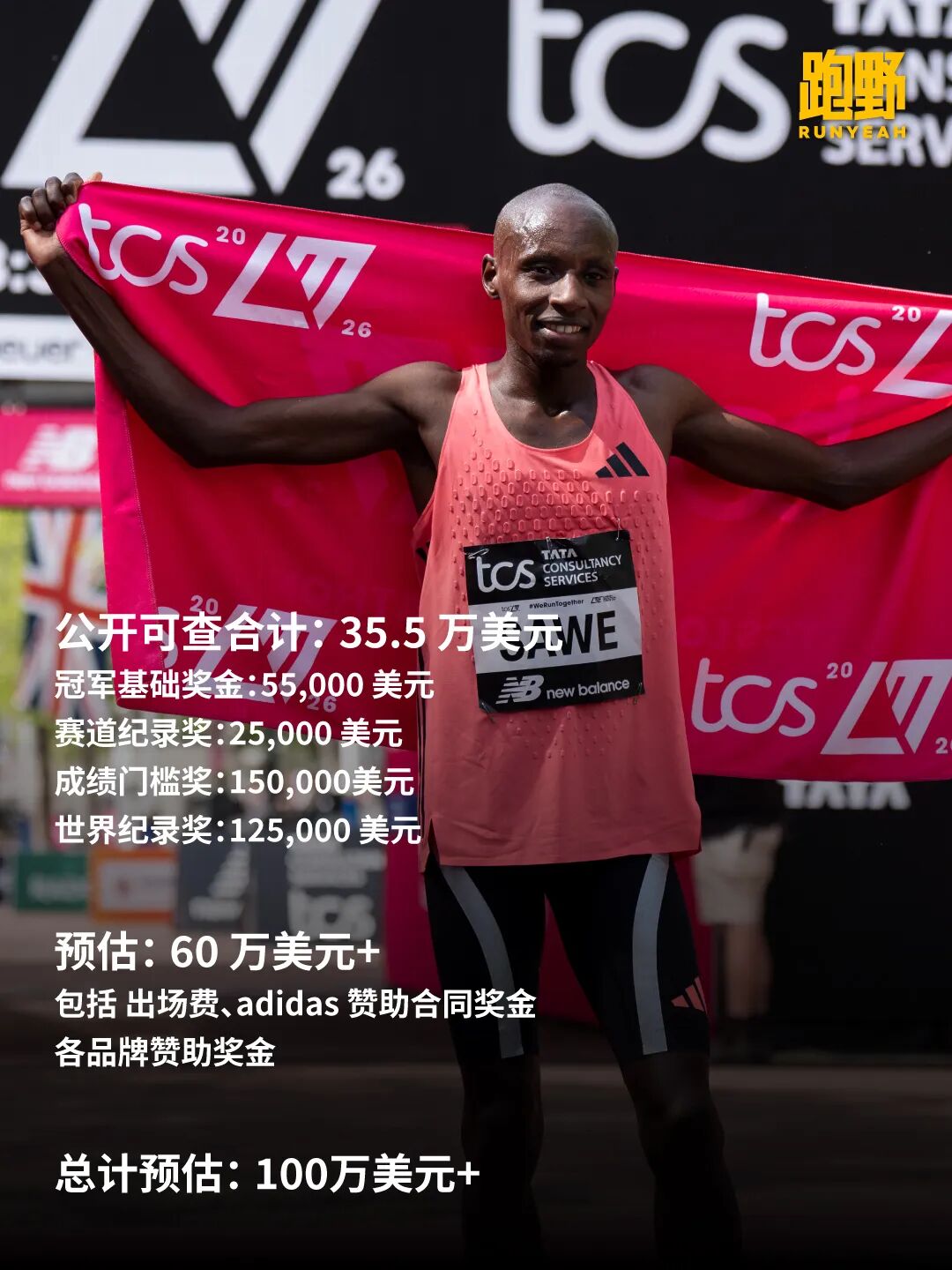
While witnessing humans push physiological limits, an extremely practical and much-discussed topic in the running community has surfaced: in this athletics event hailed as "the most commercially valuable",run an unprecedented 1:59:30, how much can Sa Wei actually earn?To answer this question, we need an objective breakdown and discussion across multiple dimensions: official race prize money, sponsor incentives, and hidden commercial income.The London Marathon has long been known for its generous prize money. According to the 2026 TCS London Marathon's official elite athlete prize distribution rules, Sa Wei had, the moment he crossed the finish line, triggered multiple high-value bonus clauses.1. Champion base prize: $55,000 (approximately RMB 375,996). As the winner of the elite men's field, this is the basic finishing position prize provided by the organizers.2、Course record prize: $25,000 (equivalent to RMB 170,907). The previous London Marathon course record was Kiptum's 2:01:25, and Sawi easily broke it.3、Time-bonus prize: $150,000 (equivalent to RMB 1,025,445). The London Marathon has set a huge time bonus for male runners who run under 2:02:00, aimed at encouraging fast-paced competition.4.,World Record Bonus: $125,000(approximately RMB 854,537). Breaking the world record of 2:00:35 held by Kiptum triggered this top-tier individual prize directly.All told, Savi could legally walk away with roughly $355,000 (approximately RMB 2.57 million) from the London Marathon organizers alone — if converted to Kenyan currency that would be as much as 46 million Kenyan shillings. Notably, the competition in this race was fierce: Ethiopian debutant Yomif Kejelcha, right on his heels, also produced an astonishing 1:59:41. Although Kejelcha finished second (earning a $30,000 base prize), he also triggered the $150,000 performance threshold bonus, bringing his single-event payout to $180,000 (approximately RMB 1,230,534).However, the $355,000 was only the tip of the iceberg of Sa Wei's earnings. According to inside information revealed by authoritative outlets such as The Guardian, when appearance fees, prize money and sponsor incentives are combined, Sa Wei's total income from this victory exceeded $1 million (approximately RMB 7.2 million). That means there was nearly $650,000 in "hidden premiums" beyond the race prize money.This income is mainly made up of two parts: one isthe hefty appearance fees paid by race organizers, and the other issports brands' "record-breaking" bonuses.At the World Marathon Majors, top elite athletes don't make a living from placing alone. Organizers, to ensure the event's appeal and a competitive standard of results, typically pay large appearance fees to defending champions or top athletes.As the double champion of the 2025 London Marathon and Berlin Marathon, Sa Wei is already at the top of the bargaining chain. That appearance fee is often secured before the race and represents the most important guaranteed income for elite athletes.Record-breaking bonuses from sports brands are an extremely important part of Sa Wei's commercial portfolio. Sa Wei is a top adidas signee; at the London Marathon he wore adidas's revolutionary ultralight carbon-plated racing shoe—the ADIZERO ADIOS PRO EVO 3, weighing just 97 grams per shoe.London was practically a tailor-made stage. adidas emerged as the biggest winner in this race. Not only did they witness Sa Wei's men's sub-2 performance, but fellow adidas athlete Tigist Assefa also rewrote the women's-only marathon world record with a time of 2:15:41.For sports brands, this is an incalculable global exposure and marketing bonanza. Most top runners' sponsorship contracts explicitly include tiered bonuses for "breaking world records".Industry practice shows that for commercial breakthroughs of this level, the bonuses and endorsement renewal fees paid by brands can even far exceed the race's official prize money.Although million-dollar single-race earnings may seem astronomical to most people, in the objective context of competitive sport they are also a direct return on the high costs of Savi's team. The marathon is not a sport where talent alone can be monetized.Behind the1:59:30 in London, Sawei lived an almost ascetic life at the Kapsabet camp in Kenya. According to his Italian coach Claudio Berardelli, in the lead-up to the race his daily breakfast was just simple bread and honey, but his weekly training load (what fellow runners often call 'stacked mileage') reached an astonishing 150 miles (about 241 km).The numbers best illustrate his superhuman form that day: in the latter half of the race, he ran the half marathon distance in a breathtaking 59:01. What's more, from 30 km to 35 km, Sawei and Kejelcha produced a 5 km split of 13:54.Even more chilling, between 35 km and 40 km the two actually ran an otherworldly 13:42 pace. At this phase when recreational runners are most likely to collapse and "hit the wall," Sawei still maintained machine-like precision in his output, completely breaking Kejiecha. It’s worth noting this race was only Sawei’s fourth full marathon of his career.Additionally, to ensure the absolute integrity of the world record, Sawei and his team proactively submitted to extremely stringent anti-doping testing before the race. Reportedly, he underwent roughly 25 out-of-competition tests in the two months leading up to the race.This high-frequency anti-doping monitoring program was extremely costly, even requiring sponsor adidas to provide roughly $50,000 in additional funding to assist operations. Therefore, whether measured in physiological toll, disciplinary constraints, or compliance costs, that $1 million is truly "hard cash."Savi's 1:59:30 not only pushed the limits of human endurance forward by a significant step, it also completely reshaped the commercial ceiling on the marathon circuit. Through a commercial package of race prize money, appearance fees and brand sponsorships, Savi earned over one million dollars from a single race, which objectively demonstrates that professional marathon running is entering a more commercially promising and monetizable "sub-two era".For professional long-distance runners, competitive results are always the only passport to commercial value. Savi proved with his legs and a 97-gram ultra-light carbon plate shoe that when the "full marathon sub-two"—a sci-fi concept that once lived only in laboratories—became reality, the vast sports market would inevitably reward it with matching cold, hard cash. This is not only a recognition of his personal excellence, but also the inevitable outcome of the marathon's development toward a highly professionalized path.Do you think that prize money is a lot?
Text: David / Editor:DavidImage: London Marathon Organising Committee / Visual: Max