At the end of last month, the International Olympic Committee announced that, from the 2028 Los Angeles Olympic cycle onward, all athletes hoping to compete in women's events at the Olympic Games, the Youth Olympic Games and related qualifying competitions will be required to undergo screening for the Y chromosome sex-determining region gene (SRY) screening。
SRY gene screening checks for the presence of the sex-determining region gene on the Y chromosome; this gene is typically located on the Y chromosome and is involved in initiating typical male development. Samples can be collected via saliva, an oral swab, or a blood sample.
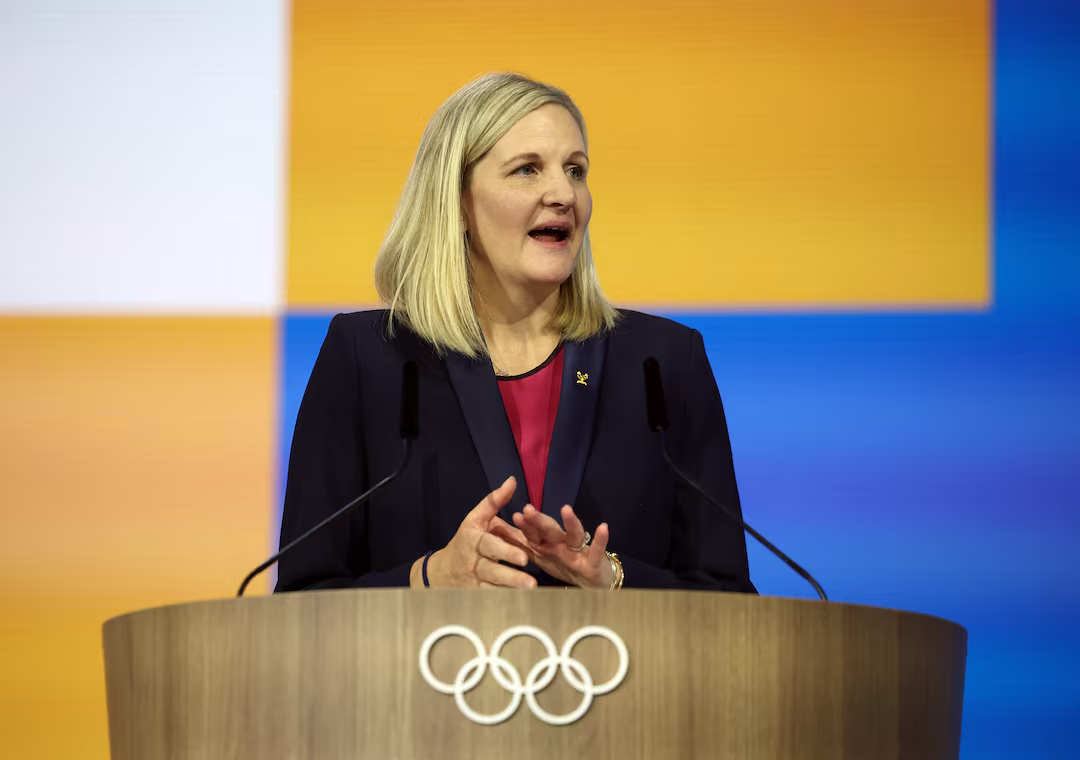
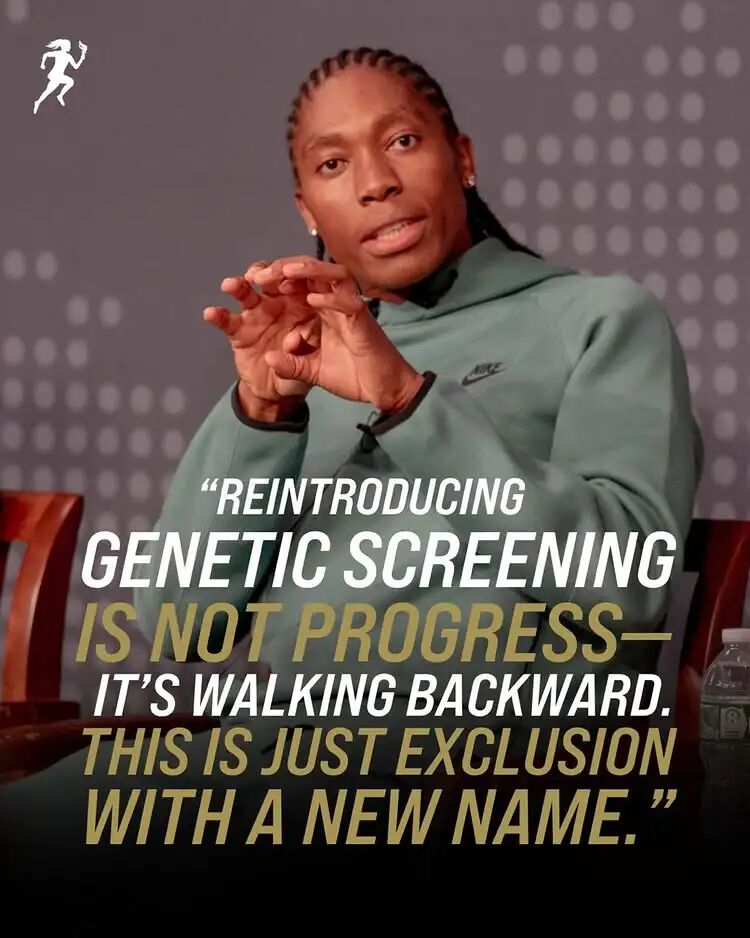
IOC president Kirsty Coventry said the policy aims to preserve the fairness, safety and integrity of women's events, is not retroactive, and does not apply to mass-participation or amateur sport. But Caster Semenya did not shy away in an interview, saying: "The moment you start requiring women to undergo testing just to participate in sports, you lose dignity." She also said she will encourage athletes to band together and oppose the new policy througha class-action lawsuit to resist the new policy.
If in recent years disputes over eligibility in women's events were more often dealt with at the level of individual federations, this time the IOC is attempting to establish a unified set of boundaries for the entire women's discipline.According to information released so far, the new rule covers the Olympic Games, the Youth Olympic Games and qualification events. If the result is positive, athletes may only compete in men's, mixed, or open category events.However, this kind of screening is ultimately only a qualification check for specific genes and cannot cover all the complex cases of sex development. For example, in the very few cases of differences in sex development, an athlete may have certain related genetic characteristics but not necessarily gain the physiological advantages the public might assume; the policy allows exceptions for such situations.But precisely because real-life situations are far more complex than the rules, once the new regulation was announced it was immediately thrust into the eye of public debate.
After the new rules were announced, one of the first to publicly oppose them was South African two-time Olympic champion Caster Semenya. Why did Semenya react so strongly? Because she knew all too well that a rule that appears neutral and fair often conceals more than order and boundaries — it can also entail a renewed scrutiny of bodies, identities, and dignity.
The conflict between her and the existing eligibility rules can be traced back to April 2018. At that time, the IAAF — the predecessor of World Athletics — announced new eligibility regulations for women’s events, which required certain athletes with differences of sex development (DSD) to lower their naturally occurring testosterone to within a specified range if they wished to continue competing in events from 400 meters to one mile; these regulations then came into force on 1 November 2018.For Caster Semenya, if she wanted to continue running the 800 meters she excelled at, she would have to medically alter her body. But she consistently refused that demand, and has publicly said the related drugs made her feel unwell; more importantly, she was unwilling to change her own body just to keep competing.Over the following years she was carried almost straight from the track into the courts. On May 1, 2019, the Court of Arbitration for Sport dismissed her challenge to the rule; she then appealed to the Swiss Federal Tribunal. On May 31, 2019, the Swiss court briefly issued an interim ruling allowing her to compete without medication while her appeal was heard, but that interim protection was lifted on July 29, 2019, which effectively ruled her out of that year's World Championships in Doha.On September 8, 2020, the Swiss Federal Tribunal formally dismissed her appeal, and World Athletics’ rule remained intact. For Semenya, that feeling of powerlessness was nothing new: she still clearly had the ability to compete at the highest level, yet she was being gradually stripped of the right to remain in her main event. It was not until July 2023 that there was a slight turn. The European Court of Human Rights then found that her appeal to the Swiss Federal Court had not been properly heard, but that did not mean she could return to competition; and on 10 July 2025, the Grand Chamber of the European Court of Human Rights upheld the original judgment. This could hardly be called a "win" — not only did it not send her back onto the track, but because the ruling did not overturn World Athletics' existing rules, it did not mean she would automatically regain eligibility to compete. In other words, Caster Semenya won back some procedural breathing room, but never truly reclaimed the right to return to top-level competition.Having lived through all of this, she is not going to sit idly by if the International Olympic Committee now tries to extend similar logic across the Olympic system.
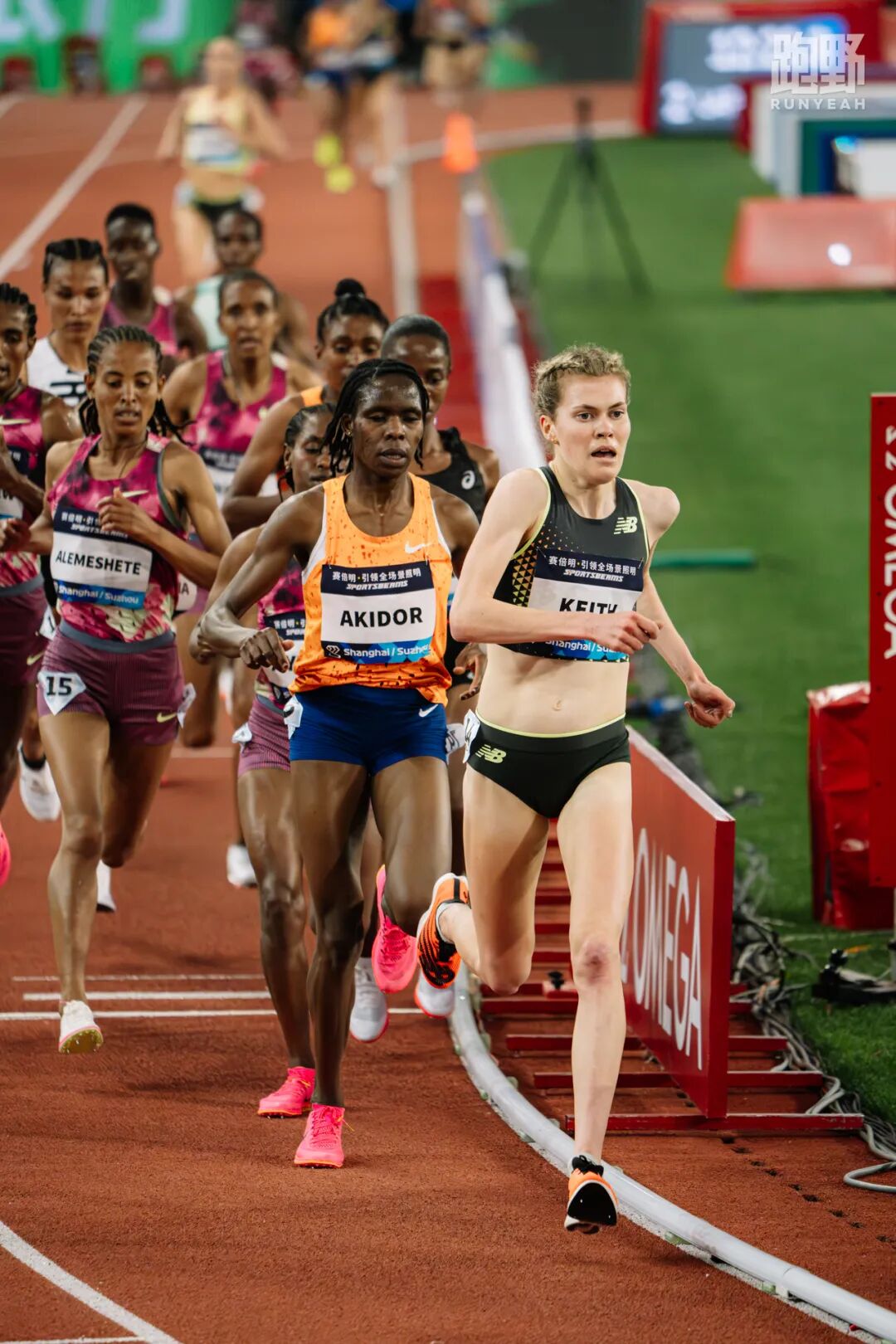
As early as July 2025, World Athletics had already taken a step forward: all athletes wishing to enter the women's World Championships are required to undergo a one-time SRY gene test; the rule took effect on 1 September 2025 and applies to the Tokyo World Championships. World Athletics' rationale at the time was straightforward — in elite women's events, eligibility must be based on "biological female" status.
Seen in this context, the IOC's new policy reads more like a recentralization: rules that were once scattered across individual federations are being gradually collected, standardized, and ultimately folded into the overall Olympic system. For administrators, this means standards are becoming more consistent; for athletes, it means that once they stand on the edge of these rules, they are no longer facing a single federation but the entire, harder-to-evade Olympic order.Because of this, disputes over women's event eligibility are unlikely to remain confined to a single discipline, a single race, or a single athlete. They are increasingly becoming a larger debate: how should the rules be set, who gets to draw the boundaries, and how should concepts like "fairness," "safety," "dignity," and "scientific evidence" be prioritized? There is still time before the 2028 Los Angeles Olympics, but this debate has, in effect, already begun.
What is clear for now is that Caster Semenya has explicitly stated her intention to pursue legal challenges and has publicly called on more athletes to join. Whether this confrontation will actually evolve into a cross-discipline, multi-athlete collective action remains difficult to judge at this stage.On one hand, the International Olympic Committee is trying to redraw the boundaries of women's events to ensure fairness; but what comes with the rules is not just eligibility restrictions — there are also new risks of stigmatization and lasting impacts on young athletes, cases of differences in sex development, and the wider women's sports environment. France has already publicly questioned these genetic tests, saying they raise serious ethical, legal, and scientific concerns.So the part of this controversy that truly deserves attention may not be merely "who can compete and who cannot." More importantly, when the IOC decides to use a more unified — and more forceful — approach to redefine women's events, the entire sporting world is forced to answer an old question again: what exactly is fairness, and who gets to decide it?For Caster Semenya, she has been grappling with these rules for many years; now, the subject of the dispute has moved beyond World Athletics to the entire Olympic system.The real test may only be just beginning.
Text:trail running / Editor:xiaocai
Image:Trail Running Big Bang & Web / Visual:MAX