

The heartbeat is the most powerful sound in the human body; if it stops, everything about a person comes to an end. Yesterday, 41-year-old Zhang Xuefeng died of sudden cardiac death despite all resuscitation efforts. Besides being an educator, he was also a runner. While a direct link between the two cannot be confirmed, running and the heart have an inseparable connection.
As long-distance endurance sports become increasingly popular, a clouded question continues to hover in many people's minds and has even become a focus of debate within the medical community:Does the extreme run of 42.195 kilometers ultimately strengthen our hearts, or does it inflict irreversible damage?
On 24 December 2025, David C. Gaze, senior lecturer in chemical pathology at the University of Westminster, published an in-depth analysis on an authoritative platform, citing a major study published in the leading medical journal JAMA Cardiology. This decade-long follow-up study finally reveals the answer and may give countless recreational runners some reassurance.

For a long time, concerns that marathon running might cause "micro-injuries" to the heart have not been unfounded. To thoroughly clarify this issue, researchers selected 152 recreational marathon runners as a sample and conducted rigorous tracking over 10 years.
The study was meticulously designed. The team not only performed immediate cardiac examinations before and after races, but also continuously monitored the runners' heart health over the following decade.

The study found two key phenomena. One is that cardiac load does indeed show short-term fluctuations. After completing a full marathon, the runners'right ventricle — the chamber responsible for pumping blood into the lungs — did exhibit a short-term decrease in pumping capacity. This confirms that marathon running does impose a substantial immediate load on the heart.
This finding is a milestone. It strongly refutes the blanket applicability of claims that "marathon running shortens life" or that "marathon running causes cardiac fibrosis" to the general running population. For the vast majority of recreational runners, the heart shows remarkable adaptability rather than fragility.

If there is no long-term damage, why were there so many previous rumors that "marathon running harms the heart"? David C. Gaze points out that this is largely due to misinterpretation of the biomarker cardiac troponin.
In clinical medicine, troponin is the "gold standard" for diagnosing myocardial infarction. When cardiomyocytes are damaged or necrotic, this protein is released into the bloodstream. Therefore, doctors typically regard elevated troponin levels as an urgent sign of cardiac events.
However, in the world of endurance sports, the situation becomes complex and confusing.

So, in short, the rise in troponin after finishing a marathon is more like muscle soreness after the heart has just completed an "extreme weightlifting" session: although the markers are abnormal, they recover with rest.

Although the findings in JAMA Cardiology are encouraging, this in no way grants runners "immunity" from heart disease. The article specifically emphasizes a harsh fact:marathon running may provoke underlying heart conditions, particularly coronary artery disease.
The piece cites a recent UK media report of a tragic case: a 42-year-old runner sought medical help for chest pain; initially, because of his good exercise habits he was thought to be fine, but he ultimately died of a heart attack.
This case exposes a lethal misconception:the "health halo" effect.
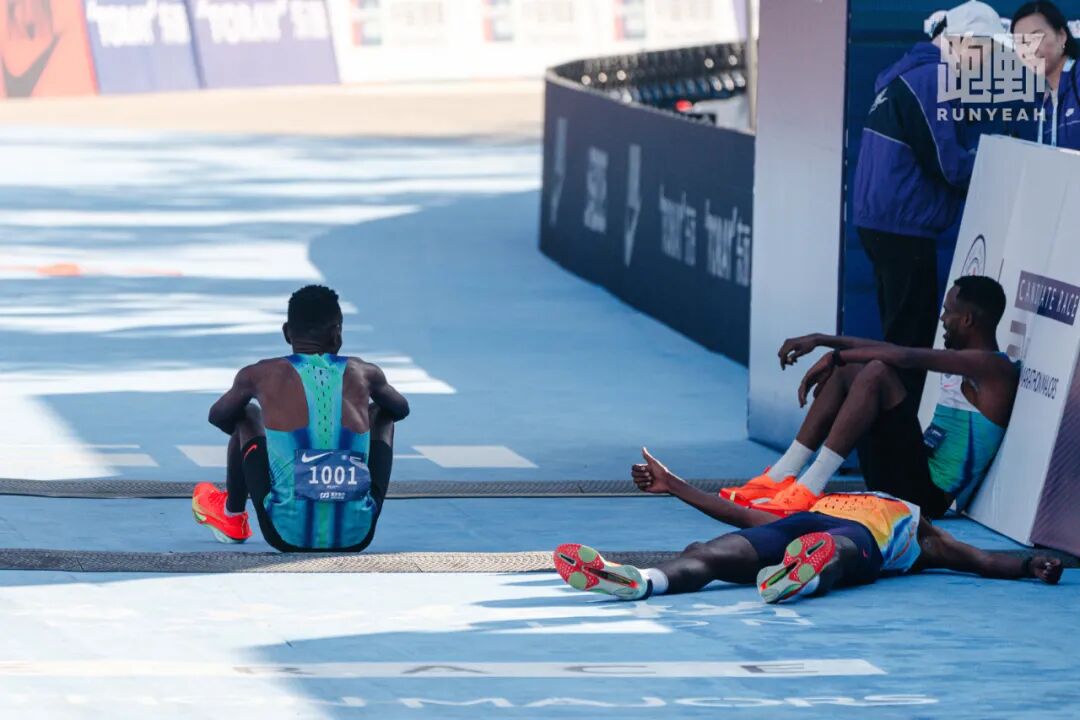
When a lean, regularly active runner experiences chest pain, shortness of breath, or syncope, both the runner and some healthcare providers may instinctively dismiss the possibility of a serious heart problem. In the tragedies mentioned above, the issue was not a troponin rise caused by exercise, but that the patient hadundiagnosed coronary artery disease。
The experts' core recommendation is: in the emergency department, an elevated troponin must be interpreted together with symptoms, ECG, and imaging studies. For runners,if you experience chest pain, unusual shortness of breath, or syncope during or after exercise, do not simply attribute it to “overtraining” or “not being in shape”. Regardless of your full marathon PB or how many races you've run, these symptoms require immediate, professional medical evaluation.
Statistics show that sudden death at marathons is very rare (about 1 case per 100,000 runners), and with improved on-course medical support this risk is falling. The vast majority of cardiac arrests are not caused by running itself “wearing out” the heart, but by high‑intensity exercise triggering underlying, undetected cardiac disease.

For recreational runners, the conclusion is clear and reassuring. But for those "ultra-endurance athletes" who train at extremely high intensities year after year, the scientific debate continues.
The article cites the well-known "Mont Ventoux study" — named after the Mont Ventoux climb, the toughest ascent in the Tour de France. The researchers examined 106 male cyclists and triathletes over age 50.

The results showed that, compared with non-athletic controls, nearly half of these veteran athletes who had long-term, very high-intensity training had small areas of myocardial scarring (fibrosis) detected on cardiac MRI scans. Such scar tissue is associated with a higher risk of abnormal heart rhythms (arrhythmias), some of which can be fatal.
This suggests to us that exercise may have a "dose-response" effect on the heart. Although the training load of most recreational runners is far below the threshold that would cause pathology, individual differences (genetics, training intensity, years of training) determine how much exercise stress each person can tolerate. For ultra-endurance runners chasing extremes, regular in-depth cardiac screening is especially important.

This ten-year study provides a solid scientific basis for the millions of marathon enthusiasts worldwide:for the vast majority of recreational runners, the heart is adapting to the marathon, not breaking down.
Our hearts are stronger and more resilient than we imagine. Those post-race spikes in troponin and the temporary weakness of the right ventricle are proof of the heart working hard under extreme challenge — and with enough recovery time, it remains healthy as before.

Scientific training and respect for life are the prerequisites for running. First, do not ignore any chest pain, unusual shortness of breath, or fainting. Good fitness does not mean your coronary arteries are clear. Especially for middle-aged and older runners, regular medical checkups to rule out underlying coronary artery disease are crucial. Also, since studies show the right ventricle needs several days to recover after a race, recovery runs in the week after a race should be truly low intensity to give the heart a chance to rest.
A marathon won't hurt your heart,and with progressive, scientific training,it can actually be an extreme refinement of cardiopulmonary function. Put on your running shoes and keep running — but bring your reason and respect. Underlying heart disease may be the real culprit, so don't blindly force yourself to continue, and don't easily believe runners can beat everything.
Your body is your own; before the starting gun, we must take responsibility for our body and our life.
This article is based on an article by David C. Gaze published on December 24, 2025, and related research data from JAMA Cardiology