
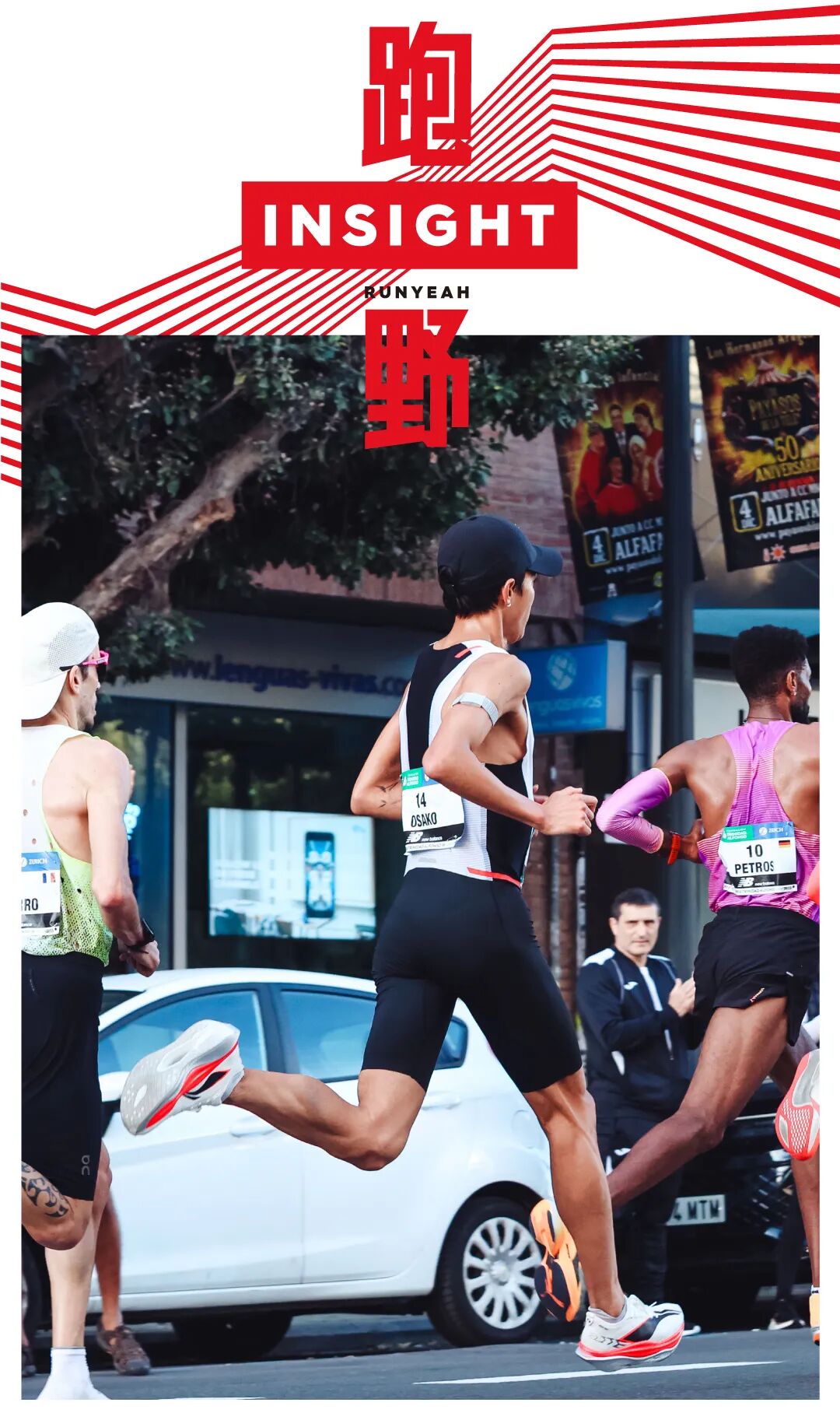
Last week, 2026 Tokyo Marathon elite roster announced, Japan's national record holder Suguru Osako was prominently listed. Tokyo is complicated for Osako — success, failure, and withdrawal have all converged there. Osako's choices of races have always been somewhat hard to predict.
For example, he'll suddenly withdraw from Tokyo and then appear in Boston; or take last year's Valencia, which brought the long-quiet "uncle runner" Suguru Osako back to life. 34 years old, 2:04:55 — third time setting the Japanese men's marathon national record, it probably inspired a lot of people to head out for a run after watching the race.
Osako has rarely appeared on race day in recent times, but conversations about him have continued, especially around his change of sponsor — and of course now everyone knows he is signed with Li-Ning.
Many people had expectations for him before the race, but probably didn't expect it would come in the form of breaking the Japanese national record. People marveled at the depth and height of his career, especially considering he was already 34 when he broke the national record for the third time.
Looking across his full marathon participation record also reflects the uniqueness of an athlete who has always broken conventions and aimed for the world elite.
Suguru Osako ran his first marathon at the 2017 Boston Marathon; by then it had been two years since he moved to the United States with his family to join the Nike Oregon Project, during which he faced intense doubts and criticism in Japan. 2:10:28, third place — a World Marathon Majors podium in his debut marathon, the best possible reply.
At last weekend's Valencia Marathon, by his planned schedule this was actually the 16th marathon he had intended to enter, but he actually finished 14, the other two being the 2019 Tokyo Marathon where he withdrew due to low temperatures (DNF) and this year's Tokyo Marathon where he chose to withdraw before the race (DNS).
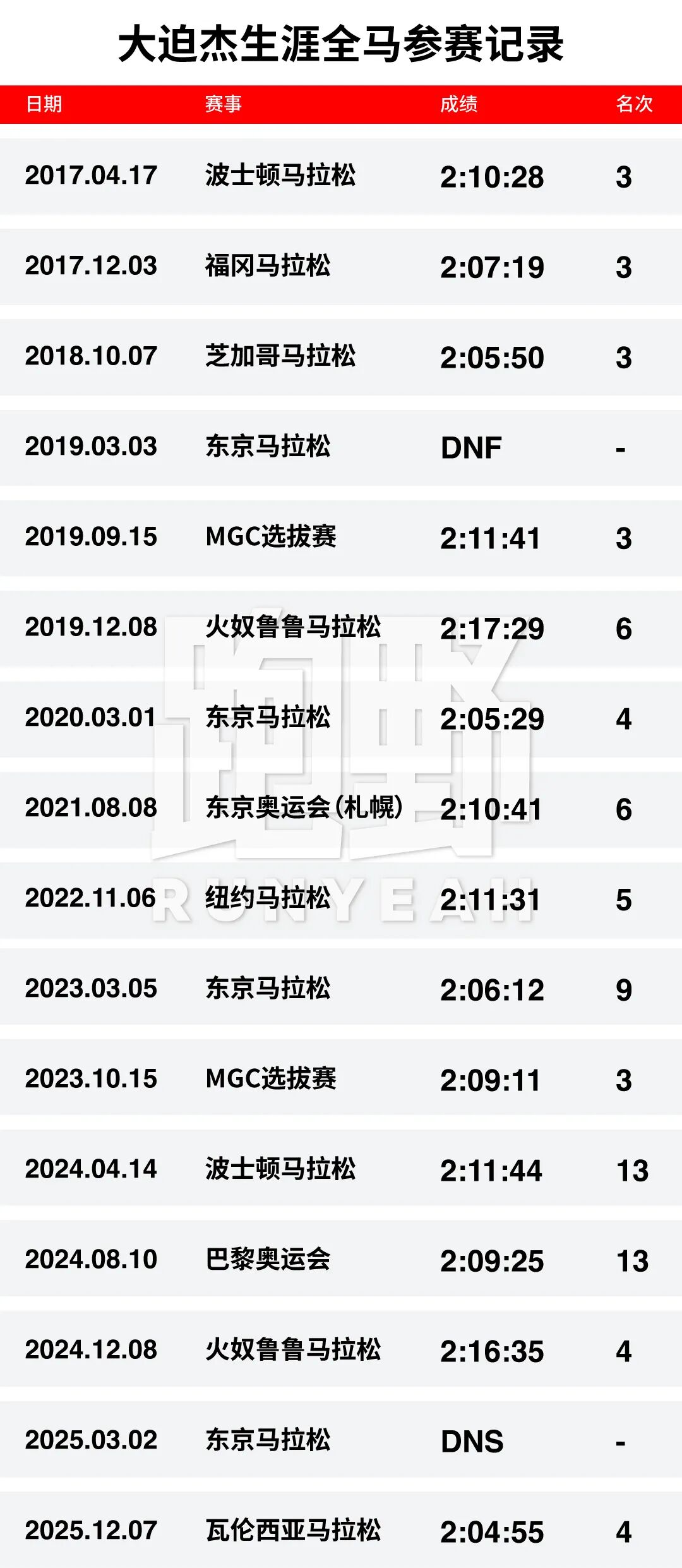
Among the 14 finished races, the Honolulu Marathon, which he ran in both 2019 and 2024, is somewhat special — the results were relatively "ordinary". I consulted people in the Japanese running media about this, and the response was that it was more of a trip for Osako and his family, treating the race as an easy training run while they were there. Of course, Osako also has a sponsorship deal with the Honolulu Marathon's official sponsor SGC, which is likely another reason he ran.
Excluding those four races, Osako ran 12 other full marathons, and using a popular phrase, his results in those races amounted to — only competing in top-tier events. If it wasn't a World Marathon Major, it was Japan's Olympic selection races packed with domestic top competitors, or the Olympic Games — every race was full of quality.
Osako's performances have naturally been impressive: in world-class events he finished in the top ten on 10 occasions, including two third-place finishes at World Marathon Majors, two third-place finishes at the MGC selection races (also twice selected for the Olympics), and three national records... showing sustained, stable high-level performances and the ability to break records at crucial moments.
It's immediately clear that Suguru Osako's career hasn't been about quantity but about focusing on high-quality races and performances that push the limits, which only adds to his legendary aura.
Chronologically, his full marathon participation over the past eight years can be roughly divided into four phases.

The first phase was April 2017–October 2018, a proving period for Suguru Osako after graduating from university and stepping away from Japan's traditional system. He went alone to the United States to pursue a different training and professional path; without results to support him he would have lacked credibility. He used a debut 2:10 to reach the podium at the centennial Boston Marathon, and later that year ran 2:07:19 at the Fukuoka Marathon — the fastest time in Asia that year (and, at the time, the third-fastest in Japanese history) — proving his decision was justified.
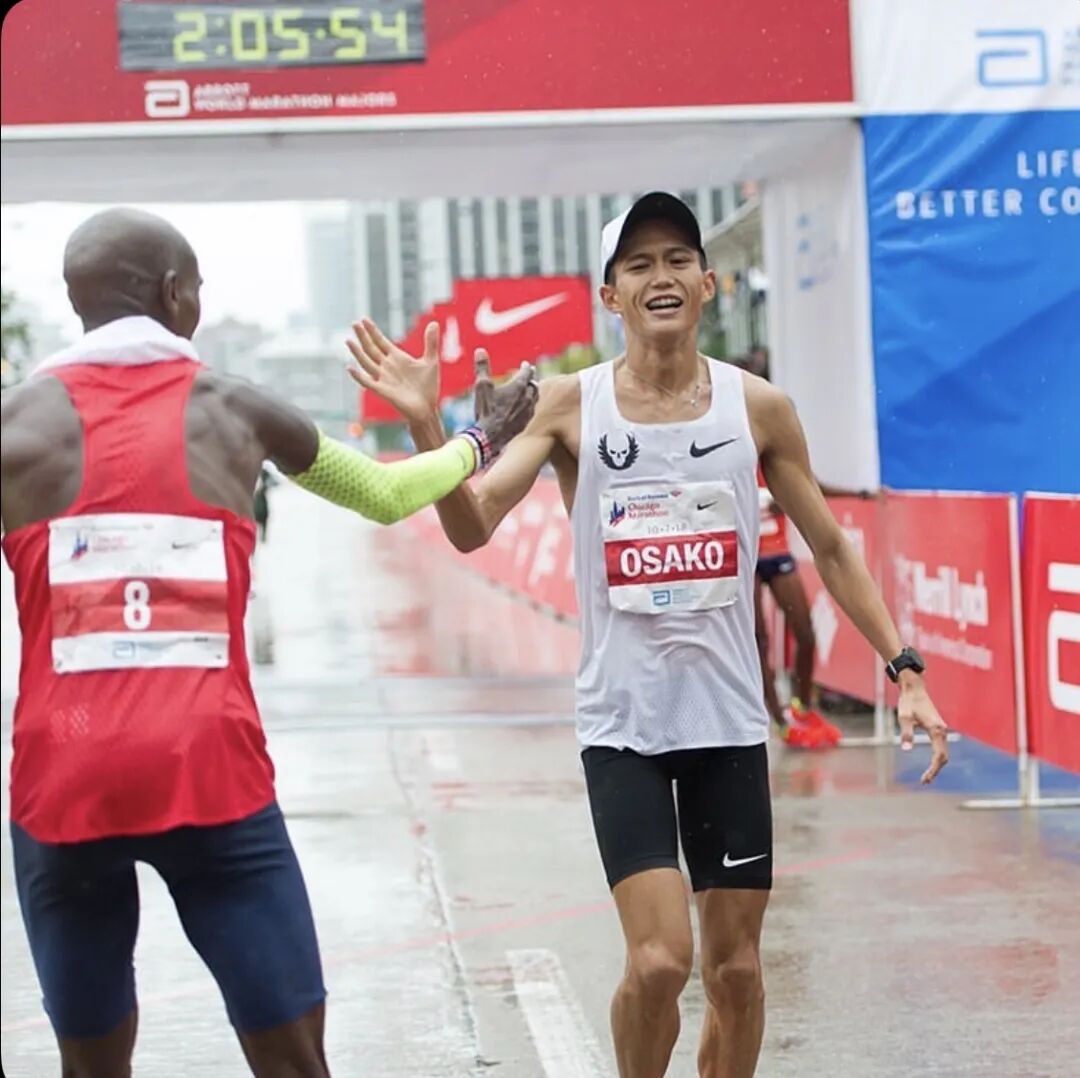
After not racing in the first half of 2018, he appeared on the Chicago course in the second half and raced alongside his senior, Mo Farah, running 2:05:50 to finish third, setting a new Japanese national record for the first time and becoming the first person of East Asian descent to go sub-2:06, and the photo of him punching the air and roaring across the finish line remains an iconic image for many runners.
The second phase was March 2019–August 2021; this period brought the heavy burden that comes with aiming for the crown, and it was also a time for him to reflect on his career. After breaking the national record he became the focus of the spotlight, but at the Tokyo Marathon — racing at home — he suffered hypothermia after 25 km and withdrew. In the subsequent Tokyo Olympic selection race he fell behind in the final sprint and finished third, meaning his Olympic place couldn't be confirmed until the final window closed (he was eventually selected). Nevertheless, his performances that year led many to question the true value of his national record.
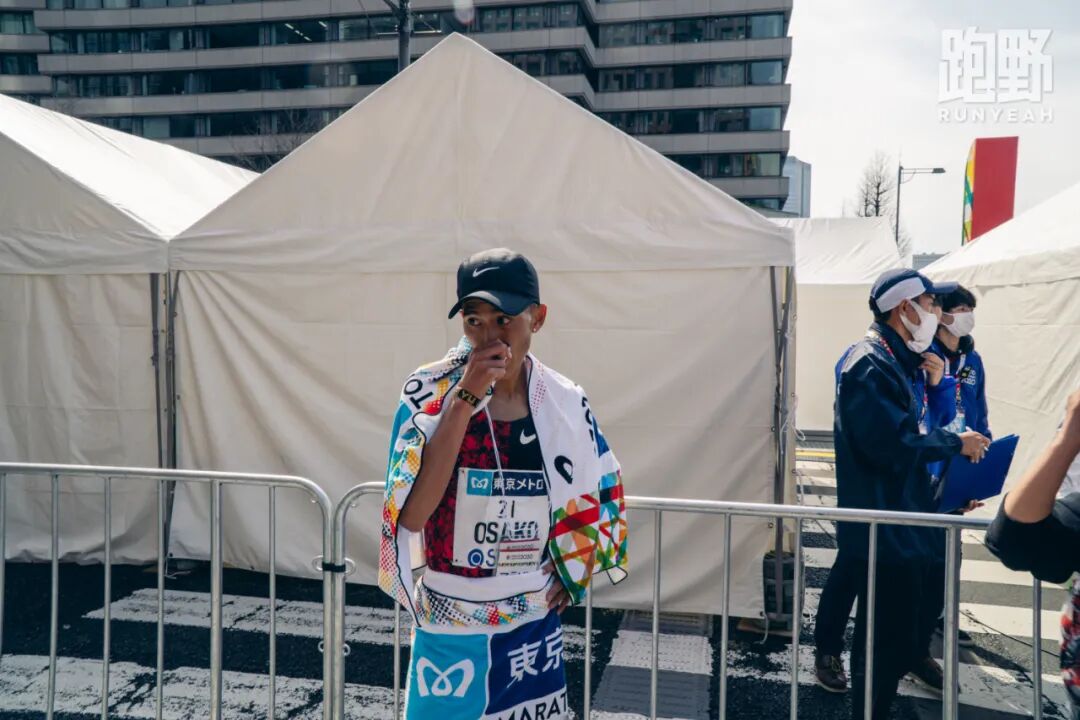
Then he broke it again. At the 2020 Tokyo Marathon, even after suffering a stitch late in the race, Suguru Osako still ran 2:05:29 to reset the Japanese national record. In the post-race interview this man even shed tears. What followed was 17 months of hibernation, all for the Tokyo Olympics. To focus fully on the race and leave no way back, he announced a decision that surprised many — to retire after the Tokyo Olympics, because the supreme goal had been achieved.
With 2:10:41 he finished sixth in the Olympic marathon, which at the time was Japan's best Olympic marathon result. He also decided to leave the sport because he felt “he couldn't find the meaning to keep running,” and during that year-plus he must have done a lot of soul-searching.
The third phase was Nov 2022–Aug 2024. In February of that year he announced his comeback, deciding to go after the Paris Olympics. His comeback debut in New York produced 2:11:31 for fifth overall; at the next year's Tokyo Marathon he ran 2:06:12 — then his third-best ever — but two other Japanese runners finished ahead of him. In October's MGC trials he again placed third, securing the final ticket to Paris.
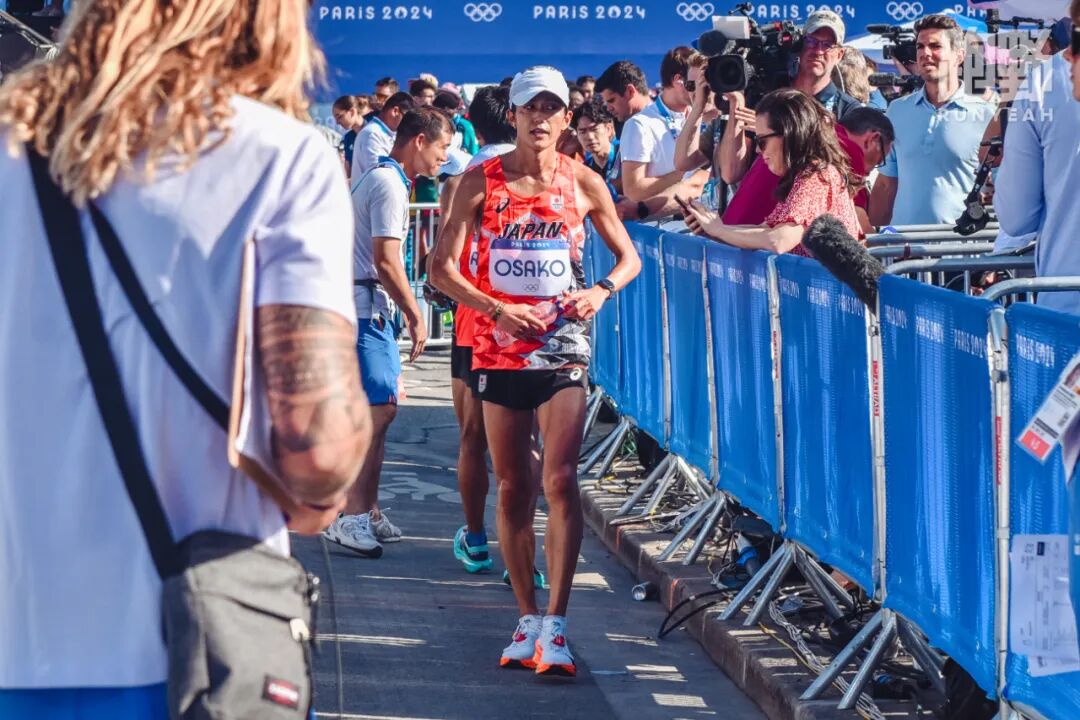
Back in Boston in 2024, his 2:11:44 wasn't bad, but it only placed him 13th in that field, and a Japanese citizen runner, Yuma Morii, ran sub-2:10 and finished ahead of him. At the Paris Olympics the young Akasaki Akira was Japan's best performer, and Suguru Osako again finished 13th, the same as in Boston earlier that year. From that point some began to say he was getting on in years and that his results were being challenged by the new generation; others suggested he'd started to shift his focus toward commercial ventures…
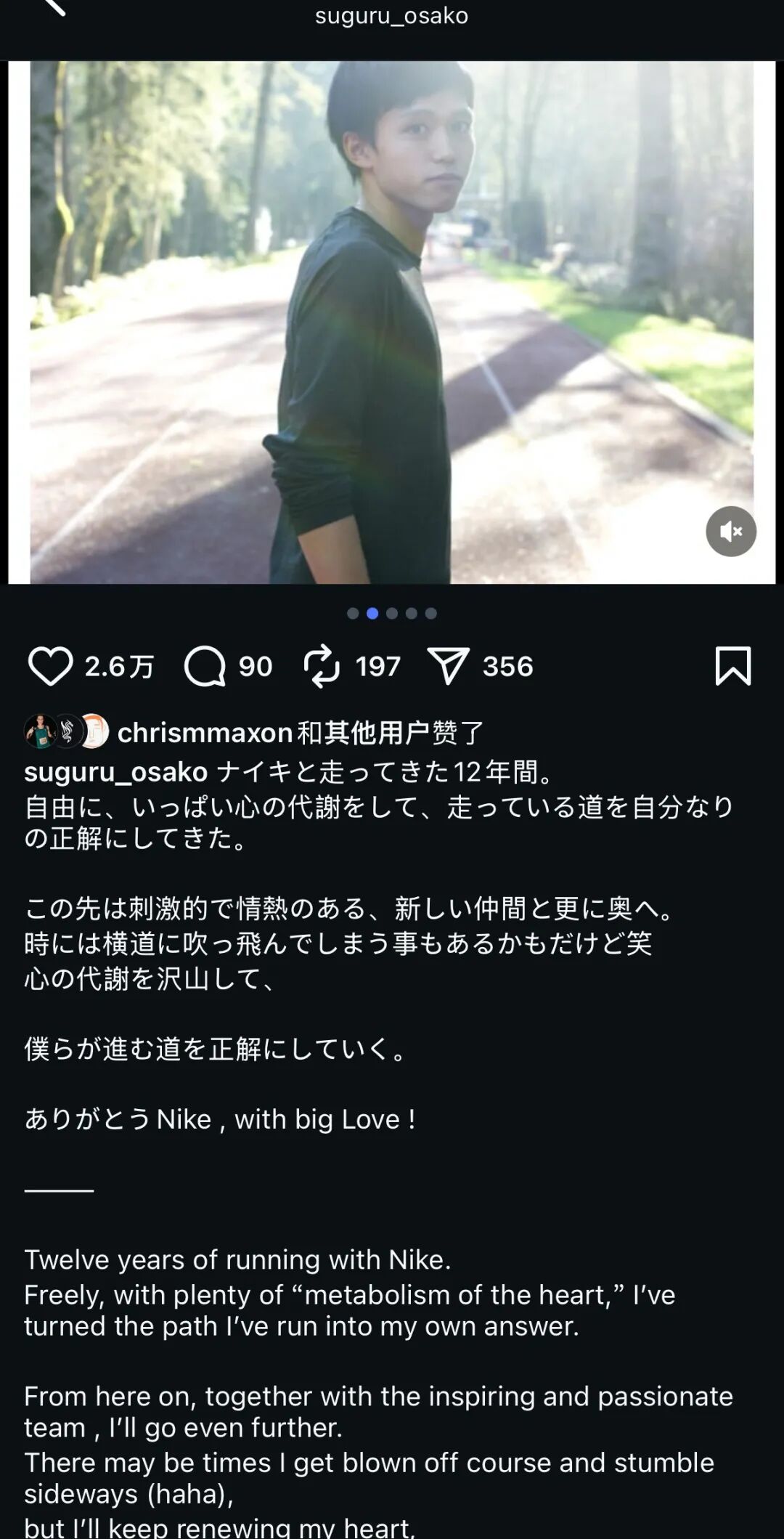
Thus came the fourth phase, from 2024 to the present, during which he went through many changes. The most obvious was his sponsor: when he split with Nike after a 12-year partnership and began training in another brand's shoes, many people were paying attention and talking. During that time he ran the Marugame Half Marathon in Kagawa wearing Xtep and finished 44th overall.
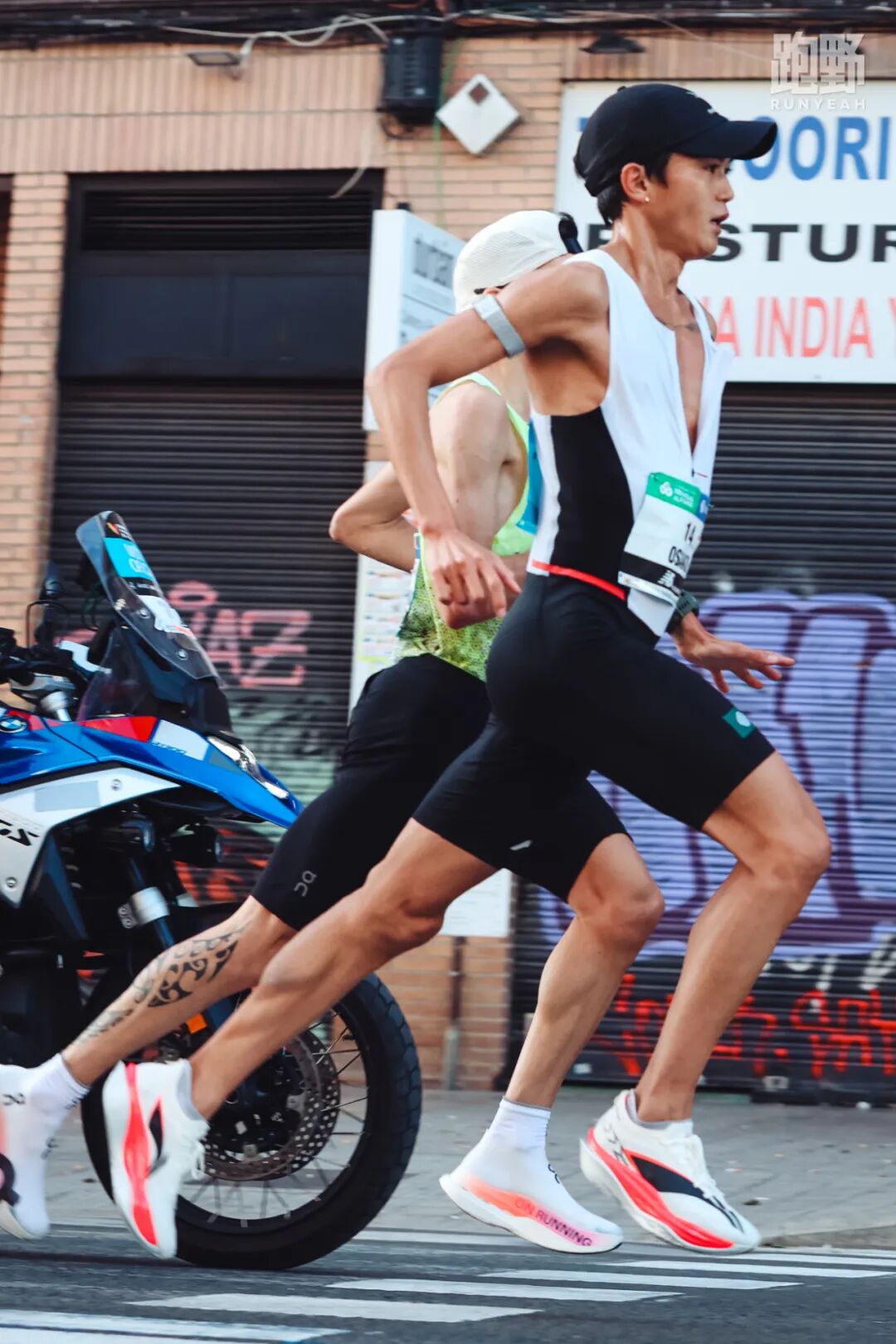
He ultimately chose to team up with Li-Ning. During summer training in Boulder I saw him alone on the track wearing Li-Ning, running intervals like a gust of wind. His first race after the partnership was the Tokyo Legacy Half Marathon, 1:01:45 — sixth overall and first among Japanese. After that race he immediately went to Kenya to make his final preparations for Valencia.
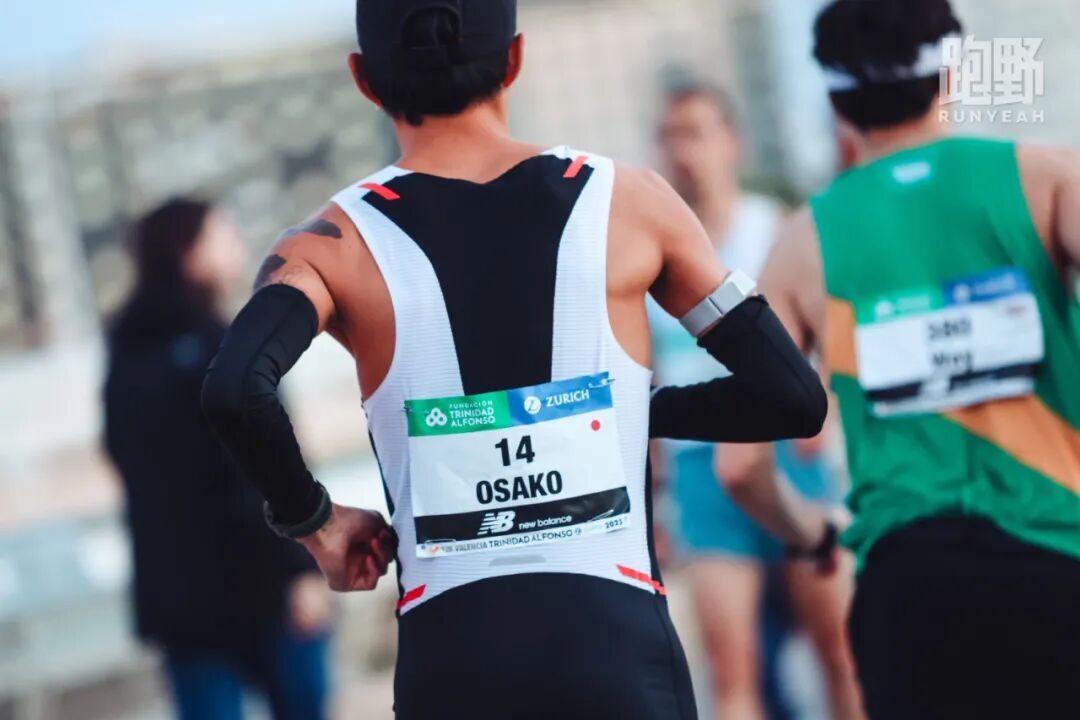
All that remained was the national record in Valencia. Up to 40 km his projected finish time was still 2:05:10, but over the final 2.195 km he blasted out a 2:53 pace, ultimately pushing Kengo Suzuki's national record from four years earlier forward by one second. After crossing the line he didn't pump his fist or roar — he sprinted hard to the finish and ended very calmly; everything was left unsaid.
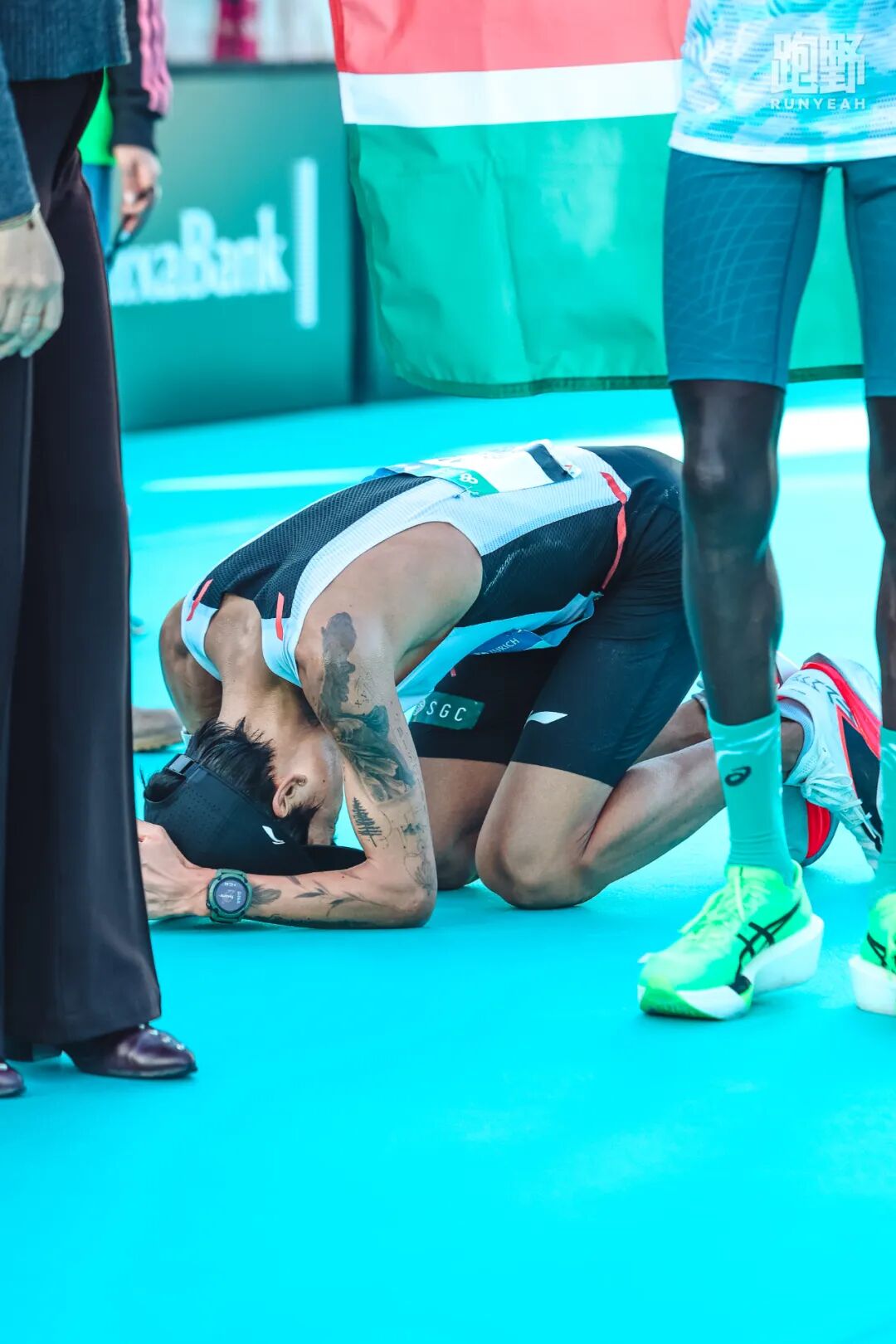
This performance earned him qualification for the MGC, Japan's Olympic marathon selection race two years from now. If he can be selected again, the Los Angeles Olympics would be his third Olympic trip; at the same time he will be 37 years old — at 34 he has written a new chapter in his story.

Looking back at Suguru Osako's full marathon race history, 'quality over quantity' is the most prominent feature — this is actually a common trait among the world's top runners today, and of course it's no secret. But the key lies in whether one can actually do it.
This has to be considered from two angles. Suguru Osako's commercial sponsorships are clearly generous, which allows him not to worry about making a living and to focus on training and the next race; many people also feel this is why they can't do the same. But on the other hand, to become a top athlete you must first face trade-offs and choices; often you even have to sacrifice a lot, including your hometown, family gatherings, exposure, flowers, and many other things.
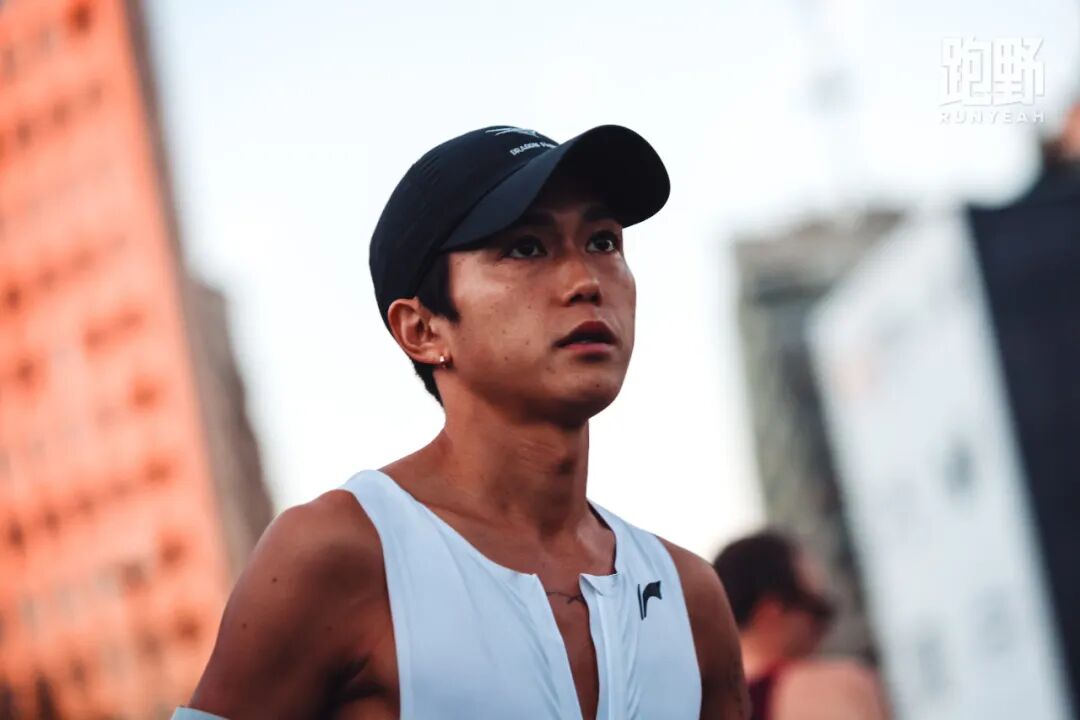
Whether it's Suguru Osako or "Ningxia Rose" He Jie, who won gold at the National Games, they both made firm choices for their goals and had the courage to miss out on many things. In the process, fatigue, suffering, loneliness, the urge to prove oneself, outside doubts, even expectations... all become pressure. And whether they can face it bravely and turn it into forward momentum is the best touchstone to test an athlete.
If Suguru Osako entered more races freely, I'm sure he would have more results inside 2:10 or even around 2:06–2:07, but then we might not have seen the 2:04 and his third national record.Choosing to put all chances on one race tests courage and confidence itself, as well as the quality of training and racing; it actually reflects ability across the board.
One more point to add is that on days when Suguru Osako isn't racing full marathons, he actually competes in some track and half marathon races as interludes — for example, famously running two 10,000m races back-to-back or two 5,000m races in succession. In this way he both tests himself and maintains speed, and it also neatly divides training cycles so he enters full marathon training in better shape. This race-as-training model may also offer some inspiration.

After the Paris Olympics ended, Suguru Osako said something that made all of Japan gasp: "I'm not stopping here; I'll fight on at the 2028 Los Angeles Olympics." Countless people snorted and shook their heads, thinking he was crazy. After all, he had nearly missed out on the Paris Games, and his era seemed to be over. Many voices said, "He's done."
But people forgot one thing: his name is Suguru Osako. The Suguru Osako who always walks against the wind and refuses to live by the script.
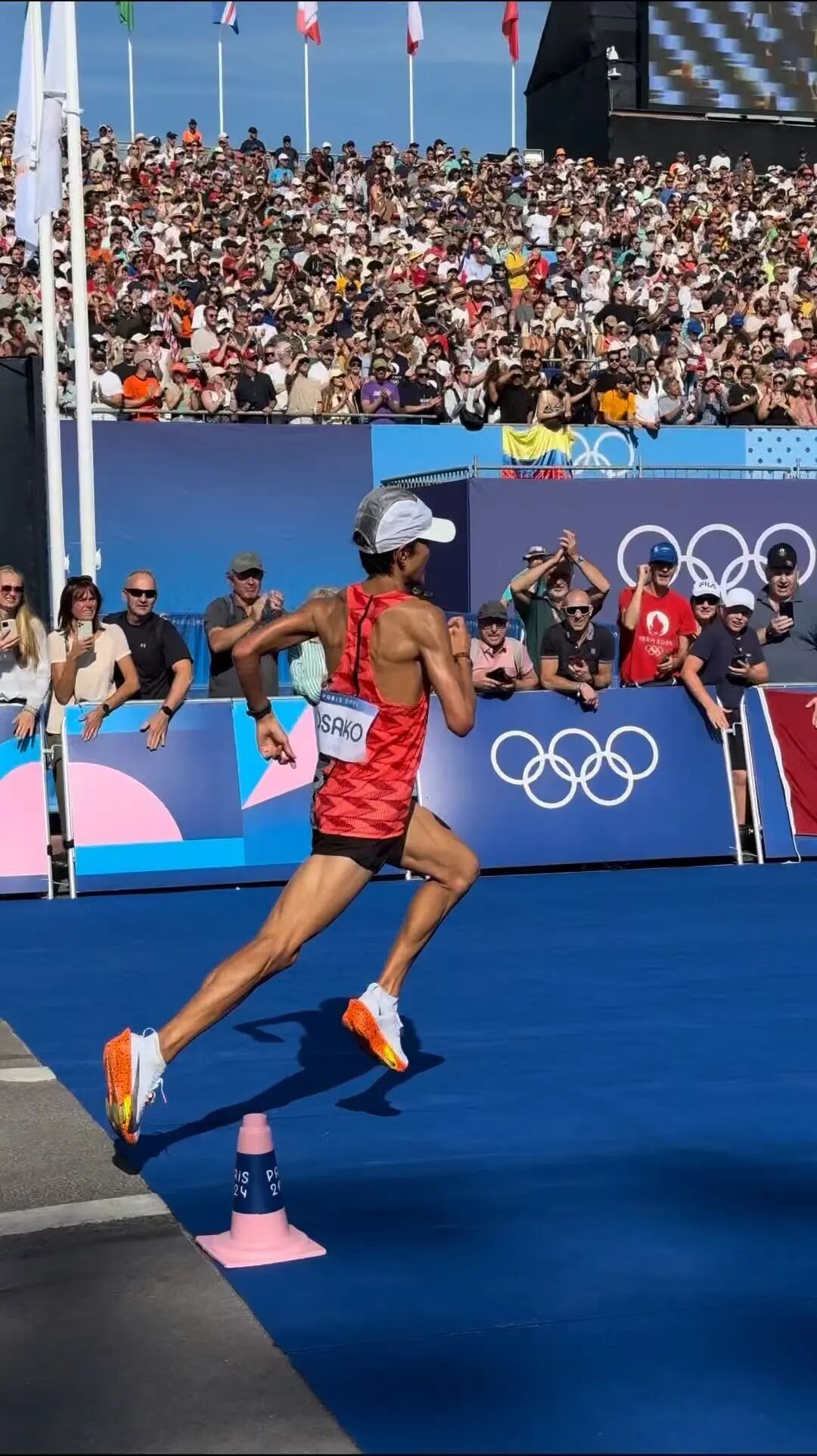
(Mao Amao witnessing Suguru Osako competing at the Paris Olympics)
When he retired, his feelings about running were complicated. He treated running as a task, as work, and was so exhausted he wanted to escape. But when he truly stopped, he realized he really loved running — it was just that love distorted by pressure. So his comeback wasn't for anyone else's expectations; he was running for himself.
From his race rhythm and style you can see Suguru Osako's biggest difference from others: he has an unorthodox stubbornness about race planning. He won't rashly change his plan just because of commercial or brand demands. He has a goal for every race — some are for training, some are experiments. He doesn't seek outside understanding; he only seeks whether his running feels authentic to him.
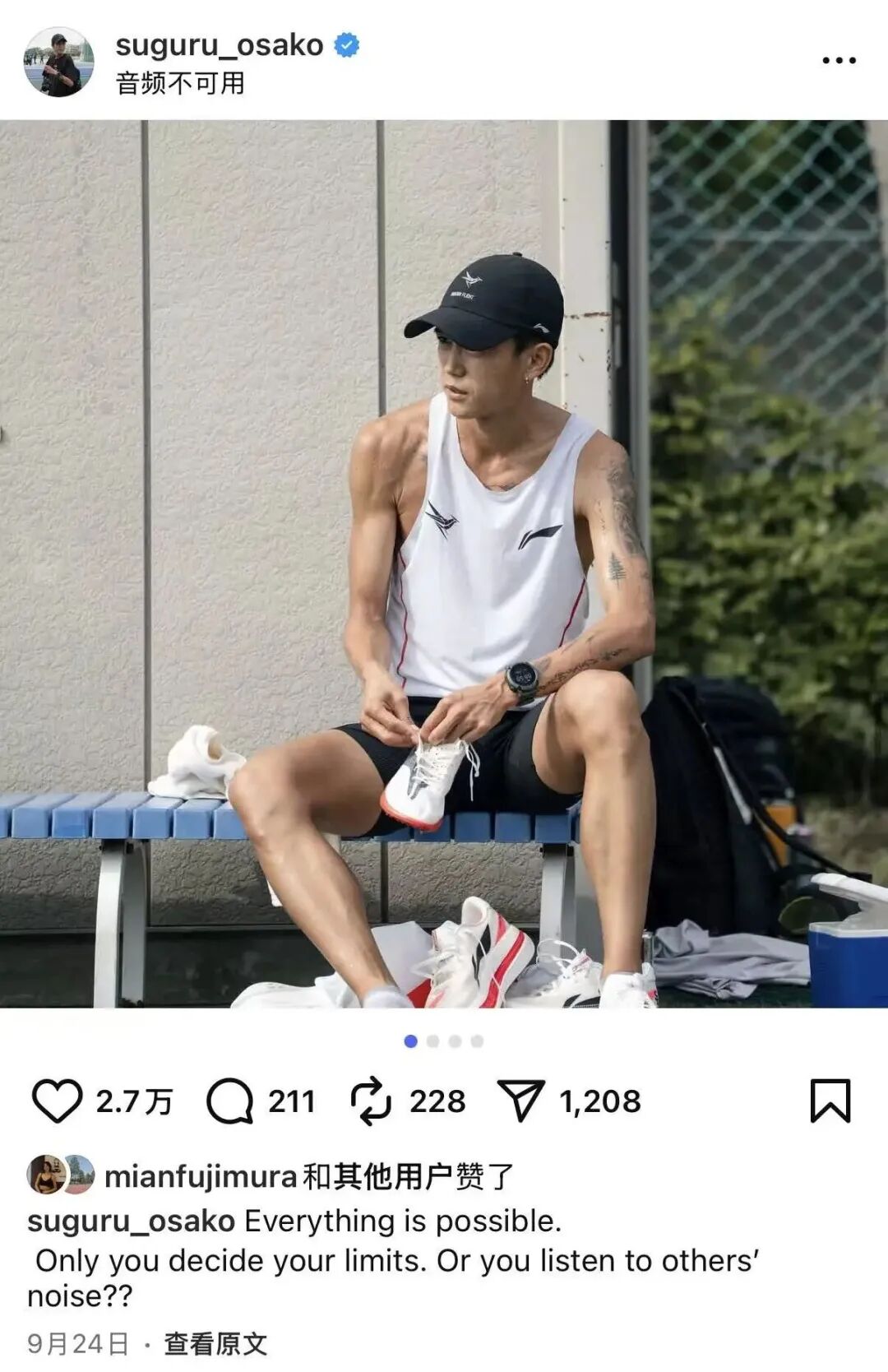
But the outside world can't see that layer. Spectators only see the results, only the placings. If you don't make the top three or you DNF, you're written off as "hopeless." So the doubts grow, as if he could never return to his peak.
Now we know that the line "I'm going to the Los Angeles Olympics" wasn't empty talk.
When partnering with Li Ning, Suguru Osako said that to get into Los Angeles he must break the Japanese record once more. No hesitation, no hedging — he said it cleanly and decisively, instantly recalling the young man who once shouldered a backpack and resolutely left Japan to train in the U.S.
This is very much Suguru Osako — his maverick streak is not rebellion, but a loyalty to the passion in his heart after calm, rational thought.
So, everyone watching: do you have a new understanding or changed view of Suguru Osako? What are your thoughts on elite athletes' choices and frequency of racing? How would you plan it for yourself?
Will Suguru Osako write a new story here in Tokyo in 2026?