
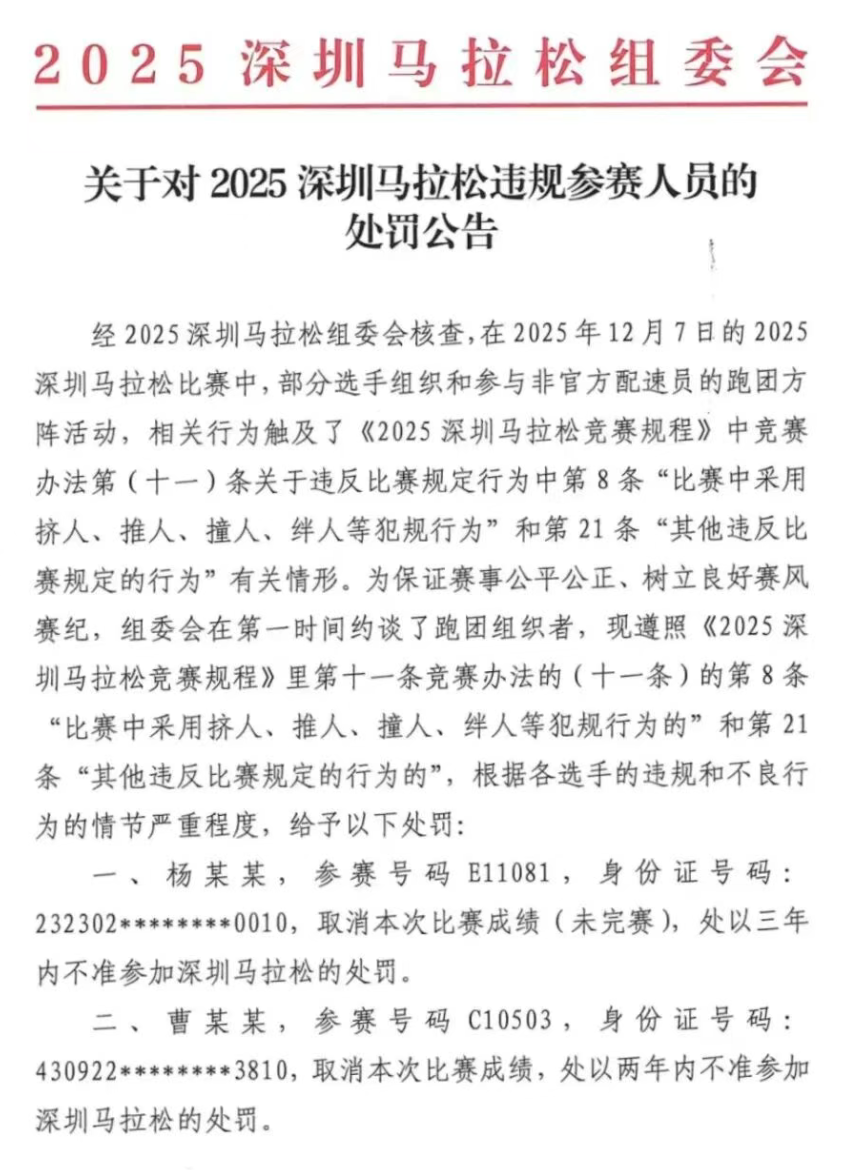
To be frank, the punishment at this year's Shenzhen Marathon, if taken at face value, is easy to summarize in one sentence:"Unofficial pacing groups were penalized."
When you read the announcement carefully, you'll find the organizing committee was really concerned with only two things: course order and race conduct.
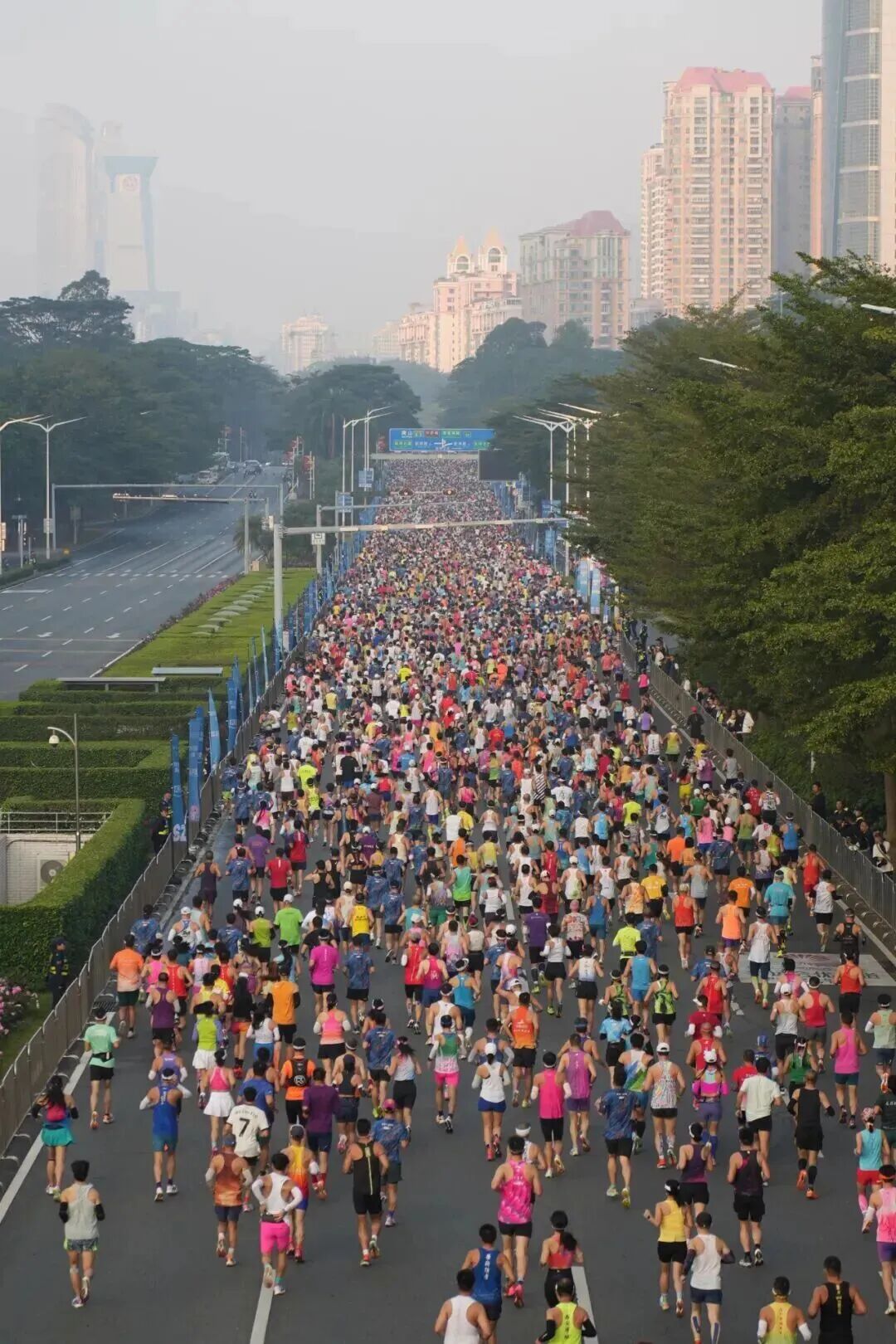
A marathon course, put simply, is a public thoroughfare. With tens of thousands running together, the only thing that guarantees the race goes smoothly is an unspoken agreement: you can run fast or slow, but don’t affect how others run.
Where’s the problem?It’s not that a few people run together, but when this “running together” starts to becomepeople leading the group, people controlling the pace, people directing the route, the nature changes. The flow of the course gets interrupted, and other runners can only adapt passively — yielding, slowing down, detouring.
You may not actually collide with anyone, but the order has already been changed.
One more realistic point: many so-called 'private running clubs' these days are long past being just about running.Matching apparel, unified slogans, someone holding a banner, even some brand exposure and corporate team-building elements. Those behaviors, when placed in post-race group photos or off-course activities, actually no one would object.
But the problem is,the official race course.
The course is not an advertising billboard, nor a team-building venue, and certainly not a public stage anyone can use to show off. Why do official sponsors and official pacers have to go through procedures and sign agreements? Ultimately, it's because the course itself is strictly regulated.
By stressing 'unofficial' this time, the Shenzhen Marathon is actually drawing this line:
It's not that you can't run together,
but you cannot, without authorization,organize others on the course, disrupt the race order, and use it as a platform for promotional/display purposes.
There's one more point that many people tend to overlook.This punishment didn't just single out a few "ringleaders"; it also dealt with runners who took part. The meaning behind it is actually very clear: when you know full well this is an organized group with formations and a performative aspect, and you still choose to join, then you're not just "passing by."
In other words,"I'm just following along" no longer holds up in the face of the rules. At the end of the day, this isn't about Shenzhen suddenly getting tougher, nor is it a crackdown on running-group culture.Rather, as events grow larger and runners, brands, companies, and communities all push onto the course, someone has to clarify the boundaries.
Running can be very free,
but races cannot be without order.
This time, the Shenzhen Marathon literally wrote that sentence directly into the rules.