Compared with road-running shoes, trail running shoes do not blindly pursue lightness — when facing complex natural conditions, protection matters more.
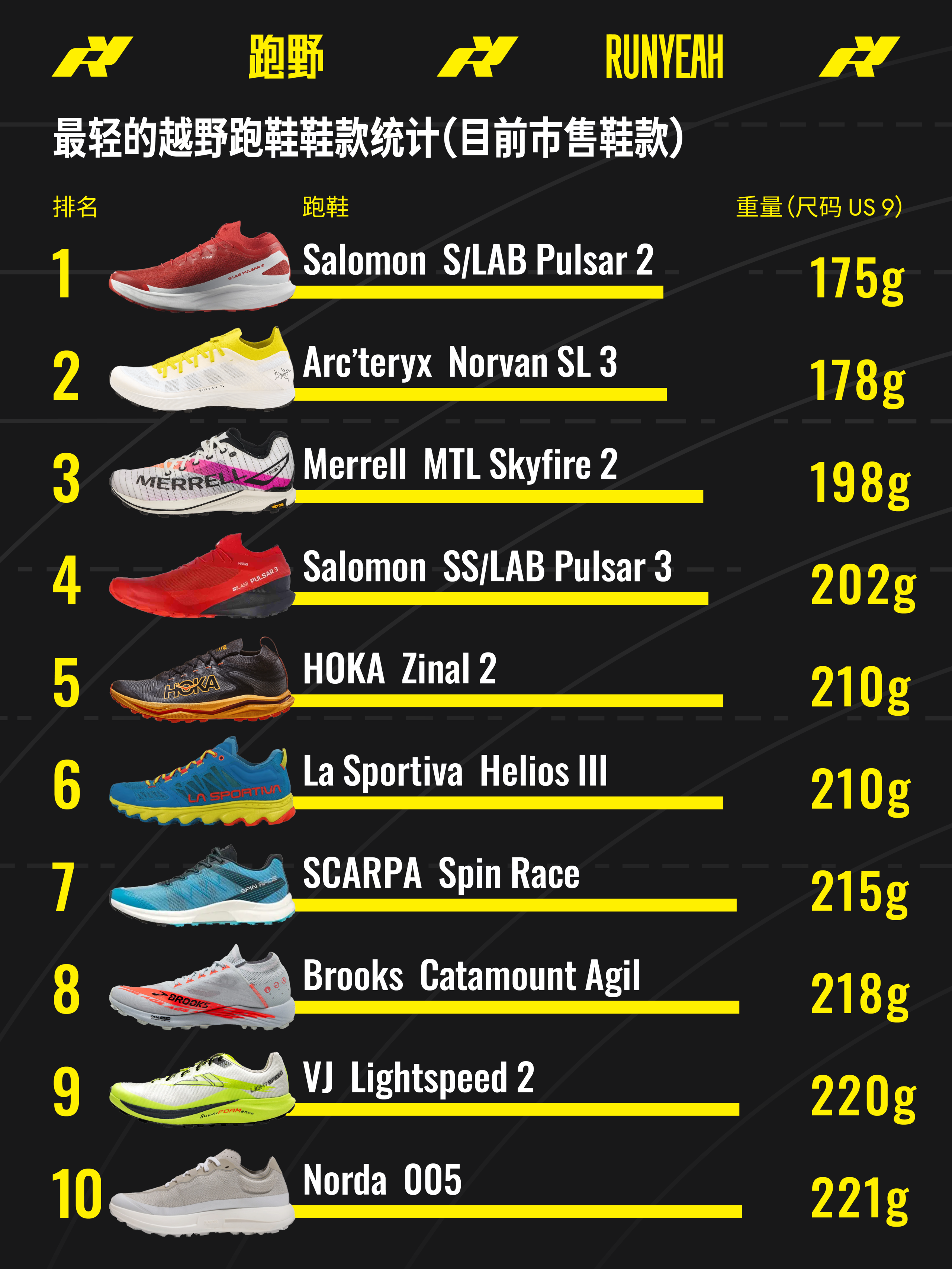
The Salomon S/LAB Pulsar series has long represented lightweight trail shoes. When the first generation launched in 2021, a US 9 weighed 175 g; the second and third generations weighed 175 g and 202 g respectively, yet by the fourth generation the weight jumped to 252 g.
The HOKA Zinal series shows a similar trend: the third generation is noticeably heavier than the second. A US 9 of the second generation weighed 211 g, while the third reached 241 g.
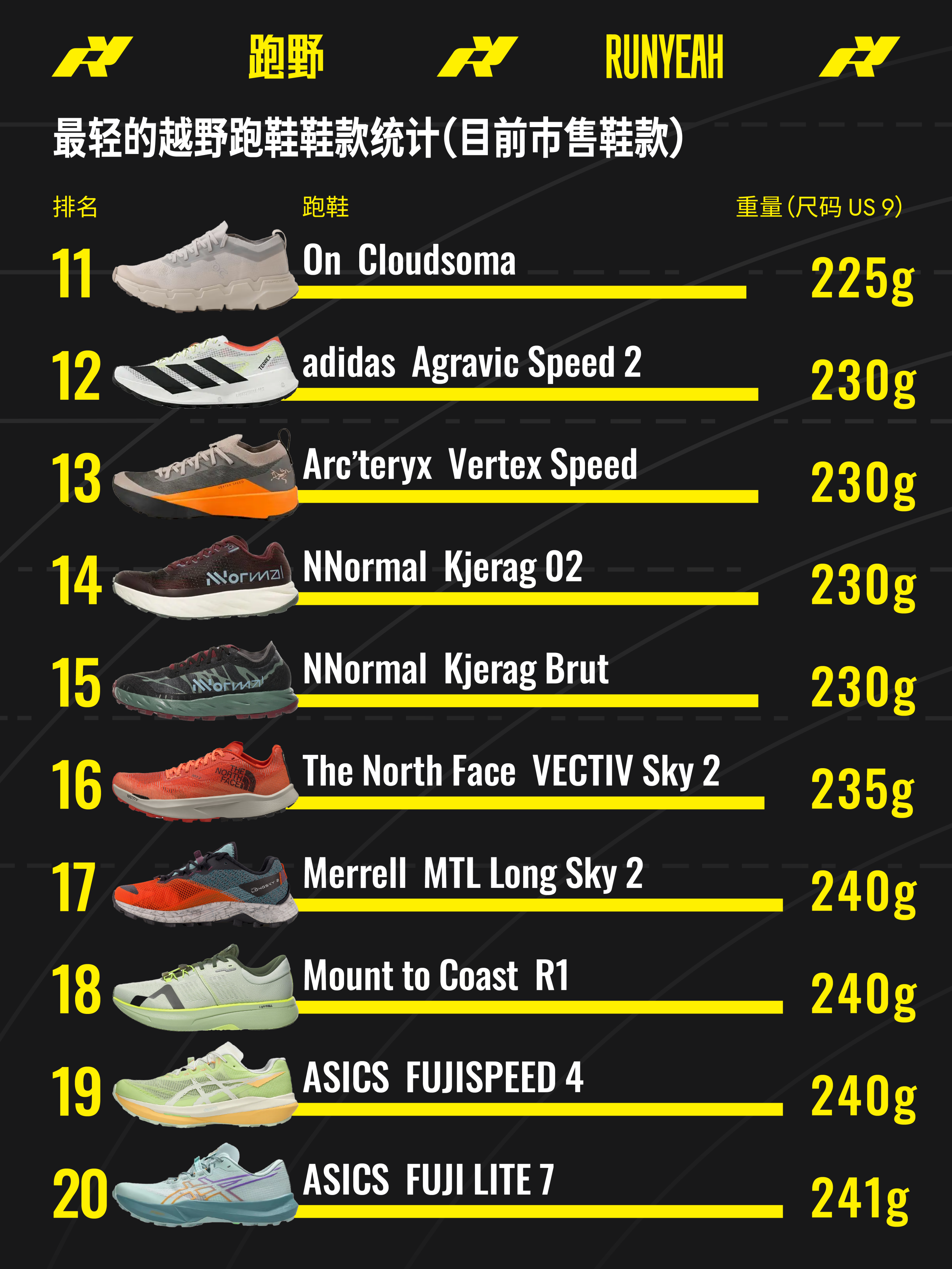
NNormal’s Kjerag series is the same: the first generation US 9 weighed only 216 g; the second added 14 g to reach 230 g, the same weight as the first-generation mud-specific version (Note: the 2nd generation was the flagship model, so the 2nd generation entered the list while the 1st did not).
This change reflects a shift in design thinking — searching for a more sustainable balance between extreme lightness and practical protection.
That’s not hard to understand: very lightweight trail running shoes (many models include SPEED or RACE in their names) are better suited to short-distance racing and place higher demands on a runner’s physical condition.
For most runners, lightness is only one aspect of a trail shoe; more important are traction, cushioning, protection, and durability.
Compared with traditional trail-running brands, emerging brands can actually surprise in terms of weight reduction, for example NNormal and Norda.
After reading this list, which models have you worn? When choosing trail running shoes, do you consider weight an important factor?
#trail running shoes #trail running #Trail Running Boom #rankings