
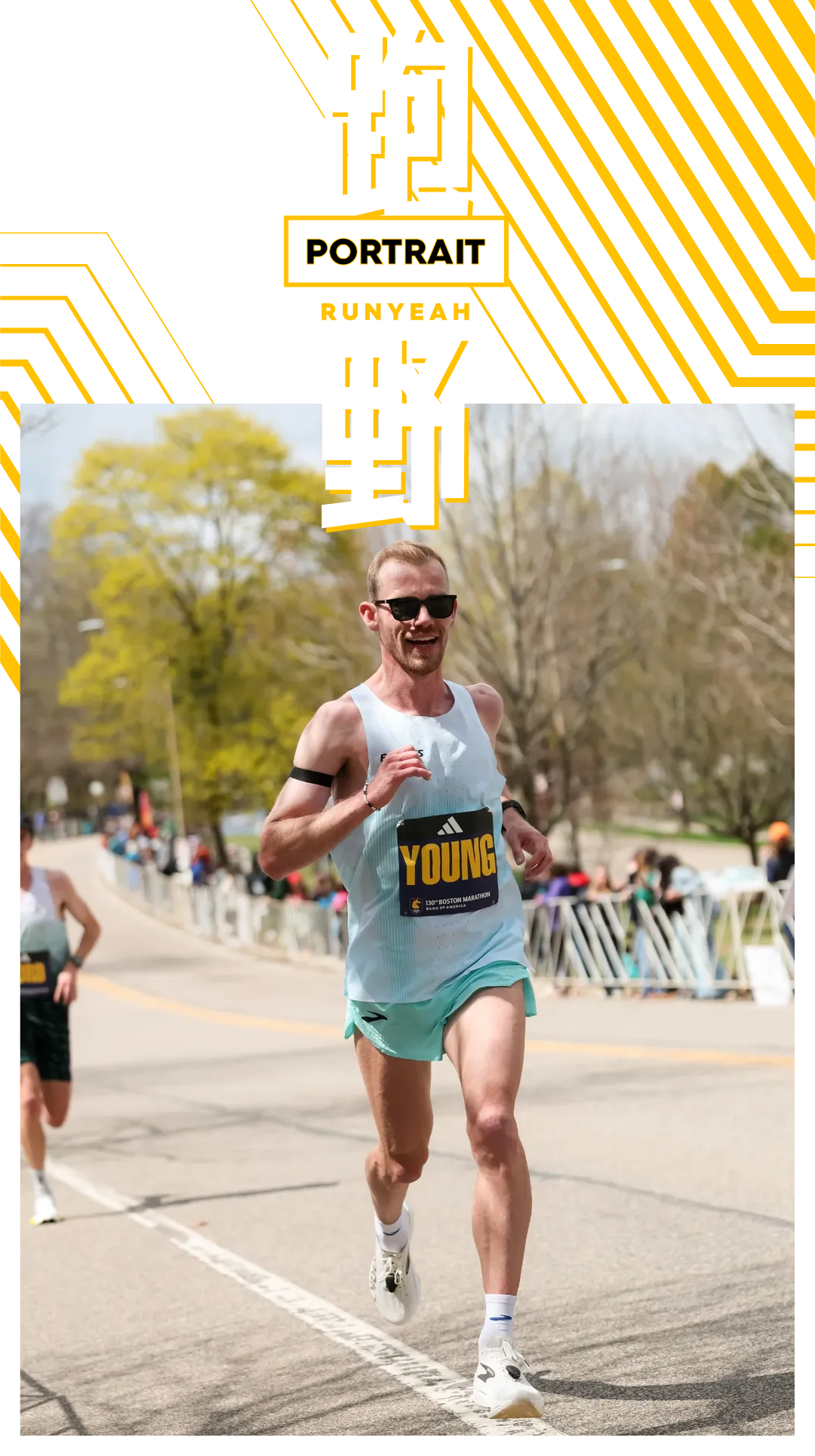
At the just-concluded 130th Boston Marathon, American star Clayton Young set a new personal best (PB) of 2:05:41, finishing 11th.
However, behind this glossy result was a half-year of darkness after the World Championships in Tokyo: a serious ankle injury, a sharp drop in training volume, and a full 18 weeks of rehabilitation. He only truly entered the Boston-specific microcycle of his preparation with 11 weeks remaining before the race.
From "intermittent running" to "setting a new PB," Clayton's journey was by no means accidental; it was the product of advanced tech gear, scientific periodized planning, and powerful mental strength working together.
This article will, from the perspectives of injury management, training plans, and mental resilience, attempt to depict the full "rebirth" process of Clayton's preparation for the Boston Marathon. This is not only a story about speed, but also a practical guide on how to overcome adversity through professionalism and resilience.

The fall shortly after the start of the Tokyo World Athletics Championships in September 2025 and the eventual gruelling finish in sweltering, humid conditions seemed to signal that his body had already reached the breaking point. Afterwards, he suffered the most serious ankle injury of his career; some doctors even declared he might never compete again.

The main issue with the injury was restricted joints: anatomical abnormalities between several bones meant a normal running gait would directly compress the damaged area. During the long period of cross-training, as his body tried to protect the injury, Clayton developed compensatory tightness in his lower back.
What was more painful was that the injury was stubborn. During an 18-week rehabilitation period, he went through multiple cycles of “feeling better — trying to run — pain returning”, and ultimately chose to withdraw from the Valencia Marathon in December 2025.
During this post-injury period he consulted several doctors; the last surgeon he saw was essentially ready to operate. The doctor said the problem would accompany him throughout his athletic career and might also mean the end of his competitive career.
To the doctors' surprise, after that conversation he suddenly had a flash of inspiration and came up with a creative solution: adjusting the insoles. By adding a small wedge at a specific spot in the insole, he supported the arch and thereby physically forced open space at the talonavicular joint. This change finally allowed him to run 16 km pain-free, and two days later he ran another pain-free16 km, thereby launching a training plan to return to competition.
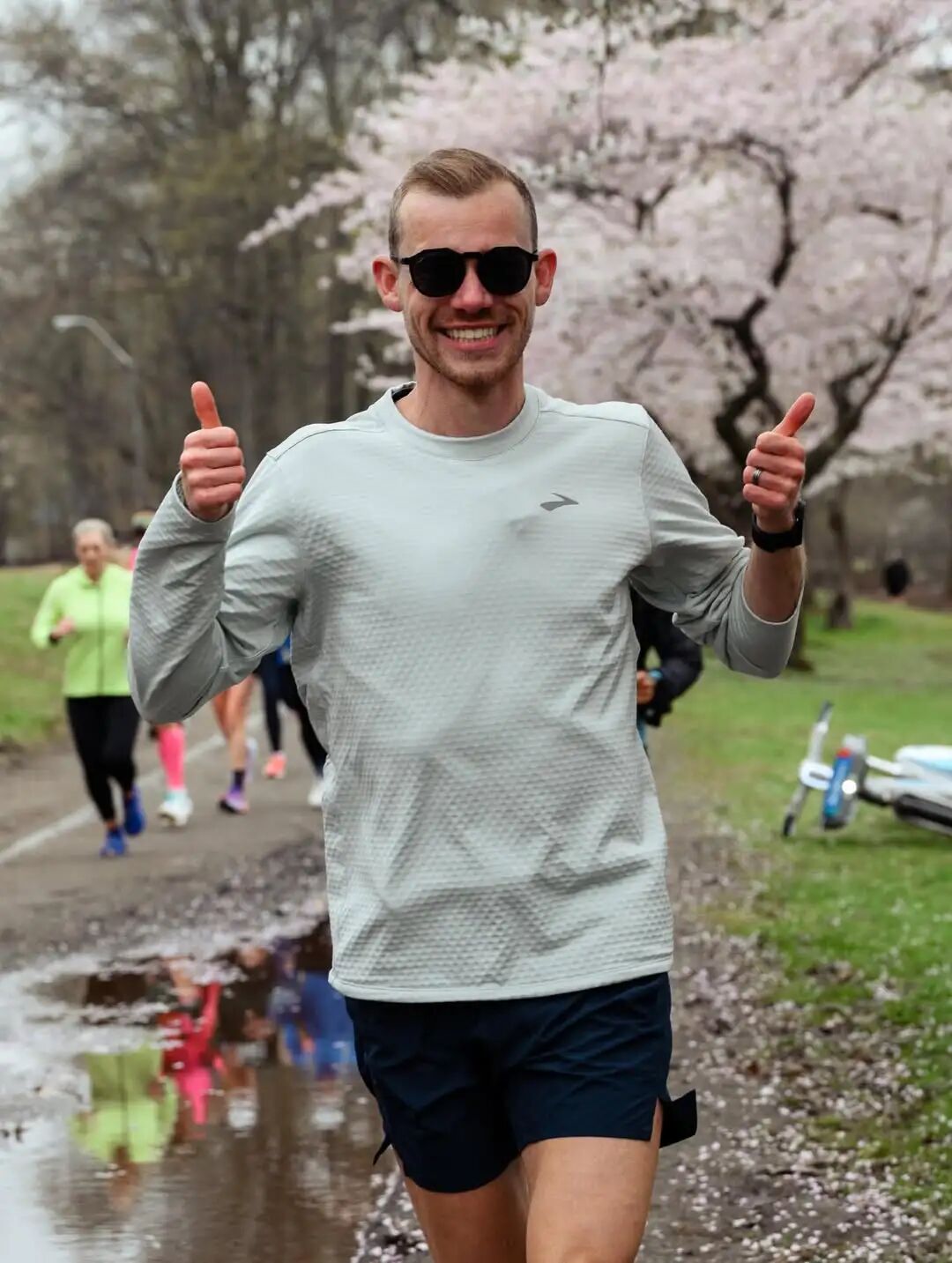
Throughout the rehabilitation period, especially in the mid-to-late stages, he put himself in a leading role in pursuing recovery — researching, studying and exploring the best ways to manage his injury on his own. This solution, which might be called a 'fortunate outcome', was in fact the inevitable result of that proactivity.
During his long injury recovery, Clayton relied mainly on the following two core machines for "high-intensity cross-training" to maintain race fitness when he couldn't run.
Arc Trainer (Arc Trainer):
This is one of the pieces of equipment he used most frequently during rehabilitation. The arc-step trainer is a low-impact cross-training device; unlike a standard elliptical, its motion path more closely resembles climbing or stepping, which more effectively activates the quadriceps, glutes, and hamstrings. This 'arched' trajectory not only puts minimal stress on the knees and ankles, but because the resistance is highly adjustable, Clayton can use it for high-intensity cardio work.
Anti-gravity treadmill (Anti–gravity Treadmill):
In the early stage of his foot healing, as he prepared to return to running, he made heavy use of an anti-gravity treadmill. This is a treadmill that uses air pressure to create a "reduced-gravity" effect. Clayton used it to restore his running gait while reducing load on his ankle. That allowed him to start practicing the flight phase (both feet leaving the ground) before his foot could tolerate full-impact loading, significantly shortening his return to competition.
Beyond those two primary devices, his full rehabilitation program also included:
Underwater running—in the earliest, most severe phase of the injury, to maintain cardiovascular fitness with zero impact;
Bike/elliptical trainer——used for aerobic sessions lasting several hours;
Strength machine training——in later strength phases he uses the leg press for calf raises, and weighted sled pushes and pulls to improve foot and lower-limb stability.
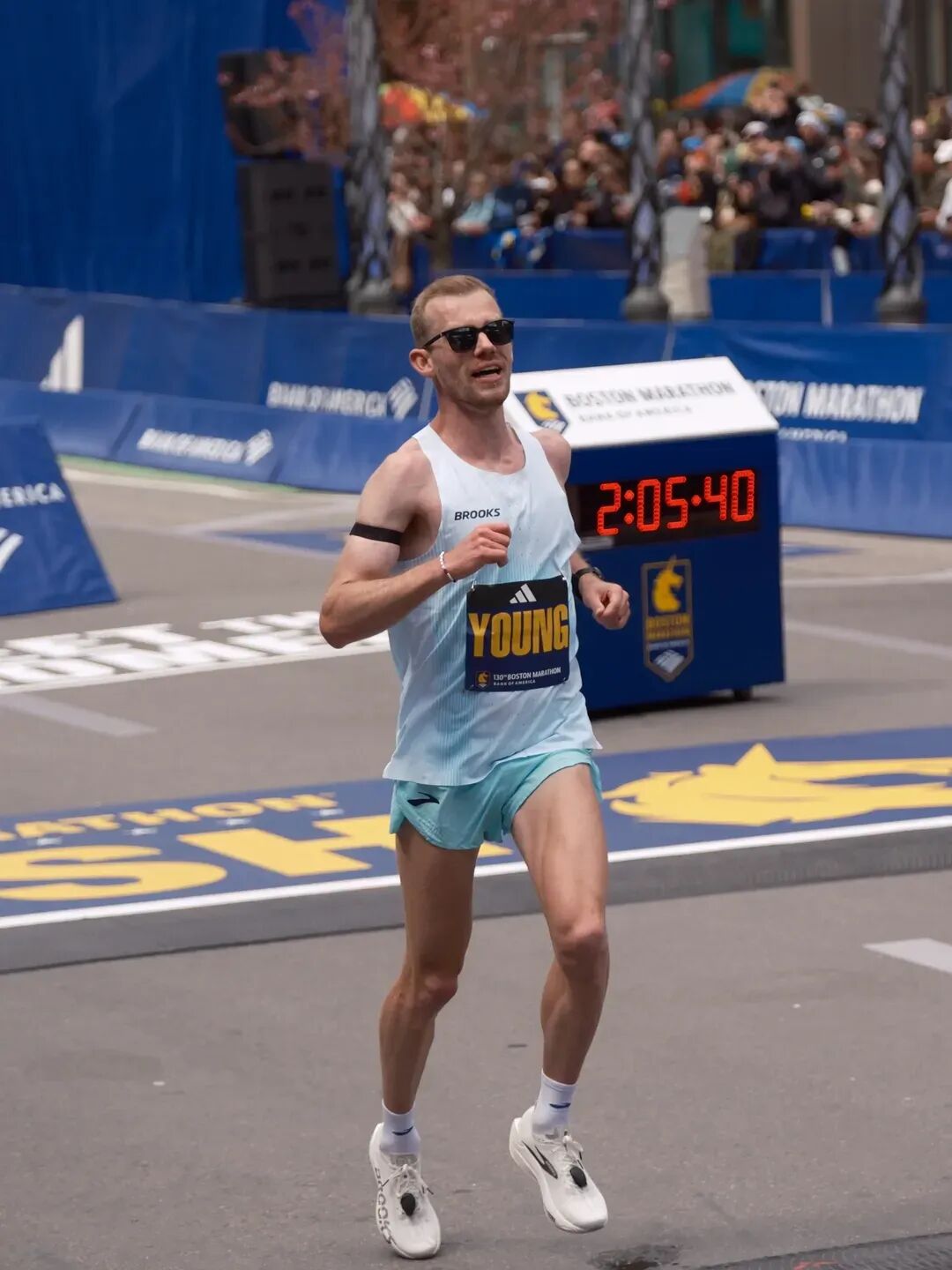
These four-and-a-half months of high-quality strength training helped Clayton return to road training in early 2026, and in just 11 weeks—using a short training block unlike his previous cycles—he achieved a new breakthrough.

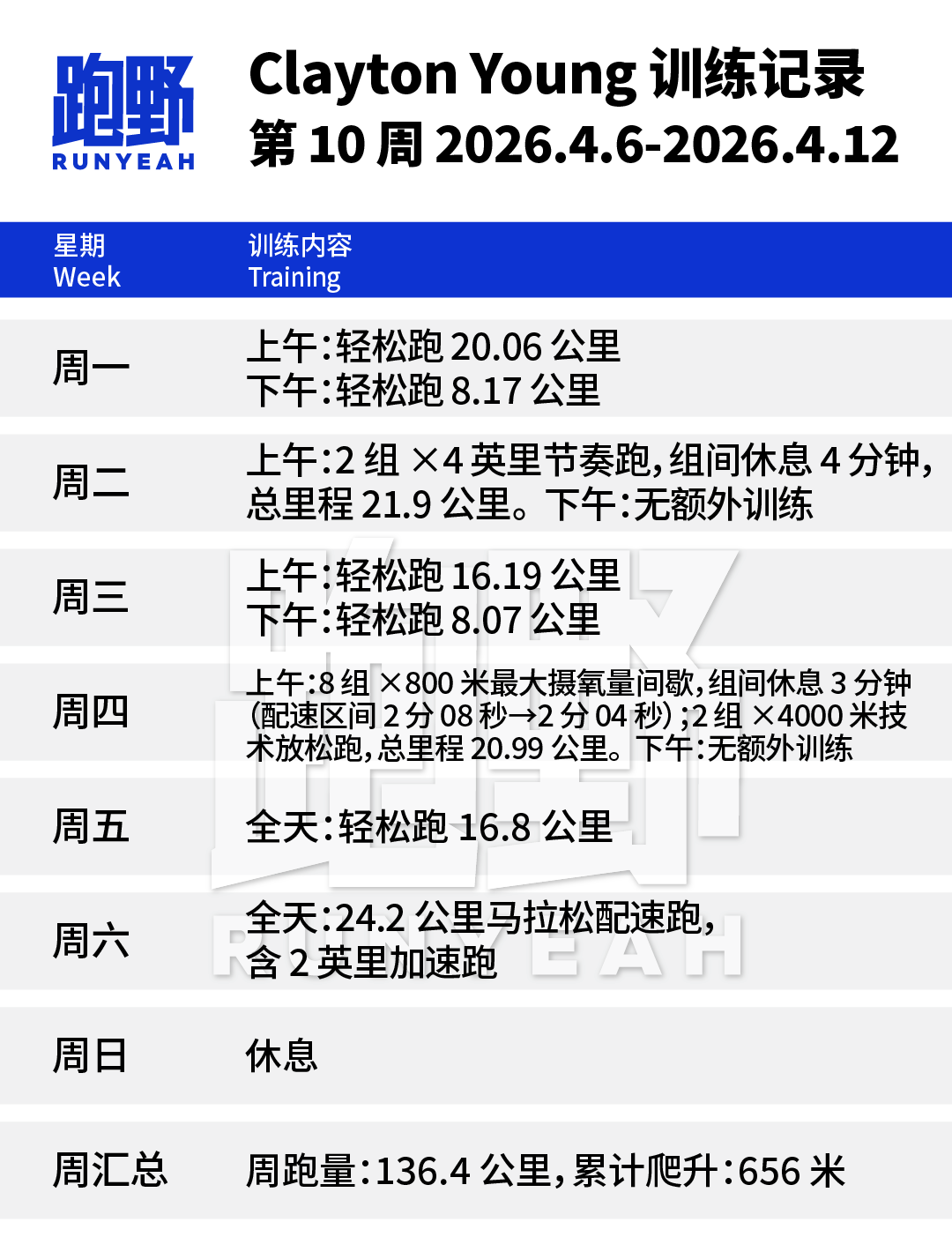
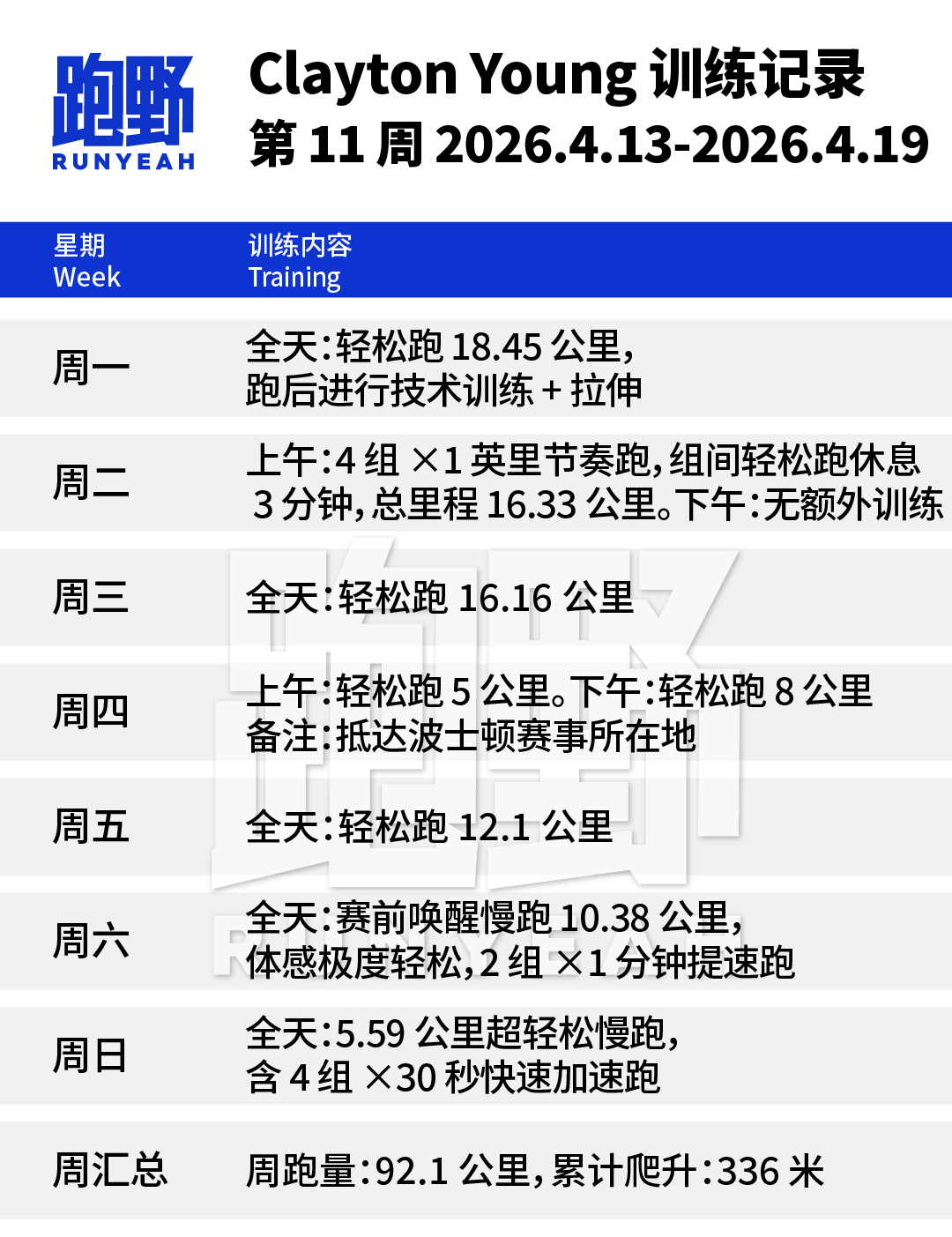
A top marathon athlete, after almost 18 weeks off due to an ankle injury, used only 11 weeks of training to run 2:05:41 at the Boston Marathon to set a new PB — it really sounds incredible. Thanks to Clayton's generous sharing of his training records on strava, we get a glimpse of a clear, compact, and extremely hard training plan.
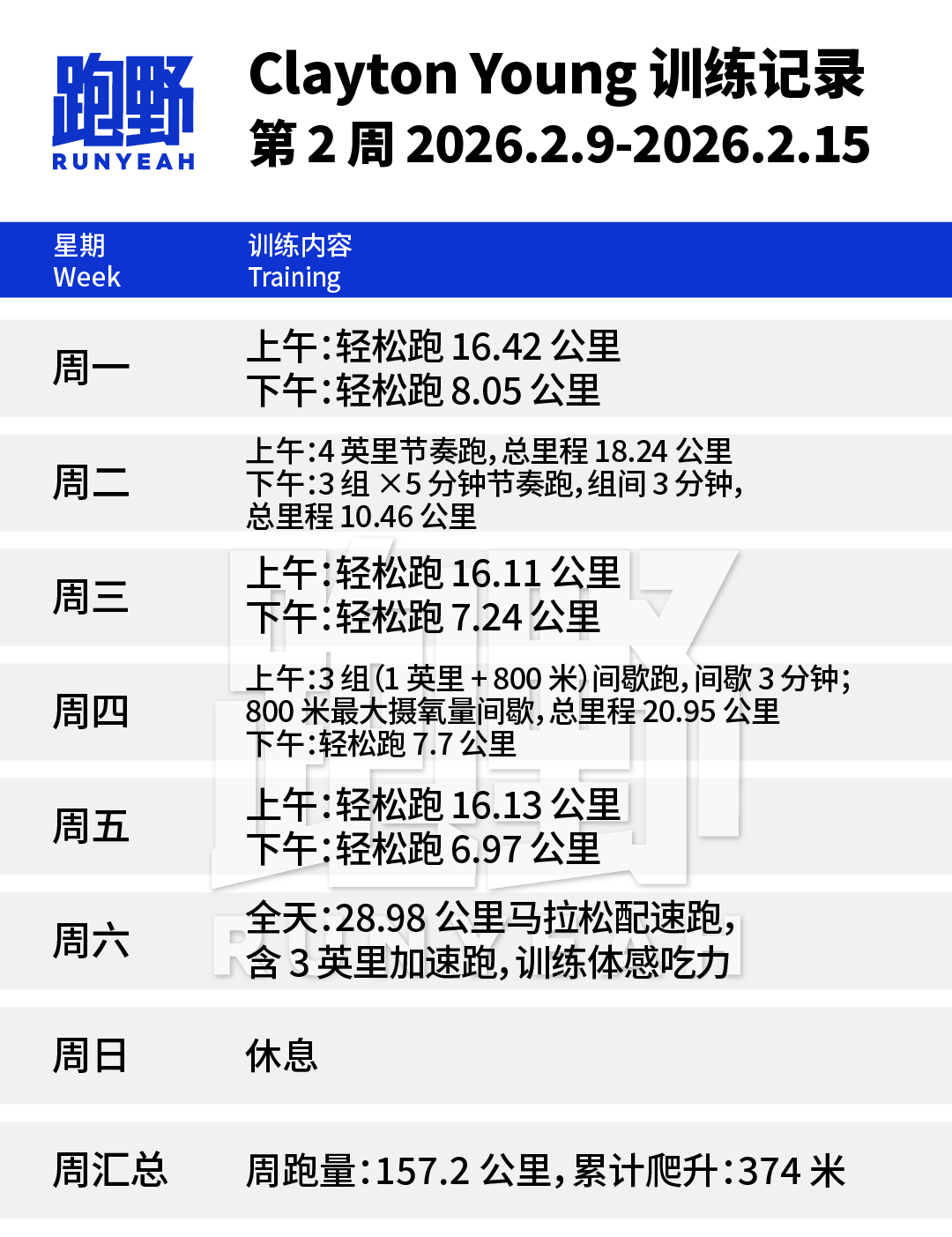
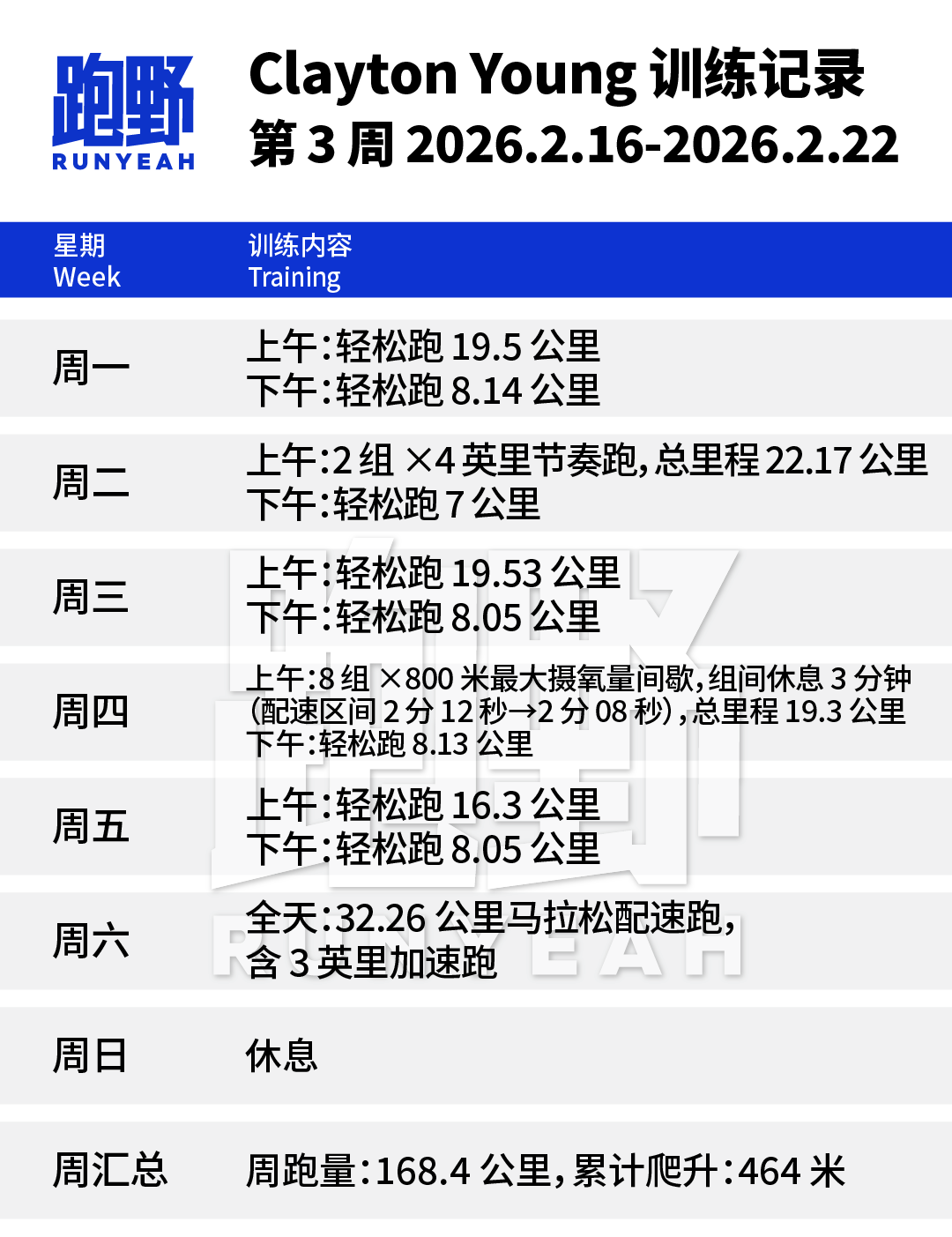
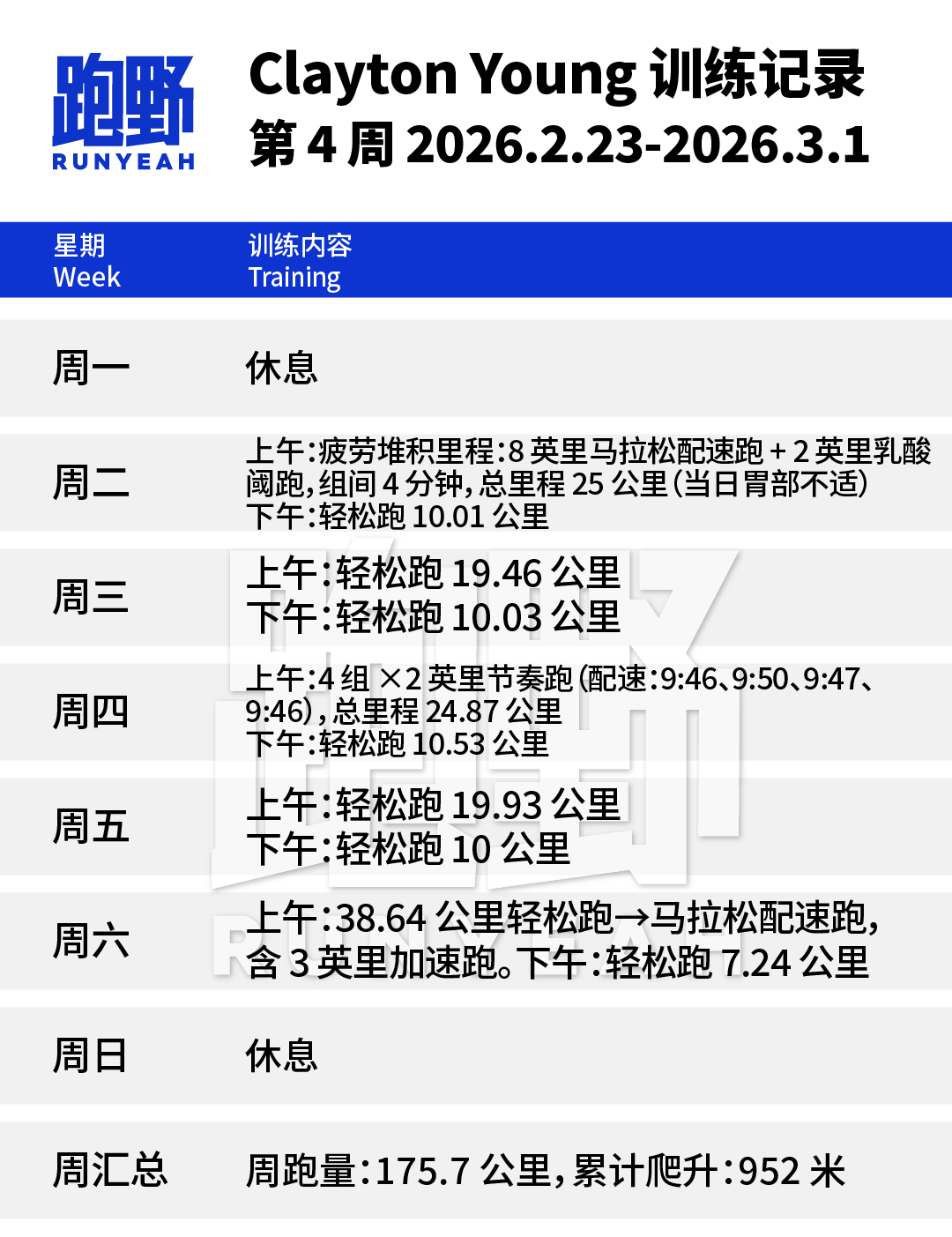
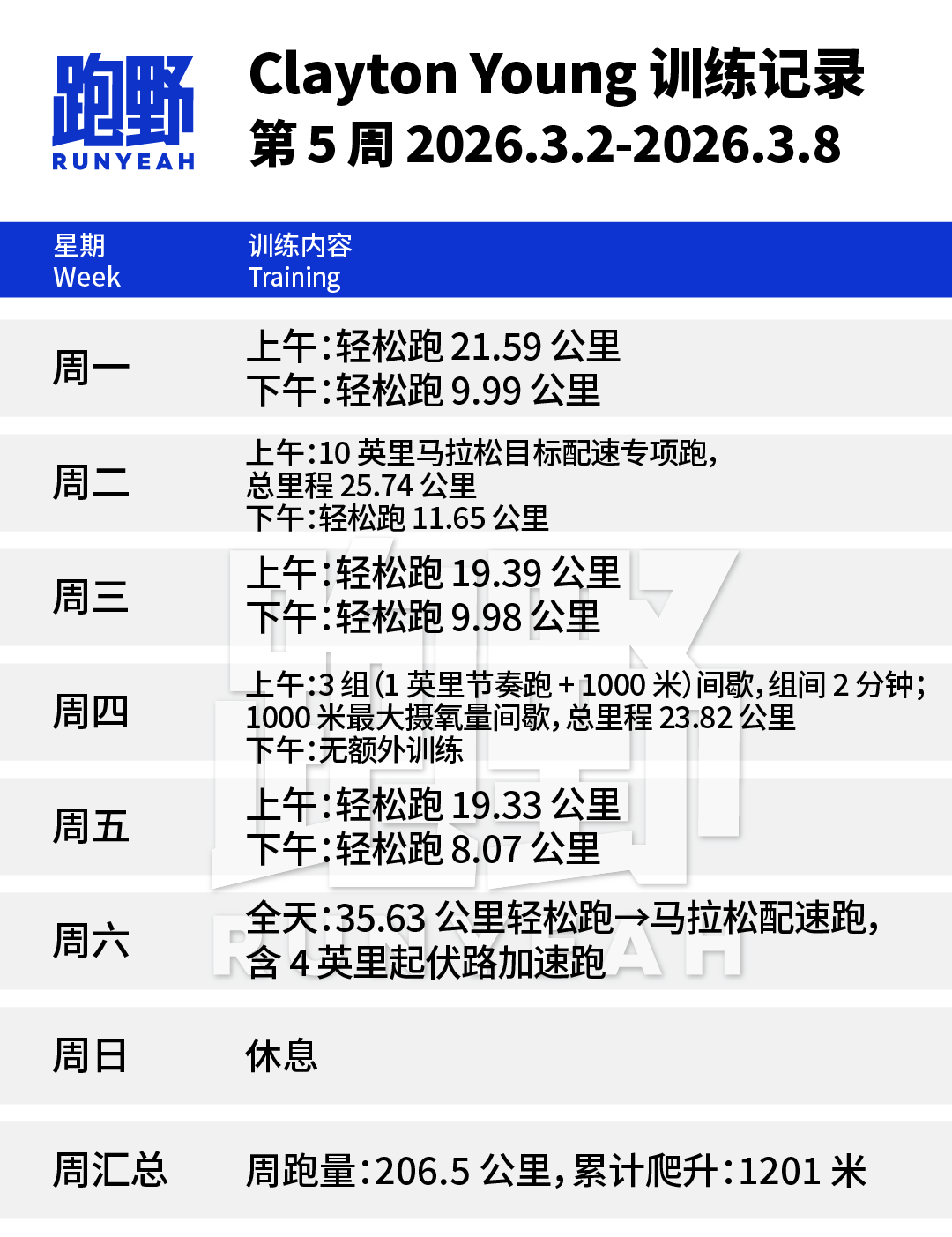
The structure of this training schedule (see image below) is very clear: the early 4 weeks for awakening and strengthening, the middle 4 weeks pushed to peak, and the final 3 weeks for tapering. Unlike several previous long buildup cycles, in this short cycle Clayton inserted no recovery weeks in the middle and did not race a 10k or a half marathon as a tune-up; the only adjustment was the final 3-week taper.
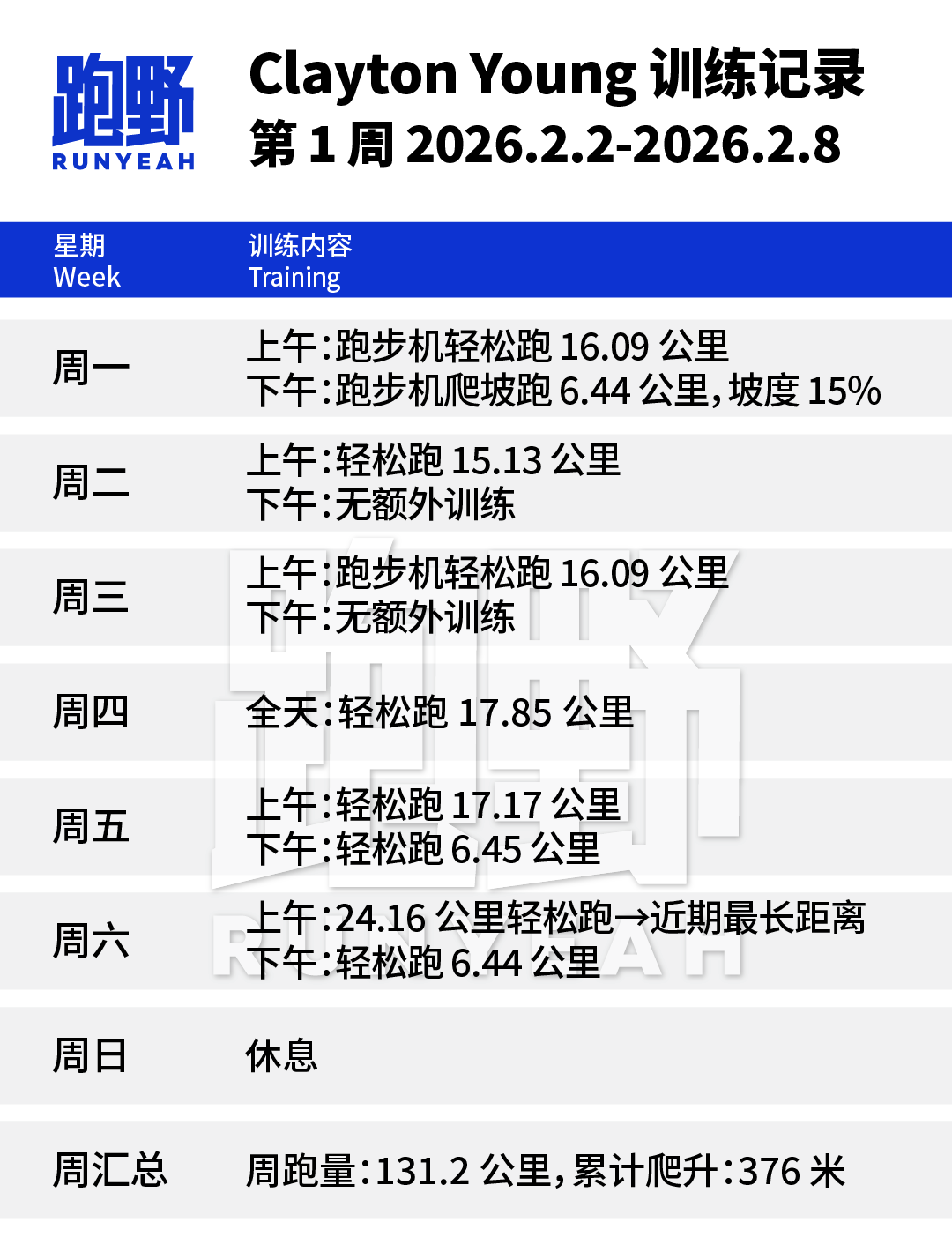
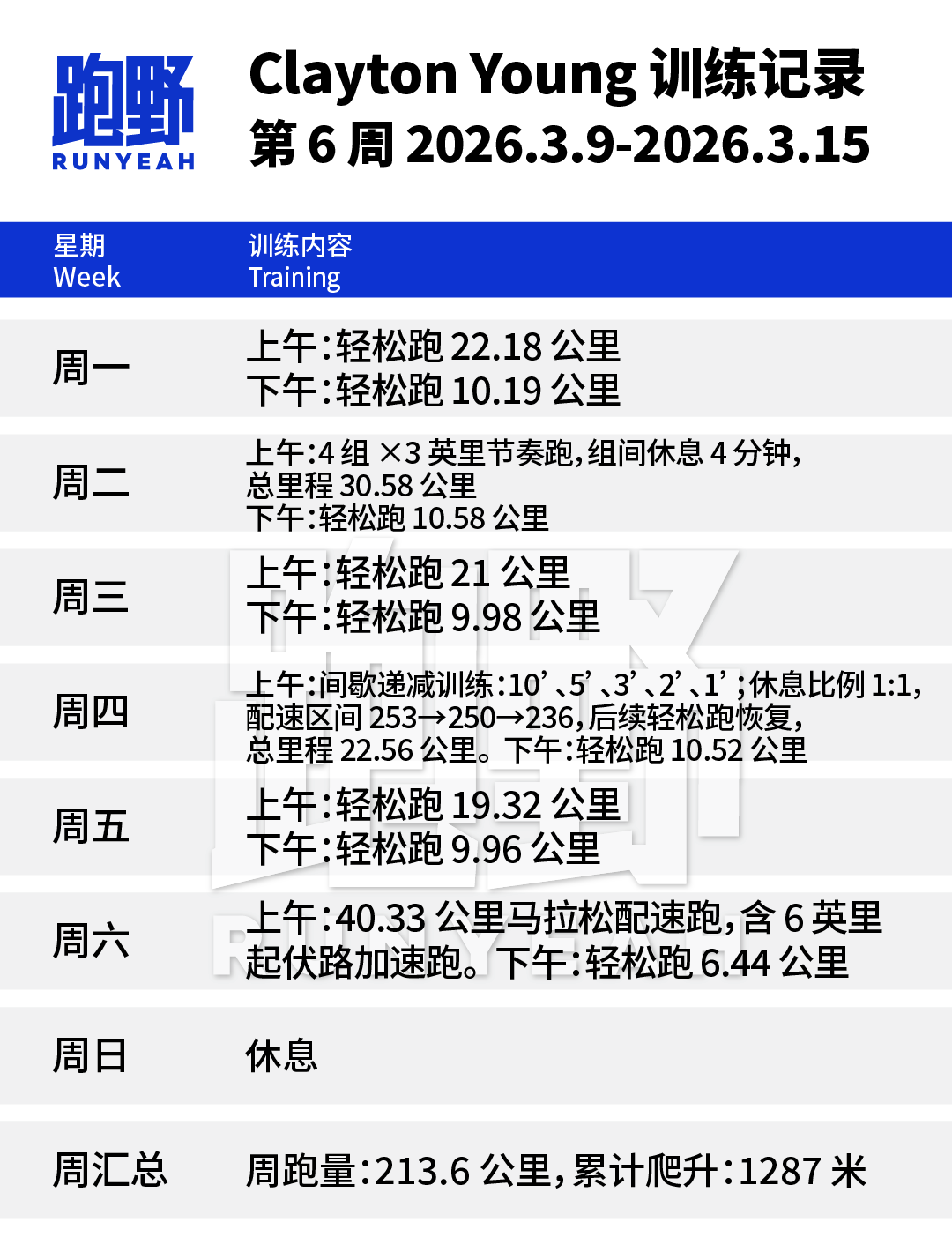
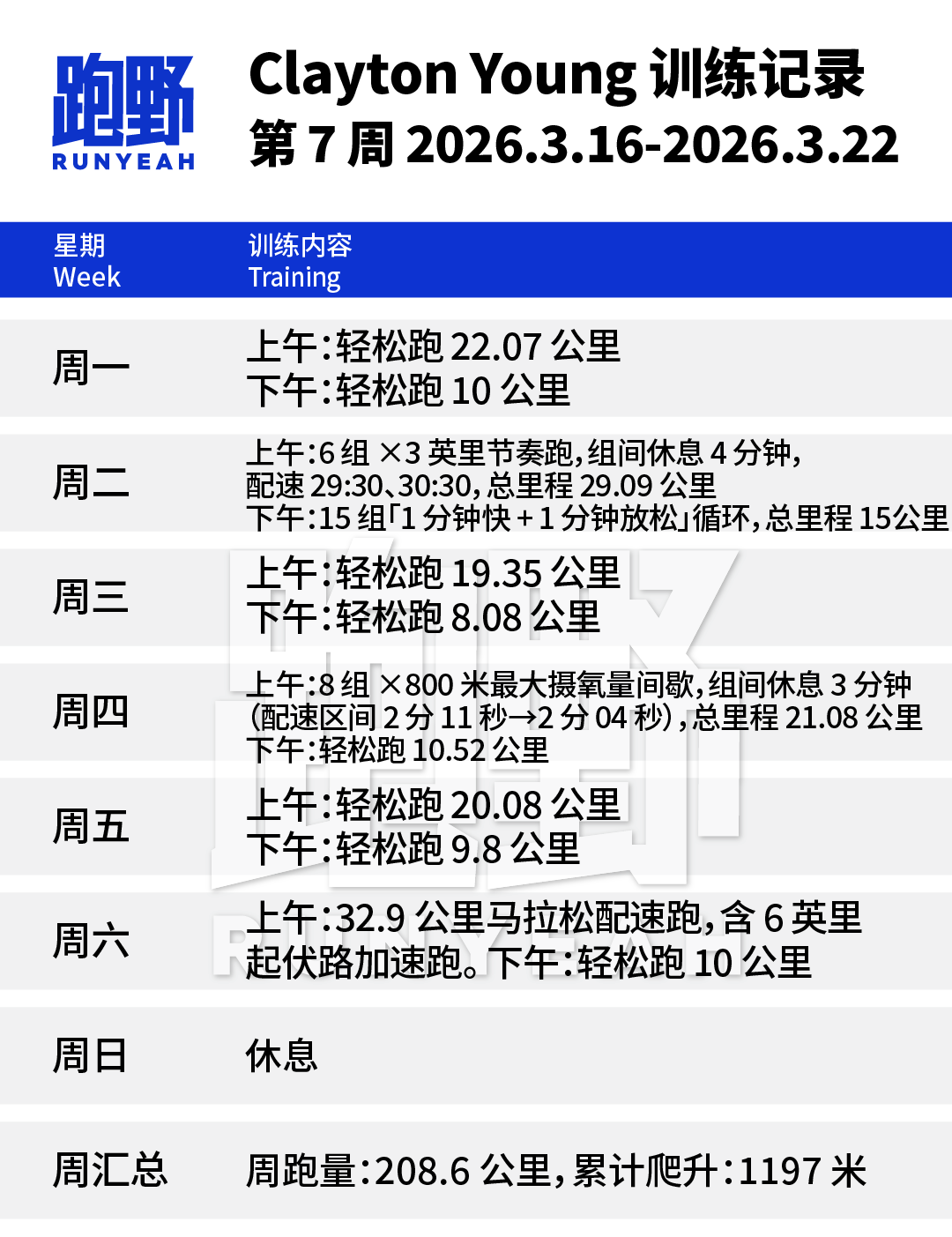
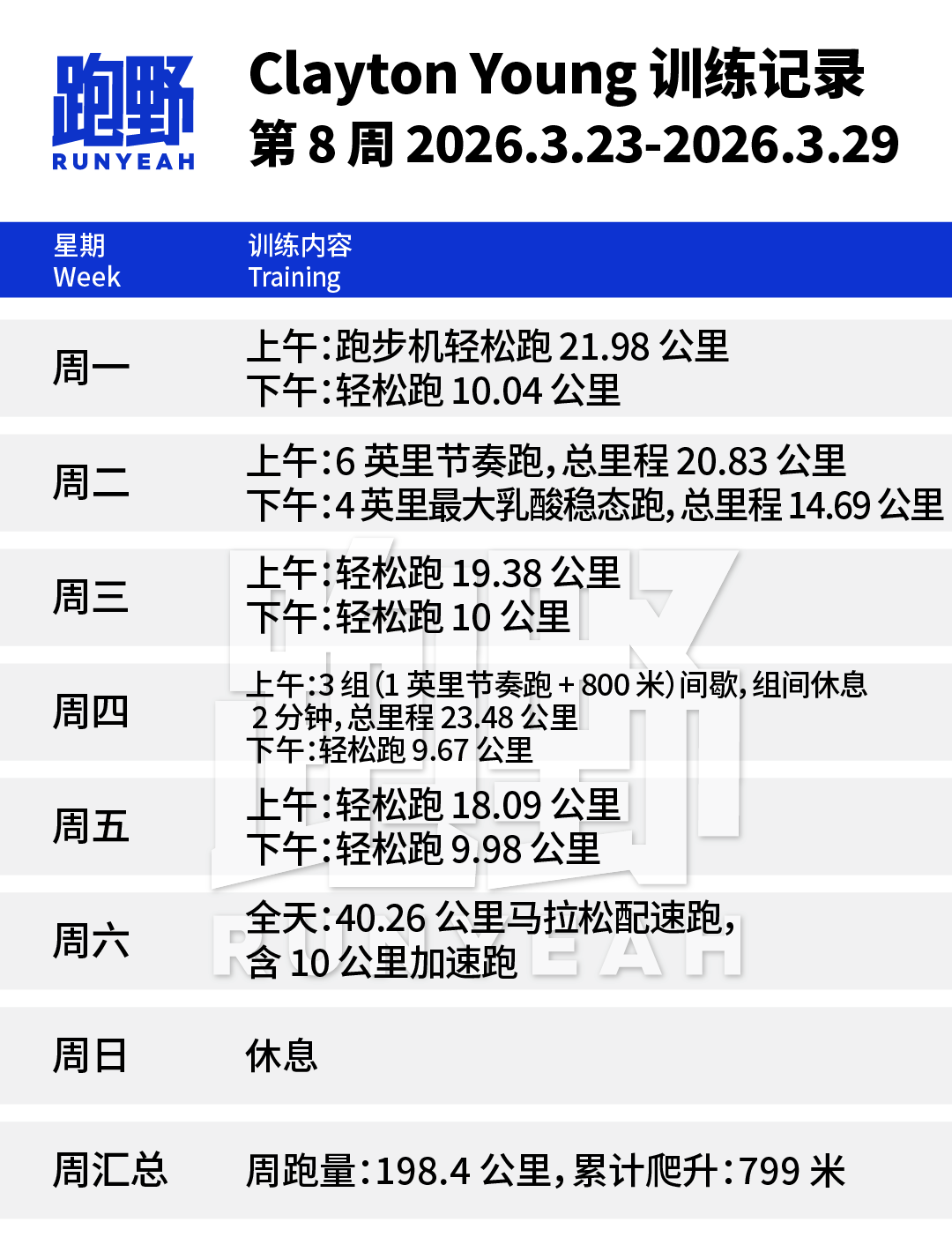
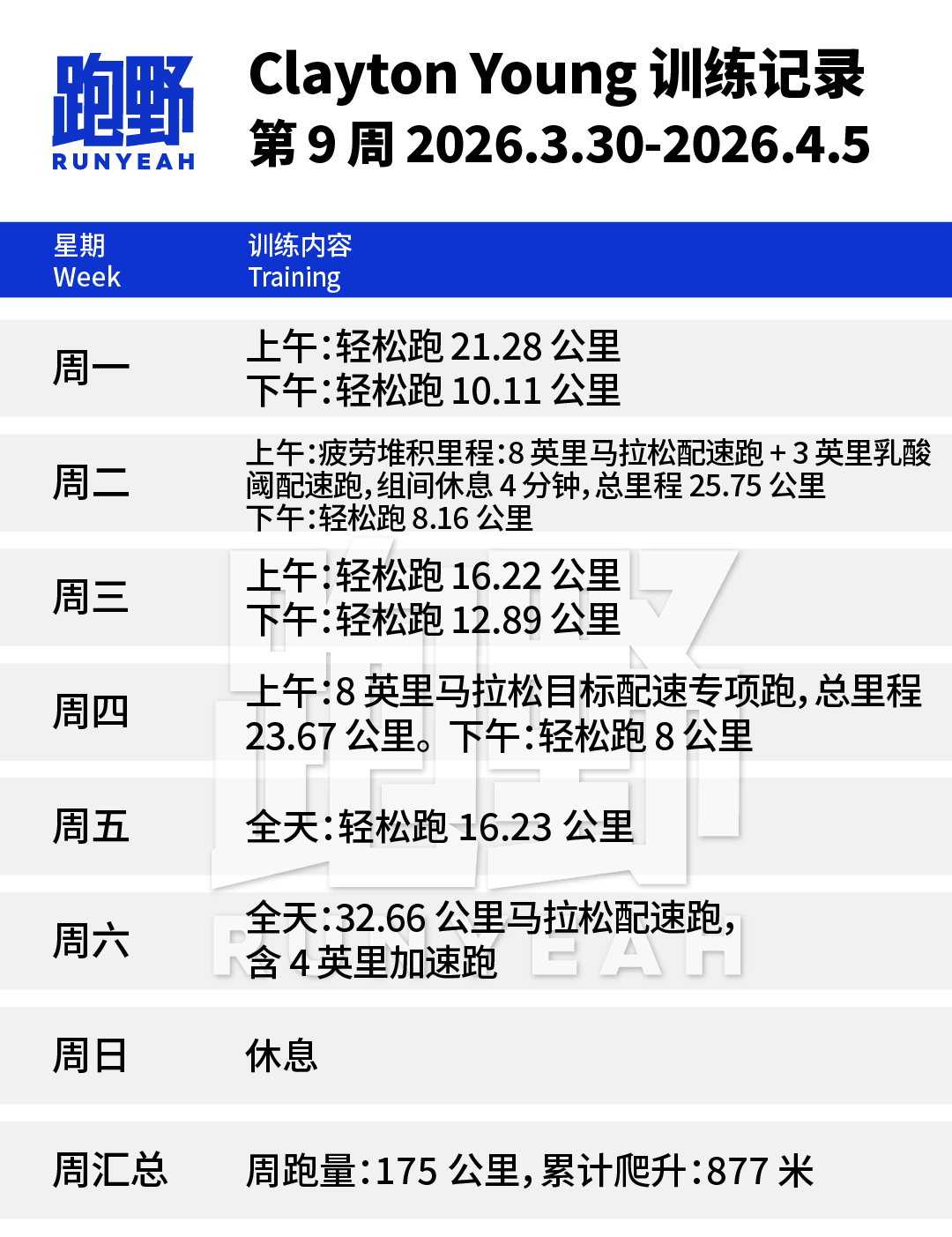
Swipe left or right to see more
Phase 1 (W1~W4): In the first two weeks keep weekly mileage around 130-160 km, with mostly easy runs. Gradually increase mileage and introduce VO2 Max (maximal oxygen uptake) workouts and threshold intensity training.
第二阶段(W5~W8):Mileage and elevation gain both reached their peak — four weeks at full load. Intensity work focused on threshold efforts with a small amount of high-intensity stimulus, while introducing double-threshold sessions and Fartlek runs.
第三阶段(W9-W11):Polishing and sharpening — maintain intensity while reducing volume. Weekly mileage dropped from over 170 km to just over 90 km, but hard workouts were kept. This preserves the feel in the legs while allowing the body to recover from deep fatigue, preparing to explode on the Boston course.
After going through his weekly training logs, I felt this was an extraordinarily meticulous, science- and courage-based, almost "surgical" approach to race preparation. The whole process can be summed up in one word from his coach: Compressed Build.
The entire plan revolves around one dilemma: how to deliver enough high-quality stimulus in a short time to restore competitive form, without re-injuring a body that has only just been repaired?
Compared to the previous training cycle, a notable change is that this cycle has added double-threshold workouts, for example:
Week 2 — Tuesday
- AM: 4-mile tempo run
- Afternoon: 3x5-minute tempo runs
Week 7 — Tuesday
- Morning: long run including 2x6-mile tempo segments
- Afternoon: 15x1-minute fast/1-minute slow fartlek
Week 8 Tuesday
- Morning: 6-mile tempo run
- Afternoon: 4x1 mile threshold intervals
This is the "double-threshold" workout. The traditional approach is to combine the two sessions into one longer workout, but that places greater stress on muscles and tendons. Splitting it into two halves reduces the structural load each time while the cumulative effective stimulus remains the same — and it can be more efficient because you can maintain higher quality in both sessions.
The second secret is the scientific use of wearables
Clayton's team used the Stryd Footpath system to continuously monitor his "biomechanical fingerprint": leg stiffness, ground contact time, and 3D foot trajectory. The emphasis isn't on the numbers themselves, but on comparisons — against his pre-injury "healthy gait" data.
After every high-intensity session, the data reveals whether his running form has compensated because of pain (for example, on the Saturday of week two). Only when the data confirms everything is normal do Clayton and his coach feel confident to increase the load. This isn't based on feel and willpower; it's data protecting every adventure.
Because of this, during peak week — while ensuring his ankle was safe — he pushed weekly mileage above 200 kilometers for several consecutive weeks. In the fourth-to-last week, even with a maxed-out midweek intensity, he still ran a 40 km long run at the weekend that included 10 km at race pace, something that hadn't happened in previous cycles.
Throughout the cycle Clayton placed extra emphasis on glute activation and strength work—skater hops, Nordic hamstring curls, and sled pushes. The aim was to build a stable "power chain" so force flows smoothly from the hips, through the legs, to the feet. When the power chain is stable, each impact is absorbed by powerful muscle groups rather than being borne solely by the fragile arches, which also resolved the low‑back discomfort he experienced early in rehab from compensatory running mechanics.
At the same time, this cycle continued the long-standing approach he and Mantz have followed:
Quality sessions in a fatigued state: For example, “Fatigued Miles” (W8 Tue, W3 Tue): first accumulate fatigue miles, then run the high-intensity work. This is an effective race simulation, targeting the mental and physical resilience when the body is on the verge of collapse in the final 10 kilometers of a race.
A distinctive long-distance specialty: His long runs aren't pure LSD, nor are they run at long race pace. In runs over 30 kilometers he often inserts 3–6 mile "pickups" (surge segments). This lets him "simulate the race" without excessive depletion, preserving the continuity of his training.
Clayton Young's training cycle is by no means a "secret formula" that can be directly copied. But for all serious runners and enthusiasts, it offers a few insights:
1. "Aerobic base" is the trump card: He can train this way because he has a deep aerobic foundation built up over many years, and during injury recovery he used various efficient technological methods to maintain his aerobic fitness. In our training, we should always prioritize building and maintaining a solid aerobic capacity.
2. The 80/20 rule of quality vs. volume: A large share of his mileage is easy running; these easy miles, which may look like "junk miles", are the prerequisite that makes those high-quality "quality sessions" effective. Without proper recovery, there is no real training.
3. Training should have a "purpose": Each workout should have a clear objective — to stimulate threshold? To simulate fatigue? Or active recovery? Decide the purpose first, then choose the method. (In the schedule, blue represents tempo–threshold zone workouts, pink represents above-threshold intensity workouts, yellow represents endurance training)
4. Listen to your body internally, and "monitor" it externally: Perception and data are equally important. When possible, use tools like a running watch or power meter to objectively understand your body's responses — this will let you progress more safely and effectively.
5. Recovery is part of training: A disciplined daily routine—rest, nutrition, and appropriate therapy—is just as important as the work you do on the training field.

When doctors hinted Clayton that his career might be over, his reaction was to go through a deep psychological low and adjustment period, and ultimately decided"bet on himself".
He described this forced work stoppage 18 weeks as a"depression and emptiness"(depression and nothing) dark period. During the five months he was unable to run, facing an injury that could have ended his career, he at one point felt he had lost his sense of purpose.
Despite doctors' pessimistic expectations, he didn't give up; instead he chose"bet on himself".Around last year's Boston Marathon he began trying to act as his own agent; when his previous sponsorship contract expired and he was unable to run,serving as his own agent, he tried, experienced, and evaluated running shoes and support offerings from various brands,and negotiated a new professional contract.
At the same time, to break out of that psychological slump, he adopted a mental framework known as"monk mode". He shut himself away, cutting off external judgment and the distractions of social media, and focused all his energy on the fundamentals of recovery — sleep, nutrition and physical therapy.
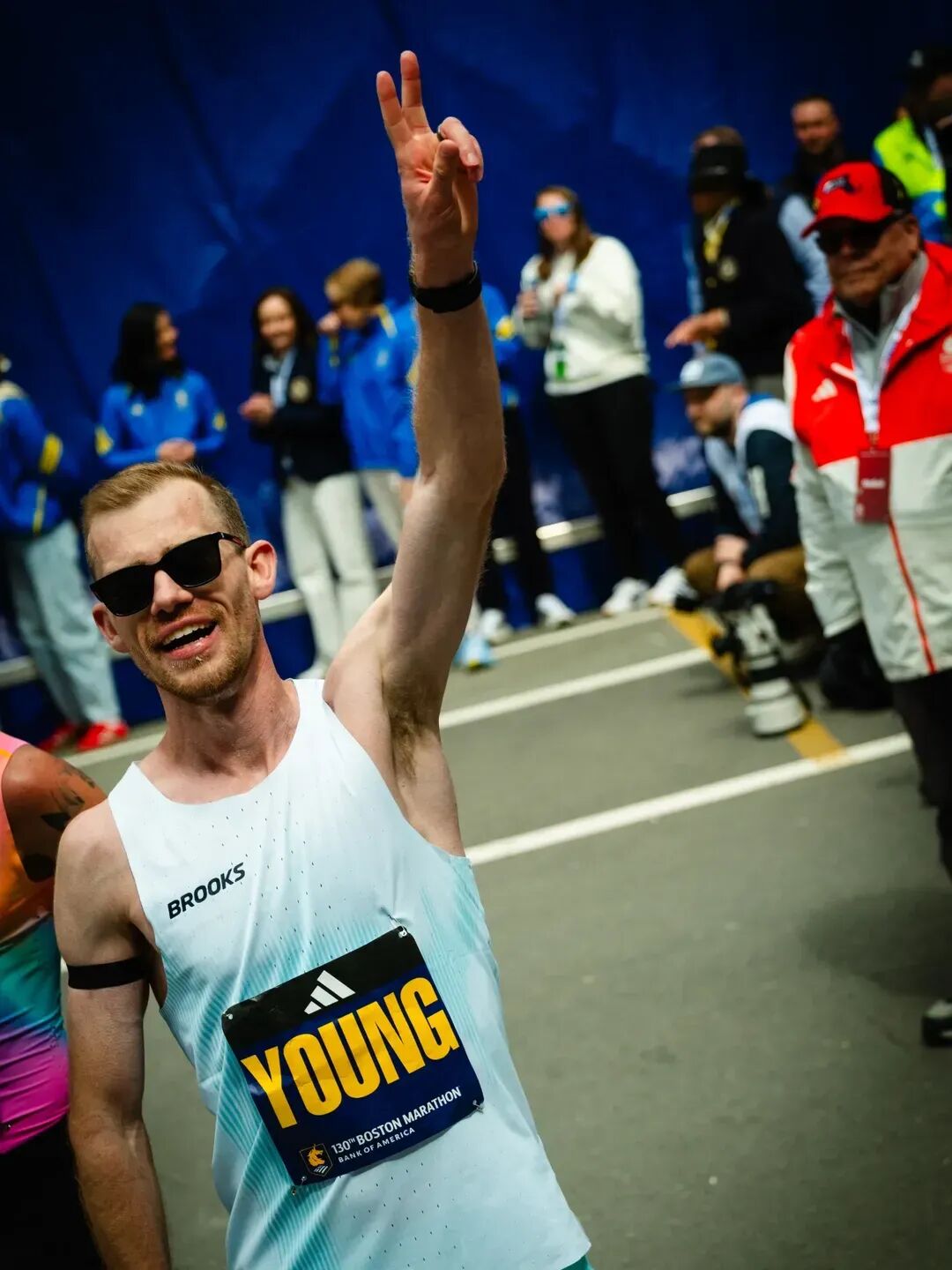
On the other hand, an engineer by training, he didn't rely on wishful thinking alone. He monitored gait data using Stryd Footpath and other technological tools to monitor his gait, and only when objective data showed his biomechanical metrics had returned to pre-injury levels did he truly gain the scientific confidence to return to competition.
In Clayton Young training and racing, he excels at using short, powerful mental cues to fight physical pain and mental wavering.His most commonly used cues include:
“Roll the Dice”(roll the dice)After 18 weeks sidelined by injury, he knew before the Boston Marathon that his training wasn't "perfect." The phrase represents a kind of courage in facing uncertainty. It helped him let go of anxiety about the outcome and encouraged him to take an aggressive approach at the crucial moment, even if the odds weren't one hundred percent.
“Find the Inch” (Find that inch)This was the motto he got from coach Ed Eyestone. Victory in the marathon isn't about a huge breakthrough, but about hanging on a little longer every minute, every mile—even one small step, one inch. In the final 10 kilometers of a race, that phrase helps him stay focused on the moment, breaking a massive goal into small actions that can be completed immediately.
“Just Keep Clicking” (Keep the rhythm) reminds him not to surge out of excitement, nor to slow down because of fatigue. It's a way of controlling rhythm. When he ran 2:05:41 in Boston, his pace was extremely steady throughout; it was this mechanical mental cue that helped him block out distractions from other competitors.
“Strong as a Mantz” (as strong as Mantz) Though it's an informal joke, after Conner Mantz (training teammate, American men's marathon record holder) withdrew due to injury, it became his emotional anchor. Mantz is known for his bold, aggressive racing style. When Clayton trains and races alone, he imagines his teammate beside him, borrowing another's strength to overcome his own frailties. When he feels discomfort in his left ankle, he tells himself he has the same iron will as his teammate.
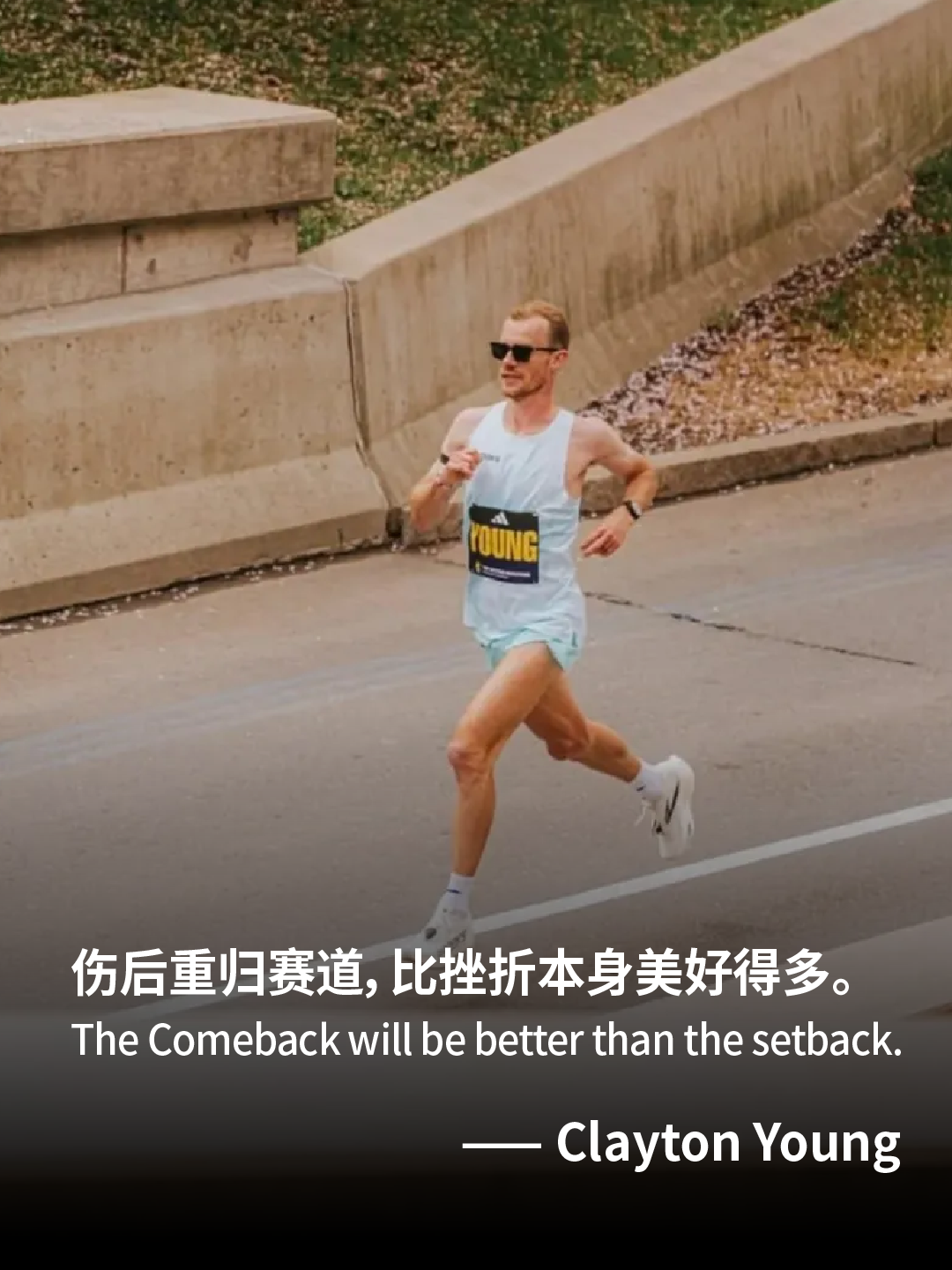
Clayton Young 's story tells us, that returning from the depths to the peak depends on more than willpower. It is the precise combination of structural healing, scientific training, data monitoring, and fearless execution. This is an excellent example of modern sports science in action, and a calm, courageous challenge mounted by an athlete and his team against the limits.