


Yesterday, Garmin announced the acquisition of the two training platforms TrainingPeaks and TrainHeroic. TrainingPeaks is one of the most widely used training planning and analysis tools among endurance coaches and athletes, while TrainHeroic focuses on strength and conditioning.
This is not Garmin’s first expansion through acquisition. In the fitness space, Garmin acquired Dutch indoor bike trainer maker Tacx in 2019, entering the fast-growing indoor cycling training market.
In 2020, Garmin acquired Firstbeat Analytics Oy, a provider of algorithms that turn raw heart-rate data into core metrics such as Training Status, Body Battery and VO2 max.
From Tacx to Firstbeat to TrainingPeaks, Garmin’s acquisition logic is consistent. It’s not simply buying products; it’s buying technology, teams, ecosystems and time.
Many will think Garmin’s acquisition of TrainingPeaks means data integration and a unified user ecosystem. That is true, but also the least exciting part. The real question is: what did Garmin get that it couldn’t build from scratch quickly? Who will be the early beneficiaries of this deal?
01
Deal scale and strategic intent
With annual revenue exceeding $7 billion, more than 23,000 employees and over 100 offices worldwide, Garmin has acquired TrainingPeaks, a coaching ecosystem cultivated for 26 years. Since its founding in 1999, TrainingPeaks has served over 9 million registered users and hosts tens of thousands of certified coaches across nearly all endurance disciplines, including running, cycling, triathlon and trail running.
TrainHeroic, meanwhile, is deeply focused on strength and conditioning, serving over 4,000 teams and thousands of strength coaches. Together, the two give Garmin immediate footholds in both endurance and strength training coaching infrastructures.
On the surface, this is about integrating user data with hardware ecosystems; the real core is: Garmin has bought assets it couldn’t have built from scratch in the near term.
Over the past decade Garmin’s strength has been hardware—releasing more than 80 new products a year, from running watches to cycling computers and from handheld outdoor units to marine navigation devices. The sheer number of hardware SKUs and categories is unmatched in sports tech. But hardware has a clear ceiling.
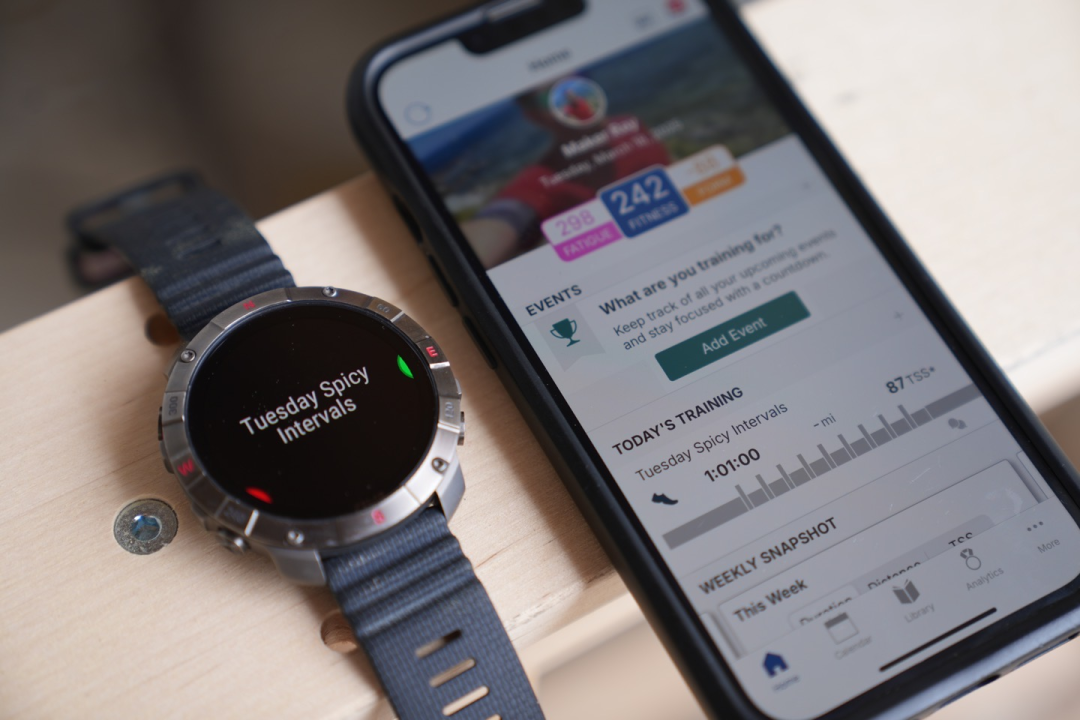
Image source: social media
Users typically replace watches every two to three years, while subscription revenue is recurring and compoundable. Garmin has made software moves before (introducing the paid subscription Connect+ with AI insights in March 2025), but the trust barriers in the coaching market are extremely hard to cross.
A coach chooses a platform not only for features but for where their peers and athletes are, and whether the platform is neutral and trustworthy. This network effect cannot be built quickly by throwing money at it. TrainingPeaks’ value is precisely those “26 years”: a structured training platform validated by global coaches and athletes, a complete workflow ecosystem, and, most importantly, trust.
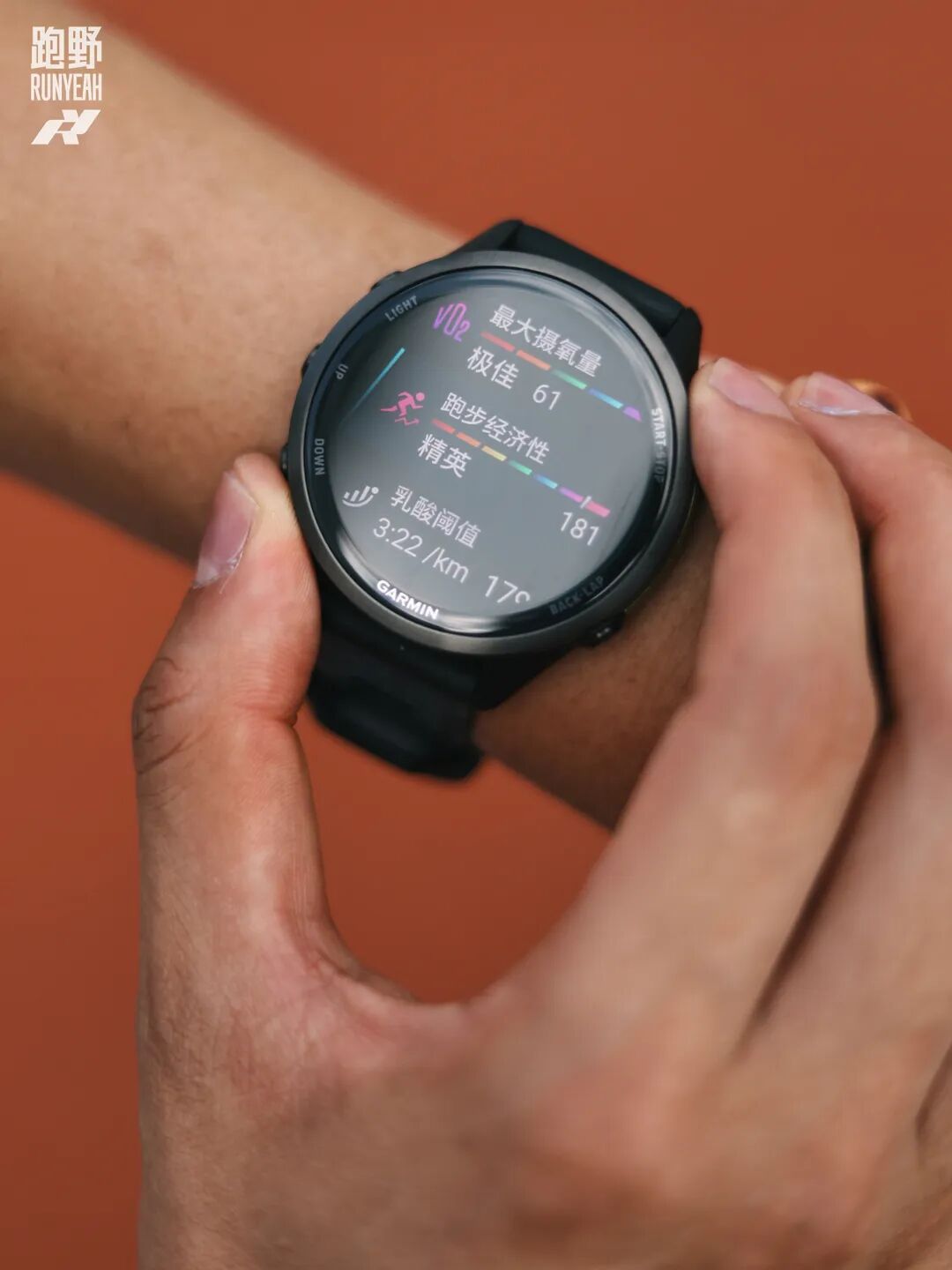
This is not Garmin’s first software acquisition. The 2020 Firstbeat purchase gave Garmin the “engine” of algorithms for heart-rate variability, training status and Body Battery; TrainingPeaks supplies the “fuel.” Manually annotated, structured training data will make those algorithms more accurate and ultimately train models that understand real coach decision-making.
If Firstbeat solved the physiological modeling of “how the body responds to training,” TrainingPeaks addresses the behavioral modeling of “how coaches design training.” Combined, Garmin for the first time gains a complete data loop from training design → execution monitoring → recovery assessment → plan adjustment.
02
Core customers: coaches
Biggest upside: distribution channels
TrainingPeaks’ long-term paying customers have never been the athletes but the coaches. Athletes move on—some change disciplines, some quit, some switch to free tools—but coaches build careers, reputations and long-term retention on the platform.
A coach’s client profiles, training templates, periodization plans and communication records on TrainingPeaks are digital assets accumulated over years, with very high migration costs. That’s where TrainingPeaks’ “stickiness” lies. It doesn’t lock in transient users, but long-term professional networks measured in years.
The biggest benefit from the acquisition is access to Garmin Connect’s roughly 40 million users as a potential distribution channel. Currently, Garmin Connect has over 20 million monthly active users and more than 3 million daily activity syncs. A sizable portion of these users are serious endurance athletes who may be encountering structured training for the first time or considering whether they need a coach.

Now, TrainingPeaks’ coaches are just “one step away” from these 40 million Garmin Connect users—if Garmin implements product-level traffic routing and recommendation mechanisms.
Regardless of what brand device an athlete wears, a coach can reach them. This device-agnostic access is crucial for coaches. A coach doesn’t have to persuade clients to change watches to use TrainingPeaks. Coaches who adapt to this trend will gain new business channels, while clients can still choose their preferred hardware brand.
Lasting value often resides in high-trust “nodes” and their underlying infrastructure. Coaches are the highest-trust nodes in endurance sports. Athletes entrust their bodies, goals, time and money to coaches—relationships far deeper than any app-user connection. What Garmin has bought is precisely the platform that carries those relationships.
03
Biggest concern:
Economic rationality makes a walled garden unlikely
The biggest worry among coaches is that TrainingPeaks has historically been compatible with all hardware—from Garmin, Wahoo, Coros, Polar and Suunto to Apple Watch, and to third-party platforms like Zwift and TrainerRoad. Will Garmin close it off after the acquisition?
If Garmin turned it into an exclusive accessory for its own devices, would coaches and athletes using Coros watches or Wahoo head units be forced to switch devices?
Economic logic answers that question. TrainingPeaks has spent 26 years integrating with nearly all mainstream devices; its business model is rooted in device neutrality. If Garmin restricts it to its own ecosystem, the coach market it paid dearly for would shrink dramatically, because coaches would reject “only clients wearing Garmin can use TrainingPeaks.”
Such self-limiting behavior would be commercially irrational. Staying open and allowing data from more device brands into TrainingPeaks would maximize the platform’s network effects and data value, which is far more profitable than any goodwill promise.
That said, subtle differences are worth watching: Garmin device users may gradually receive exclusive features other platforms don’t have (similar to a Connect+ paywall). For example, Garmin watch users may see deeper TrainingPeaks integration in the future—one-click plan sync, automatic real-time adjustments, richer two-way data interactions—while those on Coros or Wahoo might need more cumbersome workarounds to get the same functionality.
Today’s “compatibility” doesn’t guarantee it won’t change in pursuit of subscription revenue. Coaches and athletes need to watch whether Garmin is “building walls” or “building pipes.”
04
Coach community fragmentation: opportunity and unease coexist
Not all coaches are optimistic. Observers like Troy Meadows worry less about device compatibility and more about the fate of the integrated team. Will TrainingPeaks remain independently operated, or will it be fully absorbed by Garmin?
Promises of “everything stays the same” at the negotiating table often diverge greatly from the reality a year or two later. Troy Meadows bluntly said, “I’ve seen too many of these cases. Promises sound nice, but a year later teams are cut, products merged, and the founders’ ‘strategic advisor’ titles are meaningless.”

These concerns are not unfounded. Integration failure rates after large acquisitions can be 70%–90%, with the most common failure pattern being “culture clash + over-integration.” Garmin is a publicly traded company with a strong hardware DNA—processes, compliance and financial reporting pressures are everywhere—while TrainingPeaks is a 26-year-old software company with a startup-like team culture. Merging these two genes is never easy.
Early signals are cautiously positive. Garmin said it will keep TrainingPeaks president Lee Gerakos and co-founder Dirk Friel in their roles and promised independent platform operations. After acquiring Firstbeat it largely kept the Finnish team intact and even built a lab. But reliance on a single large owner always carries risk; more distribution channels also mean greater dependency. If Garmin’s strategic priorities shift, what then becomes of TrainingPeaks? These uncertainties are realities coaches must confront.
05
Competitive landscape:
Algorithm route vs coach route
Garmin is not alone. In 2025 Strava acquired Runna and The Breakaway, adding AI training plans to its 150 million-user app. Runna focuses on personalized running plans, while The Breakaway deepens cycling training content. Strava’s goal is clear: give users “good enough” training advice when they open the app, without hiring a coach.
The two strategies diverge: Strava bets that “good enough” algorithms can replace coaches, using data and AI to serve massive users at scale with low barriers. TrainingPeaks believes human coaches are the core product and that software should empower—rather than bypass—them. Both belong to the training guidance category, but they understand where value lies very differently.
This reflects the most important data-dimension battle. Activity data can tell you what an athlete “did”—how far they ran, how long they rode, how high their heart rate was—but not what they were “instructed to do,” nor why. TrainingPeaks’ 26 years of archives record what coaches instructed, whether athletes actually completed it, and subsequent weeks’ performance—and this data is compatible across all brands of watches and head units.

Raw activity data can teach models an athlete’s behavior patterns, while TrainingPeaks’ data can teach a model a coach’s decision logic and its effectiveness. The difference is like viewing a game record versus understanding a player’s thought process. The latter is precisely the raw material needed to fix Garmin users’ long-standing complaints about “Training Status” misclassifications—like inexplicable “Unproductive” labels. Garmin used to have to buy that analytic capability from Firstbeat; now it owns the most valuable data source to train those models.
For competitors like Coros and Wahoo, the landscape has changed. They now compete not only on hardware but against a rival that owns an industry-standard coaching platform. For neutral platforms like TrainerRoad, Intervals.icu and Final Surge, being independent may become even more valuable as a result of this mega-acquisition.
06
The future of AI coaching:
Expand the market, not replace humans
TrainingPeaks’ archive—the training records coaches themselves built—will become the cornerstone for Garmin to construct AI coaching models. The deepest implication of this deal is that coaches are both TrainingPeaks’ main customers and the source of the data Garmin needs to build its own coaching software.
Some form of AI coaching is the likely direction. It will be trained on human coaches’ accumulated experience. A doomsday scenario of machines fully replacing human coaches is unlikely. AI coaching’s real role is to segment and expand the market, not to fully substitute humans.
Athletes who never planned to hire a human coach—self-coached runners, budget-conscious beginners, or those who just want some direction without deep engagement—will for the first time have a decent option. That will grow the overall population that accepts guidance, rather than simply slicing up the existing coaches’ pie.
Further, this could form a pipeline from AI coaching to human coaching—people who taste guidance and want more may eventually seek human coaches. Those who value accountability, trust and personal life factors that data can’t capture will still choose human coaches.
AI models will reach the “underserved” and the “low-end market.” Those segments are not the targets of most established coaches. A mature coach’s annual fees typically range from $2,000–$5,000 or more; their clients need bespoke plans, deep communication and continuous support—something AI cannot replace.

But this is not all good news. The most affected will be entry-level human coaches. Their services—basic training plans, standardized periodization and simple data feedback—are closest to what a competent algorithm can now provide cheaply. Ironically, the data training this algorithm comes from the very work these coaches upload.
How Garmin prices and positions AI tiers—whether as a lower-tier “entry option” beneath human coaches or as a tool to augment coaches and improve efficiency—will determine whether this deal “grows the whole pie” or “squeezes the survival space at the bottom.”
There is also an ethical issue of informed consent. This data originates from coach–athlete relationships, not as “feedstock” for model training. Do the coaches who upload plans and record athlete performance and feedback know their work will be used to train an AI that may compete with them? Did coaches and athletes consent? In other creative fields—visual art, writing, music—this has already sparked controversies and lawsuits. Endurance sports are unlikely to be exempt.
TrainingPeaks’ leadership will frame things more gently. At the announcement, co-founder Dirk Friel called it “a doubling-down on the company’s mission to empower human coaches.” That may be true, but it’s incomplete—because the same data that helps human coaches can also train AI tiers capable of replacing the cheapest coaches.
So if you make a living as a coach, the real question is not “Will machines take my job?” but “Am I doing the parts machines can’t do?” It’s about the artistry of coaching: intuition, empathy, in-the-moment judgment and subtle reading of an athlete’s psychological state. Those are not yet the domain of algorithms.
The emotional value coaches provide is important, too.
07
How Garmin’s map is being assembled and the final outlook
Step back and look at the map Garmin is building. Recently Garmin launched the screenless band Cirqa, aimed at all-day passive monitoring, directly targeting Whoop. A subscription-centric pure software + low-power hardware play. Cirqa has no screen, no GPS, no notifications—just one thing: 24/7 physiological data capture. That signals Garmin is evolving from a “watch you wear while training” into an “around-the-clock body data platform.”
With TrainingPeaks added, Garmin is building a closed loop covering hardware (running watches, cycling computers, bands), passive monitoring (Cirqa’s 24/7 data), and active training guidance (TrainingPeaks’ coach platform + future AI layers). A user could wake up to Cirqa’s sleep and recovery metrics, receive daytime watch suggestions based on training load, and sync tomorrow’s TrainingPeaks workout at night. Garmin is shifting from “selling tools” to “selling ongoing health and performance improvement” services.
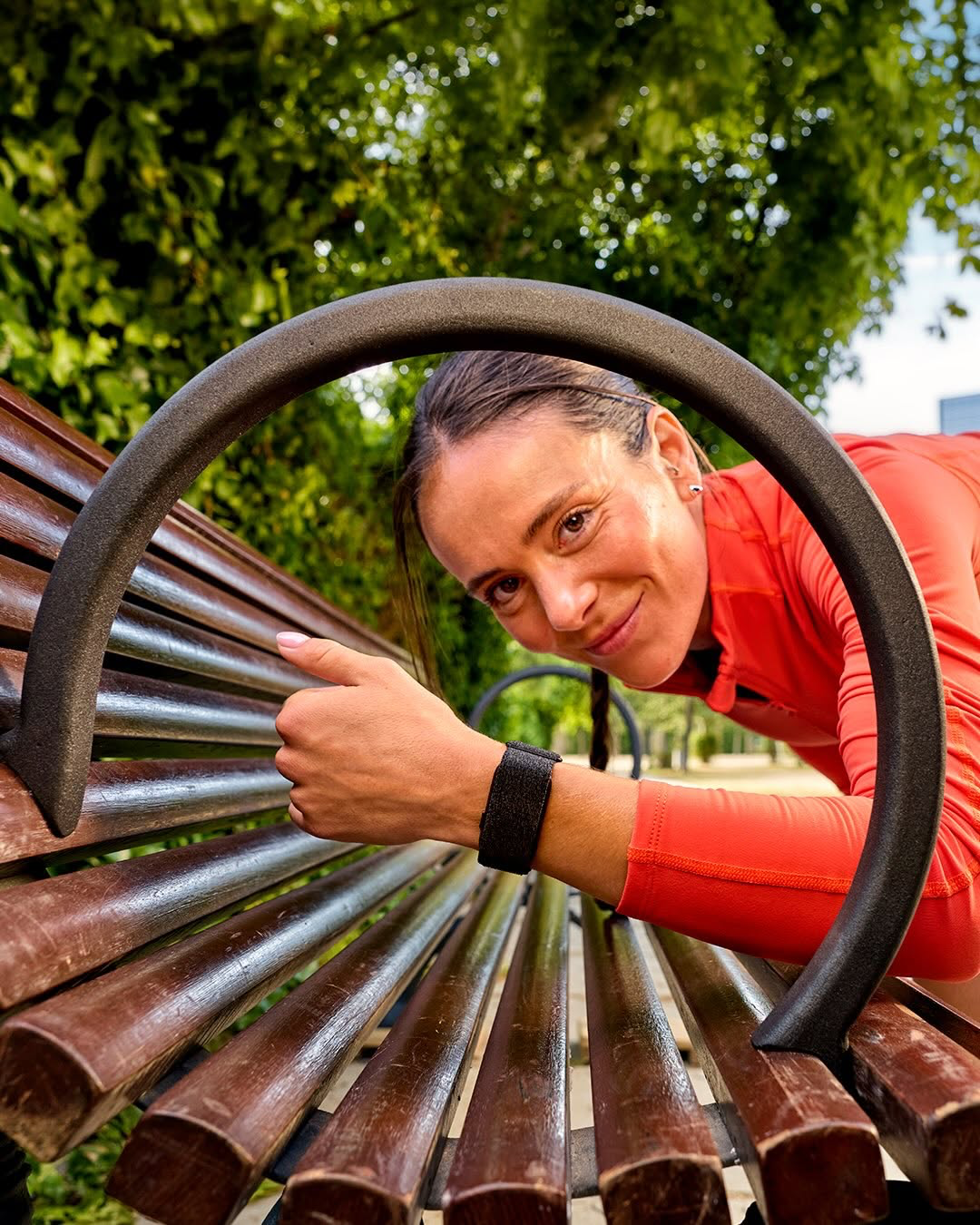
Image source: social media
This deal is not just buying an app; it’s buying a coach network, a data goldmine, and a leadership position in the future of endurance sports tech. For runners it could mean smarter, more personalized training—no longer a cold “Unproductive” label but contextualized advice with real coach wisdom.
For coaches, it’s an unprecedented opportunity. Access to 40 million users is enormous reach, but it’s also a challenge that requires careful thought: your data is being used to train a potential competitor, and whether you can provide the parts AI can’t replicate will determine your role in the new ecosystem.
The ultimate question isn’t “Will machines replace me?” but “Am I doing the parts machines can’t do?” That is the artistry of coaching.
[End-of-article interaction]
Text: RunWild / Editor: CC
Image sources: RunWild Big Bang, social media
Visuals: Max