On July 22, Garmin announced a major move: it has successfully acquired the world's two leading training platforms, TrainingPeaks and TrainHeroic. Both platforms were previously owned by Peaksware Holdings; about 120 specialized employees will join the Garmin team as part of the dealThis acquisition was not a spur-of-the-moment decision; since 2019 Garmin has been steadily building out the entire sports industry chain:In 2019 it acquired the leading smart cycling company Tacx; in 2020 it bought physiological-algorithm firm Firstbeat Analytics; in 2025 it acquired professional race-timing brand MYLAPS; and now it has filled the gap of training prescription.What ultimate goal hides behind this string of acquisitions? With each layer of strategic moves, has Garmin now created a unique, fully closed-loop sports data ecosystem?
Details of this acquisition
To understand the strategic value of this acquisition, we first need to clarify its core details: did Garmin buy the whole of Peaksware Holdings or selectively acquire assets? What irreplaceable industry value do the two acquired platforms bring? The answers are hidden in the specifics of this deal.
This deal is not a complete takeover of Peaksware Holdings; the seller only divested its sports-training businesses while retaining profitable music-education assets such as MakeMusic, Alfred Music, and Fons.Garmin co-COO Brad Trenkle publicly stated the acquisition will enhance Garmin's fitness ecosystem through personalized coaching experiences, covering endurance training, strength training, and professional competition. Does this positioning mean Garmin will fully step beyond hardware and deeply enter the sports services market?
Image source: Garmin
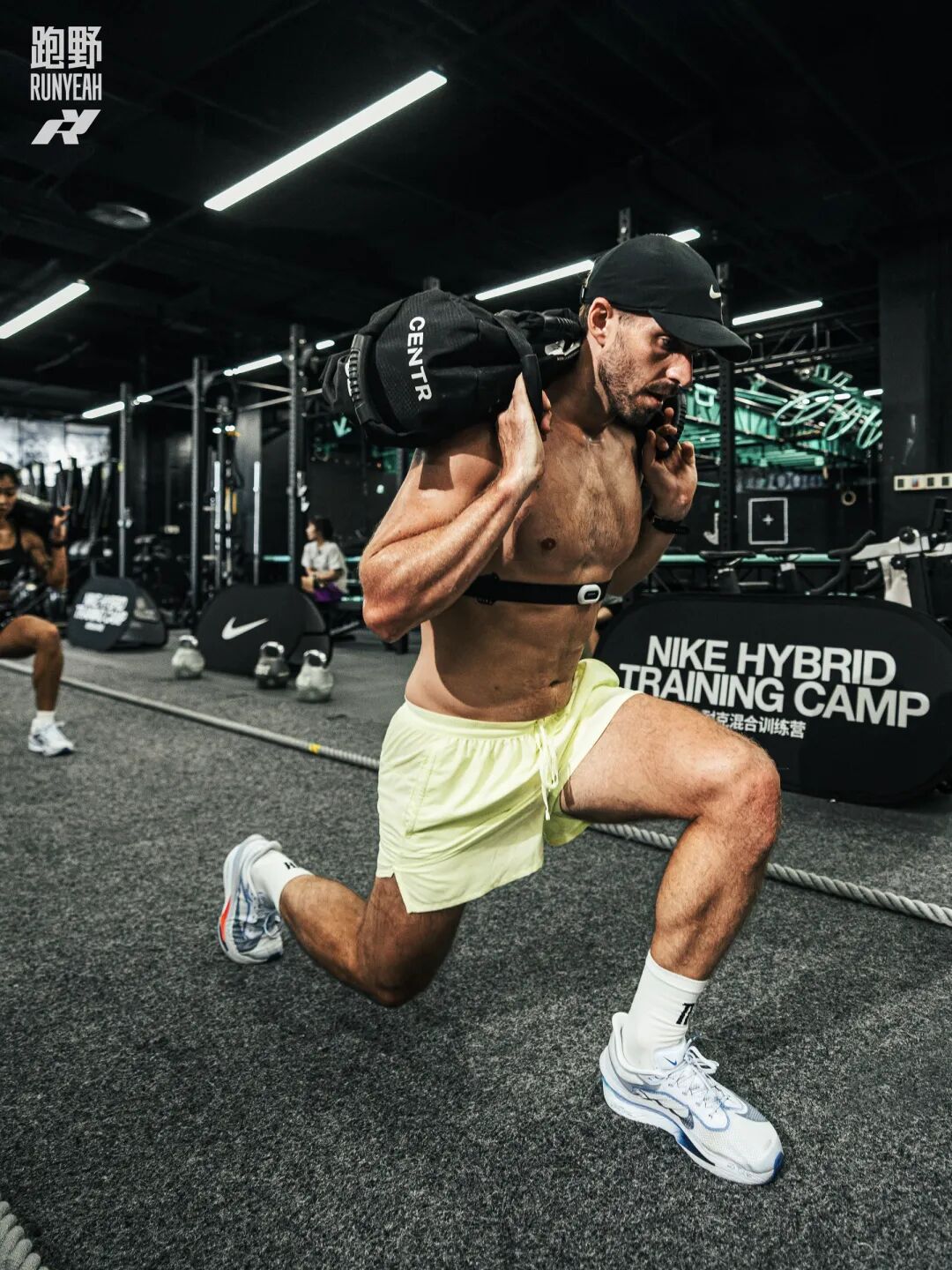
Both are training platforms—why did Garmin choose to acquire both TrainingPeaks and TrainHeroic? How do their core strengths and market positions differ, and what gaps can they fill for Garmin?Founded in 1999, TrainingPeaks is recognized globally as the industry-standard platform in endurance sports. It has deep roots in running, cycling, triathlon and other professional disciplines for over twenty years and has built a mature two-sided user ecosystem.It is far from a simple activity-tracking tool; it's an end-to-end service platform for athletes and professional coaches. Its six core business units form a complete commercial closed loop—its mature subscription model, coaching resources, and industry influence are hard for ordinary sports apps to match.Launched in 2012, TrainHeroic fills a complementary niche to TrainingPeaks by focusing on strength and conditioning and the professional gym training market. With 500,000 regular users and 10,000 professional strength coaches, can its mature strength-training content and private coaching ecosystem help Garmin tap into the mass fitness growth market?
A key detail worth pondering: the three core cycling training metrics TSS, NP, and IF—long used industry-wide—now have their trademarks fully owned by Garmin.Interestingly, Garmin's own products never used this set of metrics; its training load system relies on Firstbeat's EPOC model. So why did Garmin buy out this industry-standard metrics suite—was it to complete its own ecosystem, or to control competitors and the industry's discourse? This is arguably the most intriguing strategic aspect of the acquisition.
Why understanding Firstbeat
is crucial to interpreting this acquisition?
Many people wonder: if Garmin leads the industry in hardware, why keep spending heavily to buy software platforms? This acquisition is not isolated; it almost replicates the core logic behind the Firstbeat acquisition in 2020.The Firstbeat acquisition provided Garmin with the core foundation for interpreting physiological data, and the TrainingPeaks acquisition now fills the critical upper link for training decision-making. What deep connections tie these cross-year acquisitions together? What kind of closed-loop system has Garmin been building over the past decade?
Image source: Garmin
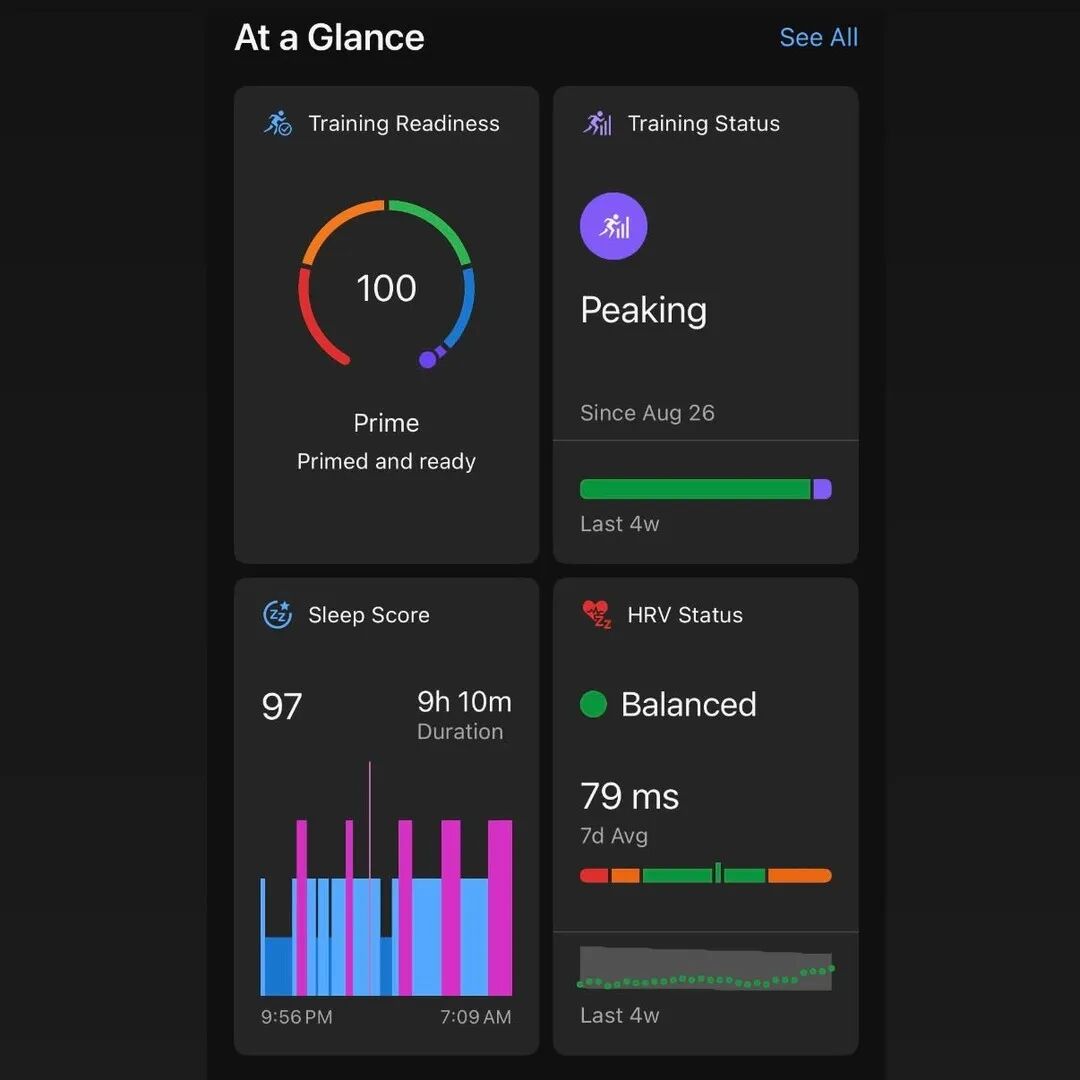
Before acquiring Firstbeat, Garmin had long used its physiological algorithms under paid licenses—collaborating since the Forerunner 610 in 2011. By the Fenix 6 series, a single device incorporated as many as 18 Firstbeat algorithms, demonstrating Garmin's heavy dependence on that technology.Given that the long-term cooperation was stable, why did Garmin opt for a full acquisition? The 2020 deal concealed three classic commercial logics that set the tone for subsequent acquisitions:1. Completely eliminate long-term licensing costs. This allows high-end algorithms to be deployed in mid- and low-end product lines, greatly improving product cost-effectiveness and margins;2. Precisely target competitors. Before the acquisition, brands like Suunto, Casio, and Huawei relied on Firstbeat algorithms for core health features. After Garmin's purchase, it publicly claimed it would continue licensing, but in practice has tightened access and largely stopped granting new licenses, directly cutting off competitors' technical sources;3. Build an exclusive software moat, monopolizing the latest R&D. That created proprietary features like Body Battery, HRV status monitoring, and VO2 Max estimation—core supports for user willingness to pay a premium.
Image source: Garmin
One could say that the core competitiveness, user stickiness, and premium pricing power of Garmin wearables now almost entirely stem from Firstbeat's physiological algorithms. Understanding that acquisition explains why Garmin is so intent on buying up scarce industry assets.When Garmin acquired MYLAPS in 2025, CEO Cliff Pemble noted that user training data and official race timing data had long been disconnected—a core industry pain point. At the time, observers wondered how Garmin would bridge the full process from pre-race training to race participation and post-race analysis.This acquisition neatly fills the last missing piece: training planning.
What is Garmin's true objective
behind this heavy investment?
Objectively, with its R&D strength Garmin could build training-plan construction, data modeling, and software platforms internally. If it could develop them itself, why pay heavily to acquire them? What compelled Garmin to act decisively?1. A scarce two-sided network: a coaching ecosystem accumulated over more than twenty yearsThe core value of TrainingPeaks has never been its software features but the global coaching network it has cultivated for over twenty years. Tens of thousands of professional coaches worldwide rely on the platform for career management, client management, and running programs, creating a strong two-sided effect: coaches attract athletes, and athlete demand attracts more coaches. This ecosystem barrier, built on long-term trust, cannot be replicated quickly with money or technology.
Image source: Garmin
2. Exclusive training compliance dataGarmin holds massive global user activity data, but that data can only record "what users did," not answer "why they trained that way" or "whether the training was effective."TrainingPeaks' proprietary data accumulated since 1999 complements this gap, fully recording three key pieces of information: coaches' prescribed instructions, user adherence to those prescriptions, and training outcome feedback.3. Locking down competitors' pathways to move upmarketTrainingPeaks is the last large independent coaching platform. Competitive dynamics are rapidly converging: Strava acquired AI running training app Runna in April 2025, then AI cycling training app The Breakaway in May, and in July 2026 integrated Runna's race database into the main Strava app.
Image source: Garmin
4. Finding a "reason to pay" for the Connect+ subscriptionGarmin's subscription service Connect+ launched in March 2025 (US$6.99/month or US$69.99/year), but was generally criticized for "lacking a compelling reason to pay"—even some of the most seasoned industry reviewers unsubscribed.TrainingPeaks is a mature, market-validated subscription asset: athlete Premium subscriptions, coach SaaS subscriptions, one-off training-plan purchases, and TrainingPeaks Virtual indoor cycling subscriptions—all of which can be modularized and bundled into Connect+'s tiered offering.5. Entering the strength-training and HYROX mixed-fitness marketIn fiscal 2025 Garmin reported revenue of US$7.245 billion (up 15%), with the fitness division generating US$2.357 billion, up 33% year-over-year (Q4 growth as high as 42%)—the fastest-growing of its five segments. TrainHeroic's 10,000 strength coaches and 500,000 users align perfectly with this growth trajectory.How one acquisition
can reshape the industry?
This acquisition signals the sports-tech industry sliding from an "open interoperable era" toward a "vertical-ecosystem era."The tacit understanding of the last decade was that hardware makers (Garmin/Wahoo/Polar), data platforms (Strava/TP), and software services (Zwift/TrainerRoad) each occupied a layer and kept APIs open. Now, with Garmin and Strava vertically consolidating, the neutral layer is nearly gone.Wahoo is arguably the biggest "victim"; many of its device users depend on TP for training management, and its product line even licensed TP's TSS/NP/IF metric trademarks. Every training file uploaded from a Wahoo head unit could now flow to Garmin.
Image source: Garmin
Strava is also significantly affected. Its relationship with Garmin has been delicate (there was litigation in 2025). Now Strava has lost the most important acquisition target for deepening into professional training; its Runna+Breakaway combo leans toward AI mass-market offerings and competes mismatched against TP's professional coaching ecosystem.It should also be noted that Garmin's openness is narrowing: Garmin Connect no longer accepts uploads from competing devices; new encrypted Bluetooth protocols restrict third-party access to features like radar and power meter functions. Over the past two to three years, the "wall" has been rising.
What weaknesses are hidden
under this seemingly perfect layout?
The seemingly flawless closed-loop ecosystem actually conceals multiple uncertainties. What overlooked risks lie behind this epic acquisition?The neutrality paradox. If Garmin tightens third-party device access to strengthen its advantage, it will inevitably cause many coaches and users to leave, directly diluting the acquisition's value;If it maintains full neutrality, it cannot realize exclusive competitive advantages and falls into a dilemma. Given Firstbeat's shift from openness to gradual restriction, how long can Garmin keep its neutrality promise?
Industry technology iteration risk. AI adaptive training apps are rising rapidly; low-cost, intelligent AI training solutions are continuously disrupting traditional paid training plans and the market for human coaches.The seller's decision to divest sports businesses while retaining steady music-education assets itself reflects a pessimistic forecast of the industry's prospects. Can Garmin, paying a premium, leverage existing data to outrun AI trends and revitalize the assets? That's still unknown.Integration risk. Historically, Garmin's ability to integrate large software platforms has not been outstanding—seven years after acquiring Tacx the complementary software ecosystem still wasn't perfected. TrainingPeaks' platform architecture is aging and slow to iterate. Can Garmin overcome past shortcomings and execute a high-efficiency integration?
Where will this ten-year strategy
ultimately lead?
Looking over Garmin's acquisitions in the past decade, acquiring TrainingPeaks and TrainHeroic is the most far-reaching strategic move and the most complete play in terms of closing the value loop.The similarity to the Firstbeat acquisition is evident: in value-chain areas that Garmin heavily depends on or complements, it buys up uniquely scarce industry assets at opaque, low cost; internally it monopolizes the newest results while externally maintaining a façade of openness.
The industry's landscape may face a new round of reshuffling:Will Connect+ become a high-value paid product? Will a Tacx+TPV combo challenge Zwift's indoor-cycling dominance? Will AI adaptive training features fully upgrade and reshape professional training systems? Might strength training, HYROX, and other new disciplines become Garmin's new growth engines?But as sports tech moves from open interoperability toward vertical monopolies, can Garmin maintain its advantage and keep leading? Can pressured competitor brands find a path to break out? Both remain to be seen.For Garmin shareholders, this is a transaction with limited downside and potentially huge optionality; for the sports-tech industry as a whole, it's another tolling bell for the end of the open-interoperability era.
[End-of-article interaction]
#What do you think of Garmin's recentacquisition?#
Text / Editor: Paoye / MP
Image source: Paoye Big Bang / Garmin
Visuals: Max