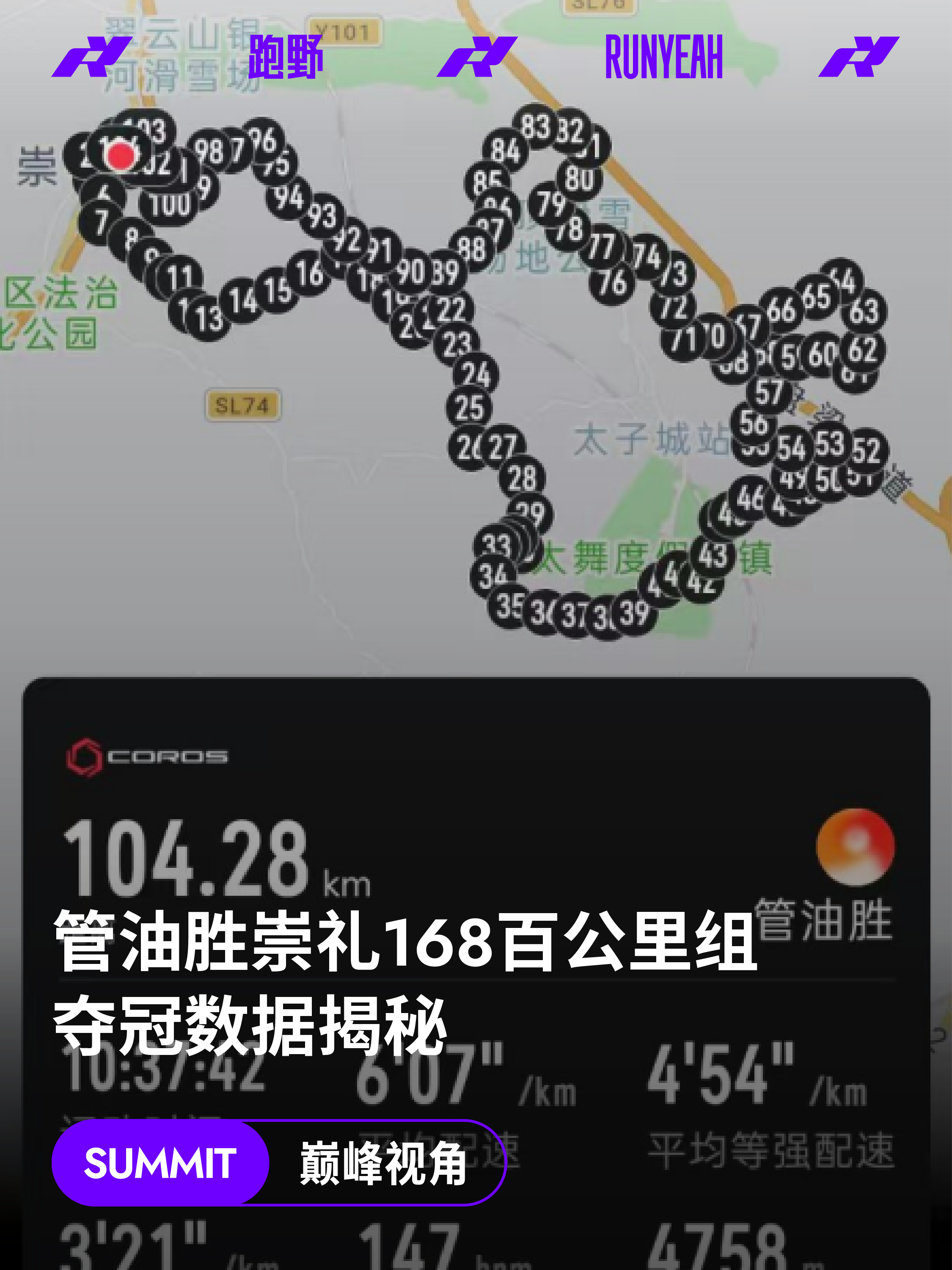
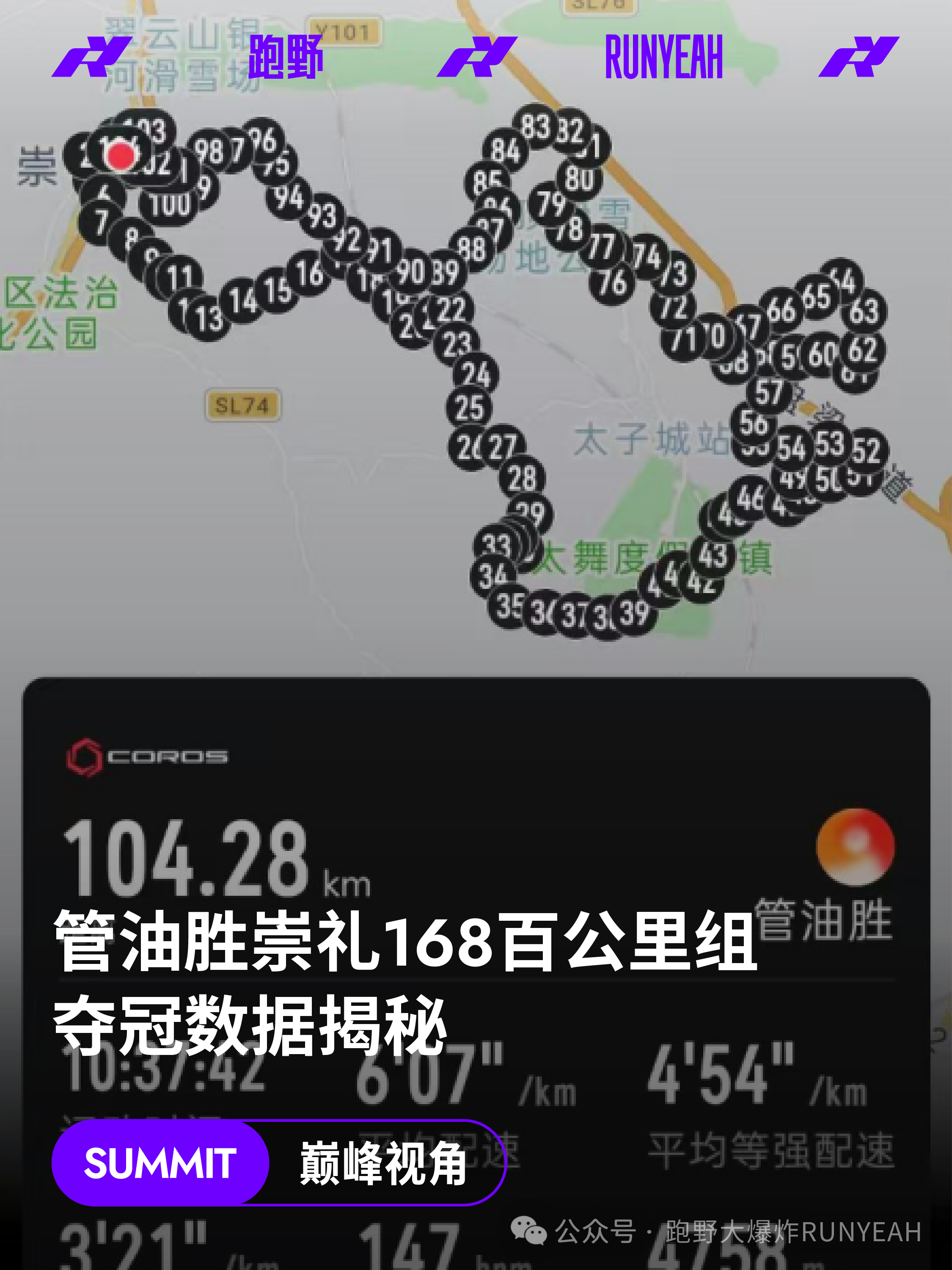
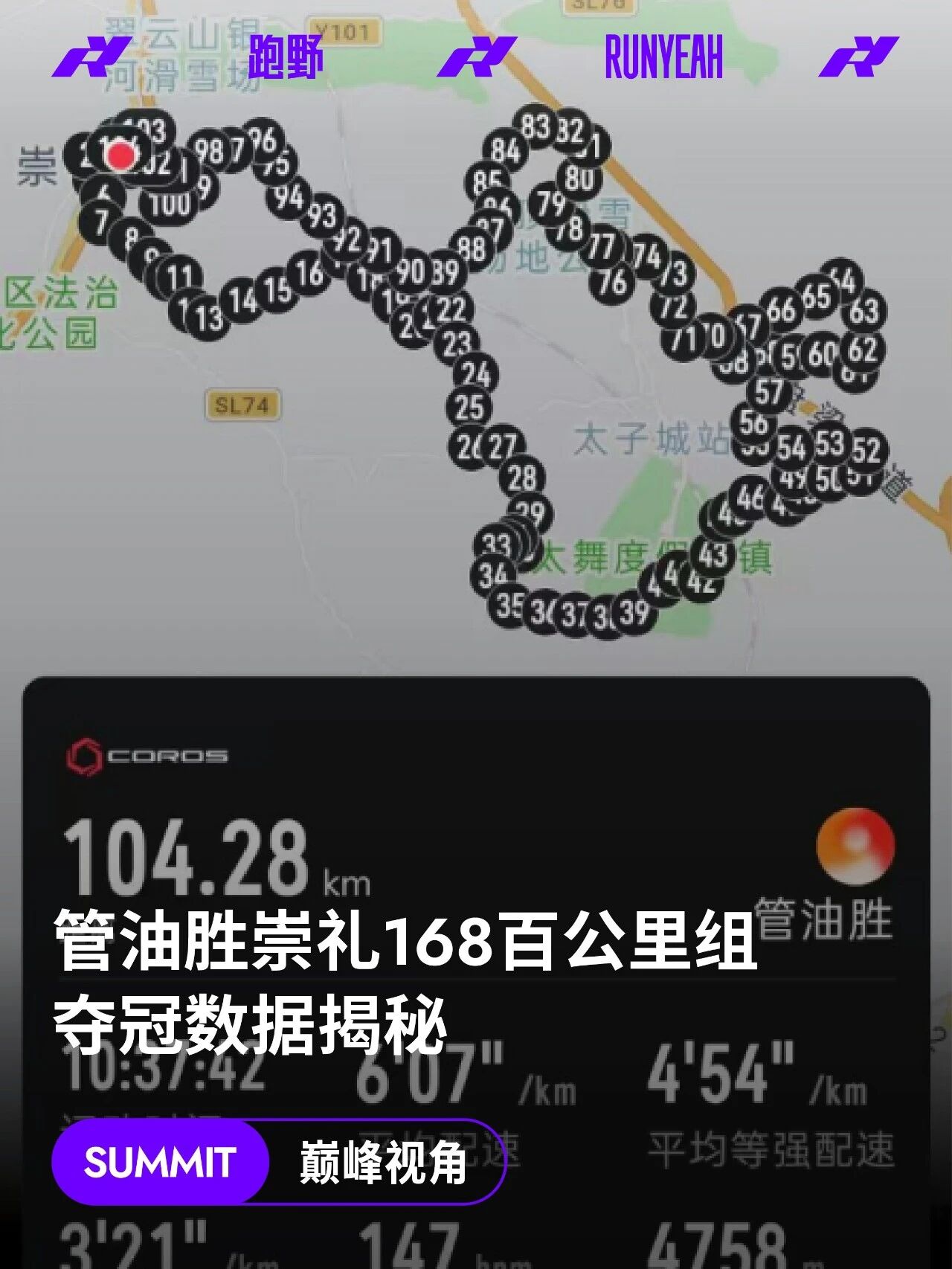
This year in the Chongli 168, in the 100km category, Guan Yousheng claimed the title with an official time of 10:28:04 — his first career victory in a 100km event and the end of a four-year DNF curse on this course.
This year’s heavy rain in Chongli, the muddy trails underfoot, and a domestic elite field that could be described as a “gods battling” level did not stop Guan Yousheng’s pursuit of the win.
He beat defending champion Batmengkai and three other athletes with ITRA performance scores over 900: Luo Tao (922), Yang Jianjian (921), Gu Rongchao (915).
Let’s look at his watch data to see how he pushed his aerobic capacity to the extreme.
First: he didn’t force it uphill, he dared to accelerate downhill, and he didn’t lose speed in the late stages.
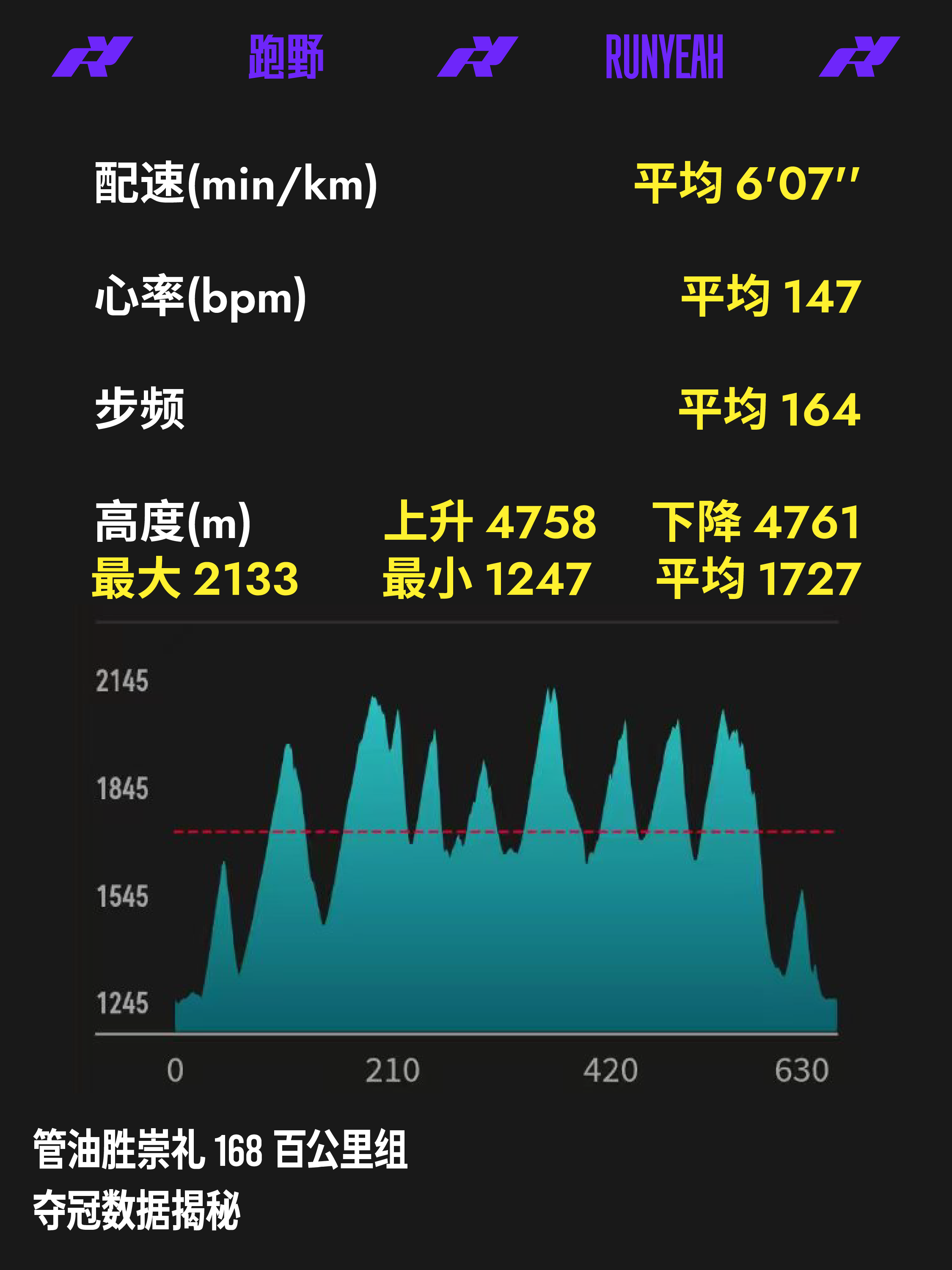
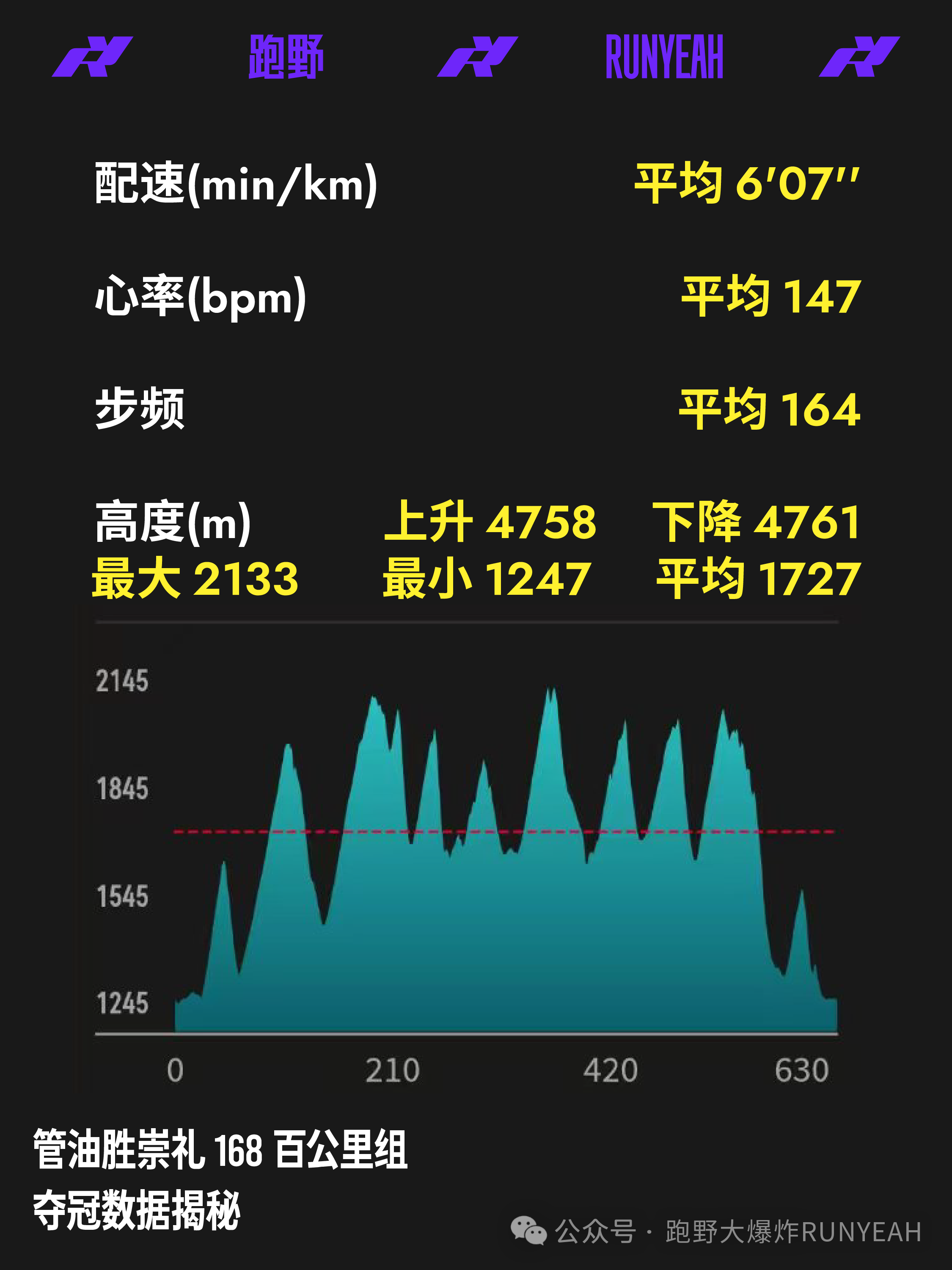
The Chongli 100km links seven landmark Winter Olympic mountains, with elevations fluctuating between 1200–2200 m, making pace control nearly exacting.
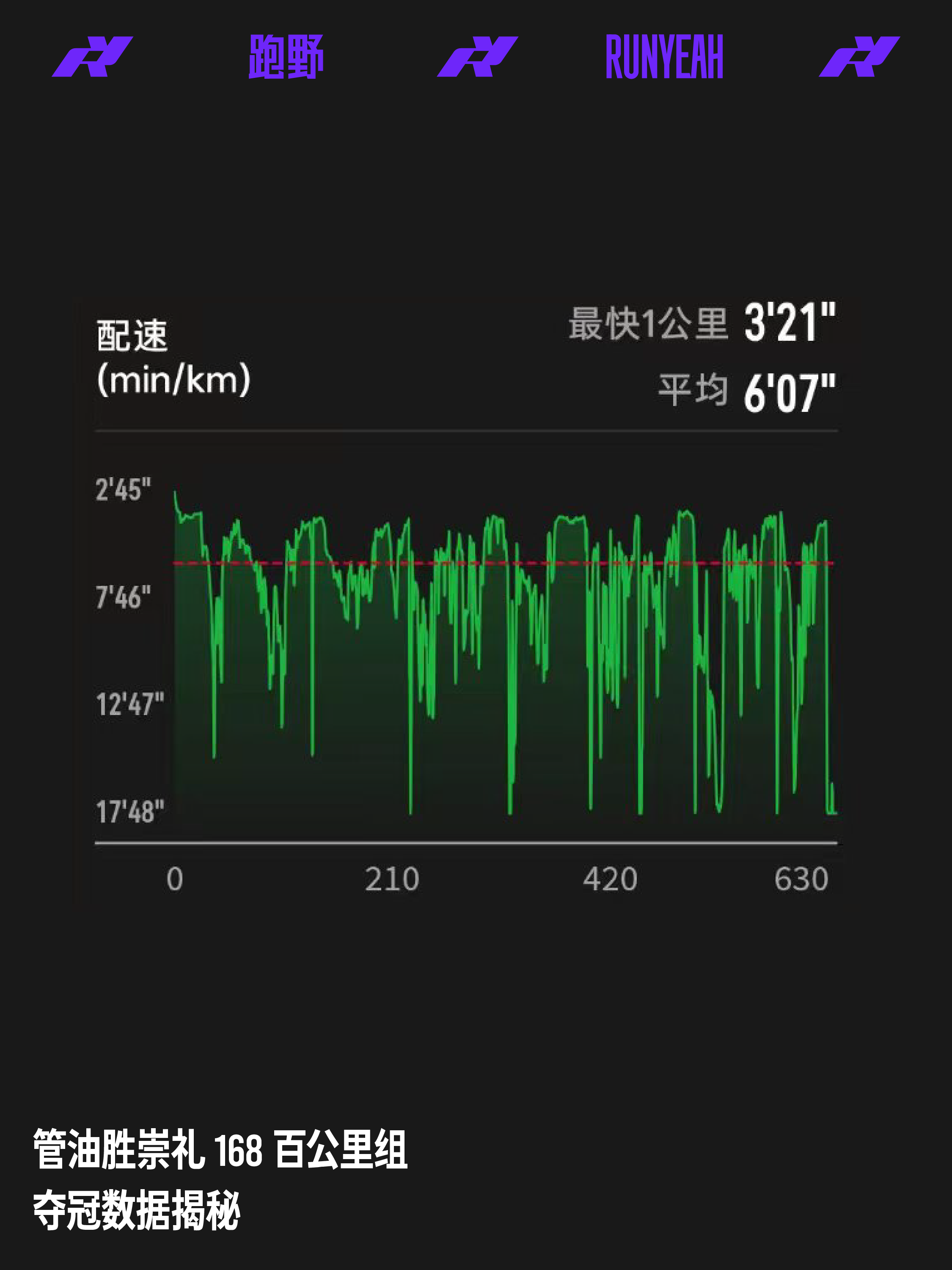
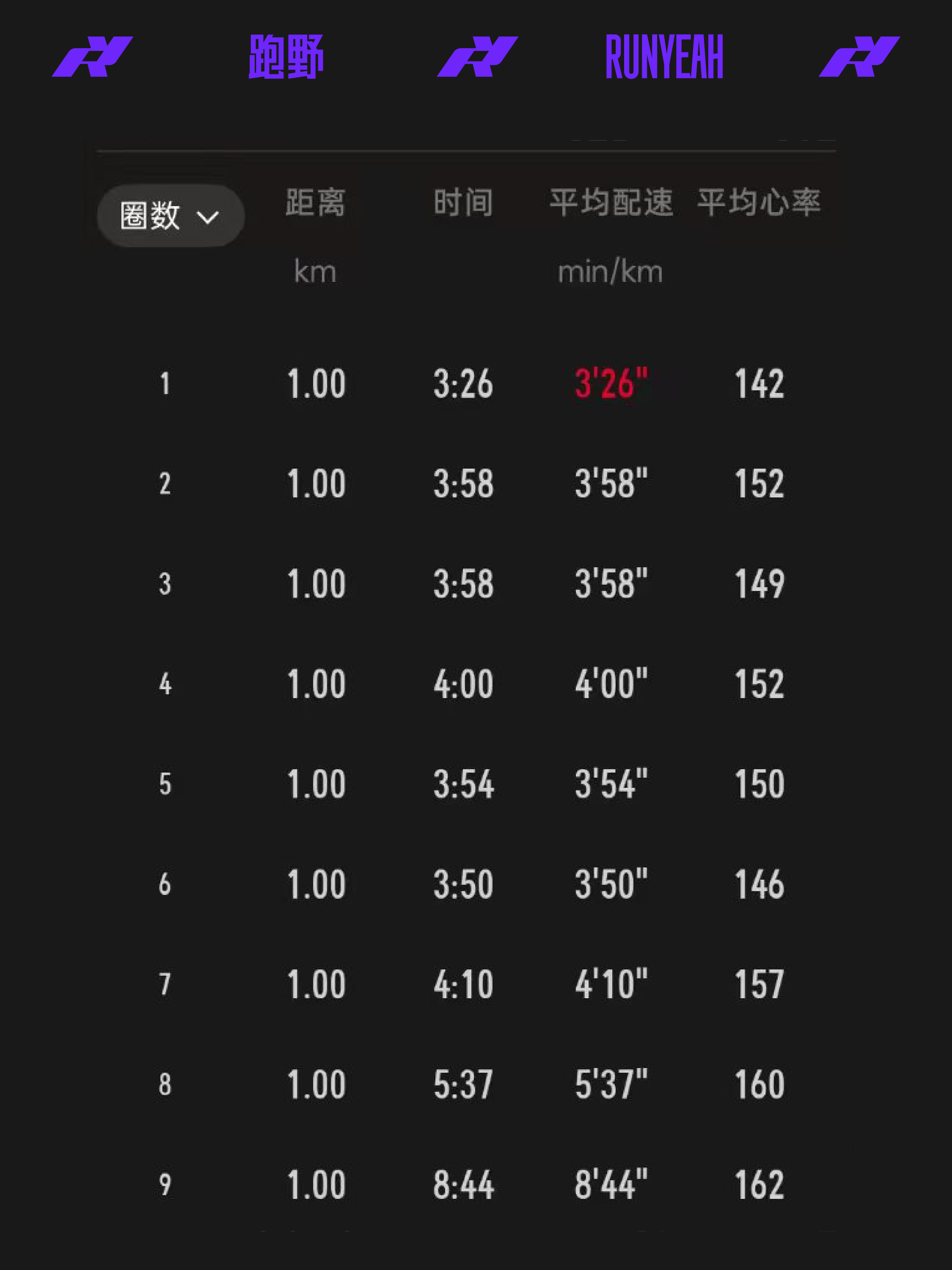
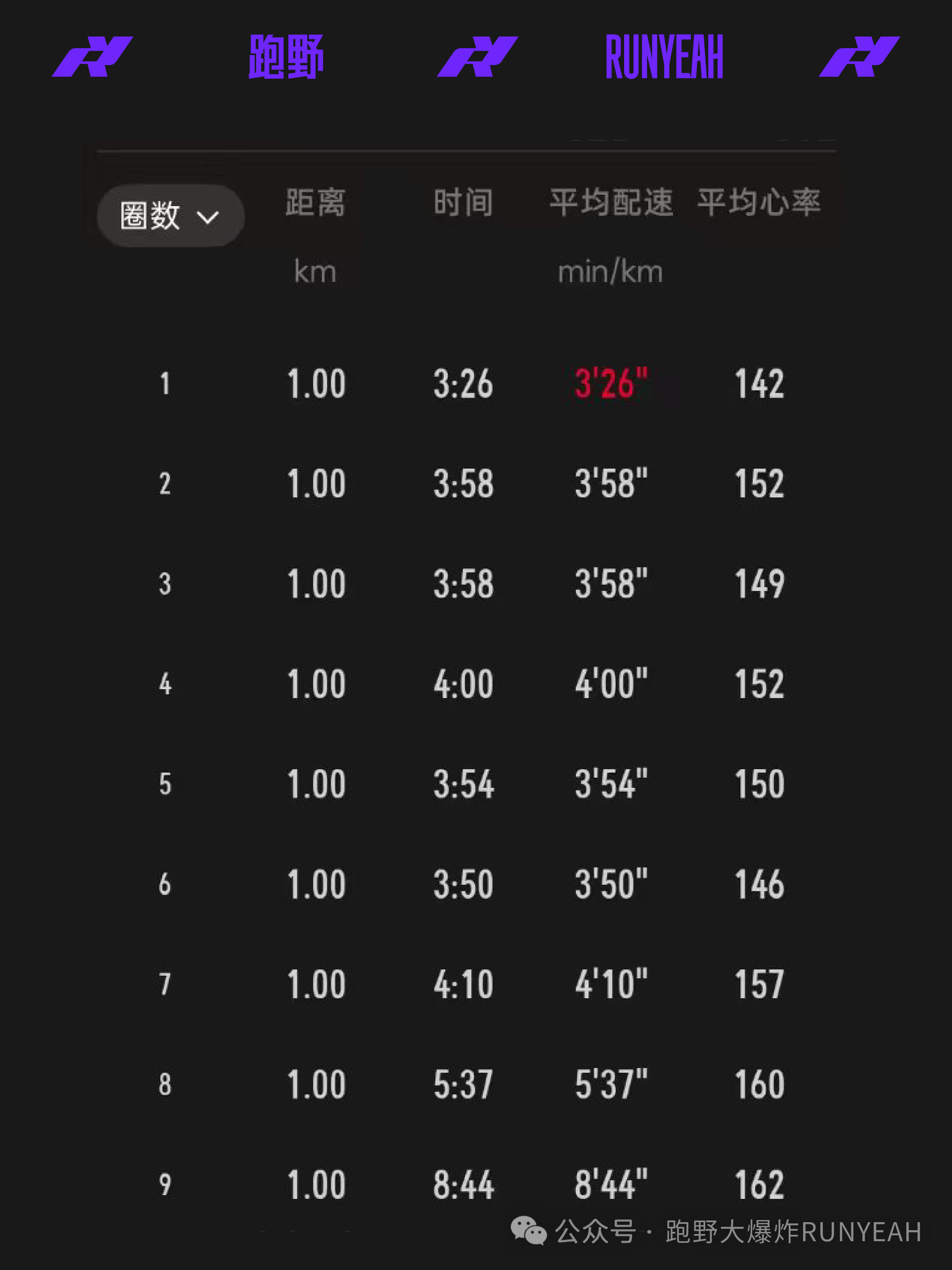
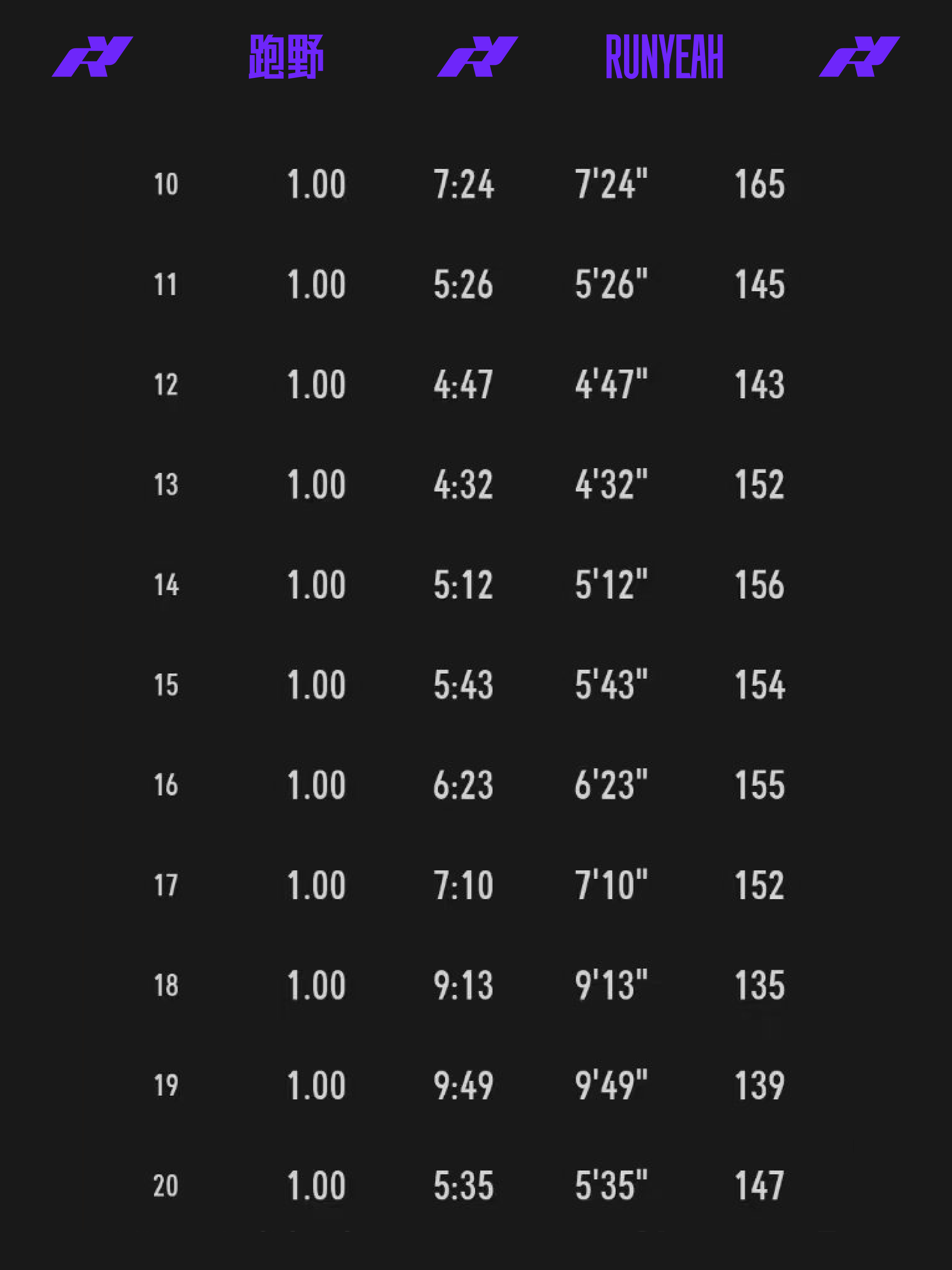
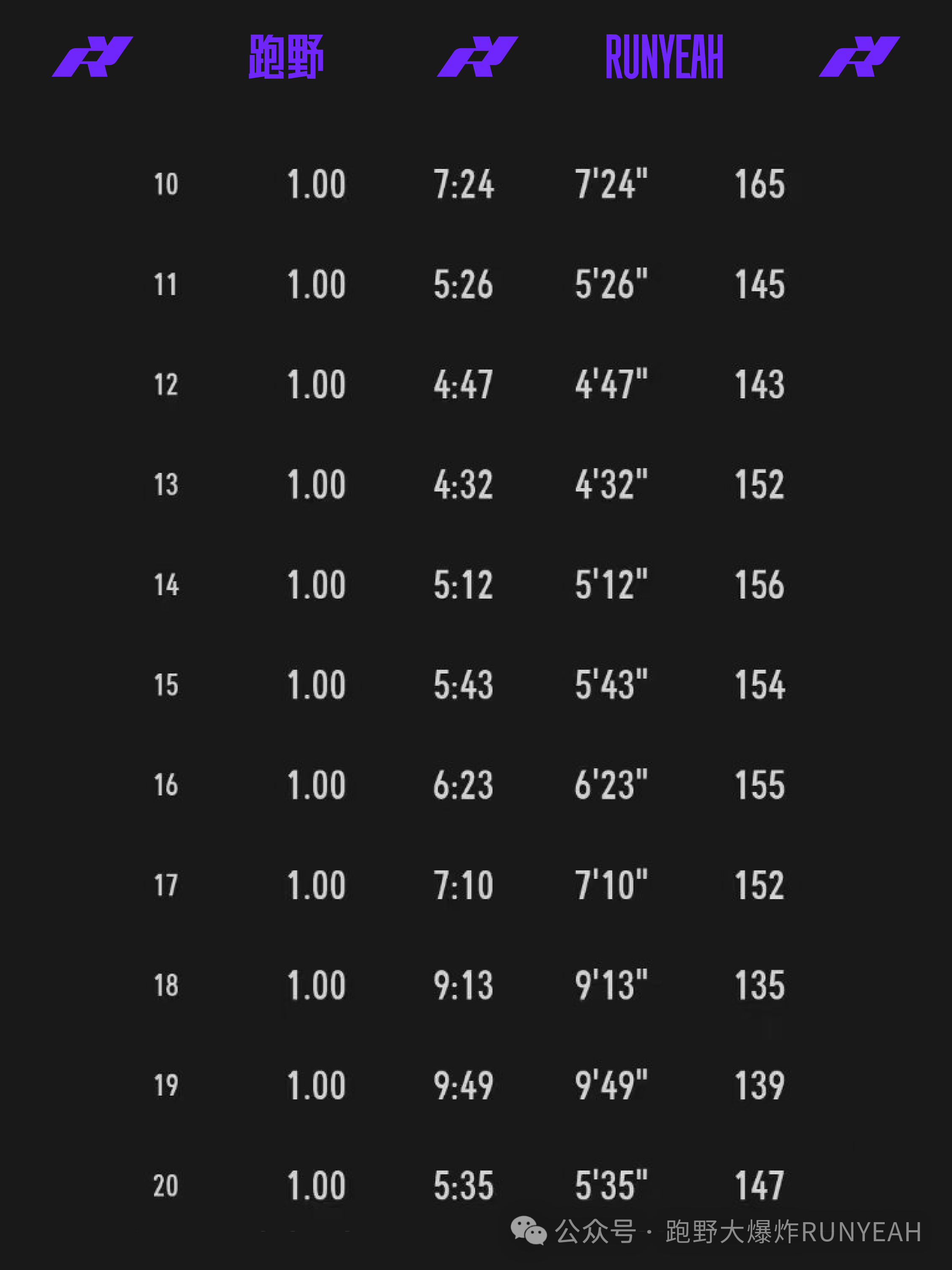
From Guan Yousheng’s watch pace-distribution curve, the race shows a dense sawtooth pattern with very even peaks.
You can see he didn’t try to make up time by forcing uphill running; instead he used efficient bounding/fast-hiking to avoid early lactate buildup. Downhill he was bold yet careful — his fastest race pace in the rain reached 3:21.
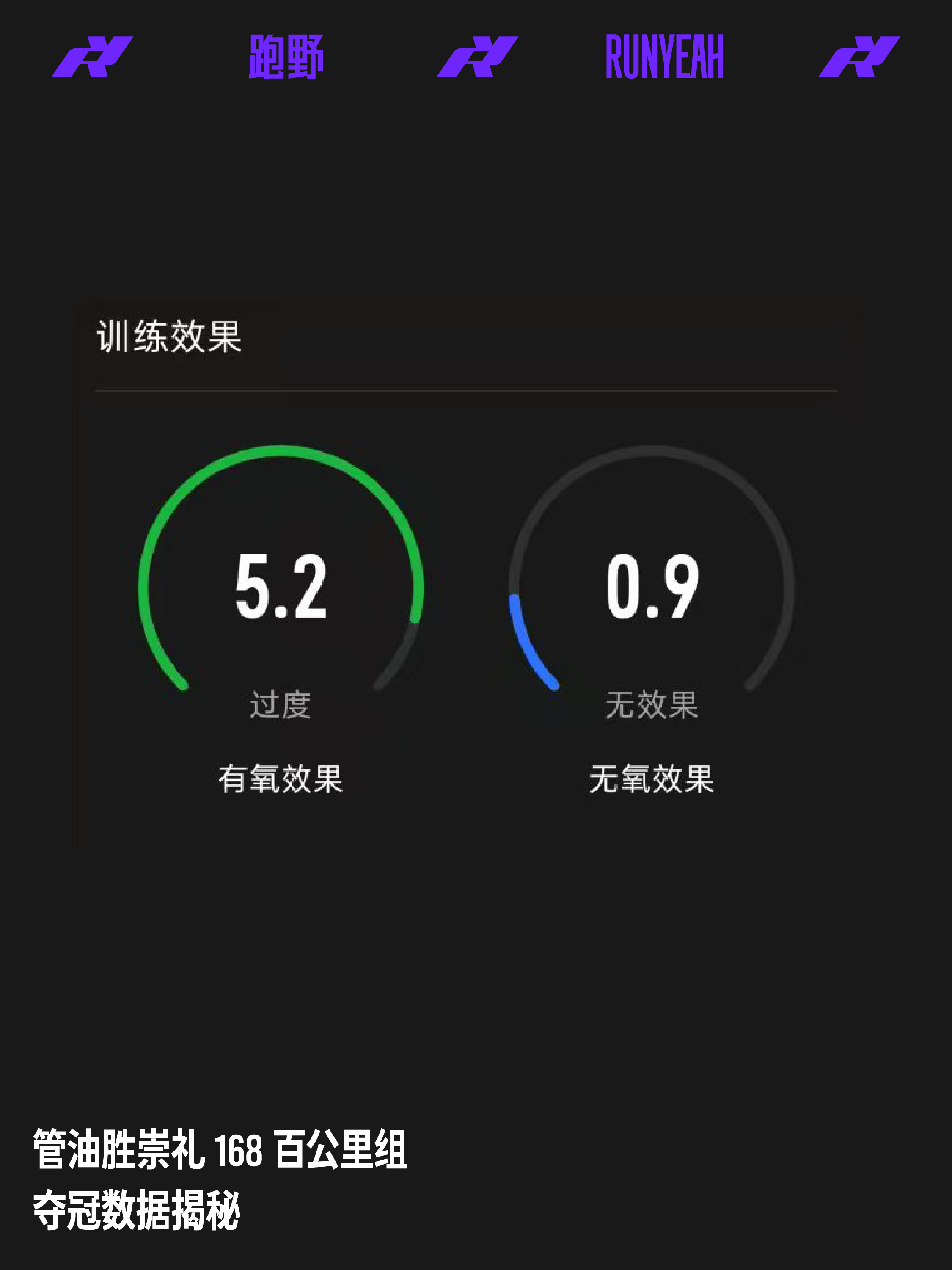
This directly explains why his anaerobic TE was only 0.9. He hardly entered anaerobic glycolysis during the race, so late-race cramps or gastrointestinal shutdown were unlikely.
Moreover, his pace curve in the second half shows no drop-off; his finishing sprint even produced higher peaks, indicating his muscular endurance and energy metabolism held up to the very end.
Another point is his road-race–level aerobic planning.
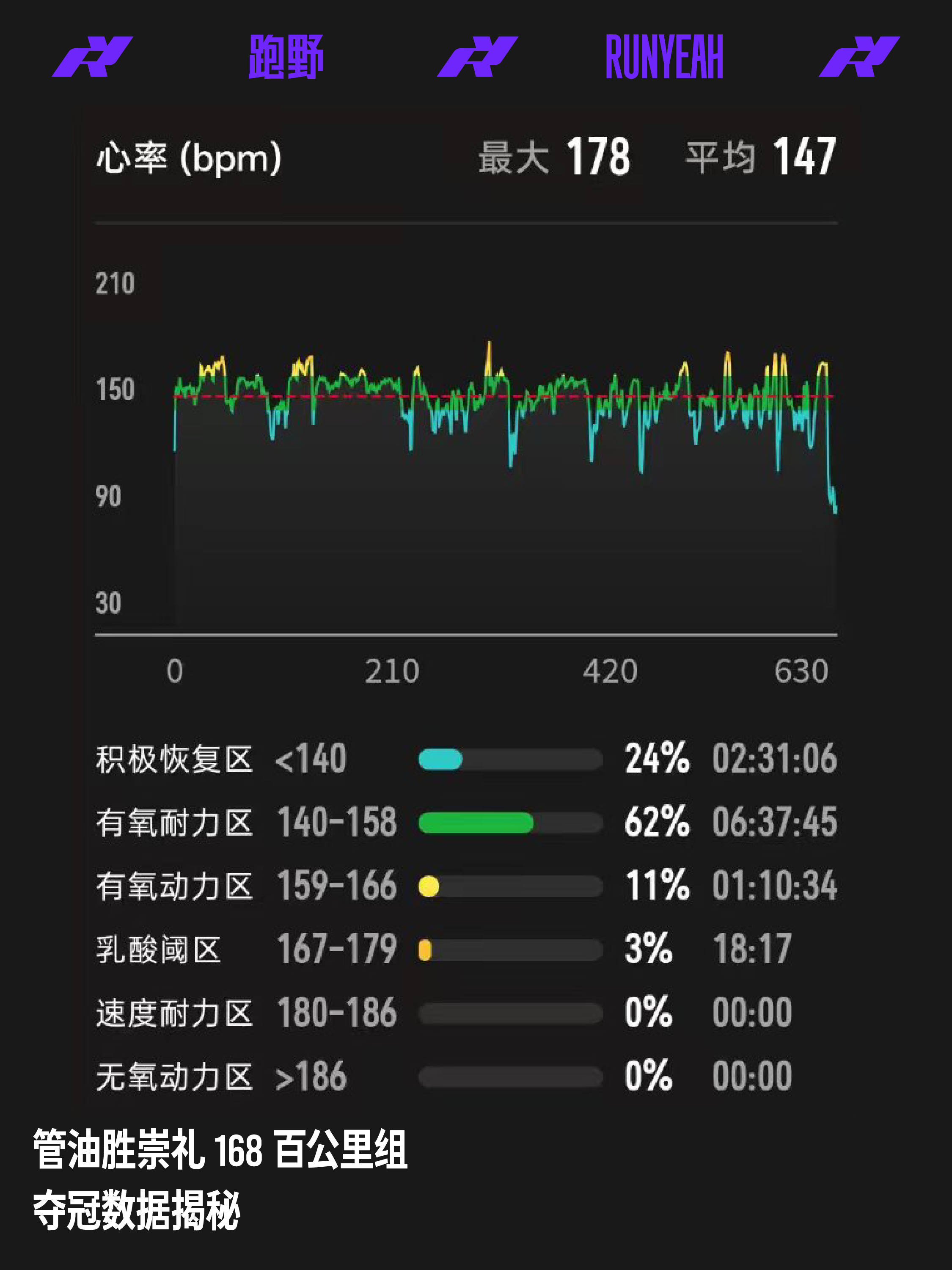
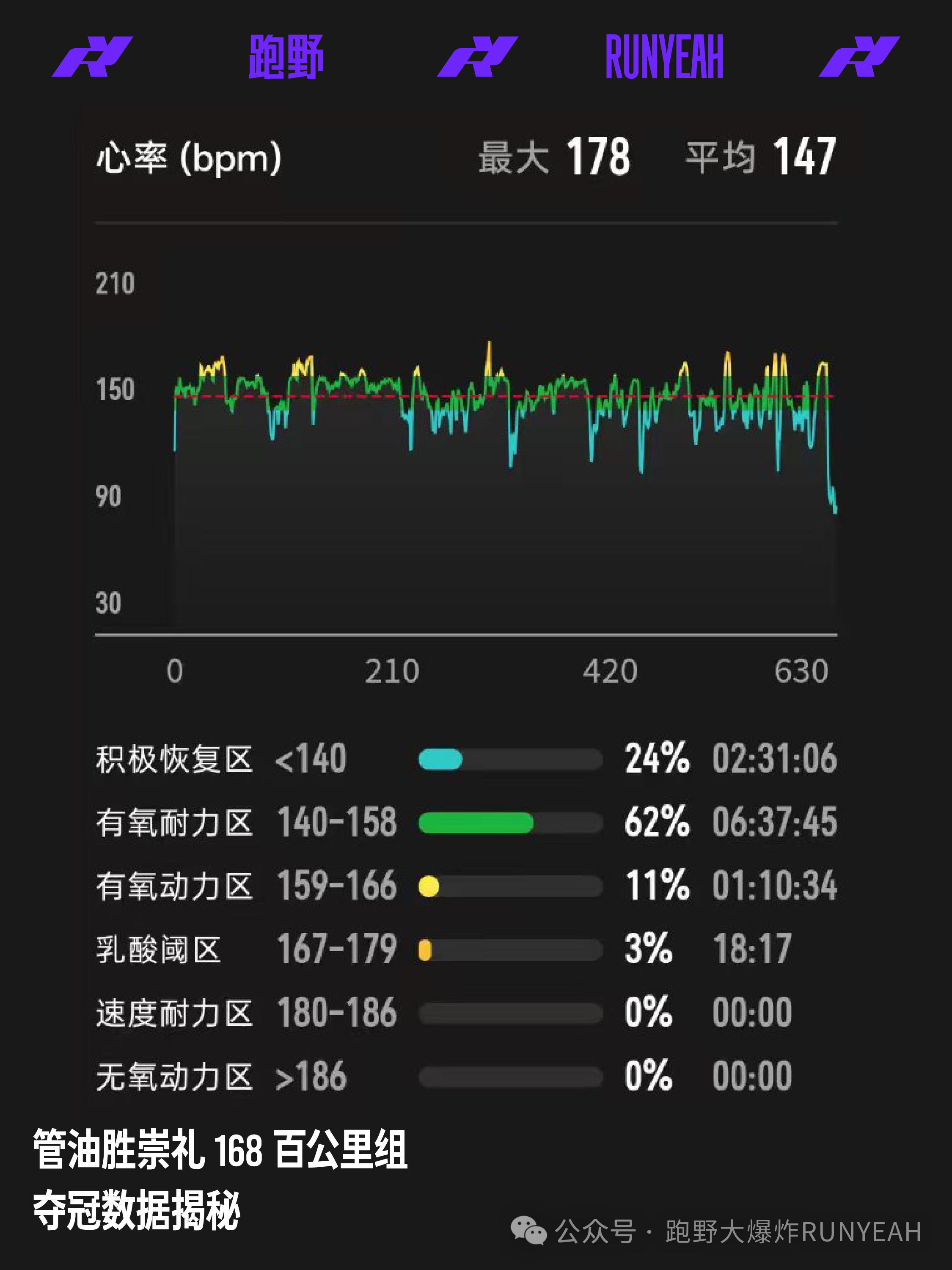
An average heart rate of 147 bpm didn’t noticeably decline in the latter half — his strong cardiopulmonary system delivered steady output throughout.
A small detail: the spikes back to a 110–120 bpm “recovery heart rate” were very sharp and infrequent, showing he minimized his time spent at aid stations. That was one reason he finished about 25 minutes ahead of runner-up Batmengkai.
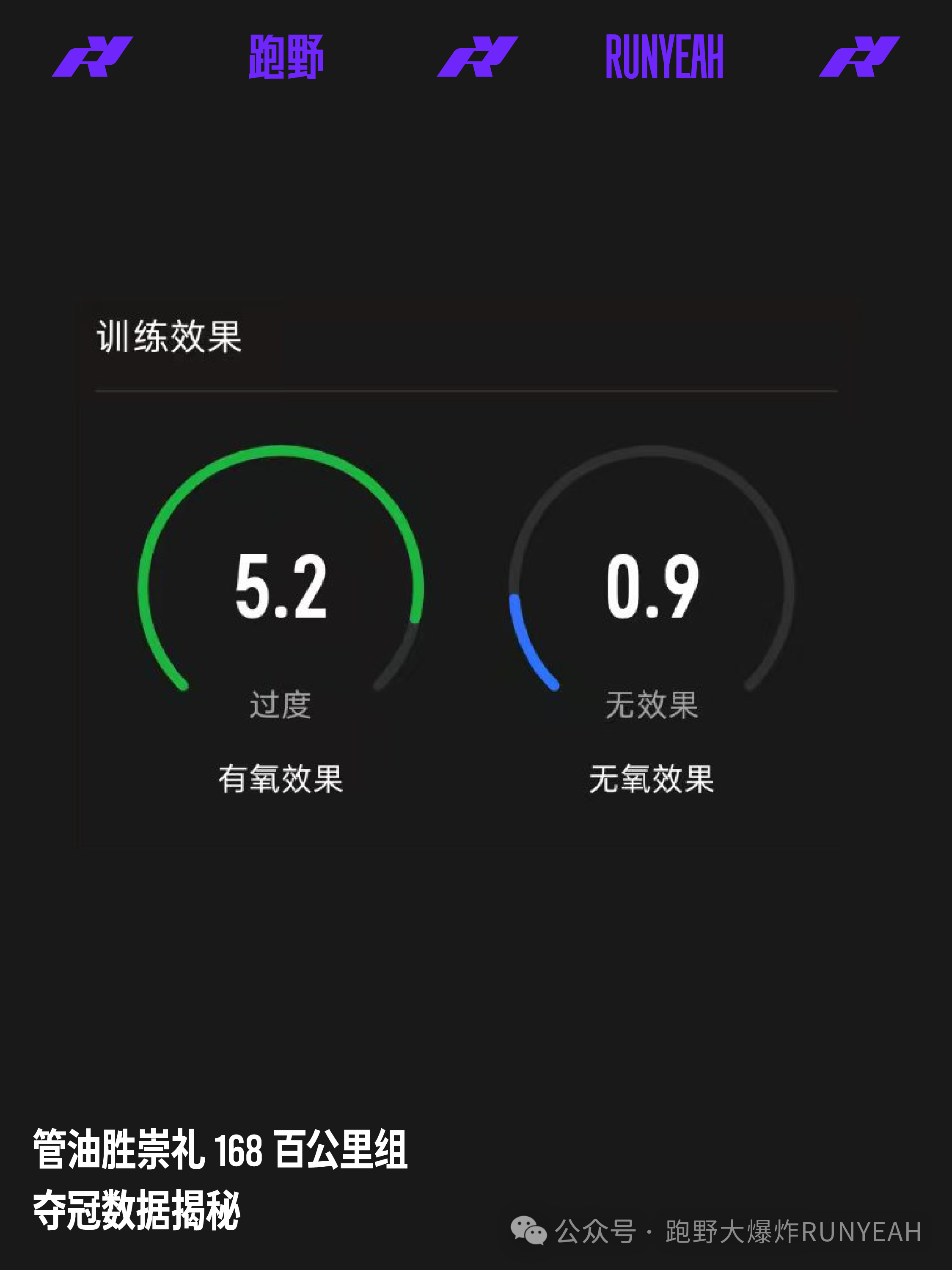
The watch’s Training Effect data is also a key reference: aerobic 5.2, anaerobic 0.9. This more directly reflects that Guan Yousheng’s output zone during this 100km victory was completely in the aerobic metabolism range — off the charts and even above the usual 5.0;
and the 0.9 anaerobic effect further shows that during the more-than-ten-hour effort he neither blindly followed others’ paces nor sprinted recklessly.
Regular fueling practice is essential.
A total energy expenditure of 5211 kcal means he needed to replenish nearly 500 kcal per hour — the product of countless training sessions refining fueling strategy and physiological adaptation.
Analyzing the pace, heart rate, and Training Effect data that runners commonly have access to helps clarify the essence of Guan Yousheng’s victory: long-distance trail running isn’t about who can sprint fastest, it’s about who can stay consistently steady.
#Chongli168 #GuanYousheng #trailrunning #TrailRunningBigBang