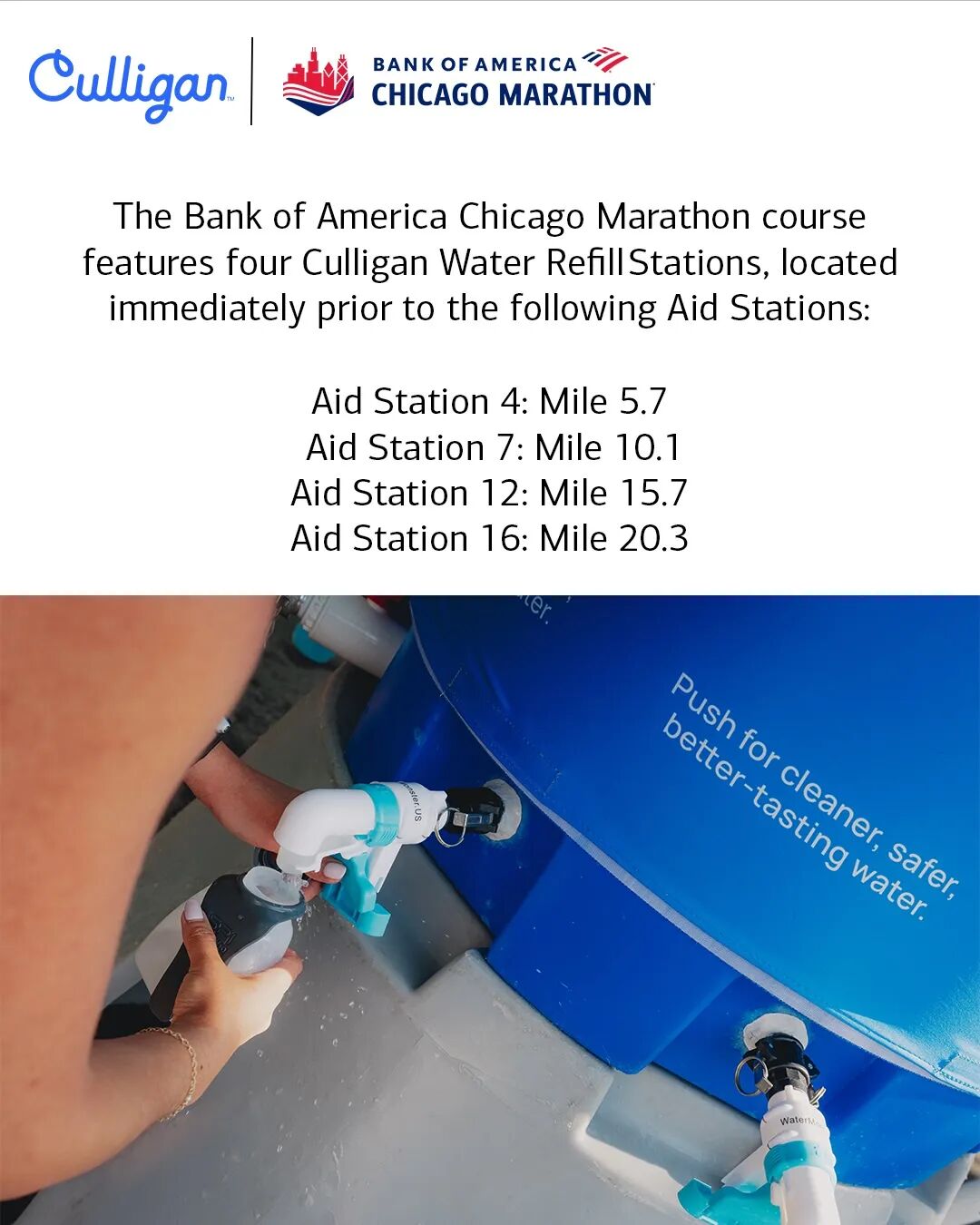
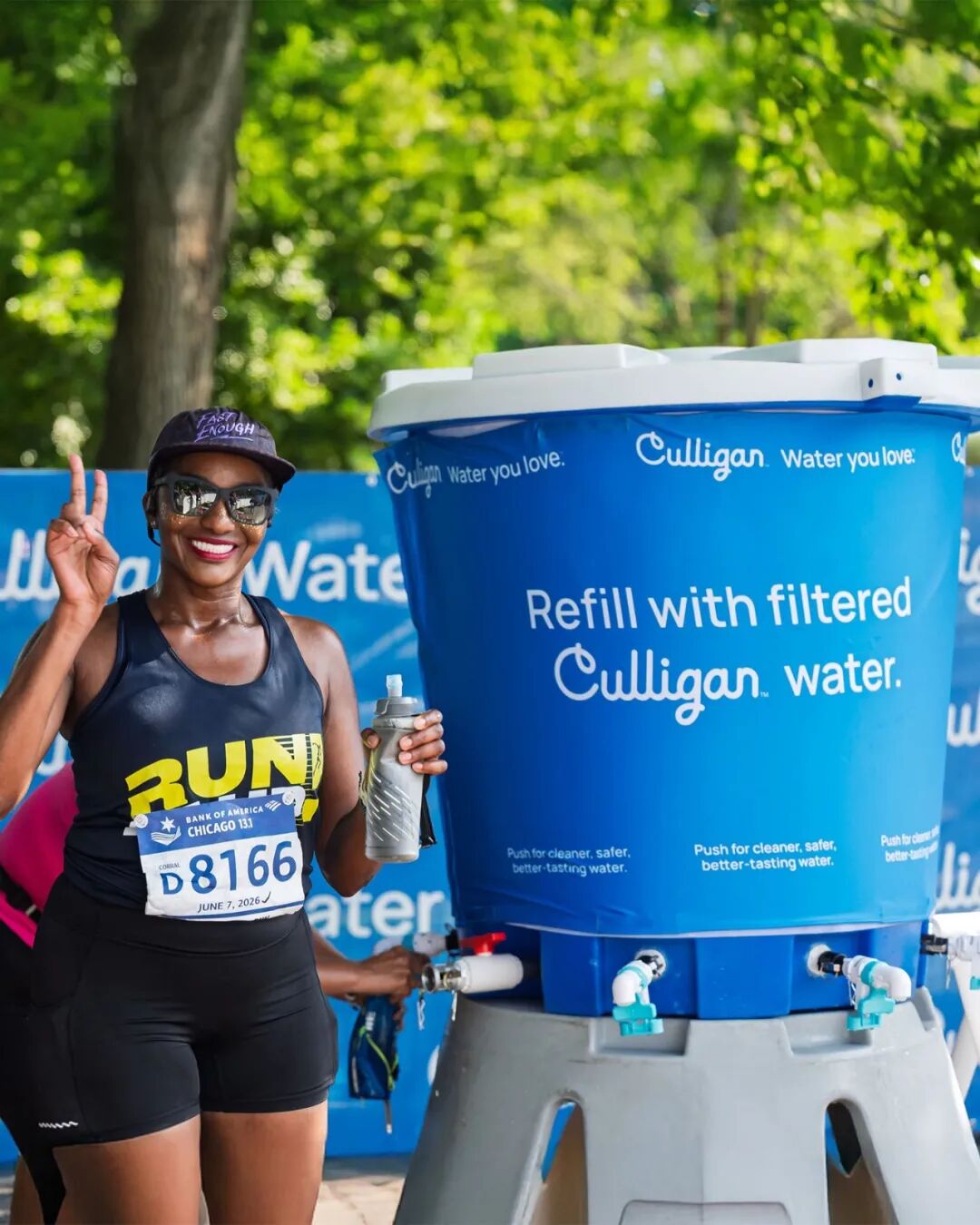
Culligan, which will operate the personal hydration stations for the Chicago Marathon, was founded in the United States in 1936. The company operates in more than 90 countries, has over 22 million water treatment systems in use, and serves more than 170 million consumers annually.Culligan's relationship with the Chicago Marathon began in 2024 and in March 2025 the two reached a long-term partnership.Chicago Marathon race director Carey Pinkowski said:“Sustainability has long been one of our core focuses, and introducing on-course hydration stations represents an important next step.”
The personal hydration stations will use a high-capacity activated carbon filtration system, and this is not simply about adding a few taps. It ties brand exposure to runners' actual race behavior and can also reduce the use of single-use paper cups.
But it also brings new operational challenges, such as:
Flow rate — how fast will water dispense? How to manage queueing times? What about congestion at the aid zone? Are the vessels compliant with regulations? How will hygiene and safety be ensured?
Moreover, the actual waste reduction, service capacity and adoption rates have not been published, so the large-scale practical effect remains the organizers' claim rather than a proven result.At this year's Paris Marathon the organizers removed single-use paper cups and plastic bottles from aid stations altogether — a decision that looks very green, but not everyone was satisfied. Some runners expressed discontent, and course congestion did occur.Chicago's move is not as radical, but these four personal-hydration stations could have a notable influence on the future development of marathon events.
Impact on domestic marathons
Large domestic marathons commonly rely on fixed aid stations supplying paper or plastic cups.At a typical large domestic marathon size of 30,000 participants, if each runner uses five single-use paper cups in one race, total consumption would reach 150,000 cups.Disposable items such as plastic ponchos, paper cups, beverage bottles and cooling sponges are widely used at races, not only damaging the course environment but also creating a heavy cleanup burden for event staff.In fact, some domestic races have already been trying alternatives to single-use cups:The 2025 Huizhou Marathon launched a “One Cup for the Whole Race · Zero Waste” campaign, giving 988 runners free reusable eco-cups and pledging not to use single-use paper cups during the event.The Xiamen Marathon replaced single-use plastic cups with biodegradable cups.The 2026 Yangzhou half marathon distributed 1,000 reusable stainless-steel drinking cups before the race, encouraging runners to carry them to aid stations.However, these trials have mainly involved organizers supplying reusable or biodegradable cups, and have not formed a complete “runners bring their own vessel + on-course fixed refill stations” model. Chicago's experiment provides a reference for domestic races.If a personal hydration model is introduced,runners would no longer rely on single-use bottled water but would also face a series of issues:1. Traditional bottled-water brands' on-course rights will face fundamental challenges.
2. Organizers will also need to address competition rules, security checks, start corrals, aid-station widths and conflicts between sponsor categories.3. Water-purification, outdoor-hydration and eco-material brands will gain new on-course sponsorship opportunities.So behind this environmental measure lies a major reshuffle of commercial interests.
The Chicago Marathon will hold its 48th edition on October 11, 2026, when the real-world effectiveness of the personal hydration stations will be put to the test.