
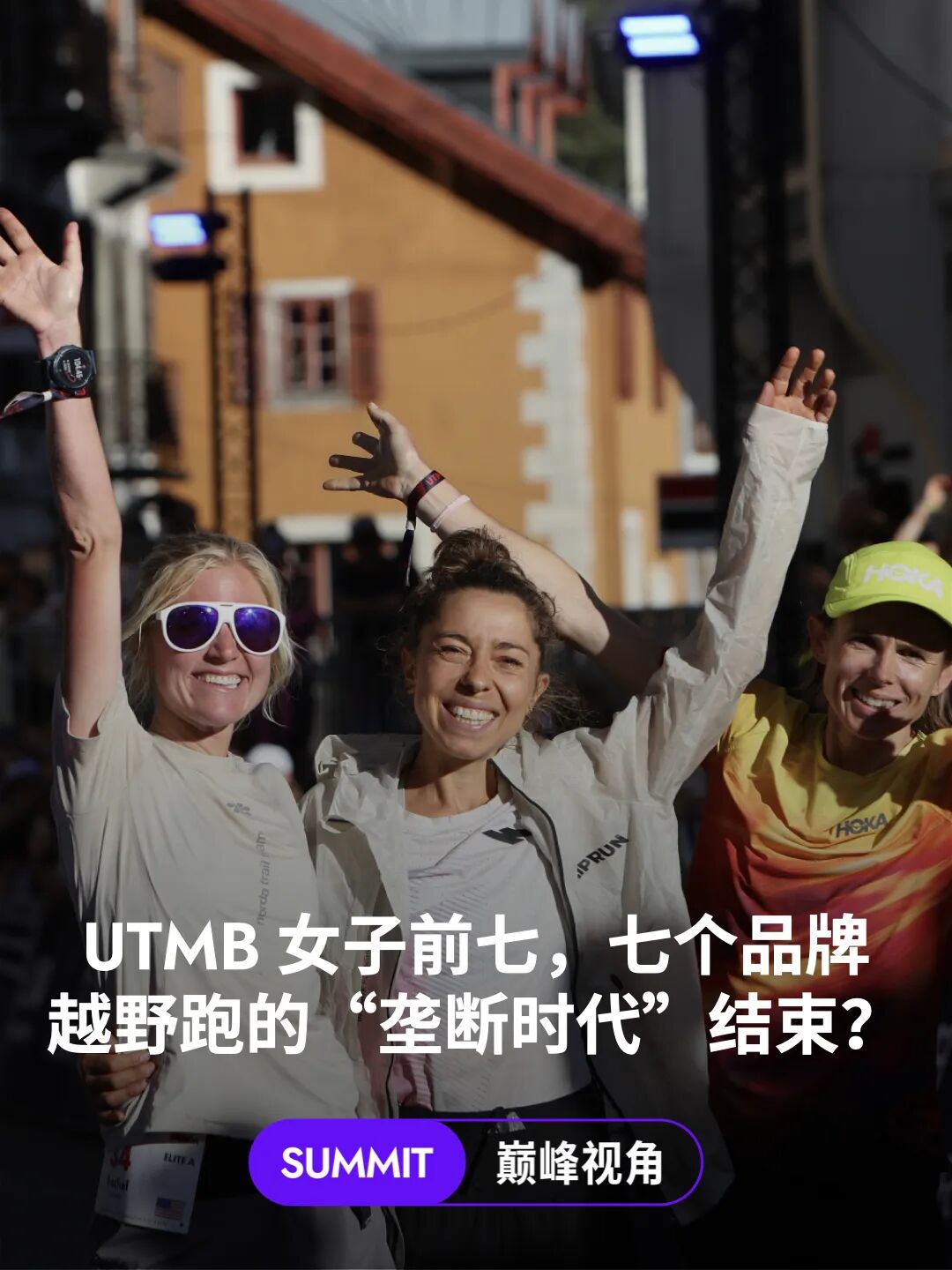
The annual UTMB final in Chamonix concluded, and the women's podium delivered a moment worth remembering.
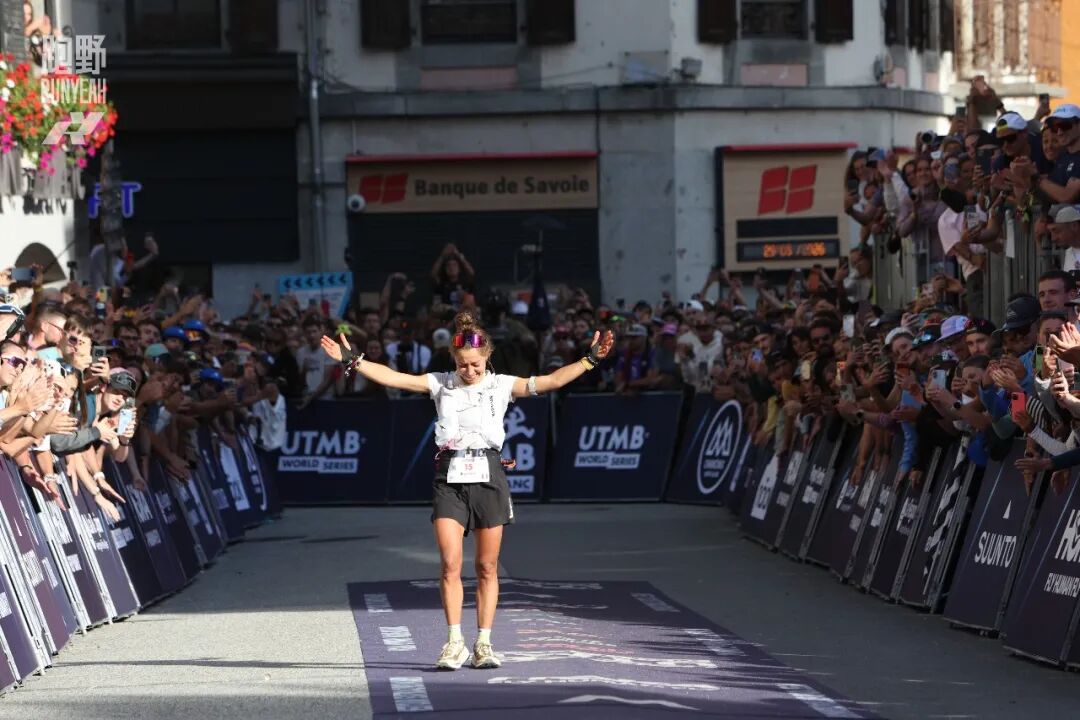
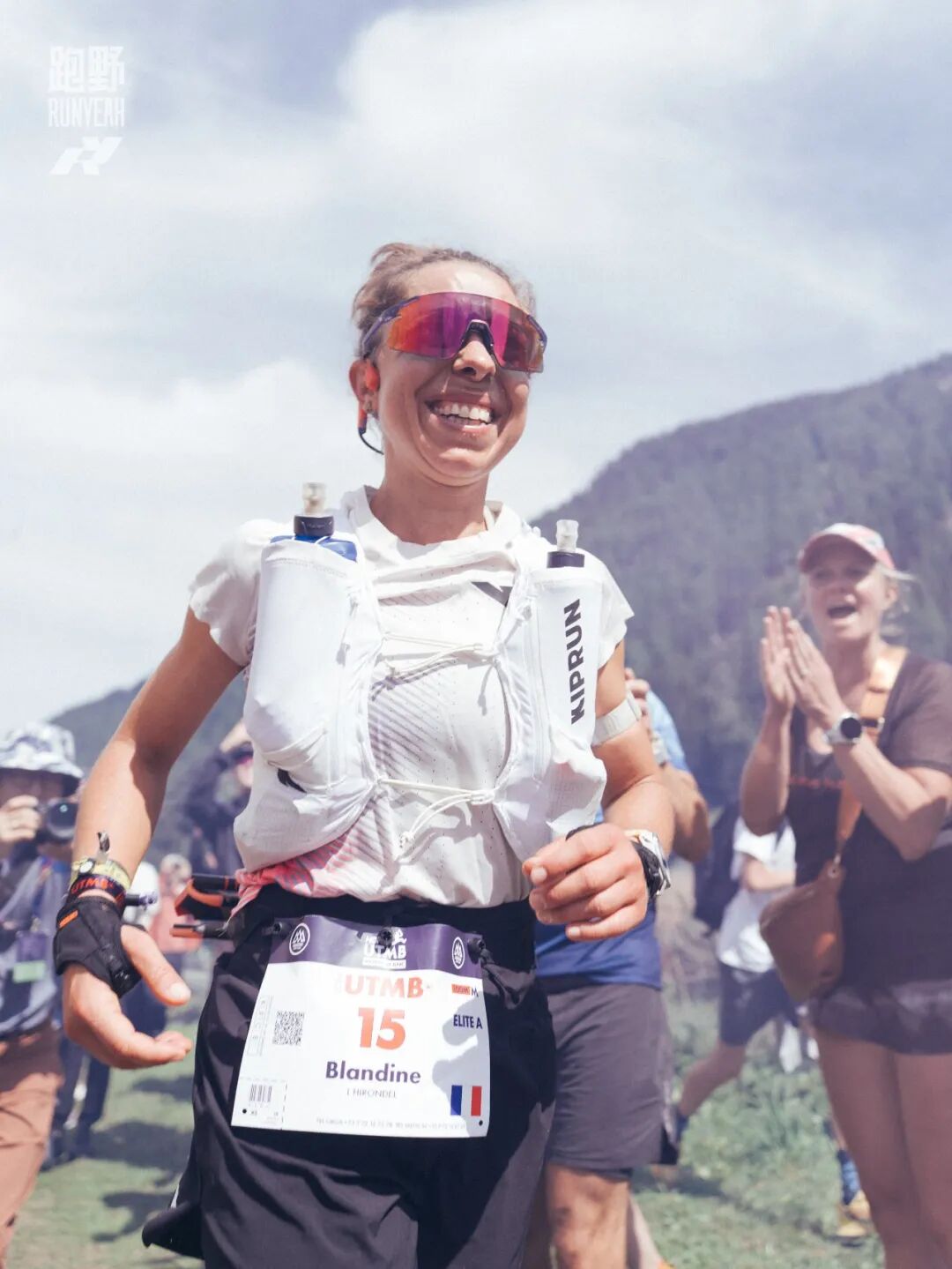
French hometown runner Blandine L’Hirondel crossed the line in 21:54:49, becoming the first woman in UTMB history to break 22 hours and completing the Grand Slam (winning OCC, CCC and UTMB).
Behind her, American Rachel Entrekin was second in 22:15:54, and fellow American Emily Schmitz third in 22:17:28.
But the surprising thing wasn’t just the times — it was a number: the women’s top seven came from seven different brands.
Champion Kiprun, runner-up Norda, third HOKA, fourth Altra, fifth Arc’teryx, sixth On, seventh Salomon. This may not be a coincidence — it signals that the balance of power in trail running gear is being rewritten.
01
Seven brands, seven different paths
Champion Kiprun: Decathlon’s “super shoe” experiment
35-year-old Blandine L’Hirondel is an obstetrician and a two-time world trail running champion. She won in the Kiprun Kipsummit Race. This is Decathlon’s first carbon-plated trail shoe and the cheapest pair on the podium.
The shoe retails at €199.99 in France and ¥1,199.9 in China (sold out on the official site). The midsole uses a supercritical aliphatic TPU material (called SCF Foam in Europe, Fastech+ in the U.S.), wrapped around a carbon plate. The outsole uses Vibram Megagrip Litebase. Heel stack 37.5/31.5 mm, drop 6 mm; size 42, one shoe 255 g.
A mass-market sports retailer breaking into the elite field at an affordable price — and winning — means more than just a shoe. Kiprun only launched in April, and a few months later it was on UTMB’s top podium. A redefinition of price versus performance is underway.
Runner-up Norda: a minimalist technical credo
Rachel Entrekin took second in her UTMB debut wearing the Canadian brand Norda 055. Norda was founded in 2020 in Montreal by endurance athletes Nick Martire and Willa Martire. The brand insists on a 100% bio-based Dyneema upper and has worked closely with Vibram to develop a bespoke outsole.
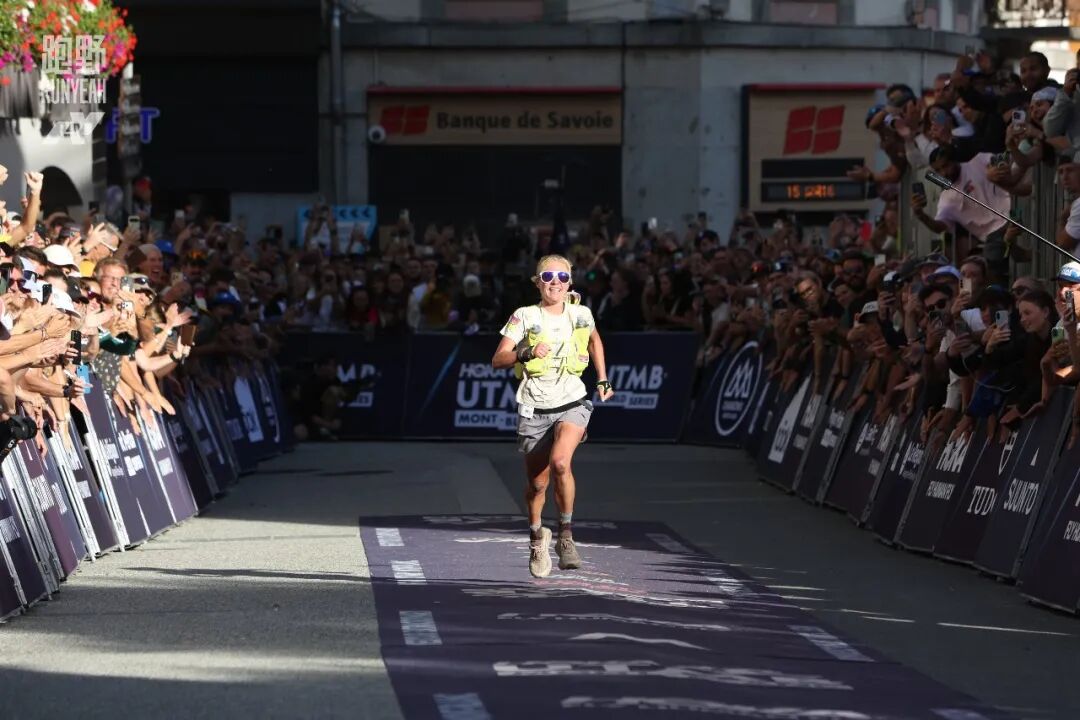
No corporate parent, no decades-long brand legacy — a six-year-old company made a product good enough to stand on the podium of the world’s biggest trail race. That alone is a forceful rebuttal to the idea that only big brands can win.
Third HOKA: the giant remains, but no longer omnipotent
Emily Schmitz, 45, from Wisconsin, moved to Chamonix after ten years of human-rights work in Colombia and signed with HOKA in 2021 to become a professional trail runner. She wore an unreleased HOKA prototype.
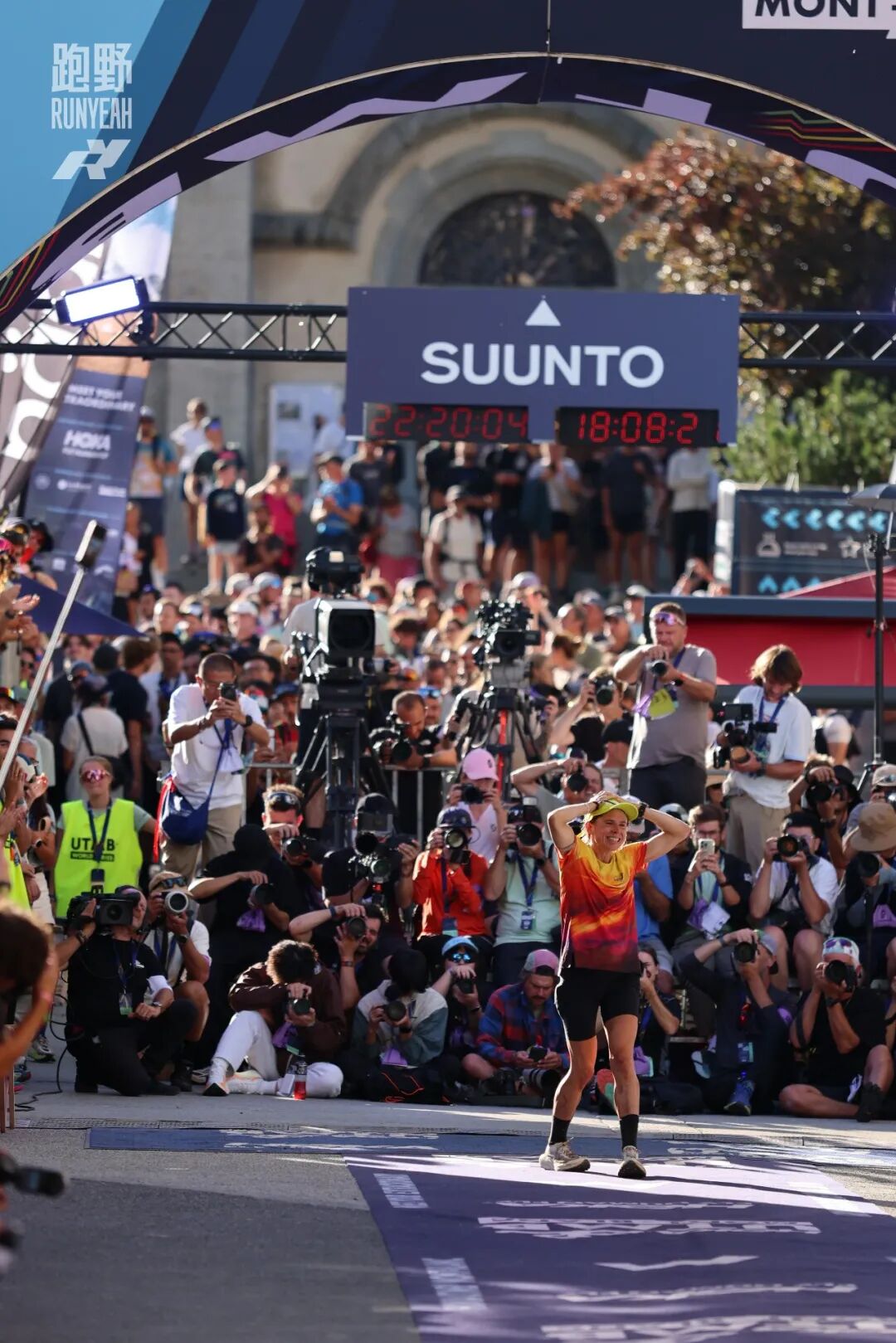
HOKA is still one of the heaviest hitters in trail running, but it only occupied one podium spot. Compared with a few years ago when HOKA was a fixture on ultra-distance podiums, does this herald a new era — or is it a temporary setback?
Fourth to seventh: the brand spectrum widens further
Fourth: Careth Arnold (USA, 23:05:20) — Altra. A believer in zero-drop shoes, Altra still holds a place on the top stage.
Fifth: Jazmine Lowther (Canada, 23:21:55) — Arc’teryx. The luxury outdoor brand entering the racing-trail field is proving it’s not just about looking good.
Sixth: Katarzyna Dombrowska (Poland, 23:27:34) — On. The Swiss engineering brand’s trail ambitions are paying off.
©Salomon
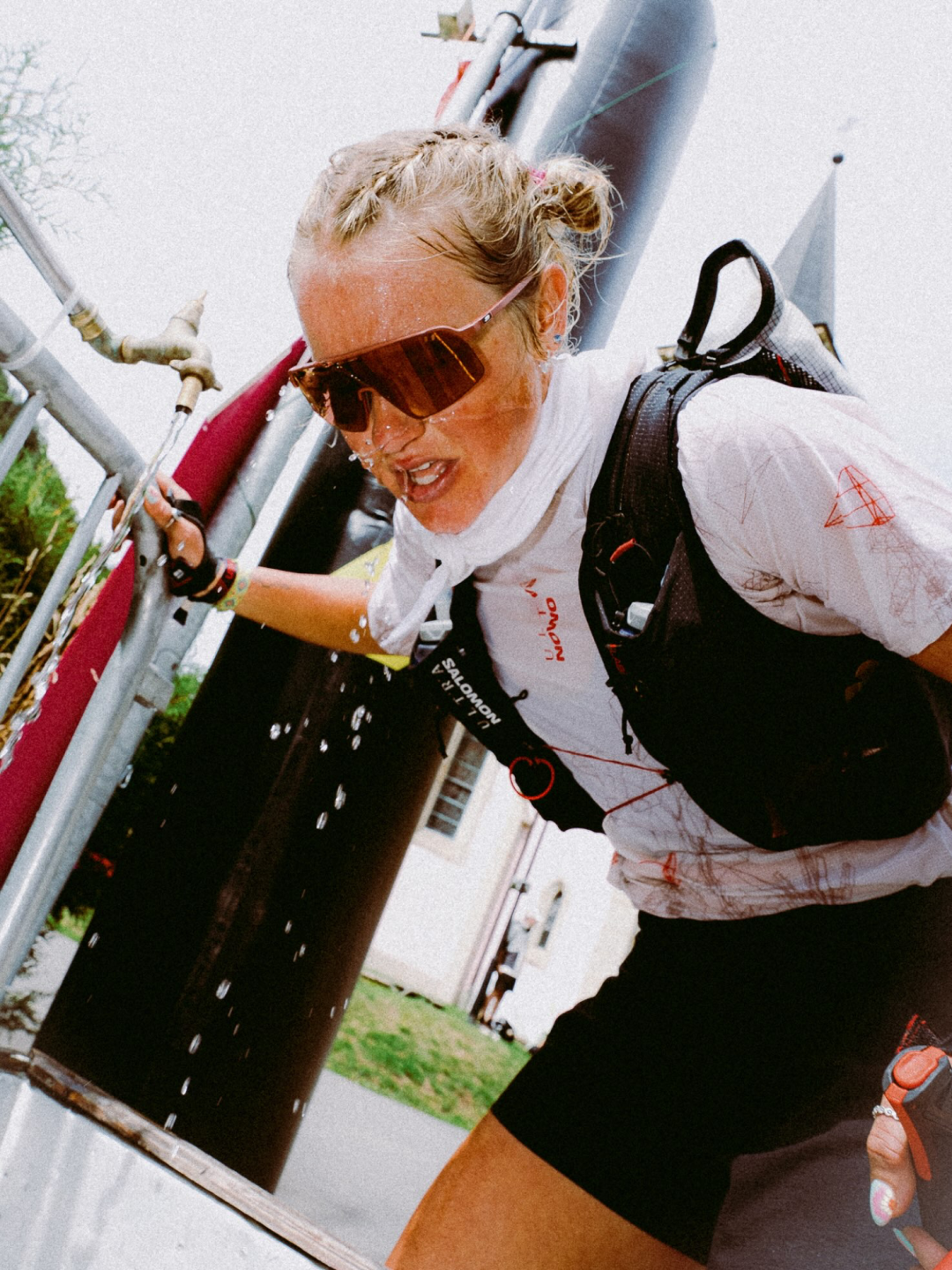
Seventh: Lucy Bartholomew (Australia, 23:44:29) — Salomon. The godfather brand of trail running, once the default on podiums, has slipped to seventh.
Seven brands — from mass-market retail (Kiprun) to luxury outdoor (Arc’teryx), from Swiss engineering (On) to a French classic (Salomon), from zero-drop faith (Altra) to minimalism (Norda) — no single path is identical. Each leads to the same finish, but the philosophies, technologies and price points along the way differ wildly.
02
From “duopoly” to “seven-way rivalry”
Over the past decade, the trail running gear space was dominated by a duopoly: HOKA and Salomon. Salomon, founded in 1947, has focused on mountain sports for over seventy years and long held the top global market share — often called the “trail running textbook.” HOKA was founded by designers who left Salomon and overturned trail-shoe design with very thick midsoles. The two French-rooted brands almost entirely shared top-stage exposure.
But in 2025 the balance began to loosen. ASICS’s two prototype shoes took the top two spots in the UTMB men’s race — a traditional road-running brand used unreleased prototypes to directly challenge trail running’s highest stage.
In 2026 the change accelerated. The women’s top seven coming from seven different brands pushed the trend of fragmentation to an extreme.
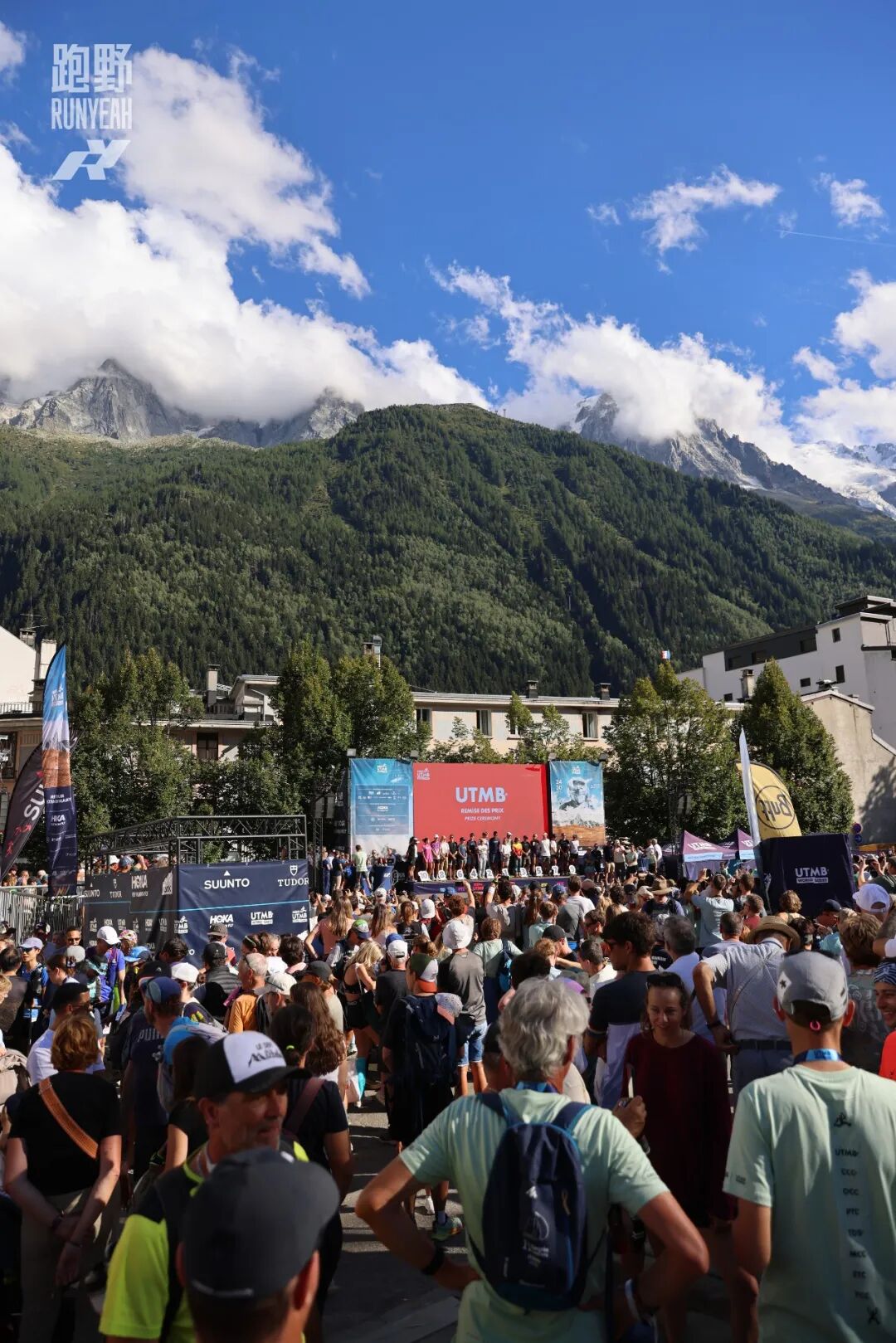
Why has this happened? It likely has a lot to do with trail running’s shift from niche to mainstream.
In 2026 almost every mainstream brand launched new trail shoes. Road-running brands have collectively “gone uphill” — On, ASICS, even Nike have increased investment in trail running. More players mean more competition and more diverse routes to victory.
As brand competition intensifies, athletes’ autonomy increases. Top runners are no longer passive recipients of brand contracts; they actively choose the gear that suits them best. Entrekin chose the young Norda; L’Hirondel chose Decathlon’s Kiprun. This suggests brand halo effects are weakening and product performance is speaking louder.
Another factor: technical barriers are lowering. Carbon plates, supercritical foams and similar materials are no longer exclusive to big brands — they are becoming industry standards. Technology democratization gives new brands a ticket to enter.
One notable contrast: men’s champion Ben Dhiman wore ASICS METAFUJI TRAIL 2, and the men’s podium still showed a higher brand concentration than the women’s. Has the women’s field entered “de-oligopolization” earlier than the men’s? That may relate to women’s trail running commercializing later and brand binding being less entrenched. Either way, the seven-brand pattern in the women’s field is a wake-up call for the industry.
03
What does this mean for brands and the industry?
For brands, there’s no longer a guaranteed path to effortless wins. Signing top athletes no longer automatically equals podium exposure. Pre-race favorite Courtney Dauwalter dropped out on the first night, leaving Salomon without a top contender. On the other hand, Kiprun won the whole race with a ¥1,199.9 shoe. Ultra-distance trail outcomes are hard to predict, but this result reveals a few things.
A new brand only needs to build one shoe that a top athlete is willing to wear to UTMB to break through. Norda took six years to do it; Kiprun did it with one shoe.
For the industry, trail running is maturing. Equipment diversification is a hallmark of a sport’s maturation. Look at the marathon shoe market: from Nike Vaporfly’s near dominance early on to today’s field of adidas, Saucony, ASICS, Brooks and others. Trail running is following a similar path — but faster.
2025 saw ASICS prototypes take the men’s top two; 2026 saw seven different brands in the women’s top seven. What will next year bring? Maybe an eighth or ninth brand on the podium — maybe even a Chinese brand.
For consumers, choice anxiety and freedom coexist. Seven brands on the podium means at least seven “validated” technological paths on the market: carbon-plate, plate-free, thick-stack, low-stack, zero-drop, low-drop — each backed by top athletes’ choices.
The myth that “you must wear X to win” is gone. But more choices mean consumers need more information to decide what suits them. The good news is that information is becoming increasingly transparent.
04
This is not the finish line — it’s a starting point
The seven-brand top seven in the 2026 UTMB women’s race is not an isolated event. It’s a slice of the trail running gear industry’s decentralization.
When a sport is no longer defined by one or two brands, it truly belongs to everyone. The seven pairs on the podium came from seven countries, seven technical philosophies and seven price brackets. Their only commonality: they all finished the 174 km UTMB course with nearly 10,000 m of ascent.
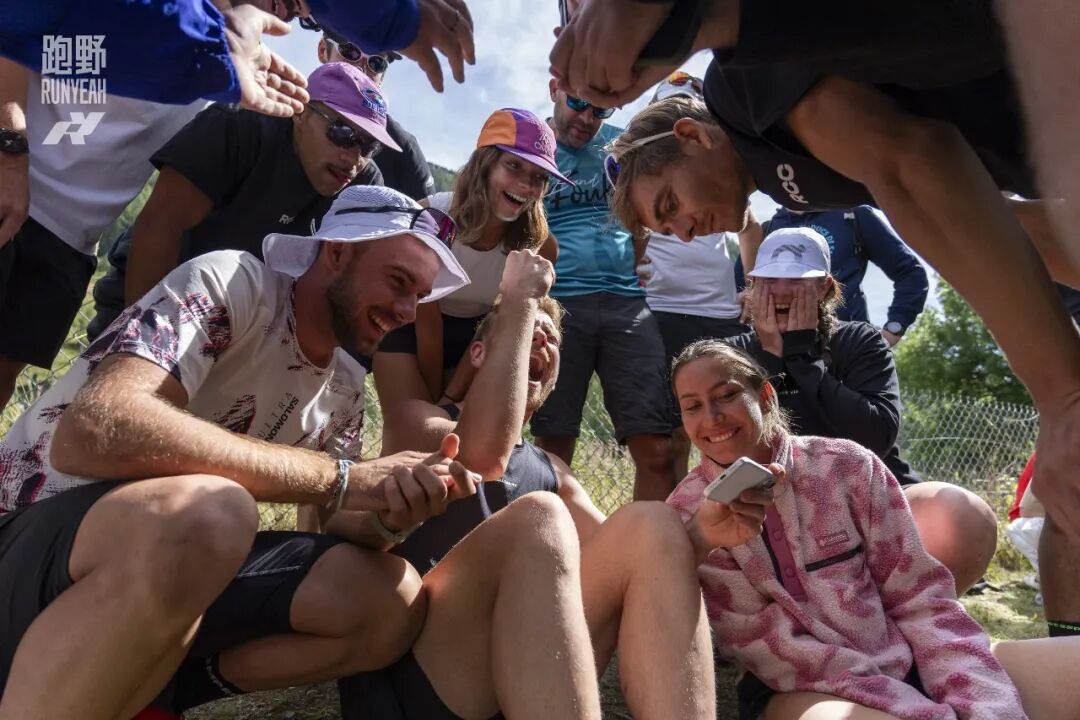
Trail running’s charm has never been about “what you wear” but about “how you run.” Yet when seven different brands appear among the top seven at the world’s most-watched trail race, that fact alone sends a message: there is no single “right answer” in this sport, only countless paths to the finish.And every path deserves serious consideration.
[Reader interaction]
#
Text / Editor: CC
Image source: Paoye Big Bang
Visuals: Max